US Sanctions on Myanmar Crypto Entities: What You Need to Know
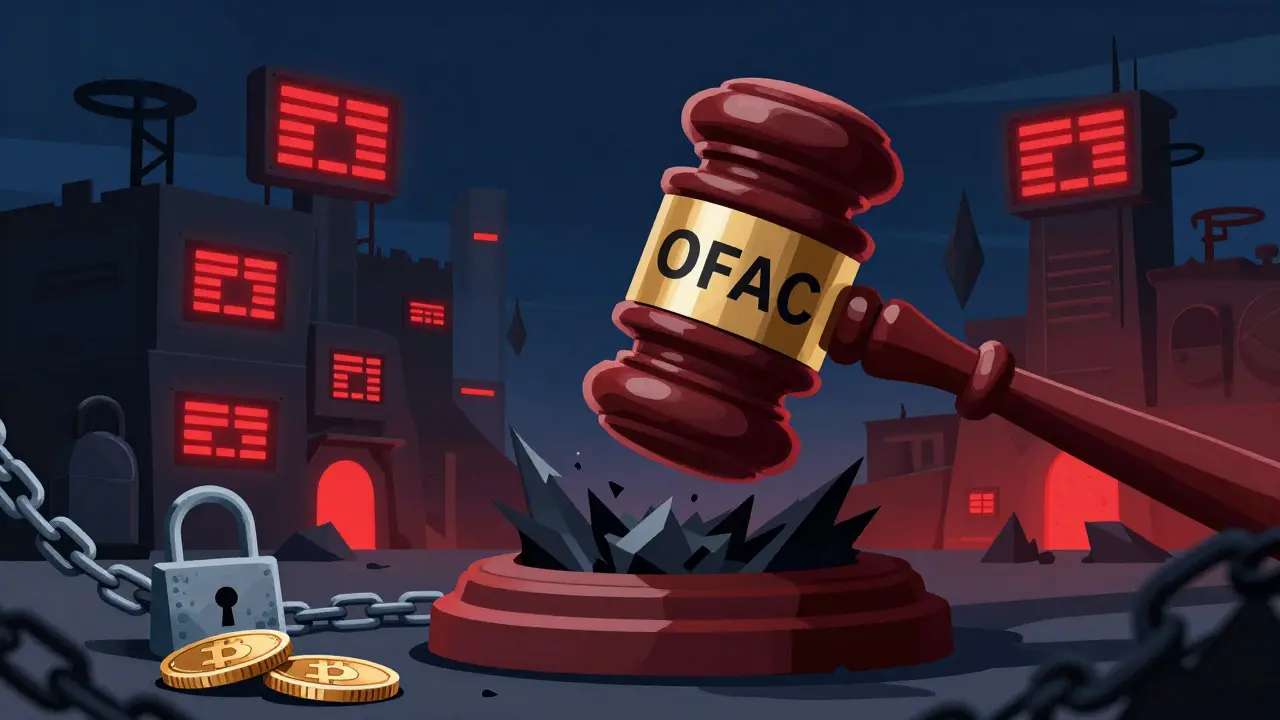
The landscape of cryptocurrency regulation just got a lot more dangerous for anyone operating in Southeast Asia. On September 8, 2025, the United States Department of the Treasury’s Office of Foreign Assets Control (OFAC) dropped a massive hammer on cyber scam networks rooted in Myanmar (Burma). This wasn't a minor fine or a warning shot. It was a comprehensive sanctions regime targeting nine specific entities in the notorious hub of Shwe Kokko, along with ten additional targets in Cambodia. If you are involved in digital assets, compliance, or regional business, you need to understand exactly what changed and why.
The core issue here is not just financial fraud; it is a complex web of human trafficking, forced labor, and military-backed criminal enterprises. The U.S. government has moved beyond simply chasing stolen Bitcoin. They are dismantling the physical infrastructure that allows these scams to happen. For American citizens, this comes as a relief after losing over $10 billion to these operations in 2024 alone. But for operators in the region, the message is clear: the era of impunity in places like Shwe Kokko is over.
The Scope of the September 2025 Sanctions
To grasp the severity of this action, we have to look at who was targeted and how. The Treasury Department didn’t just name a few rogue traders. They designated the Karen National Army (KNA) as a transnational criminal organization. This is a critical distinction. Previously, the KNA might have been viewed through a geopolitical lens as an ethnic armed group. Now, they are explicitly labeled as facilitators of cybercrime.
The sanctions specifically hit the leadership of the KNA, including leader Saw Chit Thu and his sons, Saw Htoo Eh Moo and Saw Chit Chit. By freezing their assets and cutting them off from the U.S. financial system, Washington is trying to starve the financial engine that protects these scam centers. The nine entities in Shwe Kokko are described as a "notorious hub for virtual currency investment scams." These aren't small-time operations. They are industrial-scale fraud factories.
Why Shwe Kokko? It sits on the Thai-Burmese border, in a semi-autonomous zone where the central government’s reach is limited, but local militias hold all the power. The KNA provides security for these compounds in exchange for a cut of the profits. The U.S. sanctions aim to break this symbiotic relationship by making it too costly for the KNA to continue protecting these criminals.
How the Scam Operations Work
You might wonder how these groups manage to steal billions using cryptocurrency. The answer lies in a combination of sophisticated social engineering and the pseudo-anonymity of digital assets. These operations typically follow a predictable pattern:
- The Lure: Victims are contacted via social media, dating apps, or fake job offers. They are promised high returns on cryptocurrency investments or legitimate employment opportunities.
- The Trap: Once trust is established, victims are directed to fraudulent trading platforms. These platforms look real but are entirely controlled by the scammers. Prices are manipulated, and withdrawals are impossible.
- The Extraction: Funds are transferred into wallets controlled by the syndicate. To hide the trail, the money is often mixed through various cryptocurrencies or converted into stablecoins before being laundered through exchanges in less regulated jurisdictions.
- The Labor Force: Here is the dark side. Many of the people running these scams are not willing participants. They are lured with job offers, only to be imprisoned in compounds under threat of violence. They are forced to work long hours perpetrating fraud against unsuspecting Americans. This is modern slavery.
The Treasury Department emphasizes that these are not just financial crimes. They are severe human rights abuses. The use of forced labor creates a dual-victim scenario: the American investor loses their savings, and the worker in Myanmar loses their freedom and safety.

Legal Authorities Behind the Crackdown
The U.S. government didn’t rely on a single law to pull this off. They used a multi-pronged legal approach, leveraging four different Executive Orders to maximize pressure:
- E.O. 13851 (as amended): Targets transnational criminal organizations. This allows sanctions against groups like the KNA that operate across borders to commit serious crimes.
- E.O. 13694 (as amended): Addresses malicious cyber-enabled activities. This covers the technical aspect of the fraud, including the hacking and manipulation of digital platforms.
- E.O. 13818: Focuses on serious human rights abuse. This is crucial because it frames the forced labor component as a sanctionable offense, appealing to international human rights norms.
- E.O. 14014: Targets those threatening Burma’s stability. This connects the financial crime to broader geopolitical goals, suggesting that supporting these scams undermines national security.
This layered approach means there are very few loopholes. Whether you view the KNA as a political actor, a criminal gang, or a human trafficker, there is now a legal basis to sanction them. Under Secretary of the Treasury for Terrorism and Financial Intelligence, John K. Hurley, stated that these actions deploy the "full weight" of Treasury’s tools. That is diplomatic speak for "we are going after everything you own."
Impact on the Cryptocurrency Industry
For the broader crypto industry, these sanctions send a chilling signal. Regulators are no longer treating cryptocurrency merely as a speculative asset class. They are viewing it as a primary tool for organized crime when left unchecked. The $10 billion loss figure cited by the Treasury is staggering. It represents roughly 20% of the total estimated global cryptocurrency fraud losses in 2024, according to reports from Chainalysis.
Exchanges and wallet providers must now be hyper-vigilant. Any transaction linked to entities in Shwe Kokko or associated with the KNA could trigger immediate freezes. Compliance teams need to update their screening lists to include the newly designated individuals and companies. Failure to do so could result in secondary sanctions against financial institutions that facilitate transactions with these targets.
Moreover, this crackdown highlights the risks of operating in jurisdictions with weak rule of law. Investors looking for high yields in emerging markets need to ask tough questions about the source of those returns. If an investment opportunity involves moving money through opaque structures in conflict zones, it is likely a scam.
What Happens Next?
The September 2025 sanctions are not a one-off event. They represent an escalation in a ongoing campaign. The Treasury Department has indicated that this builds on a series of recent actions, suggesting that more designations are coming. We can expect to see increased coordination between U.S. agencies like the FBI and Secret Service, and international partners in Southeast Asia.
There is also the possibility of expanding sanctions to include elements of Burma’s military regime. Deputy Secretary Michael Faulkender noted that the KNA benefits from its connections to the military. If evidence emerges that senior military officials are directly profiting from or facilitating these scams, they could be next on the list. This would further isolate the junta economically and politically.
For victims, recovery remains difficult. While sanctions freeze assets, they do not automatically return stolen funds. However, by disrupting the flow of money and exposing the operators, authorities increase the chances of seizing illicit proceeds. Victims are encouraged to report losses to the Federal Trade Commission (FTC) and local law enforcement.
| Aspect | Details |
|---|---|
| Date of Action | September 8, 2025 |
| Issuing Agency | U.S. Treasury Department (OFAC) |
| Primary Location | Shwe Kokko, Myanmar (Burma) |
| Designated Group | Karen National Army (KNA) |
| Estimated US Losses (2024) | Over $10 Billion |
| Legal Basis | E.O. 13851, E.O. 13694, E.O. 13818, E.O. 14014 |
Practical Steps for Compliance and Safety
If you are a business owner, investor, or developer in the crypto space, here is what you should do immediately:
- Update Screening Lists: Ensure your compliance software includes the latest OFAC Specially Designated Nationals (SDN) list. Look for names like Saw Chit Thu and entities located in Shwe Kokko.
- Review Counterparties: Scrutinize any partners or clients based in Southeast Asia. Verify their legitimacy and ensure they are not connected to known scam hubs.
- Enhance KYC Procedures: Strengthen Know Your Customer (KYC) protocols. Be wary of accounts that show rapid movement of large sums or connections to high-risk jurisdictions.
- Educate Your Team: Train employees to recognize signs of social engineering and forced labor indicators. Report suspicious activity to the appropriate authorities.
- Avoid High-Risk Investments: If an investment promise sounds too good to be true, especially if it involves obscure tokens or platforms based in conflict zones, walk away.
The U.S. government is making it clear that tolerance for cyber-enabled financial crime is zero. The combination of financial sanctions, human rights concerns, and national security interests creates a powerful deterrent. For those trying to profit from exploitation, the door is closing fast.
Who were the specific entities sanctioned in Myanmar?
The sanctions targeted nine entities operating in Shwe Kokko, Myanmar, which serve as hubs for virtual currency investment scams. Additionally, the Karen National Army (KNA) and its leaders, including Saw Chit Thu and his two sons, Saw Htoo Eh Moo and Saw Chit Chit, were designated as transnational criminal organizations.
Why did the US target the Karen National Army (KNA)?
The KNA was targeted because it provides protection and operational security for cyber scam syndicates in its controlled territories. In exchange, the KNA receives financial benefits from these illegal operations. The US views this as a form of transnational criminal activity that facilitates human trafficking and financial fraud.
How much money did Americans lose to these scams in 2024?
According to the U.S. Department of the Treasury, Americans lost over $10 billion to Southeast Asia-based cyber scams in 2024. This figure represents a significant portion of global cryptocurrency fraud losses and highlights the scale of the threat.
What are the consequences of these sanctions?
The sanctions freeze all U.S.-based assets of the designated entities and prohibit U.S. persons from engaging in transactions with them. This effectively cuts off the sanctioned groups from the global financial system, making it difficult for them to move money, invest, or conduct business internationally.
Is this related to human trafficking?
Yes, significantly. The Treasury Department emphasized that these scam operations rely on forced labor. Thousands of people are lured with fake job offers and then held captive under threat of violence to perform fraudulent activities. The sanctions leverage human rights laws (E.O. 13818) to address this abuse.
Will there be more sanctions in the future?
It is highly likely. The Treasury Department stated that this action builds on previous efforts and indicates an escalating response. There are suggestions that future sanctions could expand to include other elements of Burma’s military or political structure if they are found to be facilitating these criminal enterprises.