Vietnam Crypto Adoption: Why It Ranks High Despite Strict Restrictions
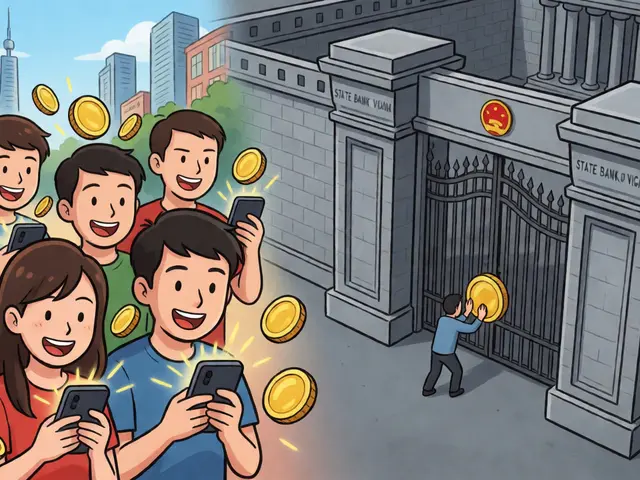
You might have seen headlines claiming Vietnam is a top-tier crypto powerhouse. The numbers look impressive: millions of users, billions in transaction volume, and a ranking that puts it ahead of many Western nations. But here is the twist most articles miss. The official Chainalysis Global Crypto Adoption Index actually places Vietnam at #6, not #5 or #4 as some media outlets erroneously reported. This discrepancy matters because it highlights a massive gap between grassroots enthusiasm and institutional reality.
If you are a trader, an investor, or just curious about why one of Southeast Asia’s fastest-growing economies is embracing digital assets while simultaneously locking down its regulatory doors, this breakdown is for you. We are looking at the real data behind the hype, the strict rules that keep banks on edge, and what this means for your wallet if you are dealing with VND or USD.
The Reality Check: Ranking vs. Reporting
Let’s clear up the confusion first. In September 2025, Chainalysis released its latest report adjusting rankings by population size. While unadjusted data might suggest a higher position due to sheer volume, the population-adjusted metric-which gives a fairer picture of per-capita adoption-puts Vietnam firmly at #6 globally. This isn’t just a minor correction; it changes how we interpret the market’s maturity.
Why does this distinction matter? Because high adoption rates driven by a young, tech-savvy population don’t necessarily mean a mature financial infrastructure. Vietnam has approximately 17 million active crypto users, which sounds huge until you realize that represents only about 17.2% of the total population. Compare this to countries like Nigeria or India, where adoption is even more widespread among the unbanked, and you see that Vietnam’s growth is fueled by a specific demographic: urban, educated, and digitally native individuals aged 18-35.
| Metric | Value | Context |
|---|---|---|
| Global Adoption Rank | #6 | Population-adjusted (Chainalysis 2025) |
| Active Users | ~17 Million | 17.2% of population |
| Annual Transaction Volume | >$100 Billion | Significant APAC contribution |
| Institutional Participation | 17% | Limited by regulatory barriers |
| Retail Participation | 83% | Dominant market force |
Legalized but Restricted: The New Regulatory Framework
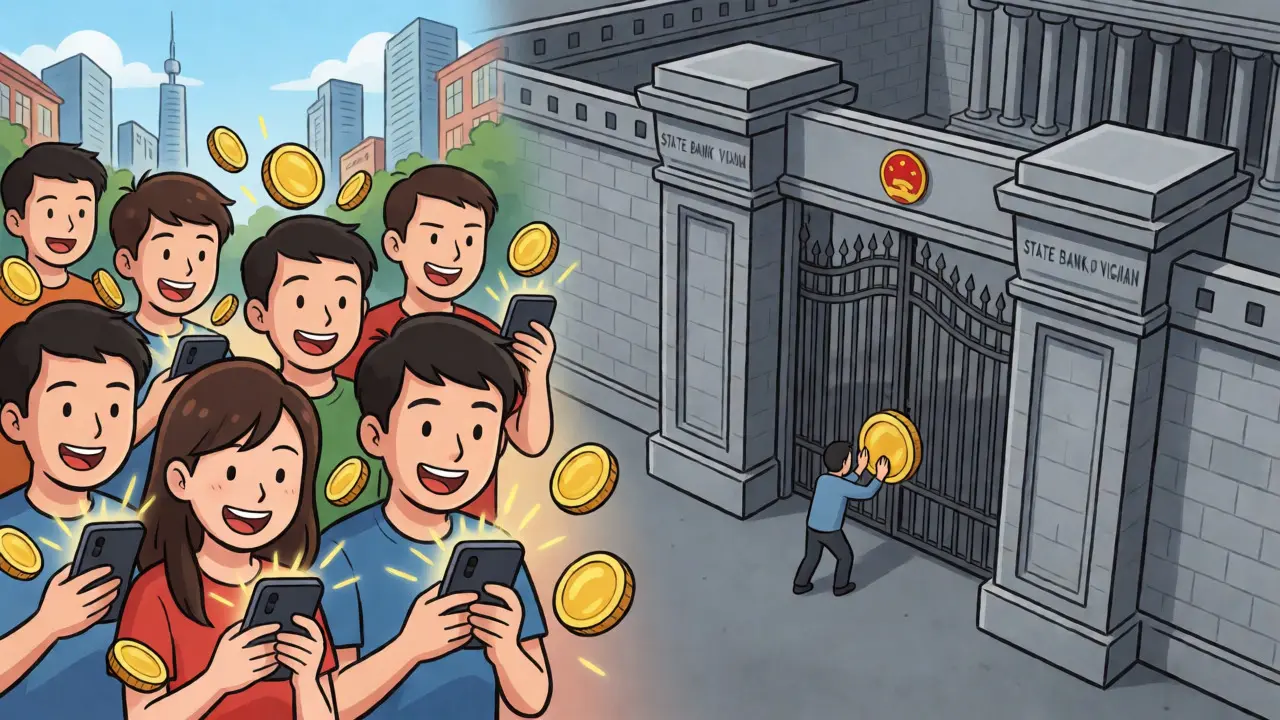
Here is where things get tricky for anyone trying to do business in Vietnam. In June 2025, the country officially legalized cryptocurrencies through the Law on Digital Technology Industry. Sounds great, right? Not exactly. The law draws a hard line in the sand that separates Vietnam from neighbors like Singapore or Thailand.
The State Bank of Vietnam (SBV) categorized digital assets into two buckets: virtual assets representing tokenized real-world products, and crypto assets like Bitcoin and Ether. But they slapped a major prohibition on fiat-backed stablecoins. You cannot issue on-chain assets backed directly by the US Dollar or other currencies within Vietnam. This rule alone disrupts the entire trading ecosystem because stablecoins are the lifeblood of crypto liquidity.
Furthermore, any company wanting to operate as a Crypto Asset Service Provider (CASP) needs a minimum capital of 10 trillion VND. That’s roughly $379 million USD. For context, that amount effectively shuts out startups and mid-sized firms, leaving the field open primarily to state-owned enterprises or massive conglomerates. It’s a strategy designed to prioritize stability over innovation, ensuring that the government keeps a tight leash on capital flows.
The Offshore Loophole: Where the Money Actually Flows
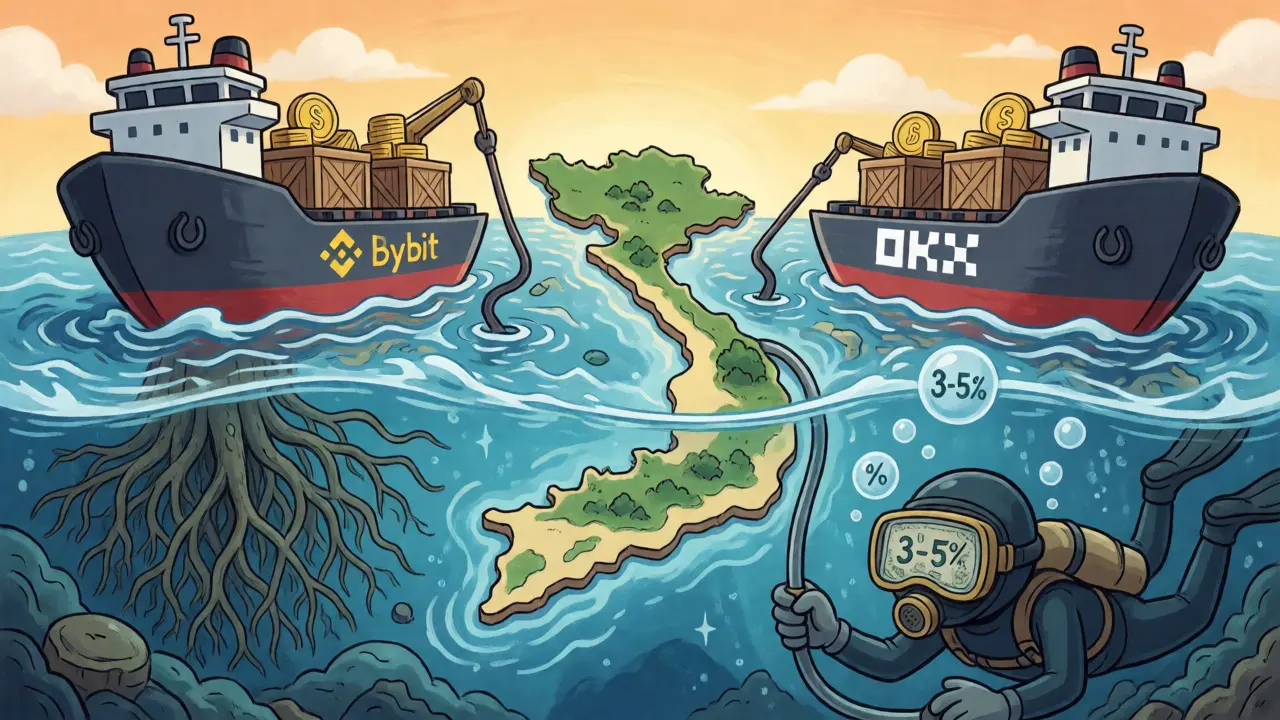
Because local exchanges face such steep hurdles, where do the 17 million users go? They go offshore. A staggering 87% of Vietnamese crypto users rely on platforms like Binance P2P, Bybit, or OKX. These aren’t regulated Vietnamese entities; they are global giants operating in a gray area.
This creates a friction point for everyday traders. If you want to convert your profits back into Vietnamese Dong (VND), you often have to use Peer-to-Peer (P2P) markets. And let me tell you, it’s not smooth sailing. Users report paying 3-5% premiums on USDT-VND trades just to bypass banking restrictions. Plus, constant KYC (Know Your Customer) hassles make moving money feel like navigating a maze blindfolded.
Consider the remittance angle. Vietnam processed $19.2 billion in international remittances in 2024. Traditional channels charge hefty fees, averaging 6.8%. Crypto offers a cheaper alternative at around 1.2%, which is why 74% of users employ digital assets for cross-border transfers. But without legal stablecoins, these transactions often involve complex conversions, adding layers of risk and cost that shouldn’t exist in a modern financial system.

Why Institutions Are Holding Back
You might wonder why big banks and hedge funds aren’t flooding into Ho Chi Minh City’s fintech scene. The answer lies in uncertainty. While retail investors thrive on volatility, institutions hate it. The SBV’s phased approach aims to protect financial integrity, but it also stifles institutional growth.
Singapore, by contrast, allows regulated stablecoin issuance and boasts a 49% institutional adoption rate. Vietnam sits at just 17%. Deloitte’s analysis shows Singapore’s open framework drives 32% higher institutional engagement. Until Vietnam clarifies its stance on stablecoins and lowers capital requirements, expect foreign direct investment in crypto to remain cautious.
Moreover, the regulatory sandbox launched in September 2025 received zero applications in its first month. Why? Because compliance involves 14 separate certifications across different ministries. It takes nearly a year and $2.8 million to become fully compliant. For a startup burning cash, that’s a death sentence before they even launch.
The Future Outlook: Growth Amidst Friction
Despite the red tape, the momentum is undeniable. Morgan Stanley projects 25-30% annual growth in Vietnam’s crypto market through 2028. Why? Because the underlying demand is organic. People need efficient ways to save, trade, and send money home. With 76% smartphone penetration and a young population comfortable with digital tools, the infrastructure is ready.
However, the IMF warns that 92% of crypto activity happens outside formal channels. This poses a significant financial integrity risk. If the government doesn’t bridge the gap between informal usage and formal regulation, they risk missing out on tax revenue and control. Draft Circular 40 proposes a 2% VAT and 0.1% transaction tax, signaling that the state intends to capture value eventually.
For now, if you are interacting with the Vietnamese crypto market, assume friction. Use established offshore platforms, budget for higher conversion costs, and stay alert to regulatory shifts. The sandbox pilot might gain traction next year, potentially pushing Vietnam back toward the top 4 rankings, but only if the rigid rules loosen up.
Is crypto legal in Vietnam?
Yes, but with strict conditions. Since June 2025, cryptocurrencies are recognized as virtual assets. However, issuing fiat-backed stablecoins is prohibited, and trading must often occur through approved or tolerated offshore channels due to local exchange restrictions.
What is the minimum capital requirement for crypto companies in Vietnam?
Crypto Asset Service Providers (CASPs) must maintain a minimum capital of 10 trillion VND, which is approximately $379 million USD. This high barrier limits entry to large, well-capitalized entities.
Why do Vietnamese users prefer offshore exchanges?
Due to the ban on local fiat-backed stablecoins and high compliance costs for local exchanges, 87% of users turn to global platforms like Binance P2P, Bybit, and OKX for better liquidity and easier VND conversion options.
How does Vietnam's crypto adoption rank globally?
According to the Chainalysis 2025 Global Crypto Adoption Index, Vietnam ranks #6 when adjusted for population. Some reports incorrectly cite #4 or #5 by using unadjusted metrics that favor larger populations.
Can I use stablecoins freely in Vietnam?
No. The issuance of on-chain fiat-backed assets, including stablecoins like USDT and USDC, is prohibited for local issuers. Most users access stablecoins via offshore platforms, facing conversion risks and fees when moving funds back to VND.