VPN Use on Crypto Exchanges: How Detectable Is It?
VPN Detection Risk Calculator
Detection Risk Assessment
VPN Comparison Table
| VPN Type | IP Profile | Detection Risk | Cost |
|---|---|---|---|
| Free/Shared VPN | Data-center IPs, often blacklisted | High (80-90%) | Free |
| Standard Paid VPN | Mixed data-center and residential IPs | Medium (40-60%) | $5-$12/month |
| Dedicated IP VPN | Static, residential-like IP | Low (10-20%) | $10-$20/month |
| Residential Proxy | Real ISP customer IP | Very Low (<5%) | $20+/month |
VPN usage for crypto exchange access is the practice of routing cryptocurrency‑exchange traffic through virtual private networks to hide a user's real location. Exchanges are getting smarter about spotting that traffic, and many claim they can spot a VPN‑based login 70‑80% of the time. That number sounds high, but the reality depends on the VPN you use, the exchange’s security stack, and how you behave online.
Why Exchanges Care About VPN Traffic
Regulators in the US, EU and other jurisdictions demand that platforms know where their users are located. KYC (Know Your Customer) and AML (Anti‑Money Laundering) checks rely on accurate geographic data. A VPN can throw a wrench into that process, so exchanges invest in what the industry calls VPN detection. When a system flags a VPN, it may ask for extra documents, lower withdrawal limits, or even block the account outright.
How Exchanges Spot a VPN
Detection is rarely a single‑step test. Modern platforms blend several techniques:
- IP‑address reputation databases: Lists of known data‑center IPs, free‑VPN endpoints and proxy services are continuously updated. If your IP shows up on a list, the exchange raises a red flag.
- Behavioral analysis: Rapid jumps between countries, login times that don’t match typical local hours, and unusual transaction bursts all get scored by machine‑learning models. A pattern that looks like “login from Tokyo, then 5 minutes later from London” will trigger alerts.
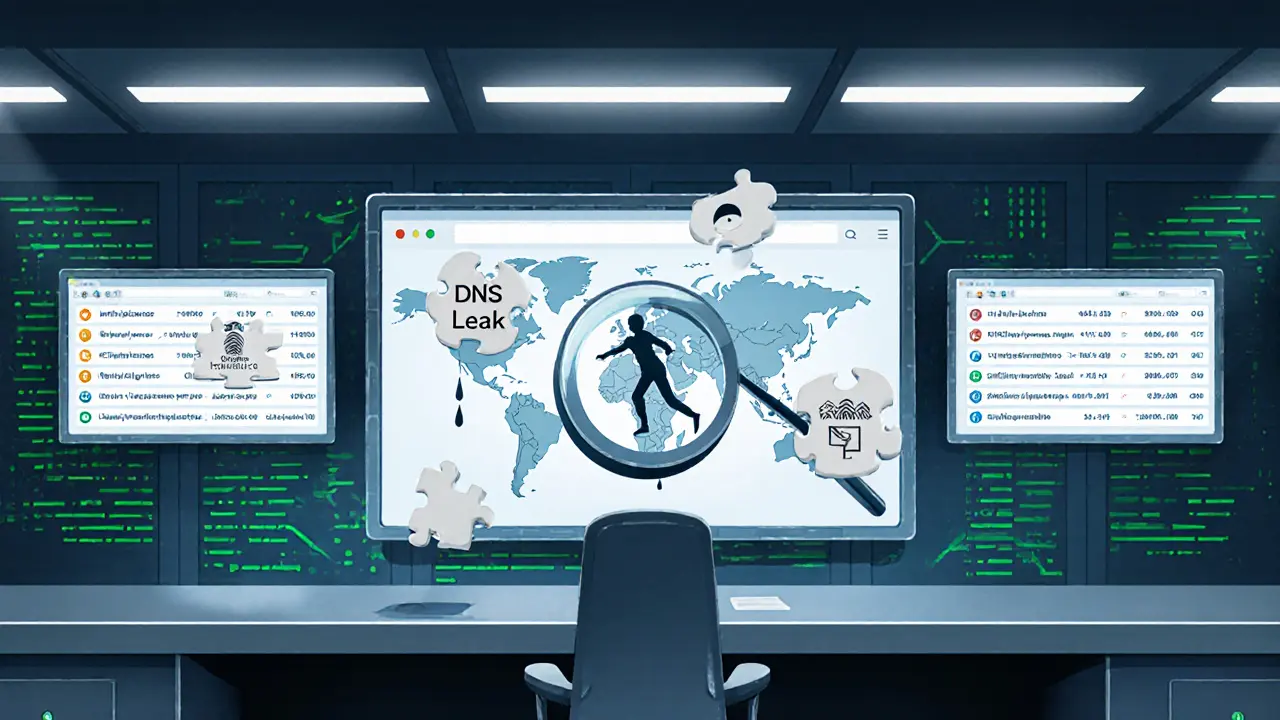
- DNS‑leak and WebRTC checks: Even if the VPN encrypts traffic, a browser can leak the real DNS resolver or reveal the local IP via WebRTC. Exchanges that incorporate client‑side scripts can catch these leaks instantly.
- Device fingerprinting: Combines browser version, screen resolution, installed fonts, and other cues to create a unique profile. If the same fingerprint appears from two distant IPs, the system flags it.
When these signals converge, the platform may automatically flag the session as “VPN detected”. The more sophisticated the exchange, the tighter the thresholds.
VPN Types and Their Likelihood of Being Detected
Not all VPNs are created equal. Here’s a quick rundown of the most common choices and how they fare against exchange defenses:
| VPN Type | Typical IP profile | Detection risk | Typical cost |
|---|---|---|---|
| Free/Shared VPN | Data‑center IPs, often on blacklists | High - 80‑90% flagged | Free |
| Standard paid VPN | Mixed pool of data‑center and some residential IPs | Medium - 40‑60% flagged | $5‑$12/month |
| Dedicated IP VPN | Single, static IP, often residential‑like | Low - 10‑20% flagged | $10‑$20/month |
| Residential proxy service | IP from actual ISP customers | Very low - <5% flagged | $30‑$100/month |
Notice the steep cost jump from a regular VPN to a residential proxy. That jump often translates into a dramatically lower detection rate because the IP looks like a genuine home user.
Top VPNs Recommended for Crypto Traders (2025)
Based on community feedback, independent testing and the providers’ own crypto‑friendly features, three services consistently rank highest:
- NordVPN: Offers dedicated IPs, accepts payments in Bitcoin, Ethereum and other major coins, and runs RAM‑only servers from Panama. Its obfuscation protocol (NordLynx) is designed to defeat deep‑packet inspection.
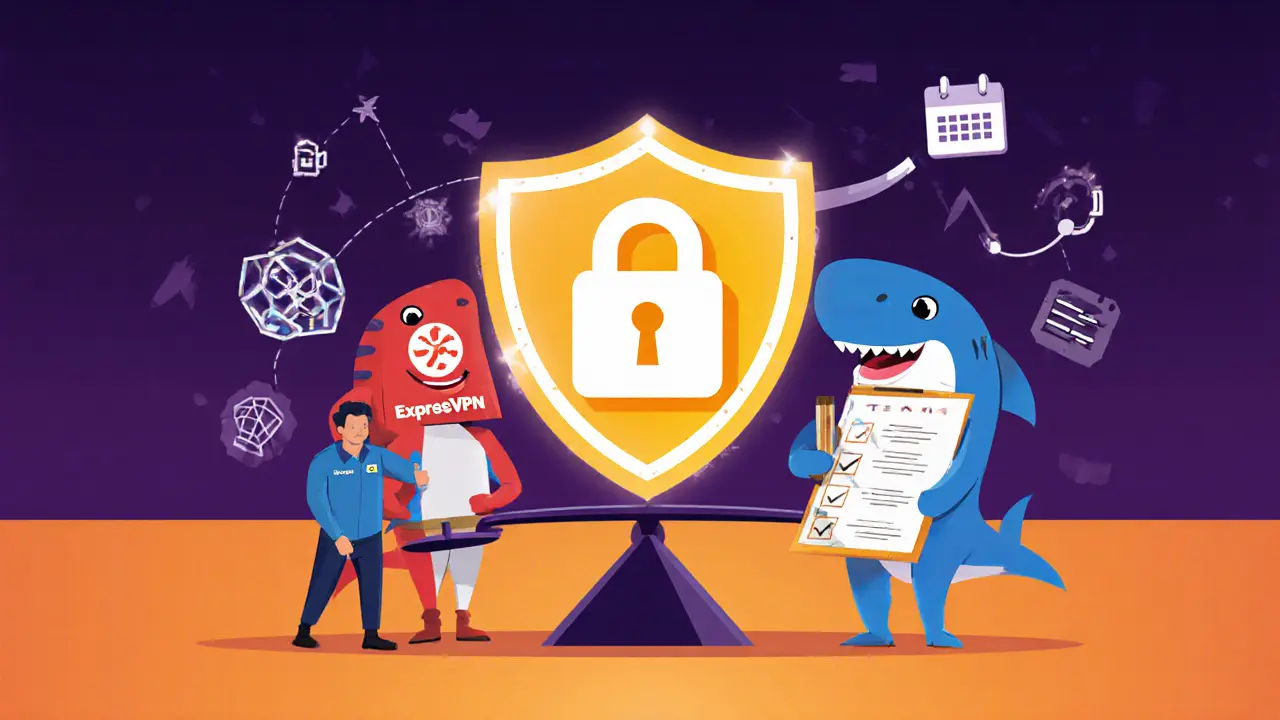
- ExpressVPN: Operates from the British Virgin Islands, provides over 3,000 servers, and only accepts Bitcoin for crypto‑related subscriptions. The service includes a built‑in “network lock” that cuts traffic if the VPN drops.
- Surfshark: Cheapest premium option with a “Camouflage Mode” that masks VPN traffic as regular HTTPS. It also offers a “MultiHop” chain that routes traffic through two separate servers, adding extra layers of anonymity.
All three bundle extra security tools like dark‑web credential monitoring, malicious‑link blockers and DNS leak protection, which are useful beyond just hiding your IP.
Regulatory and Account‑Risk Implications
Even if you manage to slip past detection, you’re still subject to the exchange’s compliance policies. Here’s what typically happens when a platform identifies a VPN:
- Additional verification: The user is asked to upload a government ID, utility bill, or a selfie with the ID.
- Reduced limits: Withdrawal caps can drop from $10,000 a day to $1,000 until the account is fully verified.
- Temporary suspension: Some platforms lock the account for 24‑48hours while they review the activity.
- Permanent ban: If the VPN use is deemed an attempt to evade jurisdictional rules, the exchange may close the account and confiscate any remaining balance.
These actions don’t just affect you-they also impact the exchange’s ability to stay compliant with regulators. That’s why larger platforms like Binance, Coinbase, and Kraken have invested heavily in machine‑learning detection pipelines.
Practical Tips for Traders Who Need a VPN
- Pick a dedicated IP or residential proxy if you trade frequently; the static address avoids the “multiple locations” flag.
- Stick to one server region for a given exchange. Jumping from Singapore to NewYork within a few hours is a red flag.
- Enable the VPN’s built‑in DNS leak protection and run a quick “what is my IP?” check after connecting.
- Use two‑factor authentication (2FA) on the exchange. Even if the VPN is caught, the extra factor can keep your funds safe.
- Keep a copy of your KYC documents handy. If you’re asked for verification, a swift upload reduces downtime.
- Avoid free VPNs altogether. Their shared IP pools are almost always on reputation blacklists.
Following these steps can push the detection probability from the vague “70‑80%” range down into the low‑double‑digit range for most premium services.
What the Future Holds for VPN Detection on Exchanges
Experts predict an arms race: as exchanges adopt more advanced machine‑learning detection models, VPN providers will roll out newer obfuscation layers, residential‑IP farms and AI‑driven server allocation. The net effect is a constantly shifting detection rate rather than a fixed 70‑80% figure.
In the next 2‑3years, we expect three trends:
- Behavior‑first detection: Instead of relying on IP lists, platforms will score user behavior in real time, making even dedicated IPs vulnerable if the usage pattern looks suspicious.
- Regulatory‑driven bans: Some jurisdictions may legally require exchanges to block any VPN‑originated traffic, regardless of detection confidence.
- Privacy‑tool collaborations: VPNs may partner directly with exchanges to offer verified-but‑anonymous accounts, letting users prove they’re not sanctioned while keeping location hidden.
Until these changes solidify, the best approach remains a mix of reliable VPN tech, disciplined login habits and full compliance with KYC requirements.
Frequently Asked Questions
Do all crypto exchanges block VPNs?
No. Large, regulated exchanges (e.g., Binance, Coinbase) actively detect and often restrict VPN traffic, while smaller or decentralized platforms may have little to no detection at all.
Is a free VPN safe for trading?
Free VPNs are usually flagged by exchange IP‑reputation databases. They also lack strong encryption, making your credentials vulnerable to interception.
What’s the advantage of a dedicated IP?
A dedicated IP behaves like a regular home address. Because it isn’t shared with other users, it rarely appears on VPN blacklists, reducing the chance of a flag.
Can I use a residential proxy instead of a VPN?
Yes, residential proxies provide IPs that look exactly like typical ISP users, making detection extremely difficult. However, they are pricier and often require more technical setup.
Will using a VPN protect me from phishing on exchanges?
Indirectly. A good VPN encrypts your traffic, preventing man‑in‑the‑middle attacks that could capture login details. Combine it with 2FA for full protection.
Do exchanges share VPN detection data with regulators?
Regulated platforms often must report suspicious activity, including VPN use, to financial authorities. The exact data shared varies by jurisdiction.

Jack Stiles
Just a heads up, free VPNs are pretty much on the blacklist for most exchanges.
Stick with a paid service if you care about your account.
Ritu Srivastava
It's irresponsible to even suggest compromising your security for “convenience”.
You ought to respect the platform's rules and protect your assets.
Liam Wells
While the calculator presented herein attempts to quantify VPN detection risk, one must acknowledge the inherent limitations of such a model.
Firstly, the reliance on static base risk percentages fails to incorporate the dynamic nature of exchange security algorithms.
Secondly, behavioral analysis employed by exchanges extends beyond mere IP classification, encompassing device fingerprinting, timing patterns, and transaction velocity.
Moreover, the purported “residential proxy” category is not a panacea; sophisticated services can still be fingerprinted via DNS leaks.
Thirdly, the data‑center IP blacklists referenced are perpetually updated, rendering historical risk assessments obsolete.
Additionally, the model assumes user behavior is static, whereas traders frequently switch networks, locales, and devices.
Furthermore, many exchanges employ machine‑learning classifiers that adapt to emerging VPN obfuscation techniques.
In light of these considerations, the risk percentages should be interpreted as a rough heuristic rather than a definitive guarantee.
Consequently, a user employing a dedicated IP VPN may still experience flagging if their transaction patterns appear anomalous.
Conversely, a “free” VPN might evade detection momentarily if the exchange’s IP reputation database has not yet been updated.
It is also noteworthy that regulatory requirements in certain jurisdictions compel exchanges to perform enhanced due diligence, further complicating the risk landscape.
Therefore, relying solely on this calculator without a comprehensive security posture is ill‑advised.
Practitioners should augment VPN usage with consistent login habits, two‑factor authentication, and minimal exposure of personal information.
In summation, while the calculator offers a useful starting point, a holistic approach to privacy and compliance is indispensable.
Neglecting these broader factors may expose users to account limitations or, in worst cases, loss of funds.
Caleb Shepherd
Yo, Liam, you’ve nailed it – the math’s cool but exchanges are always a step ahead.
Even a dedicated IP can get flagged if you bounce around too much or make huge trades.
Ken Pritchard
For anyone looking into VPNs for crypto, remember it’s not just the VPN type but also how you use it.
Keeping a steady location and low‑volume trades can lower your radar profile.
Don Price
It is a gross simplification to assert that merely stabilizing one's IP footprint suffices to evade detection; the reality is far more insidious.
State‑run surveillance apparatuses have infiltrated major cryptocurrency exchanges under the guise of AML compliance.
These agencies possess the capability to perform deep packet inspection, correlating VPN handshakes with known exit node registries.
Consequently, the notion of a “steady location” is a mirage, as jurisdictional overlays can re‑attribute traffic to disparate regions.
Moreover, many exchanges have adopted blockchain‑level analytics, mapping wallet behavior across the network, independent of IP data.
This renders VPN usage peripheral when the transaction patterns betray a mismatch with user profiles.
Even with a residential proxy, the exit node's ISP can be subpoenaed, compelling disclosure of subscriber identities.
Furthermore, the pervasiveness of browser‑based fingerprinting introduces another vector, capturing canvas and font data that betrays the underlying hardware.
One cannot overlook that some exchanges employ a “risk‑scoring” engine which aggregates myriad signals, from login timestamps to geolocation jitter.
Thus, a user who believes they are “secure” because they used a premium VPN may still be flagged due to anomalous timing of trades.
To truly obfuscate one's presence, one must adopt a multi‑layered approach: rotating residential proxies, strategic transaction sizing, and consistent device usage.
Even then, the cat‑and‑mouse game persists, as exchange security teams iterate their detection algorithms nightly.
In summary, the simplistic advice to “keep a steady location” is fundamentally flawed; awareness of the broader surveillance ecosystem is imperative.
Only by acknowledging these complexities can an individual hope to mitigate the pervasive reach of modern exchange monitoring.
Dawn van der Helm
Great info, everyone! 😀 Just remember to keep your 2FA on and maybe use a hardware wallet for extra safety.
Monafo Janssen
I totally agree with Dawn – two‑factor authentication is a must.
If you combine it with a VPN that has a stable IP, you’re already adding a solid layer of protection.
Michael Phillips
Indeed, the synergy between authentication methods and network privacy creates a defense‑in‑depth strategy.
It’s not infallible, but layering reduces attack surface significantly.
Jason Duke
Don't forget to clear your cookies and cache regularly – some exchanges track you that way! ;)
Bryan Alexander
Secure your keys, stay safe.
Patrick Gullion
Sure, but even with secure keys, a shady VPN can land you in hot water if the exchange flags your IP.
Darren Belisle
Also, consider using a hardware wallet; it keeps your private keys offline, which is a whole different ballgame for security.
Mark Bosky
From a technical standpoint, many exchanges now incorporate WebRTC leakage checks. Disabling WebRTC in your browser can prevent accidental IP exposure even when using a VPN.
Brian Lisk
Excellent point, Mark. WebRTC can indeed betray your true IP address through STUN requests, which many users overlook.
By configuring the browser to block or disable these requests, you add another veil over your actual location.
Additionally, using browser extensions that force DNS over HTTPS further reduces the chance of DNS leaks.
Combining these settings with a reputable VPN that offers a kill switch ensures that traffic is halted if the tunnel drops.
For those on mobile devices, enabling the VPN's built‑in firewall can prevent apps from bypassing the VPN route.
Remember to periodically test your setup with online leak detection tools to verify that no data is slipping through.
In practice, this layered approach dramatically lowers the probability of detection on most exchanges.
Mark Fewster
One more tip: avoid logging in from public Wi‑Fi without the VPN active – those networks are prime spots for man‑in‑the‑middle attacks.
Moses Yeo
Isn't it ironic that we chase anonymity while our very desire to hide becomes a signal itself? The more we obsess over VPNs, the more we stand out.
Debra Sears
I've seen cases where traders switched to a residential proxy for a week, only to get their accounts frozen because the exchange flagged unusual trade volumes.
Matthew Laird
People need to understand that these exchanges are protecting American investors. If you try to hide, you're just inviting trouble.
Richard Bocchinfuso
Yo, if you're using a free VPN and get blocked, that's on you. No excuses.
Jason Wuchenich
Bottom line: pick a reliable VPN, keep your behavior consistent, and always have 2FA. That’s the sweet spot for most users.
Sal Sam
From a network stack perspective, ensure your VPN supports AES‑256‑GCM and utilizes perfect forward secrecy; otherwise you're just adding a weak cipher to an already compromised pipeline.