What Are Blockchain Oracles? The Essential Guide to External Data for Smart Contracts
Oracle Cost Calculator
Estimate your oracle gas costs based on your project's data requirements and blockchain platform. This calculator provides an approximate cost based on current Ethereum gas prices.
Estimated Costs
Note: Actual costs may vary based on network congestion, oracle implementation, and current gas prices.
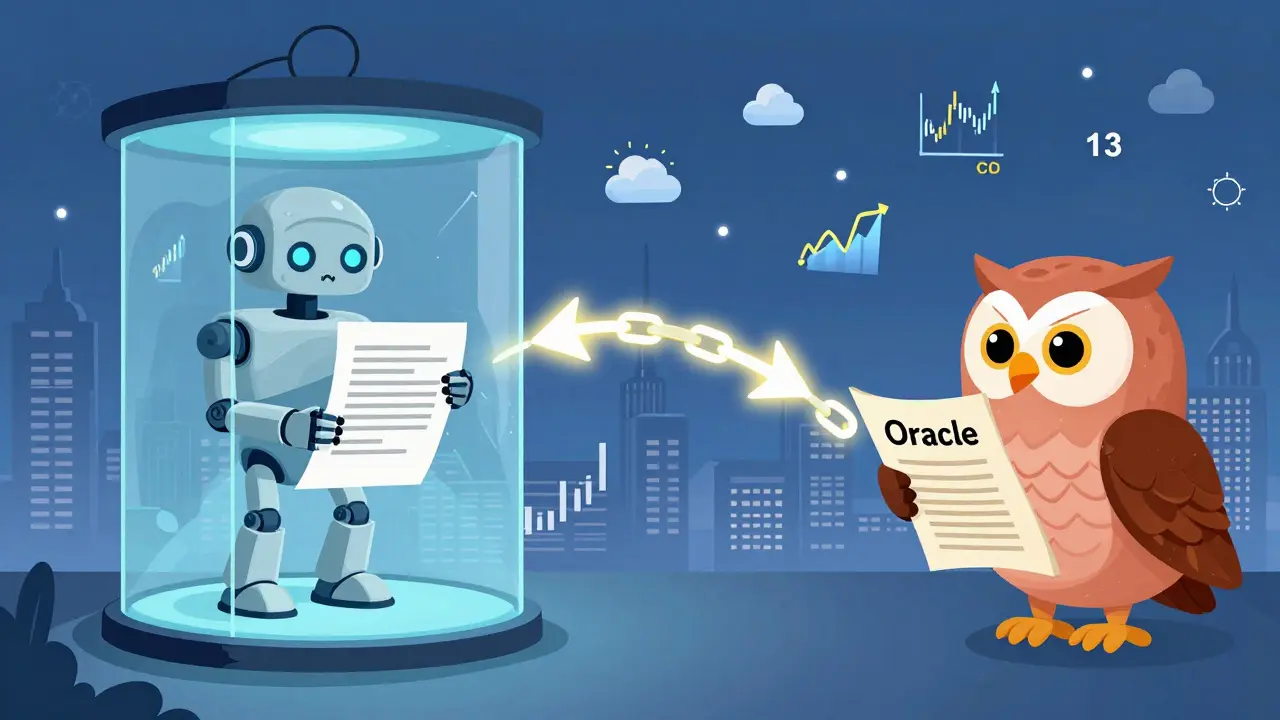
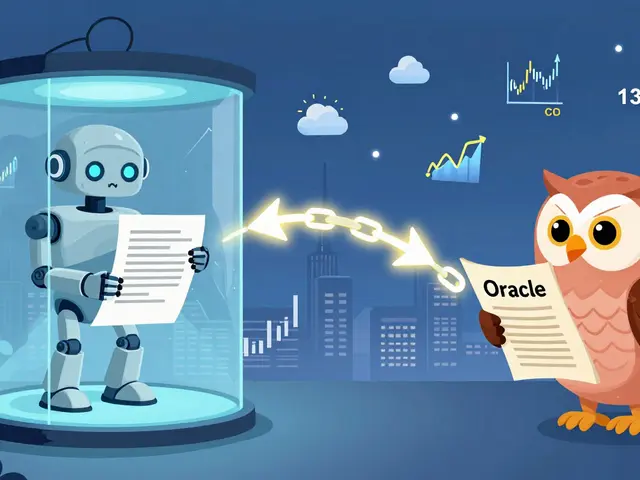
Smart contracts on blockchains are like automated robots that follow strict rules - but they’re stuck inside a sealed room. They can’t see what’s happening outside. No live stock prices. No weather reports. No bank confirmations. Nothing real-world. That’s where blockchain oracles come in. They’re the messengers that bridge the gap between blockchain logic and the messy, unpredictable world outside.
Why Do Smart Contracts Need Oracles?
Imagine you set up a smart contract to pay out $1,000 if the temperature in Miami hits 95°F. The contract is coded, ready to go. But the blockchain itself has no way to check the weather. It doesn’t have access to the internet. It can’t call a weather API. It doesn’t even know what temperature means. That’s the oracle problem - a core limitation built into how blockchains work. Every node must agree on the exact same result. If one node pulls live data from a website and another doesn’t, consensus breaks. Oracles solve this by acting as trusted intermediaries. They fetch, verify, and deliver real-world data to the blockchain in a way every node can validate.How Do Blockchain Oracles Work?
Think of an oracle as a two-part system: one part lives on the blockchain (the on-chain contract), and the other runs outside it (the off-chain node). Here’s how it works step by step:- A smart contract needs data - say, the price of Bitcoin in USD.
- The contract sends a request to its oracle contract on-chain.
- The oracle contract triggers an off-chain node to fetch the data from a source like Coinbase or Binance API.
- The off-chain node retrieves the price, checks it against multiple sources, and signs it with its private key.
- Multiple nodes do this independently. Their responses are aggregated and verified using a consensus algorithm.
- The final, verified price is sent back to the smart contract on-chain.
- The contract executes - maybe it triggers a loan repayment or a derivative payout.
Types of Blockchain Oracles
Not all oracles are the same. They’re built for different jobs:- Inbound oracles bring data into the blockchain. Examples: stock prices, sports scores, flight delays. Used in insurance payouts or betting contracts.
- Outbound oracles send data out from the blockchain. Think: triggering a wire transfer, unlocking a digital door lock, or updating a warehouse inventory system.
- Cross-chain oracles move data between blockchains. If you want Ethereum to respond to an event on Solana, you need a cross-chain oracle. Chainlink’s CCIP protocol handles this across 11 networks.
- Compute-enabled oracles don’t just fetch data - they process it. Need to calculate a complex risk score using 100 data points? A compute oracle runs that off-chain and sends back the result, saving gas and time.
Centralized vs. Decentralized Oracles
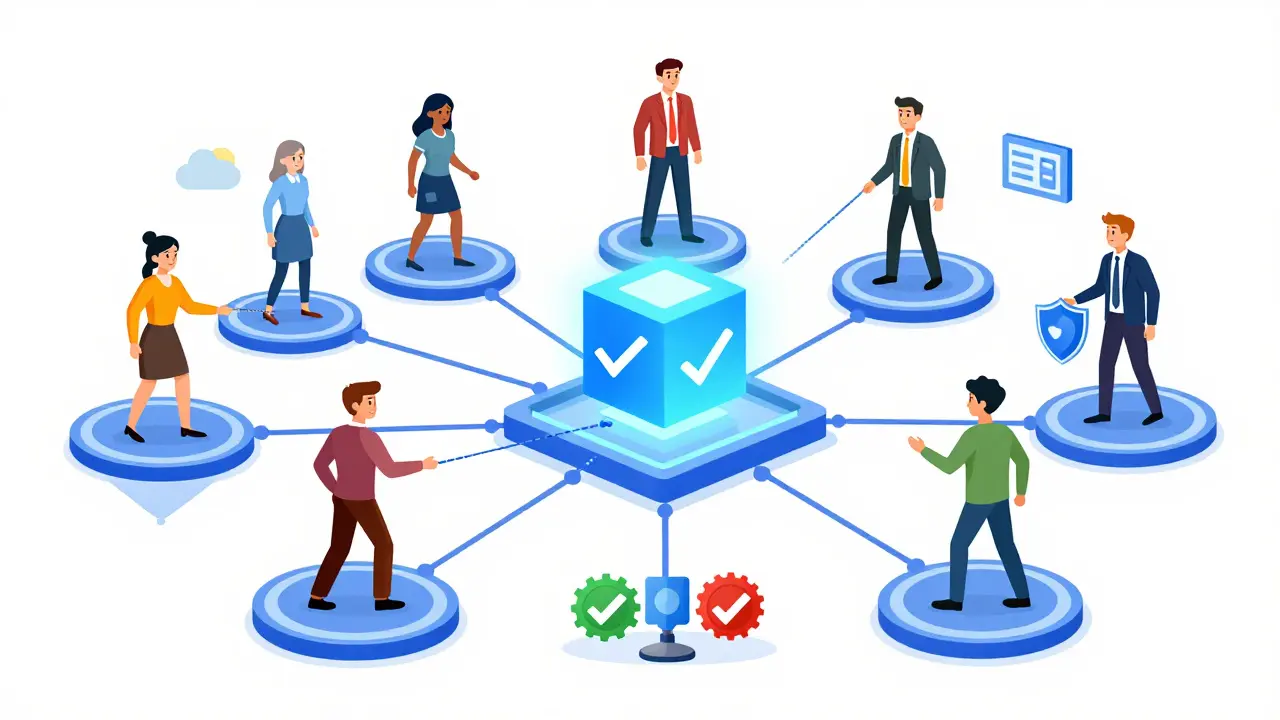
You can build a simple oracle that pulls data from one source - say, CoinGecko. But if CoinGecko goes down or gets hacked, your whole contract fails. That’s a single point of failure. Enter decentralized oracle networks (DONs). DONs use dozens or hundreds of independent nodes, each pulling data from different sources. They vote. They cross-check. If 80% of nodes report $32,000 for Bitcoin, that’s the number that gets on-chain. Even if one node is compromised, the network stays accurate. Chainlink is the dominant DON. As of Q2 2023, it secured over $10 billion in value across 1,400+ projects. It uses over 1,000 node operators and 50+ data sources. Other players like Band Protocol, API3, and Pyth Network exist, but together they hold less than 30% of the market.Real-World Use Cases
Oracles aren’t theoretical. They’re running right now:- Aave uses Chainlink oracles to price over $7 billion in crypto assets across 15 blockchains. No major oracle-related hacks.
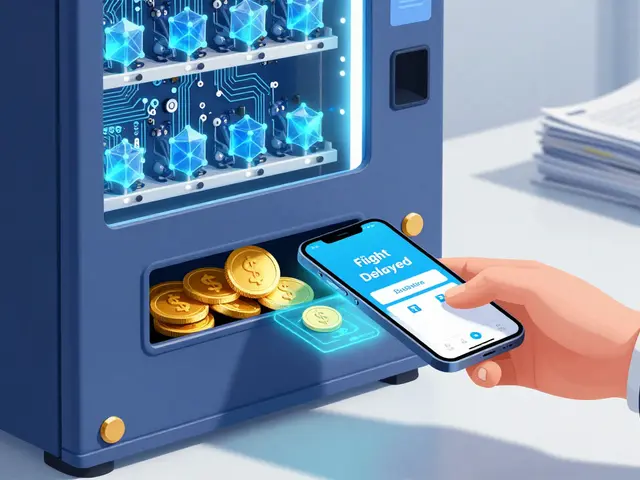
- Insurance smart contracts pay out automatically when flight delays hit 3+ hours, using flight data from aviation APIs.
- DeFi lending platforms liquidate positions when collateral drops below a threshold - based on real-time price feeds.
- Supply chain tracking uses IoT sensors (temperature, humidity) to trigger payments when goods arrive in perfect condition.
What Can Go Wrong?
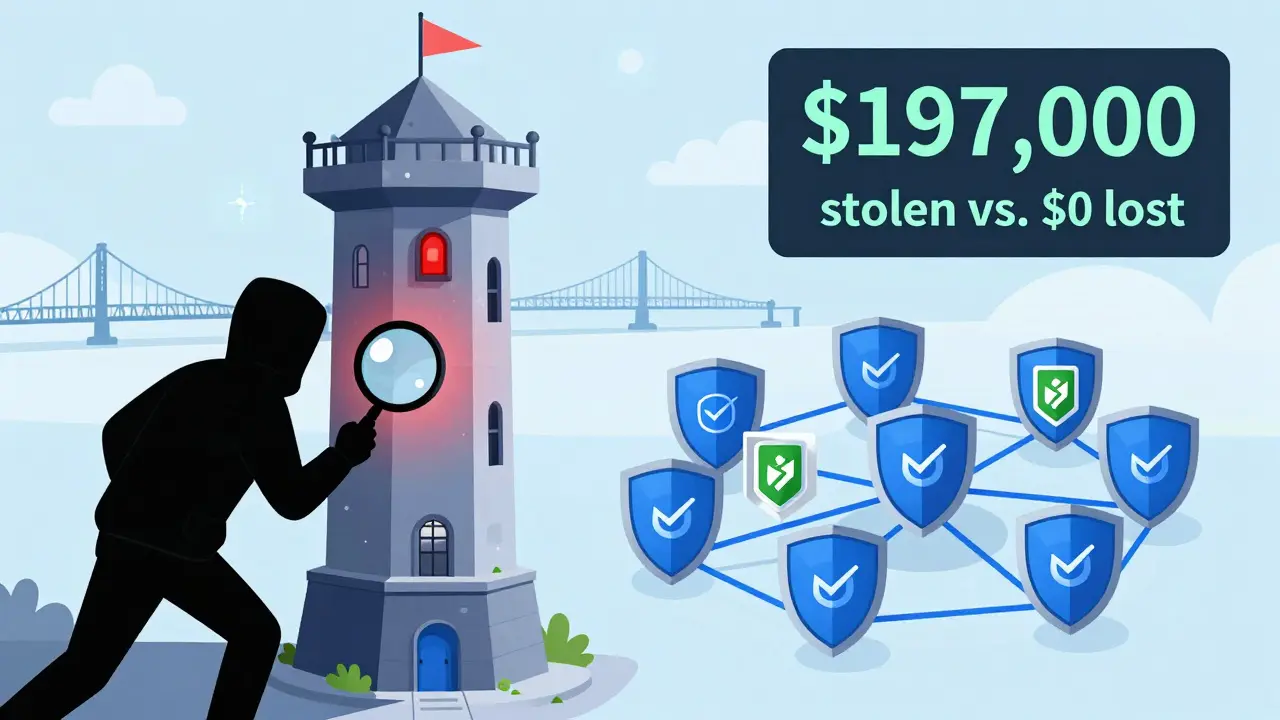
Oracles aren’t magic. They introduce new risks:- Data manipulation: In November 2022, a hacker exploited a price oracle on Euler Finance, making ETH look cheaper than it was. Result: $197,000 stolen.
- Stale data: If a price feed stops updating, contracts keep running on old numbers. Good oracles use heartbeat checks - refreshing data every 5 to 30 minutes.
- Gas costs: Every oracle request costs money on Ethereum. Expect $0.45 to $2.50 per call. For high-frequency apps, that adds up.
- Trust shift: As UC Berkeley’s Dr. David Wagner pointed out, oracles don’t eliminate trust - they just move it from the data source to the oracle network. If the oracle is poorly designed, you’re still vulnerable.
Getting Started with Oracles
If you’re a developer wanting to use an oracle:- Choose a network. Chainlink is the default choice for most.
- Set up your smart contract to request data (using Chainlink’s standard interfaces).
- Fund the contract with LINK tokens - they pay the oracle nodes for their work.
- Specify what data you need: asset price, timestamp, source, etc.
- Test on a testnet first. Chainlink’s docs are among the best in crypto - rated 4.7/5 by 1,200+ developers.
The Future of Oracles
The market is exploding. Valued at $385 million in 2022, decentralized oracles are projected to hit $1.2 billion by 2025. Enterprise adoption is accelerating: 63% of Fortune 500 companies are testing oracle-integrated blockchains. New tech is emerging:- DECO (Chainlink, 2023): Lets oracles fetch data from HTTPS websites without trusting the server. Uses zero-knowledge proofs to prove you saw the right data - without revealing it.
- CCIP 1.0: Now live, enabling secure cross-chain communication across 11 blockchains.
- OIP framework: A new standard for oracle improvements, adopted by over 40 blockchain projects.
Final Thoughts
Blockchain oracles turn smart contracts from paper robots into real-world actors. Without them, DeFi, insurance, supply chains, and gaming on blockchain would be impossible. But they’re only as strong as their weakest link. The best systems use decentralization, redundancy, and cryptographic verification. Chainlink leads the pack, but the space is evolving fast. If you’re building on blockchain, understanding oracles isn’t optional - it’s essential.What is the oracle problem in blockchain?
The oracle problem is the fundamental issue that blockchains can’t access real-world data on their own. Smart contracts run in a closed, deterministic environment - they can’t call APIs, read websites, or get sensor readings. Oracles solve this by acting as trusted external data feeders, bringing off-chain information into the blockchain in a way all nodes can verify.
Are blockchain oracles secure?
Decentralized oracle networks (DONs) like Chainlink are designed to be secure by using multiple independent nodes, consensus algorithms, and cryptographic verification. But no oracle is 100% foolproof. Centralized oracles are vulnerable to single-point failures. Even DONs can be hacked if data sources are compromised or if the aggregation logic is flawed. The most secure setups use multi-source redundancy and regular audits.
How does Chainlink differ from other oracle networks?
Chainlink leads the market with about 70% share, thanks to its large network of 1,000+ node operators, support for 50+ data sources, cross-chain compatibility via CCIP, and enterprise-grade reliability. It also offers compute-enabled oracles and privacy-preserving tech like DECO. Competitors like API3 and Pyth are smaller and often focus on specific use cases - like low-latency price feeds or permissioned enterprise setups.
Do I need to pay to use a blockchain oracle?
Yes. Oracle nodes are paid for their work. In Chainlink’s case, you pay in LINK tokens - the network’s native currency. Each data request costs between $0.45 and $2.50 on Ethereum, depending on network congestion. This payment incentivizes nodes to provide accurate, timely data. Some enterprise oracles may charge flat fees, but most public networks use token-based payment.
Can oracles handle unstructured data like social media posts?
Not well - yet. Most oracles are optimized for structured, numerical data like prices, temperatures, or timestamps. Social media sentiment, news headlines, or chat logs are messy and subjective. Some experimental oracles are trying to use AI models off-chain to analyze sentiment, but reliability is still low. Industry analysts consider this a major gap in current oracle tech.
What’s the difference between inbound and outbound oracles?
Inbound oracles bring data into the blockchain - like a stock price or weather report. Outbound oracles send data out from the blockchain - like triggering a bank transfer or unlocking a physical lock. Inbound oracles are more common in DeFi and insurance. Outbound oracles are key for real-world automation, like supply chain or IoT applications.

Regina Jestrow
I love how this breaks down oracles like a translator between two languages that don't speak each other. Blockchain is like a monk in a monastery who only knows scripture - oracles are the pilgrims who come back with news from the outside world. Brilliant analogy.
Martin Hansen
Chainlink dominates because it’s the only one that doesn’t act like a glorified API wrapper. Everyone else is just rebranding their college project as 'decentralized.' If you’re using anything else, you’re gambling with your DeFi stack.
Lore Vanvliet
ORACLES AREN’T THE PROBLEM - IT’S THE PEOPLE WHO THINK THEY CAN TRUST A BLOCKCHAIN TO DO REAL WORK WITHOUT HUMAN OVERSIGHT 😭 WE’RE ALL JUST PLAYING SIMULATED ECONOMY WITH REAL MONEY!!!
Scott Sơn
Imagine if your smart contract was a DJ and the oracle was the soundboard. One bad signal and suddenly your whole party’s playing Nickelback on loop. That’s what happens when you trust a single feed. Decentralized oracles? That’s the bass drop that saves the night.
Stanley Wong
I think what people miss is that oracles aren’t just about data they’re about trust architecture and the real innovation here isn’t the tech it’s the economic incentive layer that makes nodes compete to be right and get paid for it which is way more elegant than any centralized service ever could be because it turns the problem of reliability into a market problem which is always more resilient than bureaucracy
miriam gionfriddo
lol i read this whole thing and still dont know what a compute oracle is like i get inbound/outbound but compute? is it like a cloud function that runs on chain? or like a server that runs in the background? someone explain this to me like im 5 i think i got scammed on my last oracle deploy
Brooke Schmalbach
You say Chainlink has 70% market share but you didn’t mention that over 40% of their nodes are operated by known crypto hedge funds with conflicts of interest. The whole thing is a performance art piece disguised as infrastructure. You think decentralization means no single point of failure? No. It means 100 single points of failure that all look the same.
Tom Van bergen
Oracles are the reason blockchain will never be used for anything real. You want truth? Go talk to a human. You want certainty? Build in a sandbox. Trying to force the messy real world into a deterministic machine is like trying to teach a cat algebra. It looks cool on paper but it’s just noise
Ben VanDyk
The gas cost section is accurate but incomplete. Most devs don’t realize that if you’re doing 100+ oracle calls a day, you’re burning through $300+ monthly on Ethereum. That’s why everyone’s moving to Polygon or Arbitrum. Chainlink’s pricing model is fine for enterprise. Useless for indie devs.
Shane Budge
Wait so oracles are just APIs with a blockchain wrapper?
sonia sifflet
Why do Americans always act like Chainlink is the only option? We have Chainlink in India too but we also use API3 and its way cheaper for small projects. You think decentralization is a US-only invention? Wake up.
Uzoma Jenfrancis
Blockchain oracles? We don’t need this in Nigeria. We need electricity. We need internet. We need banks that don’t freeze accounts. This is rich people’s tech. Let them play with their oracles while we try to feed our families.
Jonathan Sundqvist
I read this whole thing and still think oracles are just glorified webhooks. If you’re relying on an external service to trigger your contract, you’re not decentralized. You’re just outsourcing your trust. And that’s fine. But don’t pretend it’s magic.
Doreen Ochodo
If you're building on-chain, you need oracles. Period. No drama. No ego. Just do the work. Start with Chainlink docs. Test on Goerli. Fund with LINK. You got this 💪
Roseline Stephen
I appreciate the breakdown but I wonder if the real risk isn't the oracle itself but the assumption that users understand how it works. Most people just click 'approve' and hope for the best.
Nelson Issangya
This is the kind of content that makes me believe in crypto again. Not the hype. Not the memes. But real, thoughtful infrastructure. Keep writing like this. The world needs more clarity, not more noise.
nicholas forbes
I think the real issue is that oracles are treated like a solved problem when they’re not. The Euler Finance hack proved that even 'secure' systems can be gamed if the data source is manipulated. We need better verification layers, not just more nodes.
Kenneth Ljungström
This is such a solid overview 🙌 I’ve been trying to explain oracles to my cousin who just bought his first ETH and this is exactly what I needed to send him. Thanks for making it digestible without dumbing it down. Love the real-world use cases too - especially the flight insurance one. That’s genius.
Sandra Lee Beagan
The DECO protocol is the most underrated innovation here. Zero-knowledge proofs enabling HTTPS data verification without exposing the source? That’s the future. We’re not just bridging data - we’re cryptographically verifying its authenticity. This is what true trust minimization looks like.
Madison Agado
There’s a philosophical layer here that rarely gets discussed. Oracles force us to confront a fundamental question: what does it mean for a machine to know something? If a blockchain node sees a price from an oracle, does it ‘know’ it? Or is it just executing a command based on a signal it can’t verify? The oracle doesn’t solve truth - it just imports a version of it. And that’s enough for capitalism. But not for philosophy.
Tisha Berg
I’m a teacher and I just used this post to explain blockchain to my 10th graders. We compared oracles to the school bell - it tells everyone when class starts, even though it’s not part of the classroom. They got it instantly. Thanks for making it relatable!
Isha Kaur
I’ve been working on a supply chain project using oracles and the biggest challenge isn’t the tech it’s getting farmers in rural India to trust that their IoT sensors are actually talking to the blockchain. We had to build a WhatsApp bot that sends them SMS alerts when the temperature data is recorded. The tech works but the human layer is still the hardest part. Also I think we need more oracles that work offline because in places like my village internet drops twice a day and the contract just sits there waiting like a confused dog
Glenn Jones
Oracles are a joke. Chainlink is a cult. The whole ecosystem is built on lies. They say decentralization but every oracle node is run by the same 50 people who also run the exchanges. And don’t even get me started on LINK tokenomics - it’s a pump-and-dump dressed up as infrastructure. I’ve lost $20k betting on oracles. Don’t be fooled.
Martin Hansen
You think the Euler hack was about the oracle? Nah. It was about the contract not validating the range. Any decent dev would’ve added a 5% deviation check. The oracle did its job. The dev didn’t. Stop blaming the messenger.