What is Abyss World (AWT) Crypto Coin? A Guide to the AAA Game Token
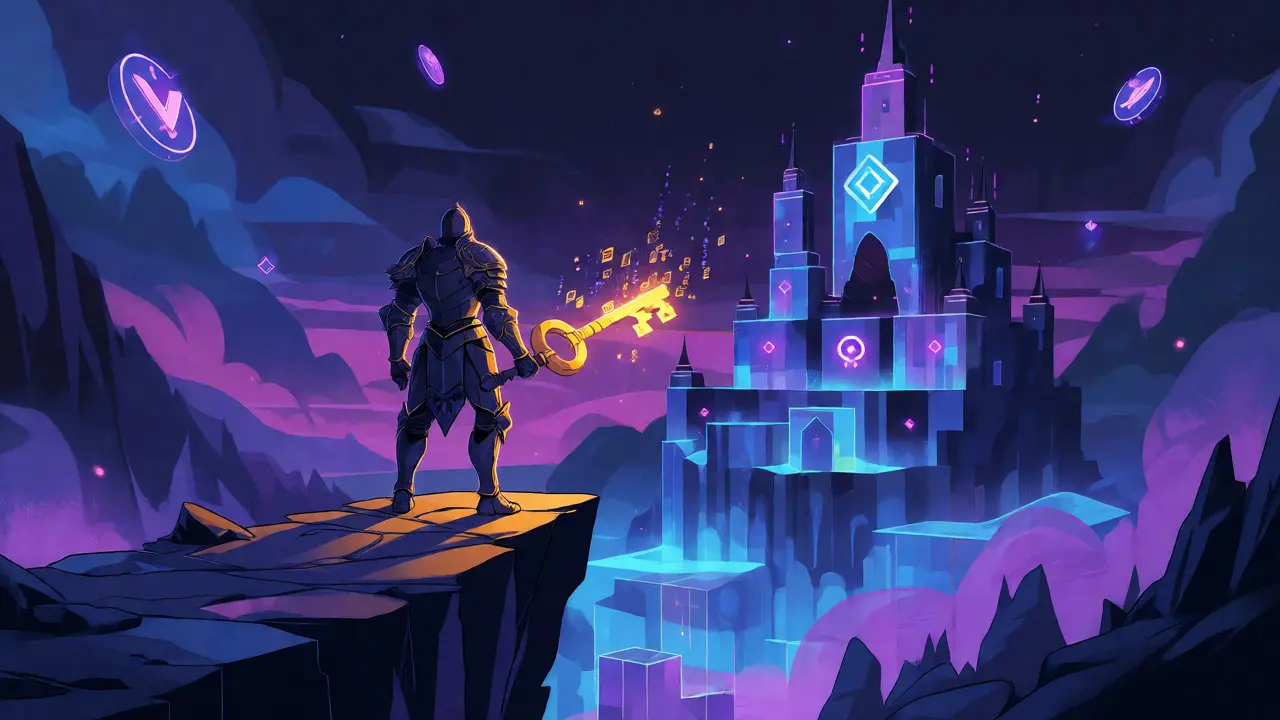
Imagine a dark fantasy world where you aren't just playing a game-you're building an economy. That’s the pitch behind Abyss World and its native cryptocurrency, AWT. Unlike most crypto projects that start with a whitepaper and hope for a game later, Abyss World claims to be a full-blown AAA action role-playing game (ARPG) first, with blockchain technology woven into the fabric of its universe. But as of late 2026, the reality of holding this token is far more complex than the marketing suggests.
If you are wondering whether AWT is the next big thing in Web3 gaming or a ghost town waiting to happen, you need to look past the hype. The project promises high-fidelity graphics and play-and-earn mechanics on the Sui and Polygon networks. Yet, market data tells a different story: low liquidity, fragmented supply numbers, and inconsistent price feeds. This guide breaks down exactly what AWT is, how it works, and why the data surrounding it looks so messy.
The Core Concept: AAA Gaming Meets Blockchain
Abyss World is a multi-chain, open-world dark fantasy ARPG developed by Metagame Industries. It positions itself not merely as a token, but as the economic backbone of a "3A" (AAA-quality) gaming ecosystem. The developers aimed to bridge the gap between traditional PC gamers and crypto enthusiasts by offering a game that doesn't require you to understand smart contracts to have fun.
The game was initially architected on the Sui network, leveraging its high throughput and low fees to handle the massive transaction volume required by an open-world MMORPG. However, the strategy evolved into a multi-chain approach, extending support to Polygon and potentially Ethereum. This cross-chain ambition was designed to avoid vendor lock-in, allowing players to move assets across different ecosystems. By mid-2023, the project had garnered around 120,000 wishlists on Steam, signaling genuine interest from the traditional gaming community before the token even hit major exchanges.
Tokenomics: Supply, Utility, and Confusion
The AWT token has a fixed total supply of 10 billion units. This cap is intended to prevent inflationary pressure from endless minting, a common pitfall in earlier Play-to-Earn models. But here is where things get tricky: reports on circulating supply vary wildly depending on which aggregator you check.
Some sources cite a circulating supply of roughly 1.59 billion tokens, while others show near-zero activity on specific chain scans. This discrepancy often stems from how different blockchains report token balances versus how centralized exchanges list them. If you are looking at PolygonScan, you might see minimal activity, whereas Gate.com reports billions in circulation. Always verify the contract address on the specific chain you are using.
| Metric | Value / Status | Notes |
|---|---|---|
| Total Supply | 10,000,000,000 AWT | Fixed maximum supply |
| Primary Networks | Sui, Polygon, Ethereum | Multi-chain deployment causes data fragmentation |
| All-Time High Price | ~$0.0147 USD | Reached early in project history |
| Recent Price Trend | <$0.00001 USD | Significant drawdown from peak |
| Exchange Listings | Gate.io, Bitget, Minor DEXs | Not listed on Binance or Coinbase |
Utility Beyond Speculation
So, what can you actually do with AWT? The utility model is designed to keep value within the game loop rather than encouraging immediate sell-offs. Players use AWT for in-game purchases, staking rewards, and accessing premium content. One unique mechanic involves "keys." To generate these keys, which are essential for progressing in certain aspects of the game, players must burn AWT. These keys then become tradable assets, creating a sink-and-reward cycle that theoretically stabilizes the token's value.
Furthermore, the ecosystem introduced a secondary layer called Stake2Earn. Here, users stake their AWT to receive "MGC certificates." These certificates are essentially IOUs for a future second token, MGC, which will launch at a later date. This dual-token structure aims to separate governance or long-term investment value (AWT) from short-term gameplay rewards (MGC), though sources disagree on whether AWT currently holds actual governance rights.
The Data Problem: Why Prices Look Weird
If you try to buy AWT today, you will notice something odd: the price is incredibly low, often hovering around $0.000001 to $0.000006. More concerning is the lack of consistent data. As of October 2026, some trackers like Coinlore classify AWT as "inactive," meaning they stopped receiving price updates months ago. Others, like TradingView, still show trades but with minuscule volumes.
This inconsistency usually points to one of two things: either the token is primarily traded on decentralized exchanges (DEXs) that don't feed all aggregators equally, or the project has seen a decline in active trading pairs. Since AWT is not listed on Tier-1 exchanges like Binance, liquidity is thin. You might find yourself able to buy, but selling a large position could significantly impact the price due to low order book depth.
Risks and Realities for Investors
Investing in AWT is not for the faint of heart. The primary risk isn't just market volatility-it's execution risk. While the concept of a AAA blockchain game is compelling, the development timeline has been long. Many Web3 games promise high fidelity but deliver buggy beta versions. With Abyss World, the team has focused heavily on community incentives, allocating 40% of the supply to player rewards. This is great for engagement but can dilute value if not managed carefully.
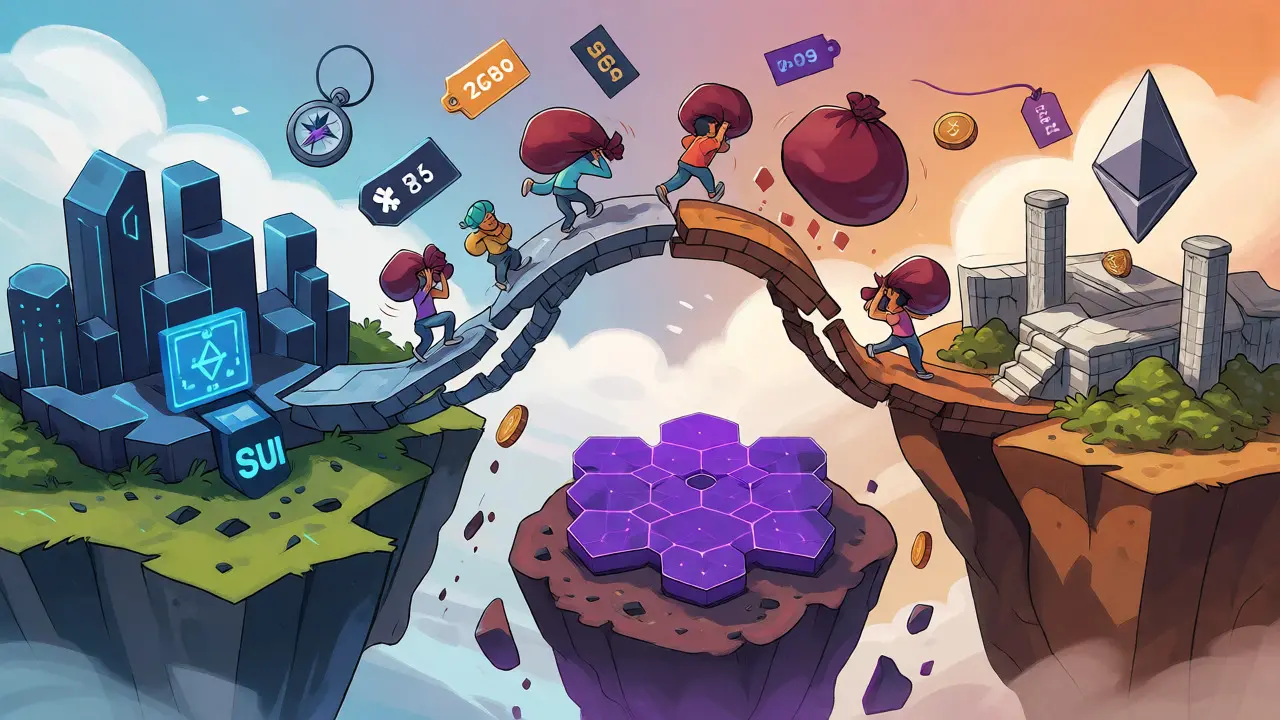
Additionally, the multi-chain architecture adds technical friction. Moving tokens between Sui and Polygon requires bridging, which introduces security risks and gas fees. For a casual gamer, this complexity can be a barrier to entry. For an investor, it means you need to track your assets across multiple wallets and networks, increasing the chance of user error.
How to Get Started with AWT
If you want to participate in the Abyss World ecosystem, here is the practical path forward:
- Choose Your Wallet: Since AWT exists on multiple chains, ensure you have a wallet compatible with both Sui (like Sui Wallet) and EVM chains (like MetaMask for Polygon/Ethereum).
- Acquire Tokens: You likely cannot buy AWT directly with fiat. Purchase USDT or ETH on a major exchange, withdraw to a smaller exchange like Gate.io or Bitget, and swap for AWT there.
- Bridge Carefully: If the game requires assets on Sui, use a reputable bridge to move funds from Polygon/Ethereum to Sui. Test with a small amount first.
- Stake for MGC: If you plan to hold long-term, look into the Stake2Earn portal to convert idle AWT into MGC certificates.
The landscape of Web3 gaming is shifting. Projects that fail to deliver engaging gameplay regardless of token incentives tend to fade away. Abyss World has the wishlist numbers to suggest potential, but the current market cap-often under $50,000 in some snapshots-shows it remains a micro-cap gamble. Keep your expectations grounded in the current data, not the future promises.
Is Abyss World (AWT) available on Binance?
No, as of late 2026, Abyss World (AWT) is not listed on Binance. It is primarily traded on smaller centralized exchanges like Gate.io and Bitget, as well as through decentralized exchanges on supported networks.
Which blockchain networks does AWT use?
AWT operates on a multi-chain architecture. It was initially built on the Sui network for high performance but also extends to Polygon and potentially Ethereum. This allows for broader accessibility but requires users to manage assets across different chains.
What is the total supply of AWT tokens?
The total maximum supply of Abyss World (AWT) tokens is fixed at 10 billion. However, the circulating supply varies by source and chain, with estimates ranging from approximately 1.6 billion to nearly zero on certain scan tools due to liquidity issues.
Why do price feeds for AWT differ so much?
Price discrepancies occur because AWT is traded on multiple networks (Sui, Polygon) and various exchanges with low liquidity. Some aggregators may not update prices frequently if trading volume drops below a threshold, leading to stale or conflicting data.
Can I stake AWT for rewards?
Yes, the ecosystem includes a Stake2Earn mechanism where users can stake AWT to earn MGC certificates. These certificates are expected to convert into a secondary token, MGC, during a future Token Generation Event.