What is BLink (BLINK) Crypto Coin? Clearing Up the Confusion
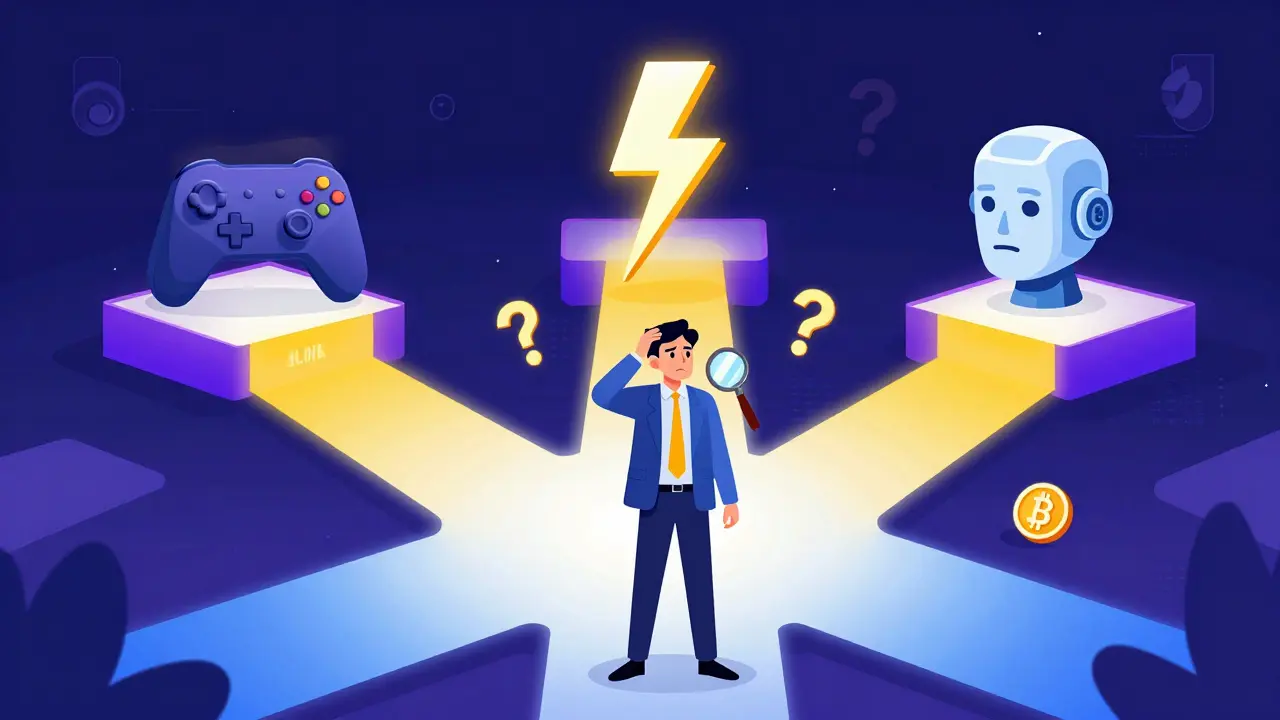
If you've been searching for BLink crypto coin, you probably noticed something frustrating: there isn't just one "BLink." Instead, you're staring at a handful of completely different projects that all use the same or very similar names. One is a gaming token, another is a high-speed coin on Solana, and one isn't even a coin at all, but a wallet. In the crypto world, this is called "ticker confusion," and it's a fast way to lose money if you buy the wrong asset.
The Main BLink Gaming Token on BSC
When people talk about the BLink token in a gaming context, they are usually referring to the one built on the Binance Smart Chain (BSC). This project started as a partnership between WINk and the Binance community to create a gaming platform. Because it lives on the BSC, it benefits from the same infrastructure that powers thousands of other BEP-20 tokens.
Looking at the numbers for April 2026, this version of BLINK has a market cap of around $316.64K. It's a small fish in a big pond. The total supply is capped at 999.99 million tokens, with about 184.34 million actually circulating in the market. The price has been a wild ride; it hit a massive all-time high of $0.4254 back in April 2021, but then crashed nearly 99.6% from that peak. While it recently bounced back from a low of $0.00001892 in mid-2025, the current trading volume is practically non-existent. This suggests that while the token still exists, the community's excitement has cooled off significantly since the 2021 bull run.
Other BLINK Tokens: Solana and BlinkBot
It gets more complicated because the name "BLINK" is popular. There is a separate BLINK token running on the Solana blockchain. This one is positioned as a Web3 coin, leveraging Solana's reputation for being incredibly fast and cheap to use. If you see a BLINK coin that claims to have near-instant transaction speeds and negligible fees, it's likely the Solana version, not the BSC gaming token.
Then there's BlinkBot (BLINK). This is yet another distinct project with its own pricing and trading volume. While it's less talked about than the others, it proves that a simple search for "BLINK" can lead you to three different smart contracts on three different networks. Always double-check the contract address before you hit "buy."
| Project Name | Blockchain/Type | Primary Use Case | Key Characteristic |
|---|---|---|---|
| BLink (Gaming) | Binance Smart Chain | Gaming Platform | Low current volume, high historical volatility |
| BLINK (Web3) | Solana | Web3 Utility | High speed, low transaction costs |
| BlinkBot (BLINK) | Various/Specific | Bot/Utility | Niche market capitalization |
| Blink Wallet | Bitcoin (Layer 2) | Payment App | Custodial Lightning wallet (Not a coin) |
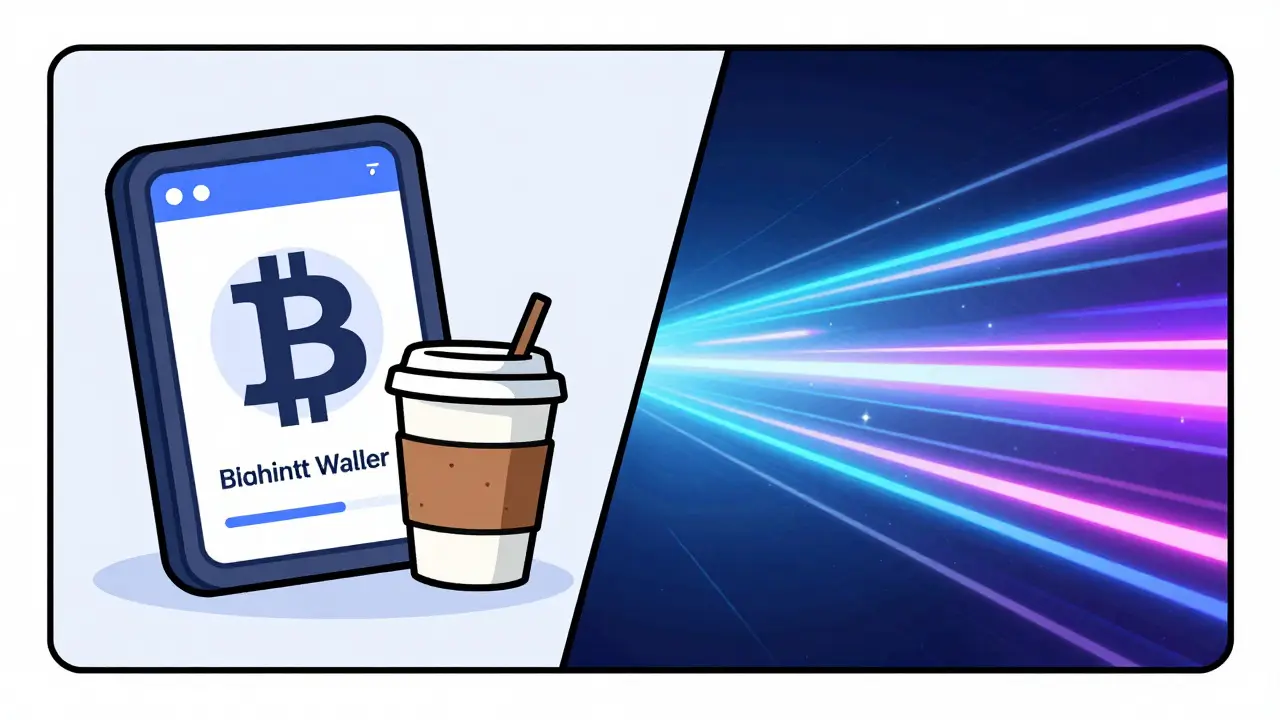
The Blink Bitcoin Lightning Wallet
Here is where the confusion peaks. There is a very popular tool called Blink, but it is not a cryptocurrency you buy and trade. It is a Bitcoin Lightning Wallet. This app was created by a company called Galloy (which previously ran the Bitcoin Beach wallet).
The purpose of the Blink wallet is to make Bitcoin usable for everyday payments-like buying a coffee-without waiting for the slow main Bitcoin network. It's a custodial wallet, meaning they handle the keys for you to make things easier. One of its standout features is the integration of "Dollar accounts" powered by Stablesats, which allows users to keep a USD-equivalent balance. Because it's built on Free and Open Source Software (FOSS), it's generally well-regarded for transparency and reliability. If you're looking for a way to actually spend Bitcoin, this is what you want, not a BLINK token.
Blink Charging: The Corporate Side
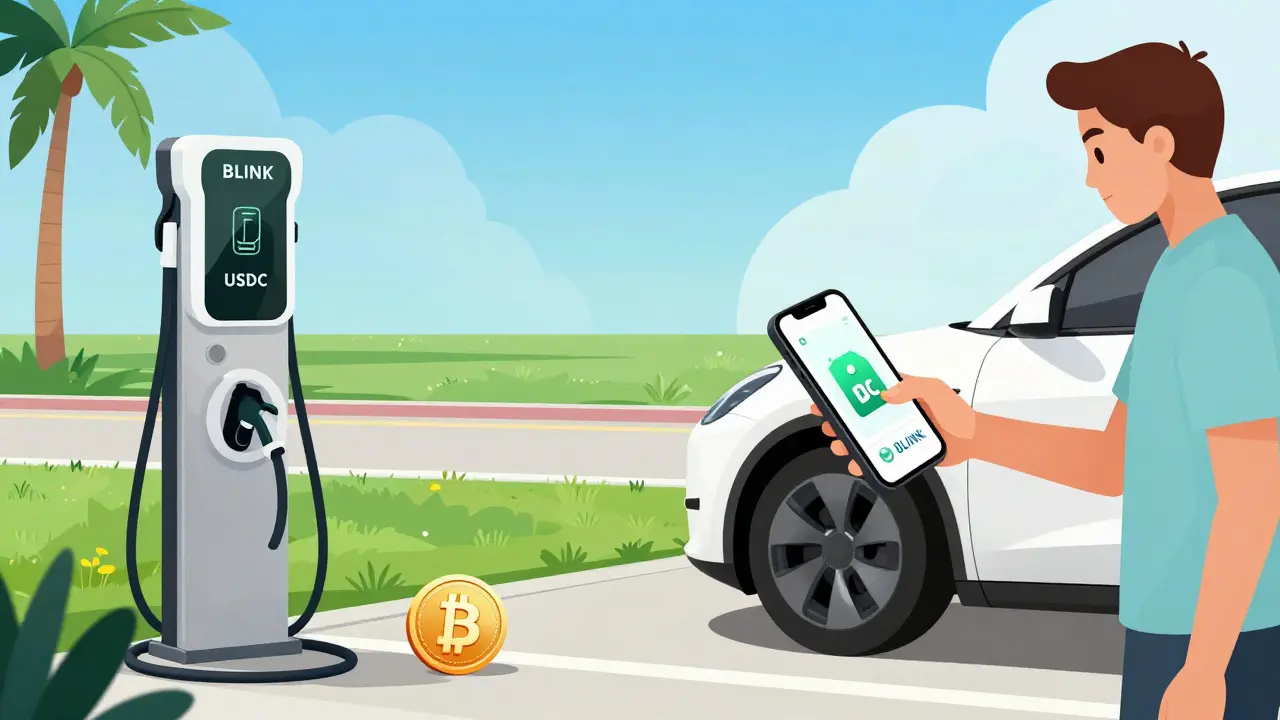
To make matters even more confusing, if you search "Blink" and "Crypto" in a news feed, you might see results for Blink Charging Co. (NASDAQ: BLNK). This is a real-world company that builds electric vehicle (EV) charging stations. They aren't a crypto project, but as of 2026, they've started accepting cryptocurrency at some of their DC fast charging spots in Florida (specifically in Chipley and Madison).
They don't have their own coin. Instead, they use USD Coin (USDC) across networks like Ethereum, Polygon, Arbitrum, and Base. It's a great example of a traditional business adopting crypto payments, but it has absolutely nothing to do with the BLink gaming token or the Solana coin.

How to Avoid the "Wrong Coin" Trap
When you're dealing with tokens that share names, you can't rely on the ticker symbol alone. A ticker is just a label; it's not a unique ID. To make sure you're looking at the right project, use these three checks:
- Check the Contract Address: Every token has a unique string of characters (the contract address). Compare the address on the project's official website with the one on a site like BscScan or Solscan.
- Verify the Network: Is it on Binance Smart Chain, Solana, or Ethereum? If the project says they are on Solana but you're looking at a BSC token, you're in the wrong place.
- Identify the Use Case: Ask yourself: "Is this a gaming token, a utility coin, or a software app?" If the marketing talks about EV charging or Lightning payments, it's not the speculative BLINK coin.
The danger here is that smaller tokens, like the BLink gaming coin, often have very low liquidity. This means if you buy a large amount, you might find it impossible to sell without crashing the price further. Given the 99% drop from its 2021 peak, the gaming token carries significant risk.
Is BLink (BLINK) a safe investment?
Any token with a 99% drop from its all-time high and near-zero daily trading volume is considered high-risk. You should carefully research whether the project is still being developed or if it has been abandoned by its creators.
What is the difference between the BLink token and the Blink wallet?
The BLink token is a tradable cryptocurrency asset (mostly associated with gaming on BSC or Web3 on Solana). The Blink wallet is a software application used to send and receive Bitcoin via the Lightning Network. You don't "buy" the wallet; you use it to manage your Bitcoin.
Can I use BLINK tokens to pay for EV charging?
No. Blink Charging Co. accepts USDC (USD Coin) at select locations, not the BLink gaming or Solana tokens. These are entirely separate entities.
Which blockchain is the BLink gaming coin on?
The primary BLink gaming project is built on the Binance Smart Chain (BSC).
How do I find the correct BLINK token address?
Always go to the official project website or a trusted aggregator like CoinMarketCap or CoinGecko. Copy the contract address from there and paste it directly into your wallet or exchange to avoid phishing scams or fake tokens.
What to do next
If you are a developer looking to integrate payments, look into the Blink Bitcoin Wallet and the Lightning Network. If you are a trader looking for a speculative play, verify the current volume of the BLink (BSC) token on a block explorer to see if there is actually any liquidity. For those interested in green tech, stick to the NASDAQ-listed Blink Charging Co. and avoid confusing their corporate payments with token speculation.

EDOZIEM MICHAEL
the beauty of this chaos is that it shows how names mean nothing in the digital void only the contract holds truth
daniella davis
Omg like literally everyone knows about ticker confusion lol. It is so basic. Honestly if u dont check the contract address ur just asking to get rekt. its not that hard to just use a block explorer but some people just love losing money i guess 🙄
Akshay Gorad
I appreciate the detailed breakdown of the different entities. It is quite helpful for those who might be new to the space and could easily be misled by the similar naming conventions.
Chidinma Sandra okafor
Oh look another great way for people to lose money while thinking they are geniuses. Truly a masterpiece of a market. I love how these tokens just exist for no reason other than to drain wallets. Simply marvelous
Amanda Faust
the bsc gaming token is basically a ghost town at this point. the volume proves it. nobody is actually trading it and the 2021 hype was just a classic pump and dump scenario
Jessie Tayaban
Wait what!! I actually almost bought the wrong one last week!! This is so scary!! Thanks for the warning because I wouldve totaly messed up the adress and lost my funds!!
Literally a lifesaver!!
Emily H
It is imperative that investors maintain a rigorous standard of due diligence. Utilizing a trusted aggregator such as CoinGecko to verify the specific contract address is the only professional way to ensure the integrity of one's portfolio.
Lane Montgomery
What wallet you using?
Scott Fenton
The distinction between a custodial wallet and a tradable token is a fundamental concept that many beginners overlook. I strongly advise against purchasing any asset that exhibits the liquidity issues mentioned in the post.
jennelle williams
just be gentle with your money. its okay to be confused. we all learn as we go
Lauren Abrams
Interesting that an EV company is integrating USDC in Florida. Seems like a practical use case compared to the speculative tokens.
Jonathan Chamma
It's like a wild jungle out there with all these name clones! Just keep your eyes peeled and always double-check your path before jumping in. We're all just trying to navigate this crazy digital landscape together!
aletheia wittman
idk why people even care about these coins anymore lol its all just a big mess. imagine actually trying to invest in a token that crashed 99%... so cringe
Mikayla Murphy
I think the Blink wallet is a great bridge for those who want the benefits of Bitcoin without the technical headache of managing their own nodes immediately. It really helps bring the technology to the mainstream.