What Is Cryptographic Encryption in Blockchain? A Clear Breakdown
Blockchain doesn’t work because it’s fancy tech. It works because of cryptographic encryption. Without it, blockchain would be just a shared spreadsheet anyone could edit - useless for money, contracts, or trustless systems. Cryptographic encryption is what makes blockchain tamper-proof, verifiable, and secure. It’s not magic. It’s math. And it’s the reason your Bitcoin stays yours.
How Blockchain Uses Encryption to Stay Secure
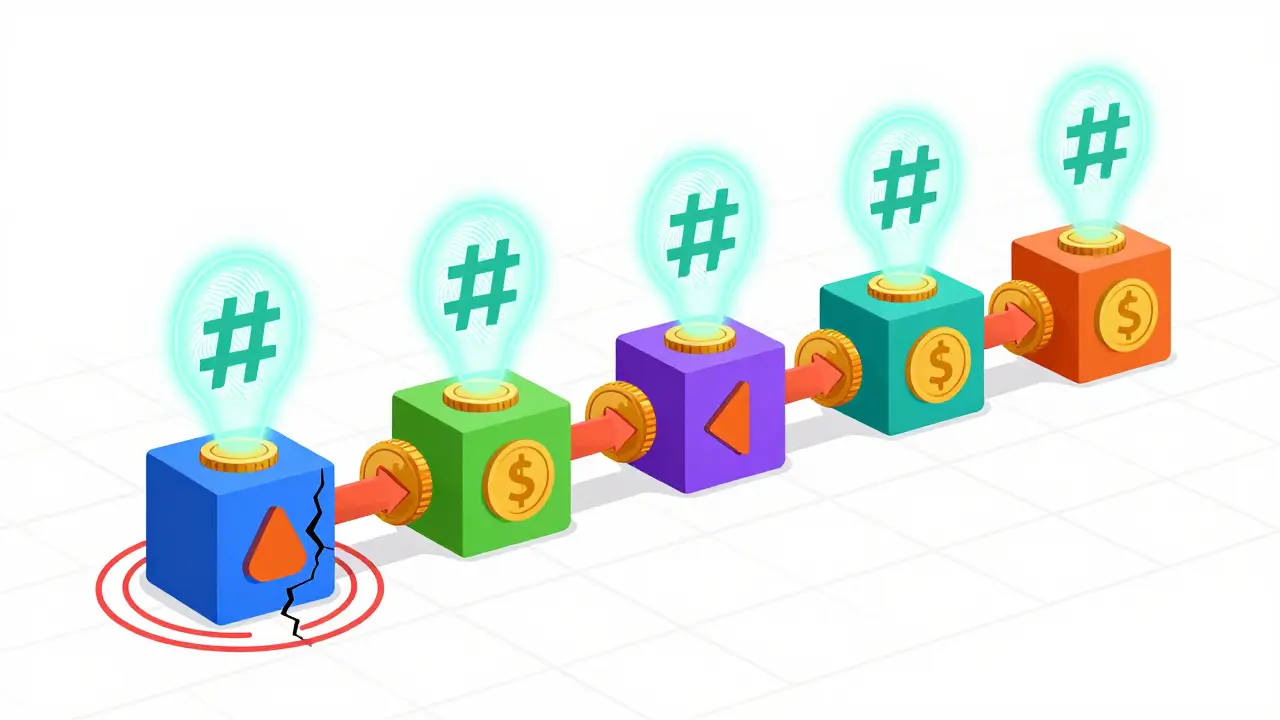
Think of blockchain as a chain of blocks. Each block holds transactions - like who sent what to whom. But here’s the catch: once a block is added, you can’t change it. Not without breaking the whole chain. That’s where encryption comes in. It starts with hash functions. Every block gets a unique fingerprint - a hash - made from its data. Bitcoin uses SHA-256, a cryptographic hash function that turns any input into a 64-character string. Change one letter in a transaction? The hash changes completely. Even a tiny tweak creates a totally different output. That’s called the avalanche effect. Now, each new block includes the hash of the previous one. So Block 2 holds the hash of Block 1. Block 3 holds the hash of Block 2. If someone tries to alter Block 1, the hash changes. That breaks Block 2’s link. Block 2’s hash changes, which breaks Block 3, and so on. To fake one block, you’d have to recalculate every single block after it - on every computer in the network at the same time. That’s computationally impossible with today’s hardware.Public and Private Keys: Who Owns What?
Hashes keep data intact. But how do you prove you own the Bitcoin in a wallet? That’s where asymmetric cryptography - also called public/private key encryption - comes in. Every user has two keys:- A public key, which is like your bank account number. You can share it freely.
- A private key, which is like your PIN. Keep it secret. Lose it, and you lose access.
- Authenticity: Only the owner of the private key could’ve signed it.
- Integrity: The transaction hasn’t been changed since signing.
- Non-repudiation: You can’t say, “I didn’t send that.” The math proves you did.
How It’s Different From Traditional Encryption
Traditional systems - like your bank’s database or cloud storage - rely on centralized control. Someone holds the master key. If that server gets hacked, your data’s at risk. Blockchain flips that. There’s no central key. No single point of failure. Your private key is your only access. The network doesn’t store it. It doesn’t need to. Every node verifies transactions using public keys and hashes. Also, traditional encryption often uses symmetric keys - one key to lock and unlock. That’s faster but risky. If someone steals the key, they get everything. Blockchain uses asymmetric keys. The public key can’t reverse-engineer the private key. Even if you know the public key, you can’t spend the coins. That’s why blockchain is called immutable. It’s not because it’s hard to hack. It’s because tampering requires rewriting history across thousands of machines - and the math makes that practically impossible.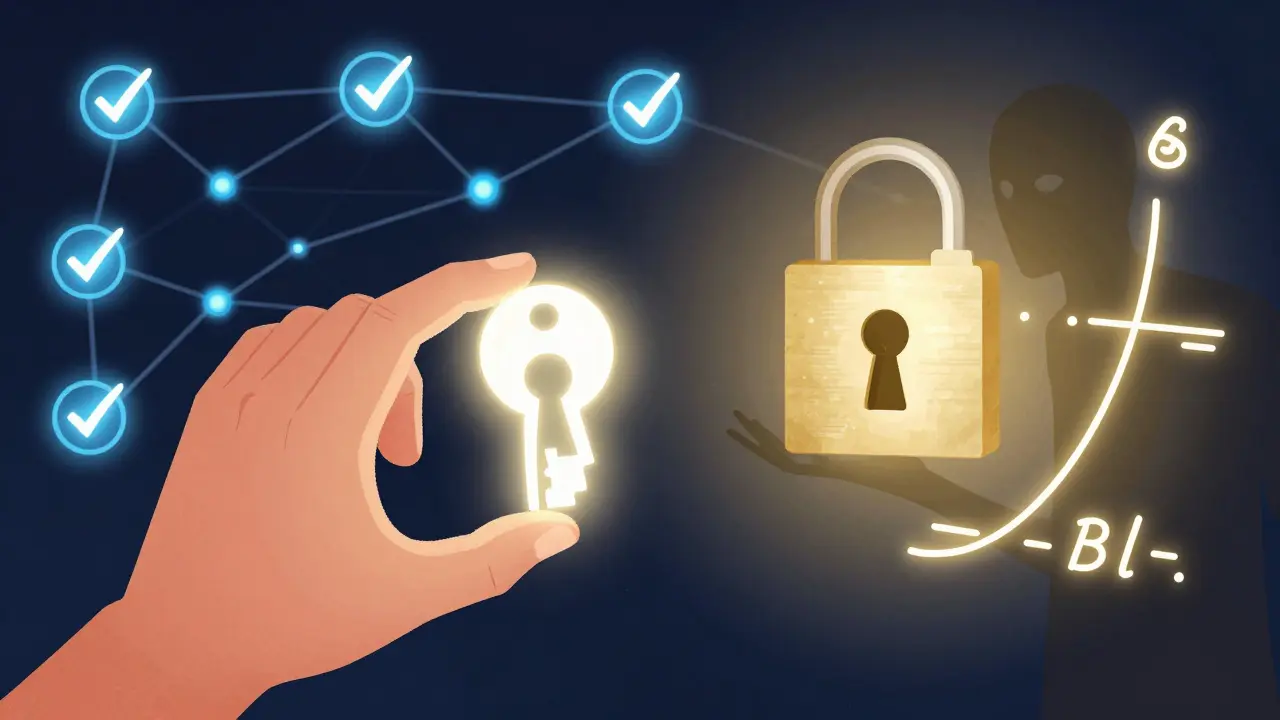
What Goes Wrong? Common Weaknesses
The encryption itself is strong. But humans are the weak link. Most blockchain hacks aren’t about breaking SHA-256 or elliptic curve cryptography. They’re about:- Lost private keys: People forget passwords, delete wallets, or lose hardware devices. No recovery. No customer service. The coins are gone forever.
- Phishing and scams: Fake websites trick users into giving up their private keys. Once it’s typed in, it’s over.
- Weak key storage: Storing keys on a phone or laptop connected to the internet is risky. Hardware wallets (like Ledger or Trezor) are far safer.
- Smart contract bugs: Code on the blockchain can have flaws. The 2016 DAO hack exploited a漏洞 in code, not encryption. The system worked as designed - just not as intended.
Quantum Computing: The Future Threat
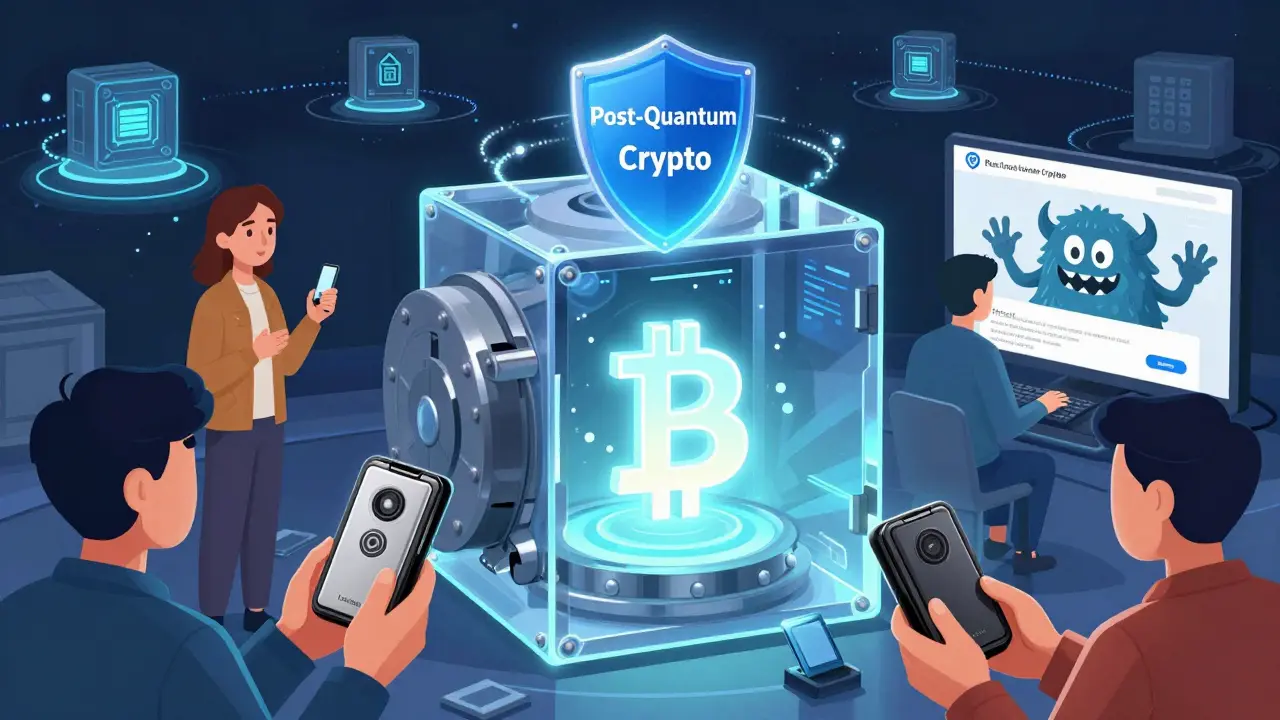
Right now, RSA and ECC (Elliptic Curve Cryptography) are considered secure. But they’re not future-proof. Quantum computers, when they mature, could break these algorithms by solving math problems too fast for classical computers. That’s not science fiction. Google and IBM are already building them. The good news? SHA-256 hashing - the backbone of Bitcoin’s security - is much more resistant to quantum attacks. It would take a quantum computer billions of times more powerful than today’s to crack it. But if your private key is exposed, quantum computers could derive it from your public key. That’s why experts are already working on quantum-resistant cryptography. Projects like NIST’s post-quantum standardization are testing new algorithms that can survive even a quantum future.Real-World Tools and Practices
Developers building blockchain apps don’t code encryption from scratch. They use trusted libraries:- OpenSSL for general cryptographic functions
- Libsodium for secure key generation and signing
- Ethereum’s Web3.js to interact with the blockchain securely
- Use a hardware wallet for anything over $100
- Never share your private key or seed phrase
- Enable multi-signature wallets for business accounts
- Regularly audit smart contracts if you’re deploying them
Why This Matters Beyond Bitcoin
Blockchain encryption isn’t just for crypto. It’s being used in supply chains to track food from farm to shelf. In healthcare, to securely share patient records. In voting systems, to prevent tampering. The core idea stays the same: trust through math, not institutions. If you can prove something happened without relying on a central authority, you’ve changed how systems work. The future of digital trust doesn’t lie in passwords or two-factor apps. It lies in cryptographic keys you control - and systems that can’t be edited after the fact.What’s Next for Blockchain Encryption?
The field is evolving fast. Here’s where it’s headed:- Zero-knowledge proofs let you prove you know something without revealing it. Zcash uses this to hide transaction amounts while keeping them valid.
- Homomorphic encryption lets you compute on encrypted data. Imagine checking your bank balance without revealing it.
- Decentralized identity lets you prove who you are without handing over your data to Facebook or Google.
Final Thought
Cryptographic encryption is the invisible hand of blockchain. It doesn’t make headlines. You don’t see it. But without it, blockchain collapses. It’s not about being unbreakable. It’s about being so hard to break that it’s not worth trying. That’s the sweet spot. And right now, that’s exactly what it delivers.Is blockchain encryption the same as regular encryption?
No. Regular encryption often uses one key to lock and unlock data (symmetric). Blockchain uses two keys - public and private - and relies on cryptographic hashing to link blocks together. It’s designed for decentralization and immutability, not just secrecy.
Can blockchain be hacked?
The blockchain itself hasn’t been hacked - not the underlying encryption. But exchanges, wallets, and smart contracts have been compromised. These are implementation flaws, not failures of SHA-256 or elliptic curve cryptography. The math still holds.
What happens if I lose my private key?
You lose access to your assets permanently. There’s no “forgot password” button on the blockchain. No customer support. No recovery. That’s why backing up your seed phrase (a human-readable version of your key) is critical.
Is blockchain encryption quantum-proof?
Not fully. Algorithms like RSA and ECC are vulnerable to future quantum computers. But SHA-256 hashing - used for block linking - is considered quantum-resistant. The industry is already developing new post-quantum cryptographic standards to replace vulnerable systems.
Do I need to understand cryptography to use blockchain?
No. You can use wallets and apps without knowing how encryption works. But if you’re holding significant value, understanding key management - like using hardware wallets and never sharing your seed phrase - is essential for safety.




roxanne nott
lol why are people still acting like sha-256 is magic? it's just math. the real hack is people writing their seed phrases on post-its.
Dan Dellechiaie
You missed the point entirely. Blockchain isn't about encryption being unbreakable-it's about distributed verification. The encryption is just the lock. The network is the guard dog. Without both? You got a locked door in an empty house.
Ellen Sales
i mean... if you're storing your crypto on a phone that got stolen last week... maybe the problem isn't the encryption? just sayin' 🤷♀️
Jacob Lawrenson
this is why i love blockchain. no banks. no middlemen. just me, my keys, and a bunch of strangers verifying my transactions. the future is weird and i'm here for it 🚀
Janet Combs
i read this whole thing and still dont get how my private key is like a pin but also not like a pin? like... if i forget it its gone forever but if someone steals it they can spend it? so its like a password and a key and a birth certificate all at once??
Sybille Wernheim
Honestly? The coolest part isn't the math. It's that someone in Nigeria, someone in India, and someone in Iowa can all trust the same system without ever meeting. That’s wild.
Sarah Glaser
The real revolution isn't in the cryptography-it's in the cultural shift. We're moving from trusting institutions to trusting protocols. That's not just technical. That's philosophical.
Luke Steven
I used to think blockchain was just crypto hype. Then I saw a farmer in Kenya use it to prove his coffee beans weren't mixed with filler. Now I get it. It's not about money. It's about truth that can't be erased.
Craig Fraser
I'm sorry but if you're relying on SHA-256 to protect your life savings, you're either incredibly brave or incredibly naive. The math is sound, but the humans? They're the weakest link.
Zavier McGuire
why do people act like quantum computing is some sci fi threat when its already happening and no one talks about it like its normal
Radha Reddy
In India, we’ve seen how digital ledgers transformed land records in rural areas. No more bribes. No more forged documents. Just a hash, a signature, and a public ledger. This isn’t just about Bitcoin-it’s about justice.
Cathy Bounchareune
Imagine if your bank account could only be accessed by a secret phrase you wrote down on a piece of paper you hid in your grandma’s cookbook. That’s crypto. And yeah, if you lose that cookbook? You’re out of luck. But also... kinda beautiful?
Jordan Renaud
The most underrated part? You don’t need permission to use it. No approval. No KYC. No form. Just download a wallet, generate keys, and you’re in. It’s the first truly open system in human history.
roxanne nott
and yet somehow people still use the same password for their wallet and their netflix account. i swear we're one generation away from a blockchain dark age where everyone's broke and confused
Sheila Ayu
Wait, so if quantum computers break ECC, does that mean my 2017 Bitcoin is suddenly worthless? Or is it just that people who didn't backup their keys are the ones who lose out? Because honestly, if you didn't backup your keys, you deserve to lose them.