What is Hummingbird Finance (New) (HMNG)? A Guide to the USDT Reward Token

You want to earn passive income from your crypto holdings without staking or locking up funds. That is exactly what Hummingbird Finance (New) is a BEP-20 reward token on the BNB Smart Chain that distributes Binance-Peg USDT to holders from a transaction tax. Also known as HMNG, it was launched in 2023 as a successor to an older contract, aiming to provide better transparency and stablecoin-based yields. But before you buy, you need to understand how this specific token works, why there are two different contracts, and whether the risks match the potential rewards.
The Core Concept: Passive USDT Rewards
Most decentralized finance (DeFi) tokens require you to stake your assets in a smart contract to earn interest. Hummingbird Finance takes a different approach. It uses a mechanism called "frictionless yield." When you simply hold HMNG in your compatible wallet, you automatically receive rewards.
Here is how the math works:
- Transaction Tax: Every time someone buys, sells, or transfers HMNG, a fixed 3% tax is applied to the transaction.
- Reward Distribution: Unlike many similar tokens that distribute more of the same coin (which can be volatile), the New HMNG contract distributes Binance-Peg USDT is a stablecoin pegged to the US Dollar on the BNB Smart Chain.
- No Action Required: You do not need to click "stake" or add liquidity. The smart contract handles the distribution pro-rata based on how many HMNG tokens you hold.
This setup appeals to investors who want exposure to the growth of HMNG while earning a steady stream of stablecoins to offset volatility. However, this model relies entirely on trading volume. If no one trades HMNG, the tax pool remains empty, and rewards stop.
Old vs. New: Why There Are Two Contracts
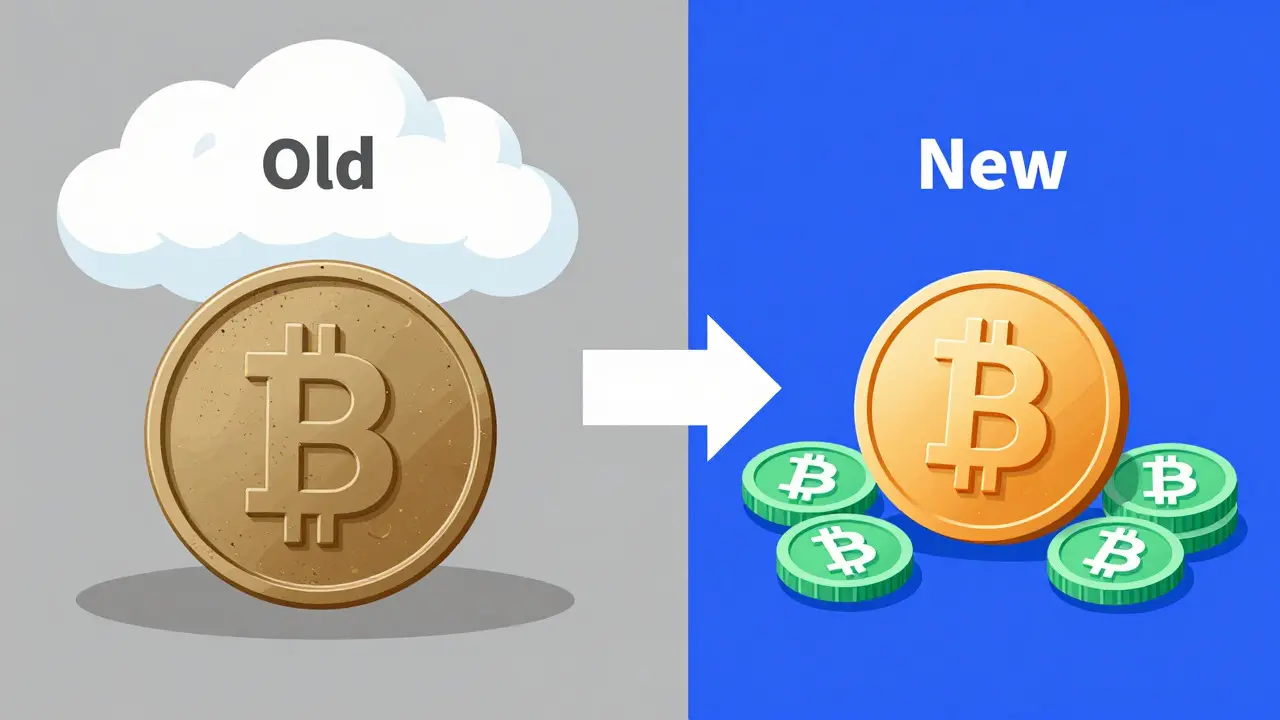
If you search for Hummingbird Finance, you will find confusion between "Hummingbird Finance (Old)" and "Hummingbird Finance (New)." This distinction is critical because they have completely different supply numbers and reward mechanisms.
| Feature | Hummingbird Finance (Old) | Hummingbird Finance (New) |
|---|---|---|
| Launch Date | April 2021 | 2023 |
| Total Supply | 100 Quadrillion (100,000,000,000,000,000,000) | 100 Trillion (100,000,000,000,000) |
| Reward Type | HMNG Tokens (Reflection) | USDT (Stablecoin) |
| Tax Structure | 3% (1.5% Burn, 1.5% Yield) | 3% (Distributed as USDT) |
| Status | Legacy Contract | Active Primary Contract |
The shift from quadrillions to trillions represents a 99.9% reduction in nominal supply. The team stated this was done to improve "tokenomics" and make the numbers easier to read. For investors, this means you must ensure you are interacting with the correct contract address. Buying the old token by mistake could leave you with an asset that has different liquidity and reward structures than expected.
Tokenomics and Supply Details
Understanding the supply is essential for evaluating market cap and potential dilution. As of mid-2026, the data for the New HMNG contract is relatively consistent across major aggregators like CoinMarketCap and the official project site.
- Maximum Supply: 100,000,000,000,000 HMNG (100 Trillion).
- Circulating Supply: Approximately 70,000,000,000,000 HMNG (70 Trillion). This suggests that 70% of the total supply has been released into circulation.
- Network: BNB Smart Chain (BEP-20 standard).
While some data providers like KuCoin may still reference larger units (quadrillions) due to legacy data syncing issues, the operational reality for the New token is the trillion-scale supply. Always verify the circulating supply on a live aggregator like CoinGecko or CoinMarketCap before making large trades, as thin liquidity can cause significant price slippage.
How to Buy HMNG Safely
Buying HMNG involves using a decentralized exchange (DEX) because it is not listed on major centralized exchanges like Coinbase or Binance for direct fiat purchase. Here is the step-by-step process:
- Set Up a Wallet: Download a BNB Smart Chain-compatible wallet. Trust Wallet is a popular multi-cryptocurrency wallet that supports BSC tokens is widely recommended by the project.
- Acquire BNB: Buy BNB on a centralized exchange and transfer it to your Trust Wallet address. Ensure you keep enough BNB to pay for gas fees.
- Convert to Smart Chain: In your wallet, ensure your BNB is set to "Smart Chain" (BEP-20), not the native Beacon Chain (BNB Beacon Chain).
- Access PancakeSwap: Open the DApp browser in your wallet and go to PancakeSwap is the leading decentralized exchange on the BNB Smart Chain v2.
- Paste the Contract Address: Do not search by name alone. Paste the official New HMNG contract address:
0x851944049DFdd189725b136c5AE3fb83cC62b28D. Double-check this against the official website to avoid scam tokens. - Adjust Slippage: Set your slippage tolerance to at least 4%. This accounts for the 3% transaction tax and prevents your transaction from failing due to price impact.
- Execute Swap: Confirm the swap from BNB to HMNG. Once confirmed, the HMNG tokens will appear in your wallet, and you will start accruing USDT rewards automatically.
Ecosystem and Utility Beyond Rewards
Hummingbird Finance positions itself as more than just a reward coin. The project claims to operate a broader ecosystem on the BNB Chain, which includes:
- NestSwap: A decentralized exchange associated with the brand.
- NFT Marketplace and Launchpad: Platforms for creating and trading non-fungible tokens.
- Multi-Network Wallet: Tools designed to manage assets across different chains.
- Conservation Advocacy: The project links its branding to hummingbird habitat protection. While this adds a thematic layer, specific details on how much of the transaction tax goes directly to conservation efforts are not clearly quantified in public reports.
For now, the primary utility for most holders remains the passive USDT yield. The ecosystem tools serve as long-term value propositions but have not yet driven significant mainstream adoption compared to larger DeFi protocols.
Risks and Market Reality
Before investing, you must look at the hard data. HMNG is a micro-cap asset with high volatility and low liquidity.
- Price Volatility: Prices often trade in the range of $0.000000001 to $0.000000003 USD. Small changes in volume can cause massive percentage swings.
- Liquidity Depth: Daily trading volumes can be as low as $6-$20 on quiet days. Selling large amounts of HMNG quickly could result in severe slippage, meaning you get far less USDT back than the current price suggests.
- Audit Status: The smart contract carries an "Unlicensed" SPDX identifier on BscScan. There is no prominent evidence of formal audits by major security firms like CertiK or Hacken. This increases the risk of hidden vulnerabilities or rug pulls.
- Data Inconsistencies: Different platforms report conflicting market caps and circulating supplies. This lack of standardized data makes it harder to assess the true size of the market.
The "Unlicensed" status does not mean illegal, but it means the code has not been formally verified for compliance standards or security best practices by third parties. You are trusting the code as written.
Is Hummingbird Finance Right for You?
Hummingbird Finance (New) offers a simple proposition: hold the token, earn USDT. It removes the complexity of staking interfaces and provides rewards in a stable asset, which is attractive for passive investors. However, it sits firmly in the speculative tier of cryptocurrency.
If you are looking for a safe, regulated investment, HMNG is likely too risky due to its low liquidity and lack of external audits. If you are experienced with DeFi, comfortable managing wallet security, and willing to accept high volatility for the chance of outsized returns, HMNG might fit a small portion of a diversified portfolio. Always do your own research, verify contract addresses manually, and never invest more than you can afford to lose.
What is the difference between Hummingbird Finance Old and New?
The main differences are the launch date (2021 vs 2023), total supply (100 Quadrillion vs 100 Trillion), and reward type. The Old contract distributed more HMNG tokens, while the New contract distributes USDT stablecoins. The New contract also has a significantly lower supply to improve readability and tokenomics.
How do I earn rewards with HMNG?
You earn rewards simply by holding HMNG in a compatible BNB Smart Chain wallet. A 3% tax on every transaction is collected and distributed proportionally to all holders in the form of Binance-Peg USDT. No staking or active management is required.
Is Hummingbird Finance audited?
As of mid-2026, there is no prominent public record of a formal audit by major security firms. The contract is marked as "Unlicensed" on BscScan. Investors should exercise caution and assume higher smart contract risk compared to audited projects.
Where can I buy HMNG?
HMNG is primarily traded on decentralized exchanges like PancakeSwap v2 on the BNB Smart Chain. You need a wallet like Trust Wallet, some BNB for gas fees, and the correct contract address for the New HMNG token.
What is the total supply of HMNG?
The New Hummingbird Finance token has a maximum total supply of 100 Trillion (100,000,000,000,000) HMNG. Approximately 70 Trillion are reported to be in circulation as of early 2025.
Why is the price so low?
The price appears very low (fractions of a cent) because the total supply is extremely high (100 Trillion). This is common in meme and reward tokens. The market capitalization is a better indicator of value than the per-token price.
Does HMNG support conservation efforts?
Yes, the project advocates for hummingbird habitat protection. However, specific details on the exact percentage of transaction taxes donated to conservation organizations are not clearly defined in public documentation.
What slippage should I set when buying HMNG?
You should set your slippage tolerance to at least 4% to account for the 3% transaction tax and potential price impact during the swap on PancakeSwap.