What is MetFi (METFI)? Tokenomics, Risks, and How It Works in 2026
Imagine a cryptocurrency that promises you up to 1,000 percent annual returns just for holding it. Sounds too good to be true? That’s exactly the question hanging over MetFi, also known by its ticker METFI, which positions itself as the world’s first decentralized autonomous organization (DAO) focused on incubating metaverse, artificial intelligence (AI), and Web3 startups. Launched in 2022 on the BNB Smart Chain, MetFi has built a cult following with its high-yield staking model, but it also sits at the center of intense debate regarding sustainability and transparency.
If you are looking at your portfolio and wondering if METFI is a golden ticket or a ticking time bomb, you aren't alone. The project blends elements of venture capital, non-fungible tokens (NFTs), and yield farming into one complex machine. To understand whether this fits your strategy, we need to peel back the marketing layers and look at how the money actually moves.
The Core Concept: A Community-Owned Venture Capital Fund
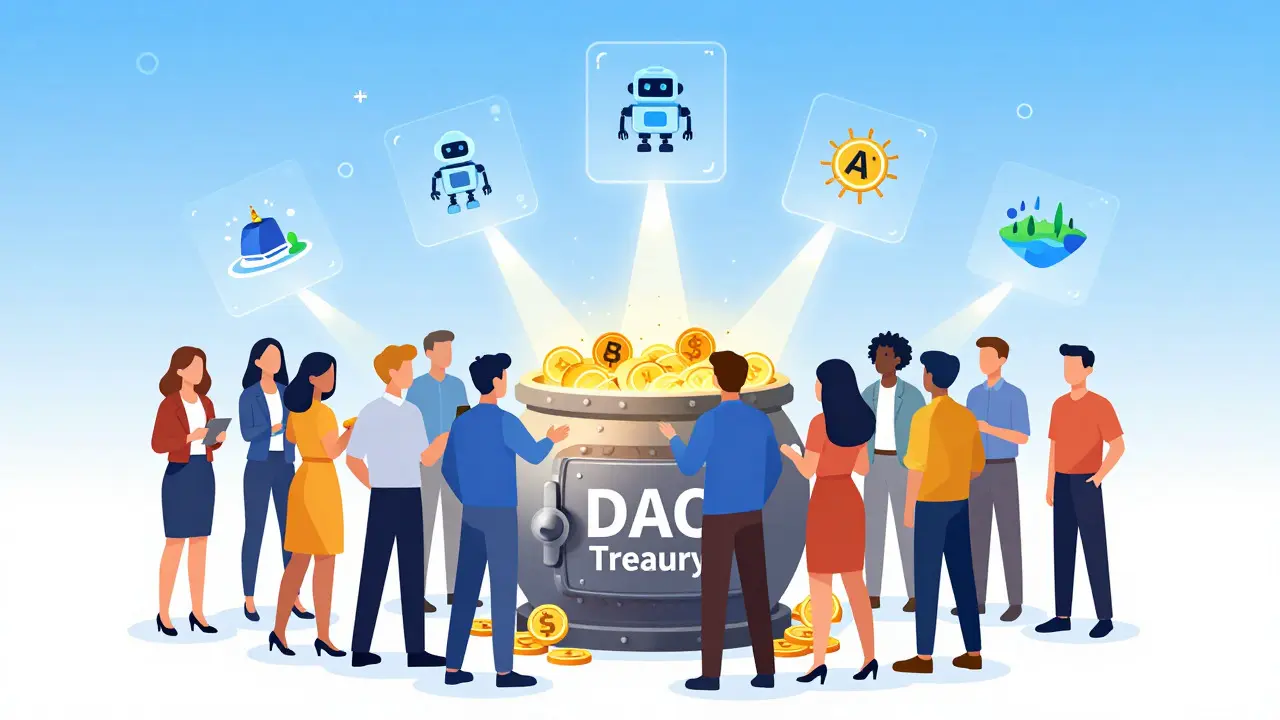
At its heart, MetFi operates as a hybrid between a DeFi protocol and an angel investor network. Instead of wealthy individuals funding early-stage tech companies, MetFi aggregates funds from thousands of retail investors who hold its utility NFTs. The stated goal is to disrupt traditional venture capital by allowing everyday people to share in the upside of promising Web3 unicorns.
Here is how the flow works in theory:
- Treasury Funding: When you buy a MetFi NFT using stablecoins like BUSD, those funds go into the DAO treasury.
- Investment Allocation: The treasury invests in selected metaverse and AI projects. It also reportedly holds blue-chip assets like Bitcoin and Solana to stabilize value.
- Reward Distribution: Profits from these investments, combined with token emissions, are distributed back to NFT holders every 12 hours.
The pitch is simple: you provide the capital, the smart contracts handle the distribution, and everyone shares the gains. However, the mechanism relies heavily on continuous growth and successful exits from incubated projects, data which remains opaque to the public.
How the METFI Token and NFT Ecosystem Work
You cannot participate in MetFi without understanding the relationship between the METFI token and the utility NFTs. They are not separate assets; they are locked together.
The METFI token is a BEP-20 asset on the BNB Smart Chain. It functions as a rebase token, meaning the number of tokens in your wallet changes automatically based on staking rewards and halving events. You do not manually claim rewards; they compound directly into your balance every 12 hours.
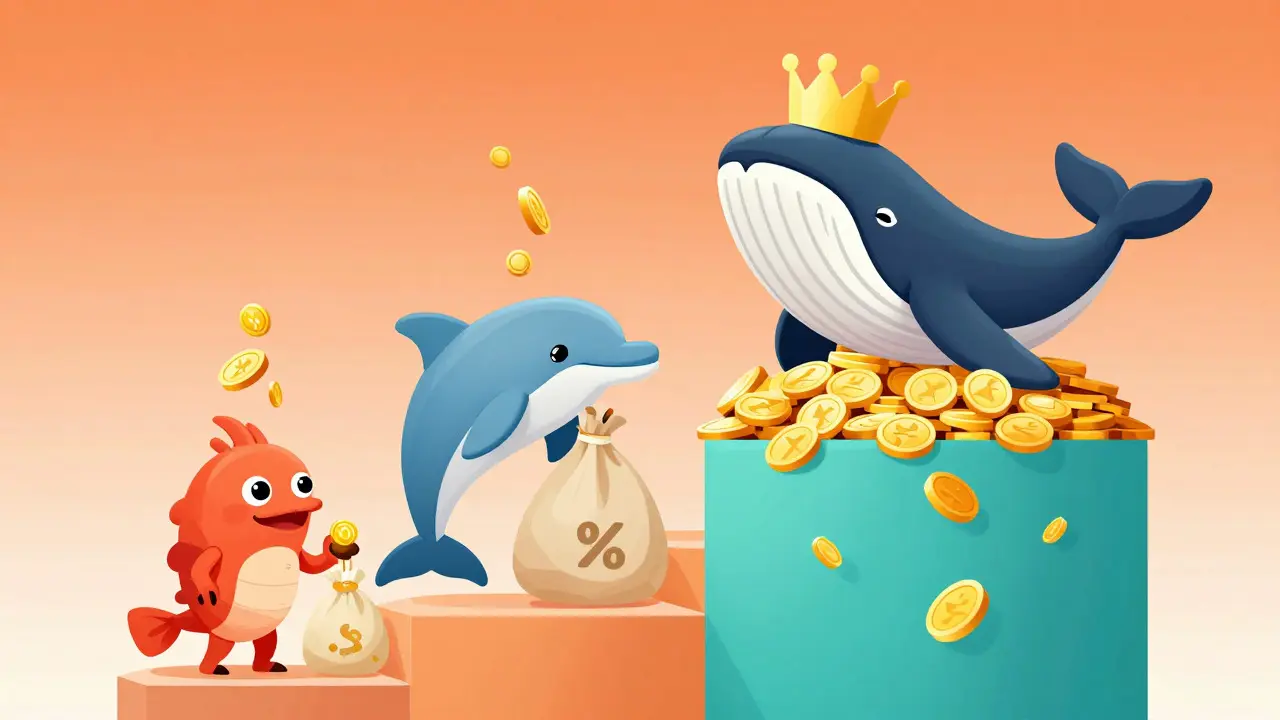
To earn these rewards, you must stake METFI to a MetFi NFT. The NFT acts as a multiplier. The higher the tier of the NFT, the more rewards you generate. Here is the hierarchy:
| NFT Tier | Multiplier | Impact on Rewards |
|---|---|---|
| Shrimp | 1x | Base reward rate |
| Dolphin | Variable | Moderate increase |
| Humpback | 10x | Maximum reward amplification |
This structure incentivizes users to buy more expensive NFTs to boost their APY. According to official materials, this system allows for yields reaching up to 1,000 percent annually through compounding. But where does that value come from?
Tokenomics: Halvings, Burns, and Supply Dynamics
MetFi’s economic model is designed to create scarcity over time, mimicking Bitcoin’s supply shock but on a compressed timeline. The whitepaper outlines a series of six halving events occurring every six months, starting in April 2023 and concluding in October 2025. By mid-2026, all scheduled halvings have occurred.
In addition to halvings, the protocol uses event-driven burns. Specific actions within the ecosystem permanently remove METFI from circulation. This reduces the total supply, theoretically increasing the value of remaining tokens if demand stays constant.
As of July 2026, the circulating supply hovers around 215 million to 320 million tokens, with a market capitalization near $3.7 million. The price trades roughly between $0.011 and $0.013 USD. While the low entry price attracts retail traders, the low liquidity-often under $25,000 in daily volume-means large sell-offs can crash the price instantly.
The Elephant in the Room: Risks and Controversies
We need to talk about the red flags. High yields in DeFi always carry risk, but MetFi faces specific criticisms that potential investors must weigh carefully.
1. Sustainability of Yields
A 1,000 percent APY is mathematically unsustainable unless backed by massive external revenue. Critics point out that until MetFi publishes independently audited financial statements proving profits from incubated projects, the rewards may largely come from new participant inflows-a hallmark of Ponzi-style structures.
2. Lack of Transparency
While the smart contracts are visible on-chain, the underlying business logic is not. There is no public registry showing exactly which startups received funding, how much was invested, or what the returns were. Claims that the treasury holds significant amounts of Bitcoin or Solana lack verifiable on-chain proof accessible to the average user.
3. Governance Opacity
The project claims to be 100% community-owned. However, independent reviewers note that control keys and upgradeability permissions remain concentrated among a small group of deployers. Without a comprehensive third-party audit of all core contracts beyond basic token verification, users are trusting code that could potentially be altered by insiders.
4. Mixed Reputation
Trustpilot reviews are polarized. Some users praise the daily rewards and community support, giving 5-star ratings. Others warn of fictitious balances and accuse the platform of multi-level marketing tactics. Scam detection tools often assign MetFi low trust scores due to missing legal notices and offshore registrations.

How to Get Started (If You Decide To)
If you have weighed the risks and decide to proceed, the technical barrier to entry is relatively low. Here is the standard process:
- Set Up a Wallet: Install MetaMask or another EVM-compatible wallet. Ensure it is configured for the BNB Smart Chain.
- Acquire Assets: Buy BNB or BUSD on a centralized exchange and transfer it to your wallet.
- Connect to dApp: Visit the official MetFi dashboard and connect your wallet.
- Purchase an NFT: Use BUSD to buy at least one utility NFT. This unlocks your ability to stake.
- Stake METFI: Swap some assets for METFI tokens and stake them to your NFT. Rewards begin compounding every 12 hours.
Remember, once you stake, your tokens are locked to the NFT. Liquidity is limited to selling the NFT itself on secondary markets, which can be illiquid.
Is MetFi Right for Your Portfolio?
MetFi occupies a niche space. It appeals to degens seeking high-risk, high-reward plays in the intersection of AI and Web3. It offers a unique narrative of democratizing venture capital. However, it lacks the institutional backing, transparent reporting, and regulatory clarity of established DeFi protocols.
If you are a conservative investor, the absence of clear revenue sources for the promised yields should be a dealbreaker. If you are an experienced crypto trader comfortable with smart contract risk and total loss potential, you might view it as a speculative bet on the success of its incubation pipeline. Never invest more than you can afford to lose, and always verify information on-chain rather than relying solely on marketing claims.
What is the current price of METFI?
As of July 2026, METFI trades between $0.011 and $0.013 USD. Prices fluctuate based on low trading volumes, so slippage can be significant during large transactions.
Is MetFi a scam?
There is no definitive legal ruling labeling MetFi a scam, but it carries high risk. Critics cite unsustainable yields, lack of audited financials, and opaque governance as red flags. Users report both positive experiences with rewards and negative experiences with alleged fictitious balances. Due diligence is essential.
How do I earn rewards with MetFi?
You must purchase a MetFi utility NFT and stake METFI tokens to it. Rewards are compounded automatically every 12 hours. Higher-tier NFTs provide larger multipliers on your earnings.
Where is the METFI token listed?
METFI is primarily traded on decentralized exchanges like PancakeSwap (V2). It is also listed on several centralized exchanges including Gate.io and BitMart, though liquidity varies significantly across platforms.
Does MetFi have a maximum supply?
The total supply is dynamic due to minting and burning mechanisms. Originally, reports cited supplies over 450 million, but ongoing burn events and halvings have reduced the circulating supply to approximately 215-320 million tokens as of mid-2026.
What blockchain does MetFi use?
MetFi operates on the BNB Smart Chain (BSC) as a BEP-20 token. This makes it compatible with Ethereum Virtual Machine (EVM) wallets like MetaMask and allows for low transaction fees compared to Ethereum mainnet.