What is Paintswap (BRUSH) Crypto? Tokenomics, Sonic NFTs & Estfor Kingdom Explained
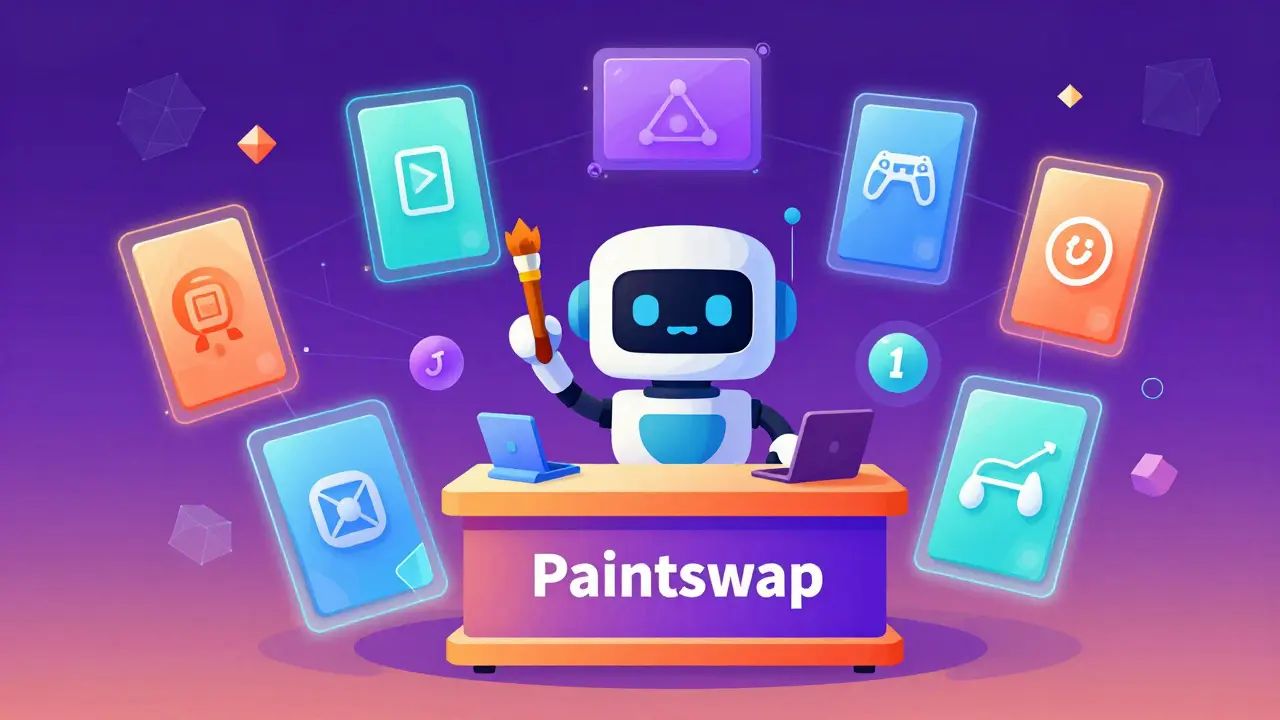
Have you ever bought a digital asset only to watch the platform fees eat away at your profits? That’s exactly the problem Paintswap was built to solve. If you are new to the world of non-fungible tokens (NFTs) and have stumbled upon the BRUSH token, you might be wondering if it is just another hype coin or if there is actual utility behind it. The short answer is that BRUSH is far more than a simple currency; it is the fuel for an entire ecosystem on the Sonic blockchain.
Paintswap started as a place to trade digital art in 2021, but it has since transformed into a massive infrastructure hub. It now supports gaming, decentralized finance (DeFi), and complex financial instruments known as fNFTs. Understanding what BRUSH does requires looking beyond its price chart and into how it powers transactions, burns supply, and rewards players in games like Estfor Kingdom. Let’s break down exactly what this project is, how the token works, and why it matters in the current crypto landscape.
The Core Identity: More Than Just an NFT Marketplace
At its heart, Paintswap is a comprehensive protocol suite operating on the Sonic blockchain (which was formerly known as Fantom). While many people think of it primarily as an NFT marketplace similar to OpenSea, that comparison misses the bigger picture. Paintswap acts as the central nervous system for the Sonic ecosystem’s digital assets.
When you use Paintswap, you aren’t just buying a JPEG. You are interacting with a platform that offers:
- NFT Trading: Buy, sell, bid, and swap digital collectibles using wrapped Sonic ($wS).
- Launchpad Services: A dedicated system for creators to mint and launch new collections with factory contracts.
- Financial NFTs (fNFTs): A unique feature allowing users to trade NFTs that represent financial positions or lending agreements.
- Airdrop Distribution: Hosting the official Sonic 190M Airdrop Marketplace, making it a critical hub for token distribution events.
This breadth of functionality means that the BRUSH token is required for multiple types of interactions, not just one-off purchases. This diversity creates a more robust demand for the token compared to platforms that rely solely on trading volume.
How the BRUSH Token Works: The Deflationary Engine
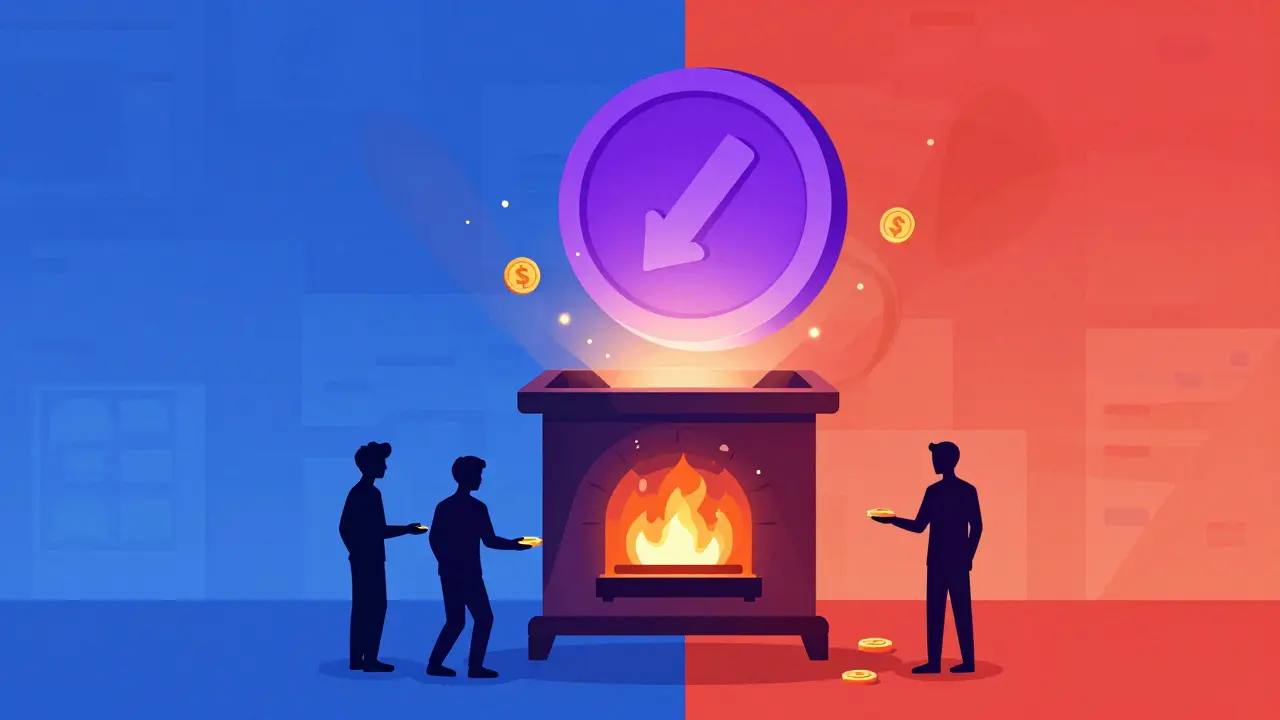
The most compelling aspect of the BRUSH token is its economic model. Unlike many cryptocurrencies that suffer from inflation due to constant issuance, BRUSH is designed to be deflationary. This means the total supply decreases over time, which theoretically increases scarcity and value.
Here is how the mechanism works in practice:
- Transaction Fees: Paintswap charges a 2.5% commission on every successful NFT sale.
- Buyback and Burn: Exactly 50% of these fees (plus 50% of launchpad fees) are used to buy back BRUSH tokens from the open market.
- Permanent Removal: These purchased tokens are then "burned," meaning they are sent to an inaccessible wallet address forever. They can never return to circulation.
This creates a direct link between platform activity and token value. As more people trade NFTs, use the launchpad, or engage with the ecosystem, more BRUSH is removed from the supply. For investors, this offers a counter-balance to the selling pressure often seen in volatile crypto markets. However, keep in mind that this mechanism depends entirely on high user activity. If the marketplace goes quiet, the burning slows down.
Gaming Integration: Estfor Kingdom and Play-to-Earn
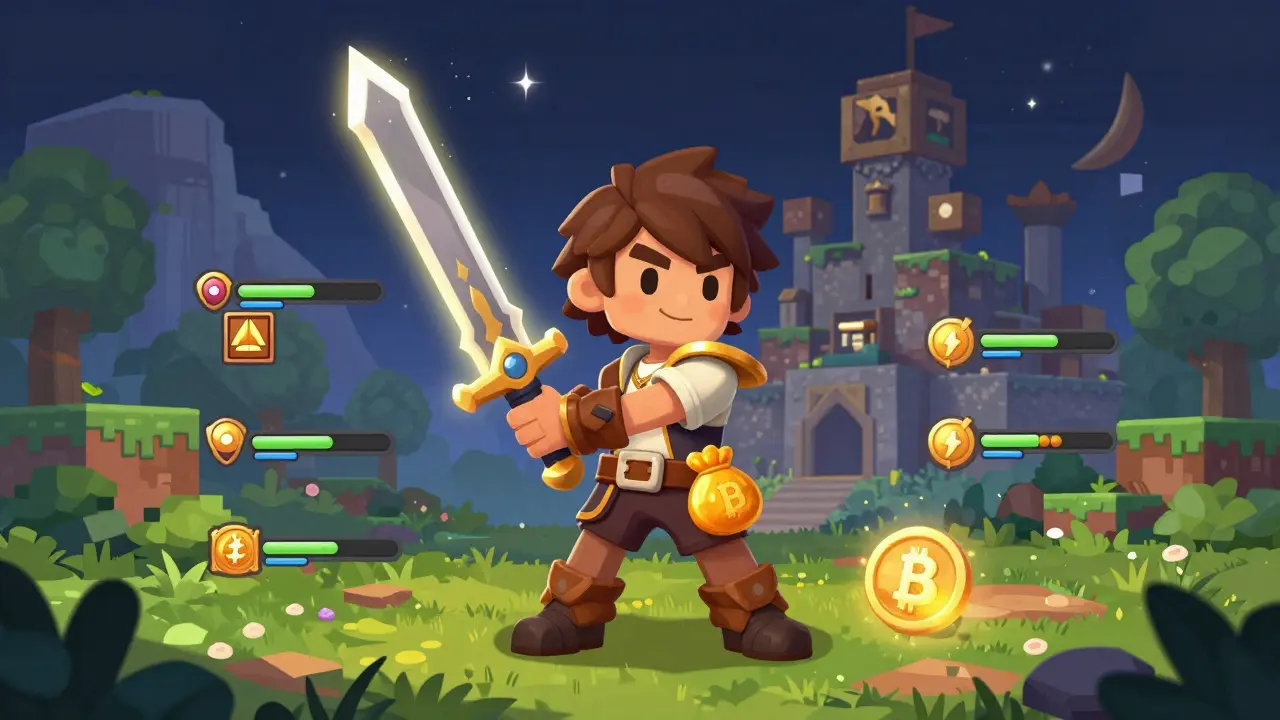
One of the biggest drivers for BRUSH utility is its deep integration into the gaming sector. The flagship project here is Estfor Kingdom, a massively multiplayer online role-playing game (MMORPG) that runs entirely on-chain.
Unlike traditional video games where your assets are locked inside a company’s server, Estfor Kingdom uses blockchain technology to give you true ownership. Your swords, armor, and characters are NFTs that you can trade on Paintswap. Within the game, BRUSH serves as the primary currency. Players earn BRUSH by completing quests, winning battles, and gathering resources.
This setup creates a circular economy:
- Earning: Players generate BRUSH through gameplay.
- Spending: Players spend BRUSH on in-game upgrades or trade them for other assets.
- Burning: Marketplace transactions involving game assets trigger the fee-based burn mechanism described earlier.
The game also utilizes Chainlink oracles to pull real-world data into the blockchain, ensuring fair outcomes for random events. This level of integration makes BRUSH essential for anyone serious about the Sonic gaming ecosystem.
Technical Infrastructure: VRF, Lending, and AI
Beyond trading and gaming, Paintswap provides critical technical tools for developers and advanced users. These components expand the utility of the BRUSH token and strengthen the overall network effect.
| Component | Function | Benefit to Users |
|---|---|---|
| PaintswapVRF | Verifiable Random Function provider | Ensures cryptographically secure randomness for games and NFT reveals, preventing manipulation. |
| fNFT Lending | Collateralized loan system | Allows users to unlock liquidity from their idle NFTs without selling them. |
| PAIGE | AI-powered game engine | Enables sophisticated, blockchain-integrated gaming experiences with artificial intelligence features. |
| Open API | Developer interface | Allows third-party apps to integrate Paintswap’s functionality, expanding the ecosystem. |
The fact that all core infrastructure is open-source is a significant advantage. It allows developers to build upon Paintswap’s capabilities, fostering a community-centric approach rather than a closed, corporate-controlled environment. This openness attracts builders who want to create innovative DeFi and GameFi products on Sonic.
Market Performance and Price Predictions
Like all cryptocurrencies, the BRUSH token is subject to significant volatility. Prices can vary depending on the exchange and liquidity conditions. Recent data shows prices fluctuating around the $0.01 mark, with trading volumes indicating moderate interest.
Looking ahead, various forecasting models offer differing perspectives. Analysts from platforms like LiteFinance and TradingBeasts project a potential upward trajectory through 2029, with average prices potentially reaching near $0.016-$0.018. WalletInvestor suggests similar minimums but hints at higher maximums in longer-term scenarios. However, it is crucial to treat these numbers with caution. Cryptocurrency markets are influenced by broader trends, regulatory changes, and technological adoption rates.
The key takeaway is not the specific price number, but the underlying driver: adoption. If Sonic blockchain usage grows, and if Estfor Kingdom attracts a large player base, the demand for BRUSH will likely follow. Conversely, if the niche remains small, the token may struggle to gain significant momentum despite its deflationary mechanics.
How to Buy and Store BRUSH Tokens
If you decide to invest in or use the BRUSH token, you have two main paths: centralized exchanges (CEX) and decentralized exchanges (DEX).
Centralized Exchanges: Platforms like KuCoin and Bitget list BRUSH. This is the easiest route for beginners. You can deposit fiat currency (like USD or EUR), complete identity verification, and buy BRUSH directly. The tokens are held in the exchange’s custody until you withdraw them.
Decentralized Exchanges: For more control, you can use DEXs on the Sonic network. This requires a web3 wallet (such as MetaMask configured for Sonic). You would first need to acquire Sonic ($S) or a stablecoin like USDT, transfer it to your wallet, and then swap it for BRUSH. Remember to adjust your slippage tolerance settings to accommodate potential price movements during the swap.
Regardless of how you buy, storing BRUSH securely is vital. Using a hardware wallet or a reputable software wallet with strong private key management is recommended to protect against hacks and phishing attacks.
Competitive Landscape: Paintswap vs. The Giants
Paintswap operates in a crowded field. Competitors like OpenSea (Ethereum), Magic Eden (Solana), and various Polygon-based marketplaces dominate global volume. So, why choose Paintswap?
The primary advantage is cost and speed. The Sonic blockchain offers significantly lower transaction fees and faster finality than Ethereum. For traders making frequent swaps or gamers interacting with assets daily, these savings add up quickly. Additionally, Paintswap’s deep integration with Sonic-specific projects like Estfor Kingdom gives it a native advantage that cross-chain competitors cannot easily replicate.
However, the limitation is clear: being tied to one blockchain restricts the user base. Ethereum has millions of active wallets; Sonic has fewer. This means lower overall liquidity and fewer high-profile blue-chip NFT collections compared to the giants. Paintswap is best suited for users already invested in the Sonic ecosystem or those seeking low-cost entry into NFT and gaming markets.
Is Paintswap safe to use?
Paintswap is built on the Sonic blockchain, which is known for its security and speed. The platform’s code is open-source, allowing for community audits. However, as with any DeFi platform, users should always verify contract addresses, enable two-factor authentication on connected accounts, and be wary of phishing links. Never share your private keys.
What is the difference between BRUSH and other NFT tokens?
Many NFT platform tokens are purely speculative. BRUSH has a defined deflationary mechanism where a portion of all trading and launchpad fees is used to buy back and burn tokens. Additionally, it has heavy utility in the Estfor Kingdom MMORPG, serving as both an in-game currency and a reward for player activity.
Can I use BRUSH on Ethereum?
No, BRUSH is native to the Sonic blockchain (formerly Fantom). It is not an ERC-20 token on Ethereum. To interact with BRUSH, you must use a wallet compatible with the Sonic network. Cross-chain bridges exist, but native usage is restricted to Sonic.
How does the buyback and burn process work?
Whenever an NFT is sold on Paintswap, a 2.5% fee is charged. Half of this fee (1.25%) is converted into BRUSH tokens, which are then purchased from the market and permanently destroyed. This reduces the total supply, potentially increasing the value of remaining tokens if demand stays constant or rises.
What is Estfor Kingdom?
Estfor Kingdom is a play-to-earn MMORPG built on the Sonic blockchain. It uses NFTs for in-game assets and BRUSH as the primary currency. Players earn tokens through gameplay, which can be traded on Paintswap. The game integrates Chainlink oracles for secure random number generation and real-world data feeds.