What is Swarm Markets (SMT) Crypto Coin? A Clear Guide to the First Licensed DeFi Platform
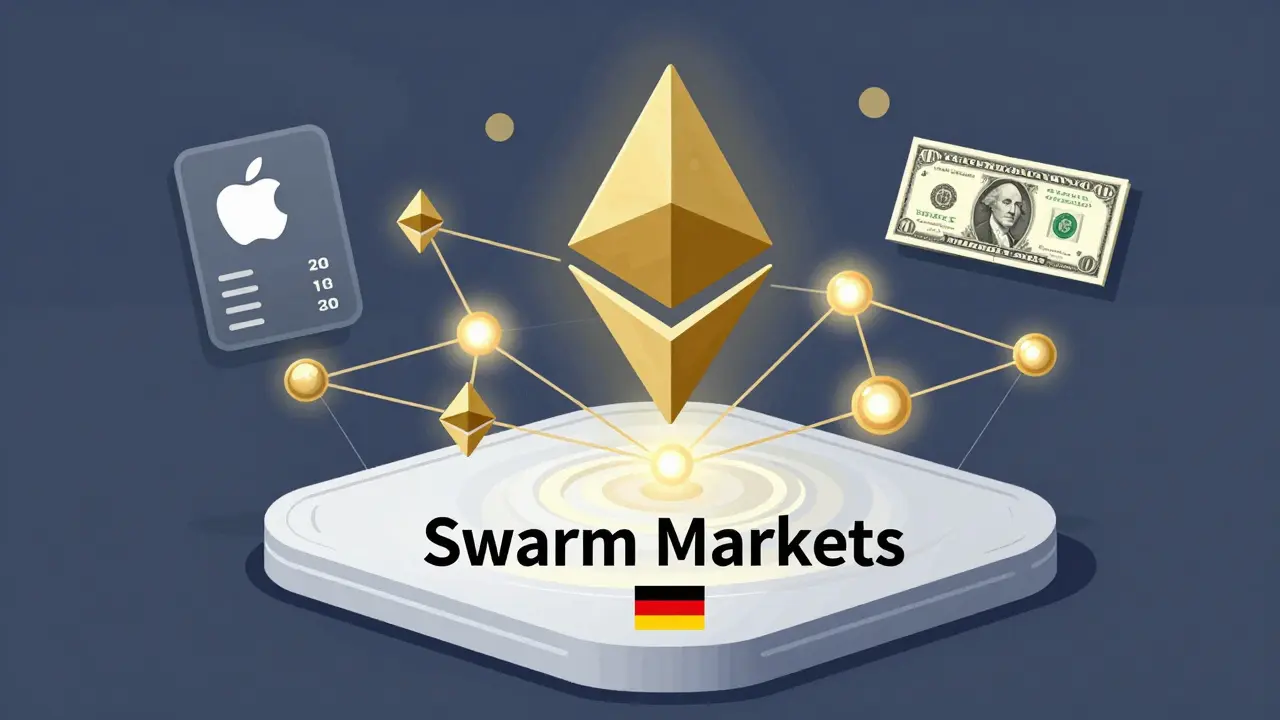
Swarm Markets (SMT) isn't just another crypto coin. It's a regulated DeFi platform that lets you trade tokenized stocks, bonds, and other real-world assets - legally. If you've ever wondered how something like Apple stock or a U.S. Treasury bill could be traded on a blockchain like Ethereum, Swarm Markets is one of the few places making it happen - and it’s licensed by Germany’s financial watchdog, BaFIN.
What Exactly Is SMT?
SMT is the native token of Swarm Markets, a decentralized finance platform built on Ethereum. Unlike most crypto tokens that just sit in wallets or get traded on exchanges, SMT powers a full trading infrastructure. It’s not a meme coin. It’s not a speculative bet. It’s a utility token designed to unlock access to compliant, blockchain-based financial services.
There are 250 million SMT tokens in total. As of mid-2024, about 84 million were in circulation - roughly one-third of the supply. The rest are locked in a long-term rewards pool, with only 1.4% released in the first 90 days after launch. Tokens are distributed weekly over 100 years, meaning early participants get more, but the supply slowly drains out over decades. This isn’t designed to pump prices fast - it’s built for long-term sustainability.
How Swarm Markets Works (And Why It’s Different)
Most DeFi platforms like Uniswap or SushiSwap are permissionless. Anyone with a wallet can trade. Swarm Markets flips that. You need to pass a KYC check called Swarm Passport before you can do anything. That means submitting ID, proof of address, and linking your self-custody wallet (like MetaMask or Ledger). The process takes 24 to 72 hours.
Why? Because Swarm Markets is the first DeFi platform licensed by BaFIN, Germany’s financial regulator. That license lets them offer tokenized versions of real-world assets - not just Bitcoin or Ethereum, but actual Apple shares, U.S. Treasury bills, and other securities. These aren’t synthetic copies. They’re legally recognized digital representations of real assets, settled on-chain.
Behind the scenes, Swarm uses a modified version of the Balancer Protocol - an automated market maker (AMM) that matches buyers and sellers without order books. But unlike Uniswap, only whitelisted assets can be traded. You can’t just add any token. Everything must be approved and tokenized through Swarm’s compliance layer.
Why Regulated DeFi Matters
DeFi promised freedom - no banks, no paperwork, no gatekeepers. But in 2025, regulators are cracking down. Many DeFi platforms got shut down or fined for offering unlicensed securities. Swarm Markets didn’t fight the rules. It built around them.
This gives it a unique edge. While other projects like Ondo Finance or Matrixdock offer tokenized assets, none have full European regulatory approval. Swarm’s BaFIN license means institutional investors - hedge funds, family offices, even banks - can use the platform without breaking compliance laws. That’s huge. It’s the only DeFi platform where you can legally trade Apple stock on-chain and still sleep at night.
But there’s a trade-off. The very thing that makes Swarm safe - KYC - also makes it less “DeFi.” Purists hate it. They argue that if you need to prove who you are, you’re not truly decentralized. Swarm’s answer? They call it “regulated DeFi.” And for most people who care about legality over ideology, that’s a fair compromise.
How SMT Is Used on the Platform
The SMT token isn’t just a currency. It’s a key to the system:
- Fee discounts: Holding SMT reduces trading fees on the platform. The more you hold, the lower your costs.
- Rewards: Liquidity providers earn SMT as incentives. A portion of swap fees goes back to token holders.
- Governance: SMT holders can vote on proposals - like which new assets to tokenize next, or how to adjust fees.
- Access: You need SMT to participate in certain pools or dOTC trades.
There’s also a vesting system. When you earn SMT, it’s locked as vSMT (vested SMT). You can’t spend it right away. It unlocks quarterly. This prevents whales from dumping tokens and crashing the price.
Market Performance and Adoption
As of late 2023, Swarm Markets had a market cap of around $6.7 million. That’s tiny compared to Uniswap’s $4.8 billion or Aave’s $1.2 billion. The 24-hour trading volume was under $52,000. Most of the activity comes from institutions, not retail traders.
Price-wise, SMT has been volatile. It hit a high of $1.40 in early 2023, then dropped over 90% by the end of the year. That’s not unusual for crypto, but it’s a red flag for some. The market doesn’t yet see SMT as a major player - yet. Token Metrics says its value isn’t widely recognized, but its potential is real.
Why the low traction? Two reasons. First, the KYC barrier turns off casual crypto users. Second, most people still don’t know you can trade tokenized stocks on a blockchain. Awareness is low. But that’s changing. With MiCA (the EU’s new crypto law) rolling out in 2025, regulated platforms like Swarm are suddenly in the spotlight.
How to Get Started With Swarm Markets
If you want to try Swarm Markets, here’s what you need to do:
- Get a self-custody wallet: MetaMask, Ledger, or Trust Wallet.
- Visit swarm.com and click "Connect Wallet".
- Start the Swarm Passport KYC process. Upload your ID and proof of address.
- Wait 1-3 days for verification.
- Once approved, you can trade tokenized assets or add liquidity to pools.
You’ll need ETH to pay for gas fees on Ethereum or Arbitrum. And you’ll need SMT to get fee discounts - you can buy it on Gate.io, Bitget, or directly through the platform after KYC.

Swarm Markets vs. Other RWA Platforms
Swarm isn’t the only player in tokenized assets. Here’s how it stacks up:
| Feature | Swarm Markets | Ondo Finance | Matrixdock |
|---|---|---|---|
| Regulatory License | Yes (BaFIN, Germany) | No | No |
| Tokenized Assets | Stocks, bonds, T-bills | Primarily U.S. Treasuries | Stocks and ETFs |
| DeFi Model | AMM + dOTC | Lending pools | Centralized custody |
| KYC Required | Yes | Yes | Yes |
| Native Token | SMT | ONDO | MDX |
Swarm is the only one with full European licensing. Ondo is bigger in the U.S. Treasury space. Matrixdock is more retail-friendly but lacks true decentralization. Swarm’s hybrid model - DeFi tech with traditional compliance - gives it a rare advantage.
Is Swarm Markets Worth It?
It depends on what you want.
If you’re a crypto purist who hates KYC and wants to trade anything, anytime - skip it. Swarm isn’t for you.
If you want to trade real stocks on a blockchain, legally, without a broker - then yes. It’s one of the only options.
And if you believe tokenized assets will be worth trillions by 2030 (as Boston Consulting Group predicts), then Swarm’s early regulatory head start could be valuable. The market hasn’t priced that in yet.
The risks? Low liquidity. Slow adoption. Regulatory shifts. If BaFIN changes its stance, or if the EU tightens MiCA rules, Swarm could lose its edge.
The upside? First-mover advantage in a $16 trillion market. A functional, licensed platform. And a token designed for long-term use, not speculation.
Final Thoughts
Swarm Markets (SMT) isn’t trying to be the next Bitcoin. It’s trying to be the first legal bridge between Wall Street and blockchain. It’s slow. It’s bureaucratic. It’s not flashy. But it’s real.
Most crypto projects fail because they ignore regulators. Swarm didn’t. It worked with them. That’s why it still exists in 2025 - while dozens of unlicensed DeFi platforms vanished.
Whether SMT becomes a major crypto asset depends on one thing: whether traditional finance decides blockchain is worth using. If it does, Swarm could be the platform that made it happen.
Is SMT a good investment?
SMT isn’t a typical investment. It doesn’t pay dividends or have a proven track record of price growth. Its value comes from utility - if you use the platform, holding SMT saves you fees and gives you voting rights. If the platform grows, demand for SMT could rise. But with low trading volume and high volatility, it’s speculative. Only invest what you can afford to lose.
Can I buy SMT on Coinbase or Binance?
No, SMT is not listed on major exchanges like Coinbase or Binance. You can buy it on smaller platforms like Gate.io, Bitget, or directly through the Swarm Markets platform after completing KYC. Always verify the exchange before sending funds.
Do I need a crypto wallet to use Swarm Markets?
Yes. You need a self-custody wallet like MetaMask or Ledger to connect to Swarm Markets. The platform doesn’t hold your assets. You control your keys. That’s part of what makes it decentralized - even with KYC.
How long does the Swarm Passport KYC take?
It usually takes 24 to 72 hours. The time depends on how quickly you submit documents and whether your identity matches the records. Make sure your ID is clear, not expired, and matches your wallet’s registered name.
Can I trade real stocks with SMT?
Not directly. You can trade tokenized versions of stocks - like a digital representation of Apple shares - on Swarm Markets. These tokens mirror the value of the real stock but are settled on-chain. You don’t own the actual stock certificate, but you own a legally recognized digital equivalent.
Is Swarm Markets safe?
It’s one of the safest DeFi platforms because it’s regulated. BaFIN audits its operations, and its smart contracts are publicly audited. But safety depends on you: never share your wallet seed phrase, use hardware wallets, and only interact with the official website. Scammers often create fake Swarm sites - always double-check the URL.

Mark Cook
This is just Wall Street with a blockchain mask on lol 🤡
Bradley Cassidy
im legit vibin with this. i mean sure its not the wild west anymore but like... if i wanna trade apple shares without calling my broker and waiting 3 days, and i can do it with my wallet? sign me up. the kycc is kinda annoying but hey, its not like im trying to dodge taxes or anything 😅
Greg Knapp
They’re not decentralized they’re just another bank with a fancy website and a license they paid for and now they’re pretending they’re revolutionary and honestly i think they’re just trying to get rich off gullible people who think crypto means freedom when it just means more fees and more paperwork
Shruti Sinha
The regulatory approach here is actually refreshing. Most DeFi projects ignore compliance until they get shut down. Swarm’s model acknowledges that real-world assets require real-world oversight. It’s not perfect, but it’s pragmatic.
Heather Turnbow
I appreciate the thoughtful structure of this post. The distinction between speculative tokens and utility-based infrastructure is crucial, especially in a space often dominated by hype. The long-term vesting schedule for SMT also suggests a commitment to stability over short-term gains.
Jesse Messiah
Hey everyone - just wanted to say this is one of the most well-explained pieces on regulated DeFi i’ve seen. The comparison table alone is gold. If you're new to RWA, start here. And yes, the KYC is a pain, but think of it like a bouncer at a club - it keeps the weirdos out so the real investors can chill. 🙌
Elvis Lam
Let’s be real - if you’re not holding SMT and you’re trading tokenized assets on-chain, you’re leaving 15-30% of potential savings on the table. The fee discounts alone make it a no-brainer for active traders. And the governance rights? You’re not just a user - you’re a stakeholder. Stop treating this like a meme coin.
Jonny Cena
I’ve been watching Swarm for a year now. The team doesn’t post flashy tweets. They don’t pay influencers. They just build. Slowly. Carefully. And honestly? That’s rarer than you think. If you’re skeptical of KYC, I get it. But ask yourself - do you want to trade Apple stock on a platform that could vanish tomorrow? Or one that’s audited by a national regulator?
Sue Bumgarner
Germany? Seriously? You’re trusting a European bureaucracy to handle your crypto? The EU will regulate us into oblivion. This is just the first step before they ban crypto entirely. Mark my words - this ‘licensed’ platform will be the first to be shut down when MiCA gets teeth. They’re all puppets.
Emma Sherwood
As someone who grew up in India where banking access is still a luxury for millions, seeing regulated DeFi like this makes me hopeful. It’s not about replacing banks - it’s about expanding access to people who’ve never had it. The KYC isn’t a barrier - it’s a bridge. And SMT? It’s not just a token. It’s a tool for inclusion.
Florence Maail
This is all a CIA operation. 🤫 They need to track your assets so they can freeze your crypto during the next ‘economic reset’. The ‘BaFIN license’? That’s just a front. The real goal is to get you hooked on centralized identity so they can deplatform you later. Don’t connect your wallet. Burn this article. 🚨
Chevy Guy
So you need a passport and a wallet and a vibe check and now you’re trading apple stocks on ethereum? Sounds like a middle schooler trying to run a hedge fund with a spreadsheet and a dream
Amy Copeland
I mean, if you’re going to do DeFi, why not just go all-in on the chaos? This feels like buying a Tesla and then insisting on using the gas pedal like a manual transmission. You’re paying for innovation but then begging for bureaucracy. How quaint.
Abby Daguindal
Low liquidity. Low volume. High volatility. Sounds like a rug pull waiting to happen.
Patricia Amarante
I tried it. KYC took 48 hours. Got in. Bought some SMT. Fees dropped. It’s weirdly satisfying.
SeTSUnA Kevin
The notion that ‘regulated DeFi’ is an oxymoron reveals a fundamental misunderstanding of scalability. Compliance is not the antithesis of decentralization - it’s its necessary evolution.
Timothy Slazyk
What’s interesting isn’t whether Swarm works - it’s that it forces us to ask: what is decentralization really for? If the goal is freedom from intermediaries, then why do we still need identity verification? But if the goal is access to real economic value - without the risk of fraud, theft, or legal exposure - then perhaps this isn’t a compromise. It’s a refinement. The blockchain doesn’t need to be anarchic to be revolutionary. It just needs to be useful.
Madhavi Shyam
The Balancer AMM variant here is a non-trivial innovation - especially with whitelisted assets and on-chain settlement. The gas optimization layer on Arbitrum is underdiscussed. Most retail users don’t realize this is one of the few RWA platforms with sub-second finality.
Jack Daniels
I just don’t know if I can trust this. I mean... what if they just... disappear? Like... tomorrow? I’m scared.