What Is the Kimchi Premium? How Capital Controls Create Crypto Arbitrage in South Korea
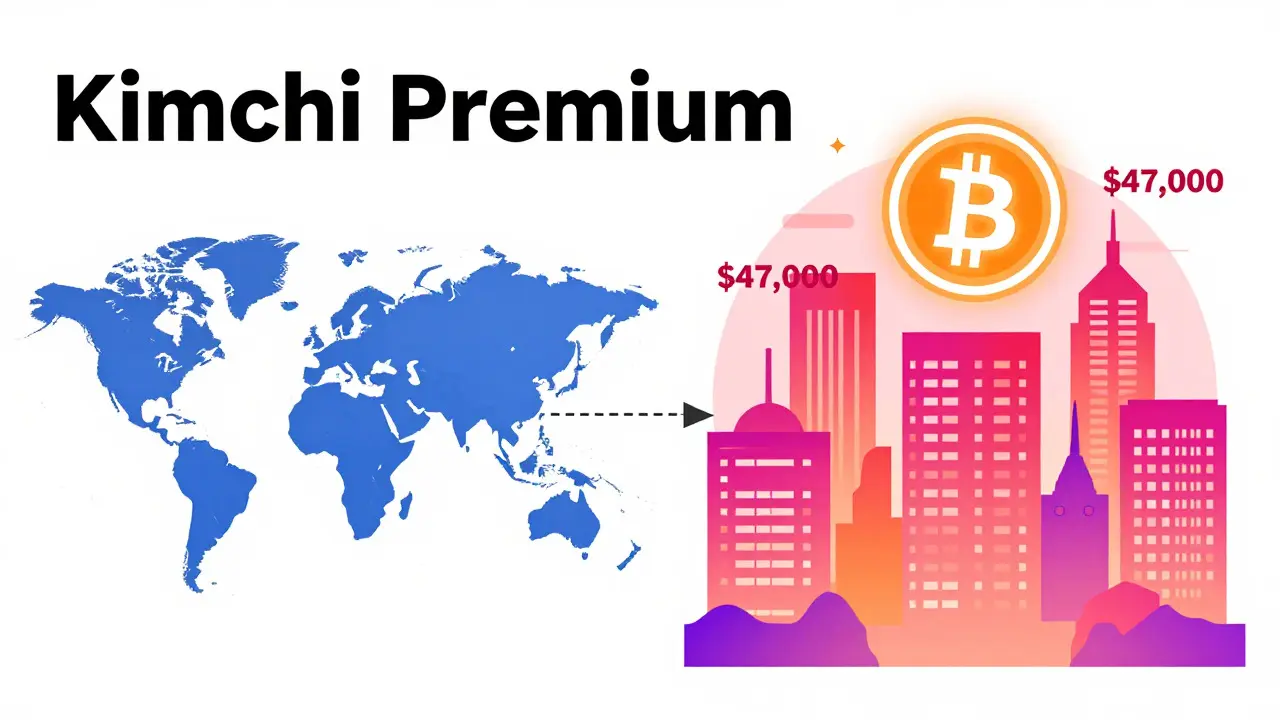
Imagine buying Bitcoin for $45,000 on a global exchange and selling it for $47,000 just hours later. It sounds like free money, but in reality, it’s one of the hardest arbitrage plays in finance. This price gap is known as the Kimchi premium, a phenomenon where cryptocurrencies trade at significantly higher prices on South Korean exchanges compared to the rest of the world.
The term isn't just a catchy nickname; it reflects deep structural issues in how South Korea manages its financial borders. While most markets are interconnected, allowing prices to equalize quickly, the Korean crypto market operates in a semi-isolated bubble. For traders, this creates a unique set of opportunities and frustrations. For regulators, it highlights the tension between controlling capital flight and embracing digital assets.
How the Kimchi Premium Works
To understand why this happens, you have to look at the math. The Kimchi premium is calculated by comparing the price of an asset, usually Bitcoin (BTC), on major international platforms like Binance or Coinbase against local South Korean exchanges such as UpBit or Bithumb.
| Market | Bitcoin Price (USD) | Difference |
|---|---|---|
| Global Average (e.g., Binance) | $45,000 | - |
| South Korea (e.g., UpBit) | $47,000 | +$2,000 |
| Premium Percentage | ~4.4% | |
In normal market conditions, this premium hovers around 4.5%. However, during periods of extreme volatility or panic, it has spiked much higher. In January 2018, the premium hit a historic peak of approximately 55%. There were even documented cases where Bitcoin traded at $10,000 globally while hitting $18,000 in Korea, creating an 80% disparity. That kind of gap should theoretically vanish instantly as traders buy low abroad and sell high locally. But in Korea, it doesn’t.
Why Can’t Traders Just Exploit the Gap?
If you’re thinking about moving money into Korea to capture this spread, stop. The reason the premium persists is precisely because it is so difficult to exploit. It’s not a bug; it’s a feature of the regulatory environment.
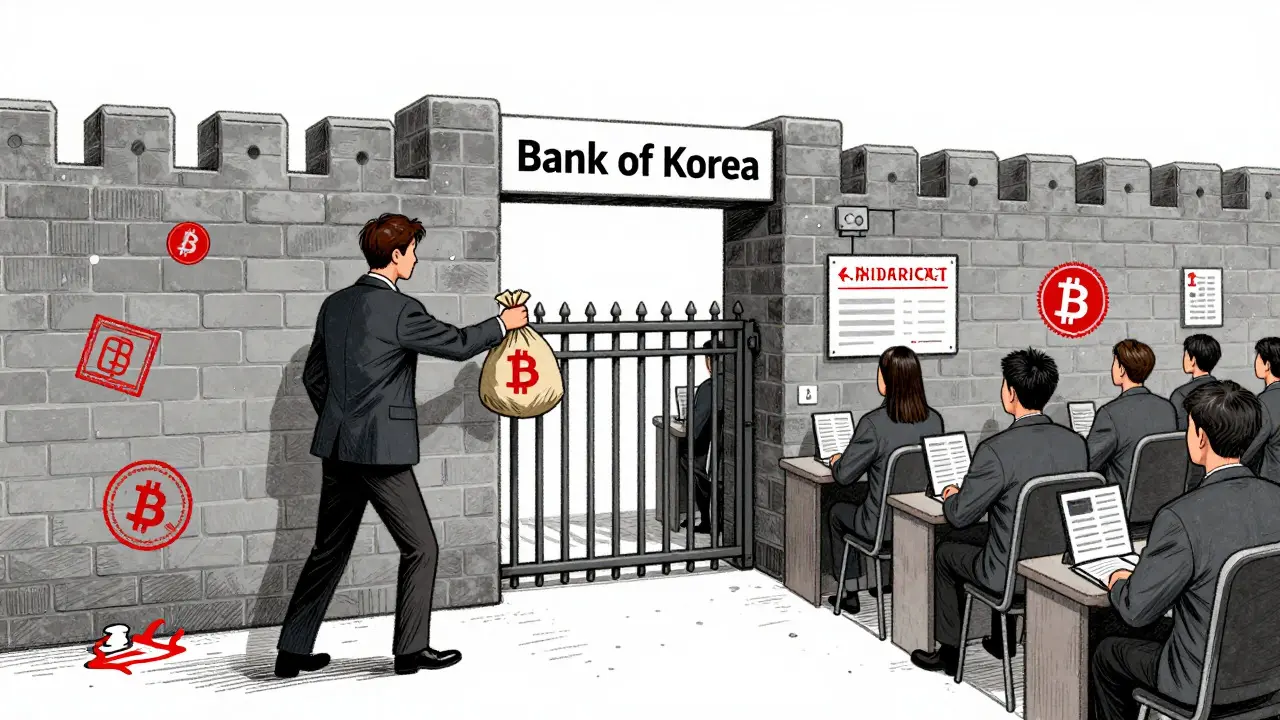
The primary barrier is capital controls. The Bank of Korea (Central Bank) has implemented strict measures to prevent rapid capital outflows that could destabilize the won. These controls mean that transferring fiat currency out of South Korea takes time-often days or weeks. By the time your funds arrive in a foreign bank account, the price gap has likely closed.
Additionally, there are significant logistical hurdles:
- Residency Requirements: To open an account on major Korean exchanges like UpBit, you generally need a Korean Alien Registration Card or national ID. International tourists or remote traders cannot simply sign up and start trading.
- Verification Delays: Even if you have residency, the Know Your Customer (KYC) processes are rigorous. Adding a new withdrawal method often triggers security holds that delay fund movement.
- Tax Reporting: The Korean government requires detailed reporting on crypto gains. Large, frequent transfers associated with arbitrage can trigger audits or frozen accounts.
These friction points turn what should be a seconds-long arbitrage trade into a complex, multi-week logistical nightmare. The cost of holding the position, combined with the risk of regulatory intervention, usually outweighs the potential profit from the premium.
The Role of Local Demand and Speculation
Capital controls explain why the money stays in, but they don’t explain why the price goes up. That’s driven by demand. South Koreans are among the most active cryptocurrency investors in the world. The population has a high tolerance for risk and a strong cultural affinity for speculative assets.
This demand is amplified by a specific market behavior known as the "listing pump." When a new cryptocurrency is listed on a major Korean exchange, local traders rush to buy it immediately. This surge in buying pressure drives the price up sharply, often well above the global average. Because these exchanges dominate the local liquidity pool, the inflated price becomes the reference point for all domestic trading.
During bull markets, this effect is magnified. As global prices rise, Korean traders tend to chase momentum more aggressively than their counterparts in Europe or North America. This creates a feedback loop: higher prices attract more buyers, which pushes prices even higher, widening the Kimchi premium further. Conversely, when the global market crashes, Korean prices may fall slower initially due to stubborn hold-outs, keeping the premium positive even in bearish conditions.

Regulatory Restrictions and Market Isolation
The South Korean government walks a tightrope. On one hand, they want to foster innovation and protect retail investors. On the other, they fear the financial instability that uncontrolled crypto flows can cause. This duality creates a regulatory framework that isolates the local market.
Anti-money laundering (AML) laws are strictly enforced. Exchanges must monitor every transaction for suspicious patterns. If a trader tries to move large sums of crypto out of the country to cash in the premium, the exchange may flag the activity. The result is a market that is technically connected to the global blockchain but functionally disconnected from global pricing mechanisms.
This isolation serves as a case study for other nations. Regulators worldwide watch the Kimchi premium closely. It demonstrates that even in a decentralized system, centralized policies can create persistent inefficiencies. It also shows that without seamless cross-border fiat movement, true global price discovery remains elusive.
Is the Kimchi Premium Sustainable?
As we move through 2026, the dynamics are shifting. Institutional adoption is growing, and stablecoins are becoming more prevalent. Some analysts argue that as offshore trading options become more accessible to Koreans, the premium will shrink. Others believe that as long as the Bank of Korea maintains strict capital controls, the gap will remain.
For now, the Kimchi premium remains a vital indicator of market sentiment. A widening premium suggests strong local bullishness and potentially impending regulatory scrutiny. A narrowing premium might indicate capitulation or successful arbitrage efforts by sophisticated players who have found loopholes.
Whether you are a trader looking for alpha or a student of financial markets, the Kimchi premium offers a fascinating glimpse into how culture, regulation, and technology collide in the digital age.
What is the current Kimchi premium percentage?
The Kimchi premium fluctuates daily based on market conditions. Historically, it averages around 4.5%, but it can spike to over 10% during periods of high volatility or extreme local demand. You can check real-time data on tracking websites like CoinWarz or specialized crypto dashboards.
Can foreigners trade on Korean exchanges to exploit the premium?
Generally, no. Most major Korean exchanges like UpBit and Bithumb require users to have a Korean resident registration number or Alien Registration Card. Without local residency and proper identification, opening a verified account is nearly impossible for non-residents.
Why does the Kimchi premium exist?
It exists due to a combination of high local demand for crypto, strict capital controls that prevent easy money transfer out of the country, and regulatory barriers that make arbitrage difficult. These factors create a supply-demand imbalance within South Korea that keeps local prices higher than global averages.
What is the highest recorded Kimchi premium?
The highest recorded premium was approximately 55% in January 2018. During the 2017-2018 bull run, there were instances where Bitcoin prices in Korea were nearly double those in the United States, though these extreme gaps were short-lived.
Does the Kimchi premium apply to all cryptocurrencies?
While Bitcoin is the most commonly tracked asset for this metric, the premium can appear in other cryptocurrencies listed on Korean exchanges. However, smaller altcoins may have wider spreads due to lower liquidity, making their premiums less reliable indicators.