xSuter Airdrop: Is It Real? How to Spot Scams & Find Legit Crypto Drops

You’ve probably seen the hype. Social media feeds are flooded with posts promising free tokens from projects like xSuter is a cryptocurrency project rumored to be launching an airdrop, though official verification remains scarce as of August 2026. The promise is simple: connect your wallet, do some tasks, and get rich quick. But here is the hard truth you need to hear right now. As of today, August 9, 2026, there is no credible, verified information about an "xSuter" airdrop from any major blockchain authority or reputable news outlet. When a project name sounds familiar but lacks concrete details, it’s usually a red flag waving in your face.
The xSuter Mystery: Fact vs. Fiction
In the world of crypto, names get recycled constantly. You might have heard of Suter Holding AG, a Swiss company that provides services for digital assets, or perhaps you are thinking of a different DeFi protocol entirely. However, searching for "xSuter airdrop" leads mostly to silence or suspicious links. This isn’t just bad luck; it’s a pattern. Scammers often create fake landing pages that look professional, using terms like "airdrop," "claim," and "bonus" to trick users into connecting their wallets. Once connected, they drain funds rather than depositing them.
Why does this matter? Because every minute you spend chasing a ghost like xSuter is a minute wasted on real opportunities. Before you risk your private keys on an unverified site, let’s break down how to tell if an airdrop is legit or a trap. We will also look at what actually happened with recent major airdrops so you can see what a genuine campaign looks like compared to the noise.
How to Identify a Fake Airdrop Instantly
Scammers are getting smarter, but they still make the same mistakes. If you are looking at a page claiming to offer xSuter tokens, run through this mental checklist. If more than one of these points applies, close the tab immediately.
- No Official Verification: Does the project have a verified Twitter (X) account with blue checks? Do they link to a GitHub repository showing actual code development? If the only presence is a Telegram group or a Discord server with thousands of bots, it’s likely a scam.
- Urgency Tactics: Phrases like "Claim within 24 hours or lose out" are designed to bypass your critical thinking. Legitimate protocols give users weeks or months to claim rewards because they want maximum participation, not panic.
- Unusual Domain Names: Check the URL carefully. Is it `xsuter-official.com` or `xsuter-airdrop-secure.xyz`? Scammers often use slight misspellings or generic top-level domains like .xyz, .top, or .info to mimic official sites.
- Requesting Private Keys: No legitimate dApp ever asks for your private key or seed phrase. They ask for wallet connection permissions. If a pop-up asks for your 12-word phrase, it’s over.
Take the time to verify. Use tools like Revoke.cash is a security tool that allows users to manage and revoke smart contract approvals for their crypto wallets. regularly. It helps you see which contracts have access to your funds and lets you cut ties if something looks fishy. This simple habit has saved countless investors from losing their entire portfolio to malicious approvals.

What a Legitimate Airdrop Looks Like
To understand why xSuter raises eyebrows, compare it to the gold standard of recent airdrops: Jupiter (JUP) is the largest decentralized exchange aggregator on the Solana blockchain, known for its massive successful token distribution in January 2025. When Jupiter launched its airdrop, it didn’t rely on vague promises. It distributed 1 billion JUP tokens to nearly 1 million unique wallets. Why did they do this? To reward early adopters who had used their swap interface during the beta phase.
This was transparent. The criteria were public. The snapshot date was clear. Users knew exactly what they needed to do: trade on the platform. There was no mystery box. Now, contrast this with the Midnight airdrop, which went live in August 2025. Midnight focused on privacy-preserving enterprise solutions on Solana. Their claim phase was open until October 2025, giving users ample time to verify eligibility through official channels.
Notice the difference? Legit projects build communities first, then reward them. Scam projects demand attention first, then steal from them. If xSuter were real, we would see similar transparency: whitepapers, team doxxing, and clear tokenomics. Instead, we find vacuum.
| Feature | Legitimate Project (e.g., Jupiter) | Suspicious Project (e.g., Unverified xSuter) |
|---|---|---|
| Official Communication | Verified social media, official blog | Anonymous Telegram/Discord only |
| Token Distribution | Transparent criteria, public snapshot | Vague promises, "mystery" rewards |
| Website Security | HTTPS, recognized domain (.com/.org) | Misspelled URLs, new domains (.xyz/.top) |
| User Action Required | Use the product (swap, stake, etc.) | Connect wallet, pay gas fees, join groups |
| Team Identity | Doxxed founders, LinkedIn profiles | Anonymous or fake personas |
Where to Find Real Opportunities in 2026
If you are hunting for airdrops because you want to grow your portfolio without upfront capital, you are in the right mindset-but you need better targets. The landscape in 2026 has shifted. Projects like Monad is a high-performance EVM-compatible blockchain aiming to scale Ethereum transactions, generating significant buzz for potential future incentives. and Abstract is a consumer-centric blockchain layer focused on simplifying Web3 experiences for mainstream adoption. are building infrastructure. These are the types of ecosystems that historically reward early testers.
Instead of chasing rumors, focus on active engagement. Here is a practical strategy:
- Monitor Testnets: Many new chains launch testnets before mainnet. Interacting with these networks costs nothing but time. Record your activity. If they launch a token later, you might be eligible.
- Use Aggregators: Platforms like DefiLlama track TVL (Total Value Locked) and new protocols. Look for rising stars with low market caps but high developer activity.
- Join Official Communities: Not Telegram spam groups, but official Discords where developers answer technical questions. Being active here gives you insider knowledge on upcoming drops.
- Diversify Chains: Don’t just stick to Ethereum. Solana, Base, and Arbitrum have seen massive growth in user acquisition campaigns. Each chain has its own set of emerging protocols worth exploring.
Remember, the best airdrops feel like bonuses for using a great product, not like lottery tickets. If you enjoy swapping on Jupiter or staking on Marinade, those actions themselves add value to your life. The tokens are just icing on the cake.
Protecting Your Wallet in a Wild West Market
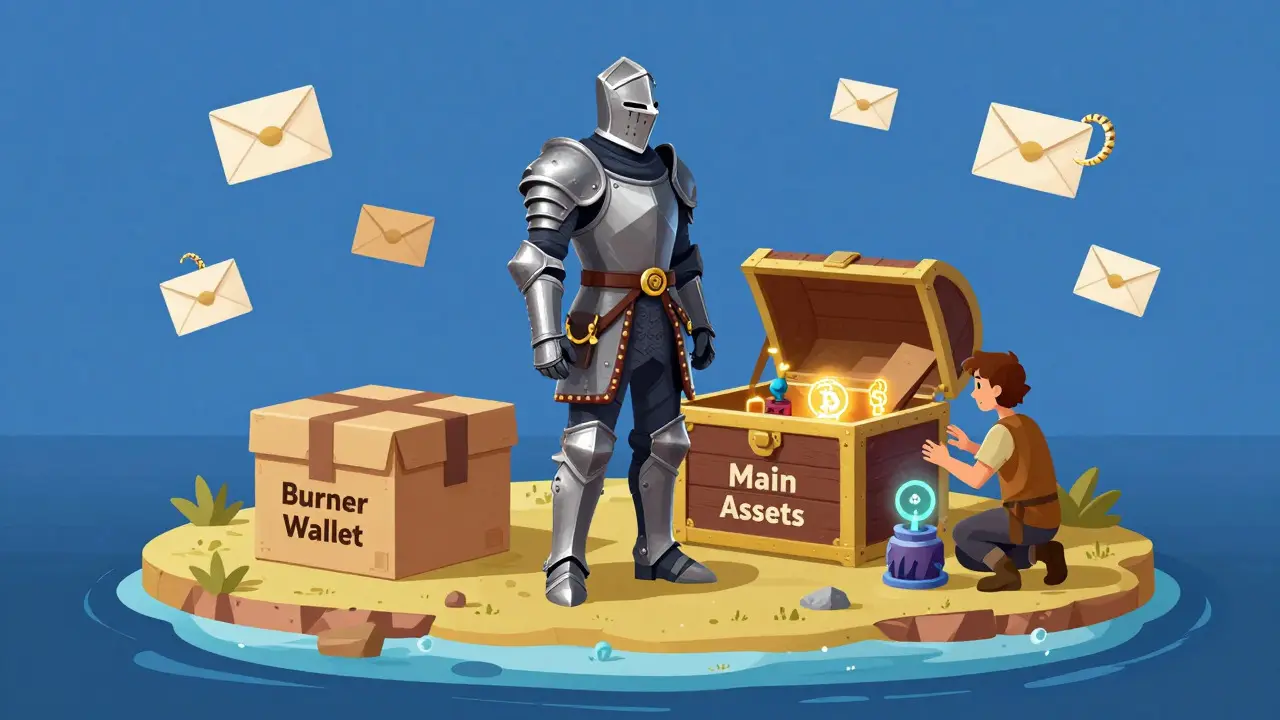
Security is not optional. With scams targeting specific keywords like "xSuter," your defense needs to be proactive. Start by using a burner wallet for testing new protocols. Keep your main holdings in a hardware wallet like Ledger or Trezor, isolated from daily interactions.
When you do interact with new dApps, check the approval limits. Never approve "unlimited" spending unless you trust the contract implicitly. Most modern interfaces allow you to set a specific amount for approval. This limits exposure if the contract turns malicious later.
Also, beware of phishing emails. Scammers send emails pretending to be from Coinbase, Binance, or even smaller projects, urging you to "verify your identity" or "claim rewards." Always navigate to the exchange directly via bookmark, never through email links. Enable two-factor authentication (2FA) using an authenticator app, not SMS, which can be SIM-swapped.
Conclusion: Patience Pays Off
The search for the xSuter airdrop highlights a broader issue in crypto: FOMO (Fear Of Missing Out). It drives us to click on suspicious links and ignore due diligence. But the most successful investors are patient. They wait for verification. They research the team. They understand the technology.
Until xSuter provides verifiable proof of legitimacy-official announcements, audited contracts, and transparent tokenomics-treat it as nonexistent. Meanwhile, keep your eyes on established players and emerging infrastructure projects that are building real utility. The next big drop won’t come from a whisper in a dark corner of the internet; it will come from a project changing the way we use money.
Is the xSuter airdrop real?
As of August 2026, there is no verified evidence of a legitimate xSuter airdrop. The lack of official documentation, verified social media presence, and clear tokenomics suggests it may be a scam or a rumor. Proceed with extreme caution and avoid connecting your main wallet to unverified sites.
How can I spot a fake crypto airdrop?
Look for red flags such as anonymous teams, urgent deadlines, misspelled URLs, and requests for private keys. Legitimate airdrops have transparent criteria, verified social media accounts, and clear communication channels. Always verify the source before interacting with any contract.
What was the Jupiter JUP airdrop?
The Jupiter airdrop was a major event in January 2025 where the Solana-based DEX aggregator distributed 1 billion JUP tokens to nearly 1 million users. It rewarded early adopters who used the platform's swap features, serving as a model for transparent and community-focused token distributions.
Should I use a burner wallet for airdrops?
Yes, highly recommended. Using a separate "burner" wallet isolates your main assets from potential risks associated with new or unproven protocols. If a smart contract is malicious, only the funds in the burner wallet are at risk, keeping your primary holdings safe.
Are there any upcoming legitimate airdrops in 2026?
While specific dates change, projects like Monad and Abstract are generating significant interest for potential future incentives. Focus on engaging with their testnets and official communities. Always rely on official announcements rather than third-party rumors to confirm eligibility.