2024-2025 Crypto Enforcement Statistics: Global Crackdowns & Crime Trends
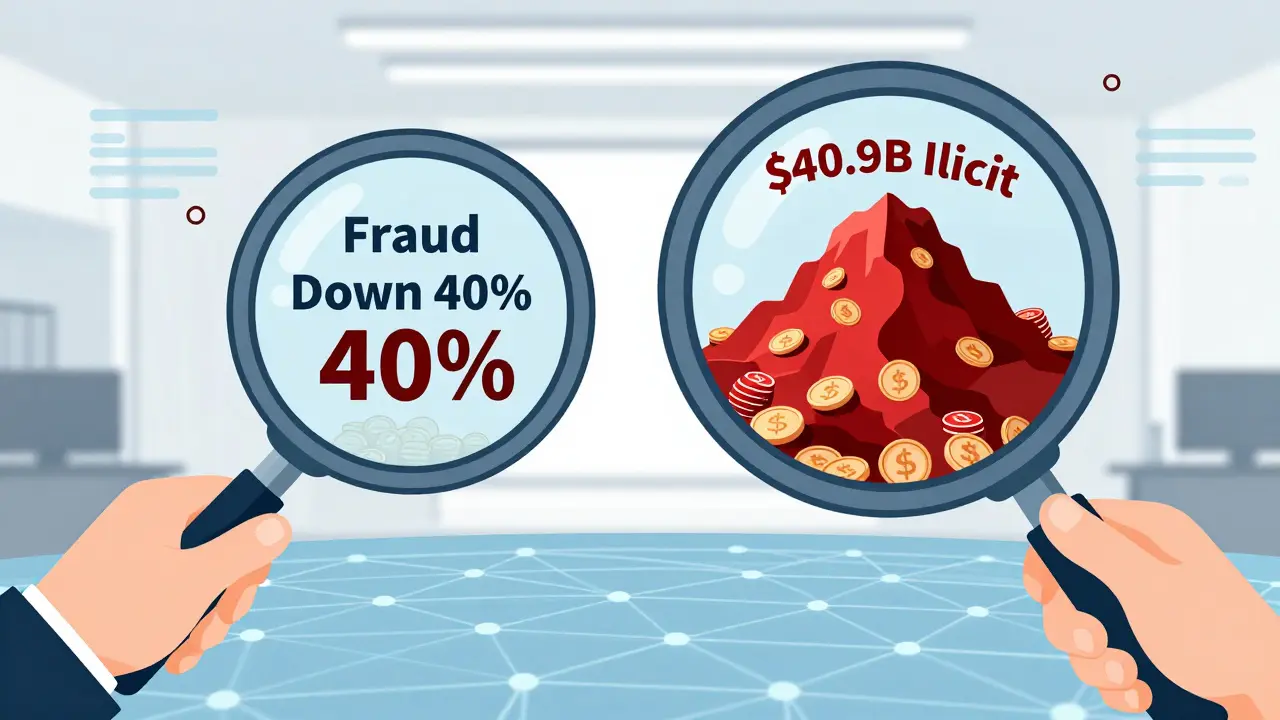
The narrative that cryptocurrency is the wild west of financial crime is crumbling. If you look at the hard numbers from 2024 and early 2025, the story isn't about unchecked chaos-it's about a global regulatory tightening that is actually working, albeit unevenly. We are seeing a significant drop in fraud-related funds, massive freezes on illicit assets, and a shift in how governments punish bad actors. But here is the catch: while some metrics show improvement, others suggest criminals are just getting smarter, moving to new chains and using more sophisticated tools.
Understanding these crypto enforcement statistics is crucial for anyone operating in the digital asset space, whether you are an exchange operator, a compliance officer, or an investor trying to gauge risk. The landscape has shifted from "move fast and break things" to "comply or get shut down." Let’s break down what the data really says about the state of crypto enforcement worldwide.
Key Takeaways
- Illicit crypto activity linked to fraud dropped by 40% in 2024 compared to 2023, according to TRM Labs, totaling $10.7 billion.
- However, broader definitions by Chainalysis show $40.9 billion received by illicit addresses in 2024, highlighting methodological differences in tracking crime.
- TRON blockchain hosted 58% of global illicit volume in 2024 but saw its share halve due to the T3 Financial Crime Unit freezing over $130 million.
- Global regulatory compliance remains patchy; 75% of jurisdictions are only partially compliant with FATF requirements, and nearly 30% still fail to implement the Travel Rule.
- Crypto penalties ($13.5 billion since 2020) remain significantly lower than traditional finance fines ($300+ billion), indicating regulators are focused on building frameworks rather than punishing systemic fraud.
The Data Discrepancy: Fraud vs. Broad Illicit Activity
When discussing crypto crime, the number you see depends entirely on who is counting. This is the first thing you need to understand about 2024-2025 enforcement stats. There are two major players in this space: TRM Labs and Chainalysis. Their reports often tell different stories because they define "crime" differently.
TRM Labs released their 2025 Crypto Crime Report in January 2025, focusing specifically on funds sent to fraud. They reported that illicit activity amounted to $10.7 billion in 2024. This was a 40% decrease from 2023. If you only read this headline, you might think the problem is solved. It shows a clear downward trend from the peak year of 2022.
On the other hand, Chainalysis published their report in February 2025 with a much higher figure: $40.9 billion received by illicit addresses in 2024. Why the huge gap? Chainalysis includes darknet markets, scams, ransomware, and sanctions evasion in their total. They also note that their figures typically grow by about 25% between annual reports as they identify more illicit addresses retroactively. For example, their 2023 estimate grew from $24.2 billion to $46.1 billion within a year.
Then there is Kroll Cyber Threat Intelligence, which added another layer to the conversation. In their 2025 report, they documented that nearly $1.93 billion was stolen in crypto-related crimes during the first half of 2025 alone. This suggests that while overall fraud volumes might be stabilizing or dropping in some categories, the sheer value of sophisticated attacks remains high.
| Source | Report Date | Total Value (USD) | Scope/Metric |
|---|---|---|---|
| TRM Labs | Jan 15, 2025 | $10.7 Billion | Funds sent to fraud (narrower scope) |
| Chainalysis | Feb 3, 2025 | $40.9 Billion | Broad illicit activity including darknet, ransomware, sanctions |
| Kroll (H1 2025 only) | 2025 | $1.93 Billion | Stolen funds in first half of 2025 |

Where the Money Moves: Blockchain-Specific Enforcement
Criminals are not evenly distributed across the blockchain ecosystem. They go where it is cheap, fast, and anonymous. In 2024, TRON blockchain was the undisputed leader in hosting illicit activity, accounting for 58% of the global volume. Ethereum followed with 24%, Bitcoin with 12%, and Binance Smart Chain and Polygon each holding 3%.
Why TRON? It offers low transaction fees, robust smart contract capabilities, and is the home of USDT (Tether), the most popular stablecoin used for laundering money. Criminals prefer platforms where they can move large amounts of value without paying high gas fees.
However, 2024 marked a turning point for TRON. Its illicit volume dropped by $6 billion, effectively halving its proportion of total illicit activity. This wasn’t accidental. It was the result of targeted enforcement through the T3 Financial Crime Unit (T3 FCU).
Launched in August 2024, the T3 FCU is a public-private partnership between TRON, Tether, and TRM Labs. This initiative allowed them to freeze over $130 million in illicit proceeds directly on the chain. According to TRM Labs, 49% of TRON's illicit volume was linked to sanctioned entities, and 32% involved blocklisted funds. Crucially, about 20% of blocklisted USDT on TRON was reissued to victims and government accounts. This proves that when exchanges, issuers, and analytics firms collaborate with law enforcement, they can disrupt criminal flows effectively.
Regulatory Gaps: Paper Rules vs. Real Implementation
You might assume that because countries have passed laws, the problem is handled. The data says otherwise. The Financial Action Task Force (FATF) is the global standard-setter for anti-money laundering (AML). In March 2024, they assessed 58 jurisdictions and found that 91% had enacted or were implementing AML/CFT registration regimes. Furthermore, 84% claimed to have implemented the Travel Rule, which requires sharing sender/receiver information for cross-border transactions.
But claims don't equal reality. The subsequent fifth Targeted Report on Implementation of Recommendation 15, released after the June 2024 plenary, showed significant gaps. PwC's Global Crypto Regulation Report 2025 corroborated this, stating that 75% of surveyed jurisdictions remain only partially compliant or non-compliant with FATF requirements. This figure hasn't changed since April 2023. Even worse, nearly 30% of jurisdictions still fail to implement the Travel Rule entirely.
This discrepancy highlights a critical issue: regulatory frameworks exist on paper, but effective implementation is lagging. For businesses, this means navigating a fragmented landscape where compliance in one country doesn't guarantee safety in another. TRM Labs' Global Crypto Policy Review noted that over 60% of 24 analyzed jurisdictions introduced new policies in 2024, but the quality and enforcement of these policies vary wildly.

Penalties: Crypto vs. Traditional Finance
If you are worried about the financial risk of non-compliance, put your mind at ease regarding the scale of fines compared to Wall Street. The Coincub Crypto Asset Risk Report 2025 provides a stark comparison. Between 2020 and early 2025, the entire crypto industry faced aggregate penalties of $13.5 billion. This includes formal sanctions, fines, and significant security incidents.
Compare that to traditional finance. Institutions like Bank of America and JPMorgan Chase have faced penalties exceeding $97 billion collectively. The broader financial services sector has incurred over $300 billion in fines, primarily for mortgage abuses and sanctions breaches.
So, why does crypto feel like it's under constant attack? Because the *frequency* of enforcement actions is higher. Coincub found that 72% of crypto enforcement records were for regulatory compliance actions, not necessarily massive fraud settlements. Regulators are using smaller, frequent fines to establish compliance frameworks. In contrast, traditional finance sees fewer but much larger penalties for systemic failures.
A notable example of this targeted approach is the U.S. Department of Justice's action in October 2024. The District of Massachusetts charged 17 individuals with crypto-related crimes involving market manipulation. These defendants used bots to engage in wash trading of altcoins and meme coins. This shows regulators are focusing on specific, detectable behaviors like market manipulation rather than just waiting for massive collapses.
What to Expect in Late 2025 and Beyond
As we move deeper into 2025, several trends are becoming clear. First, the user base is exploding. Estimates suggest there were 560-659 million crypto users globally in 2024, projected to surpass 950 million by the end of 2025. More users mean more targets for criminals, but also more eyes watching for misconduct.
Second, regulators are shifting focus. PwC forecasts that jurisdictions with mature frameworks will increasingly target stablecoins, DeFi protocols, and NFTs. By Q3 2025, 68% of regulatory bodies plan to release specific guidance for these segments. If you are running a DeFi protocol, expect scrutiny.
Third, international cooperation is improving. Norton Rose Fulbright anticipates that 2025 will see pivotal developments in cross-border asset recovery. The success of the T3 FCU model suggests that public-private partnerships will become the norm, not the exception. Platforms that refuse to cooperate may find themselves isolated.
Finally, Chainalysis projects that the total identified illicit volume could surpass $51 billion in the next reporting cycle, driven by their historical pattern of discovering previously hidden illicit addresses. This doesn't necessarily mean crime is increasing; it means detection is improving.
Did crypto crime increase or decrease in 2024?
It depends on how you measure it. Funds sent to fraud decreased by 40% to $10.7 billion according to TRM Labs. However, broad illicit activity tracked by Chainalysis totaled $40.9 billion. The decrease in fraud suggests enforcement is working against scams, while the high total volume indicates persistent issues with sanctions evasion and darknet markets.
Which blockchain has the most illicit activity?
In 2024, TRON hosted 58% of global illicit crypto volume, followed by Ethereum (24%) and Bitcoin (12%). TRON's dominance is largely due to its low fees and the widespread use of USDT for laundering. However, its share dropped significantly in late 2024 due to the T3 Financial Crime Unit's enforcement efforts.
Are crypto fines higher than traditional banking fines?
No. Since 2020, the crypto industry has faced $13.5 billion in penalties. In contrast, the traditional financial sector has incurred over $300 billion in fines. However, crypto faces a higher frequency of regulatory compliance actions as authorities build out enforcement frameworks.
What is the T3 Financial Crime Unit?
The T3 FCU is a collaboration between TRON, Tether, and TRM Labs launched in August 2024. It enables the freezing of illicit funds on the TRON network. Within months, it helped freeze over $130 million in illicit proceeds and facilitated the return of funds to victims and governments.
How many countries comply with FATF crypto regulations?
While 91% of assessed jurisdictions have enacted AML regimes, only 25% are fully compliant with FATF requirements. Nearly 30% still fail to implement the Travel Rule, creating significant gaps in cross-border tracking despite strong legal frameworks on paper.

JEVON HALL
finally someone put the T3 FCU stuff in perspective 🧊 its wild how fast they froze that money on tron. usually it takes years for law enforcement to even figure out where the coins went but here we are with real time freezes. makes me wonder if other chains will follow suit or just pretend they dont care about compliance.
Karthikeyan S
you people are so naive 😡 thinking this means crime is going down is delusional. criminals just move to privacy coins or mixers that these analytics firms cant track yet. the numbers only look better because the detection methods are flawed and biased towards centralized exchanges. typical corporate propaganda to make you feel safe while your keys get drained 💀
Dinesh Pattigilli
the disparity between TRM and Chainalysis data is laughable if you actually understand blockchain forensics. chainalysis includes darknet markets which have been declining for years due to seized servers, while trm focuses on direct fraud. calling it a 'discrepancy' shows a lack of nuance. also who uses tron anymore except for laundering usdt? its not like ethereum users are hiding there.
Madhu Menon
one must consider the philosophical implication of 'compliance' in a decentralized system. when we allow entities like tether to freeze assets, are we truly preserving freedom or merely creating a digital fiat clone with worse transparency? the travel rule sounds noble but in practice it creates a surveillance state infrastructure that benefits no one but the regulators themselves 🤔
Narendra Kulkarni
i think the point about regulatory gaps is super important though. most countries just copy paste laws without having the tech to enforce them. its like putting a speed limit sign on a highway with no cameras. nice gesture but useless in reality. hopefully more nations start investing in actual monitoring tools instead of just paper regulations.
verna kennedy
stop pretending crypto is special. traditional finance has had these issues for decades and they still manage to function despite the massive fines. the idea that crypto needs its own unique moral panic is exhausting. just treat it like any other asset class and let the market sort out the bad actors without all the hand wringing.
Kelly Tenney
i really appreciate how this breaks down the difference between fraud drops and overall illicit volume. it helps clarify why some reports say things are getting better while others say worse. as someone new to this space its easy to get overwhelmed by conflicting headlines but seeing the methodology behind the numbers makes it much less scary to invest responsibly.
Greg Lewis
so basically the government wants to know every transaction you make now huh? travel rule is just spyware legalized. i dont trust these partnerships between private companies and law enforcement at all. next thing you know theyll be freezing my wallet because i bought something illegal in another country. total overreach and nobody seems to care about privacy rights anymore
Dr Lynea LaVoy
from a compliance officer perspective the shift towards frequent smaller fines is actually strategic. regulators are building case law and precedents rather than waiting for a massive blowup like ftx. it allows them to test boundaries and force industry adaptation without destroying entire ecosystems overnight. its a slow burn approach that will likely result in stricter standards by 2026.
Matthew Malone
good riddance to the scammers. america leads the way in cracking down on these digital thieves who try to undermine our financial sovereignty. if other countries want to protect their citizens they should adopt similar measures immediately. weak regulations invite criminal elements and we cannot afford to be soft on cybercrime anymore.
aaliyah zahid
it is fascinating to see how different regions handle this. in some parts of asia the adoption is huge but regulation is lagging behind significantly. maybe international cooperation could help bridge that gap so criminals dont just hop borders to avoid scrutiny. collaboration seems like the only viable path forward given the global nature of blockchains.
Erik Kirana
absolutely pathetic analysis if you ask me. ignoring the fact that most 'illicit' activity is just normal trading in jurisdictions with poor banking access is insulting. labeling remittances as crime is what enables this narrative. also the emoji usage in previous comments suggests a lack of seriousness from the community generally speaking 🙄
dan kaffeman
this whole article is written by people who have never held private keys. the moment you introduce central points of failure like tether or binance you create targets for seizure. true decentralization cannot be regulated because it does not exist in a legal jurisdiction. stop trying to square the circle and accept that crypto will always operate outside your control.
Caitlin Donahue
i guess thats fair but im just glad theres finally some clarity on the stats. its been so confusing reading different reports. thanks for sharing this breakdown it really helped me understand whats actually happening under the hood.
Caralee Robertson
im worried about the small exchanges though. big players can afford compliance teams but smaller ones might just shut down if costs get too high. hope they find a way to support innovation without crushing the little guys under red tape.