2024-2025 Crypto Enforcement Statistics: Global Crime Data, Fines & Regulatory Gaps

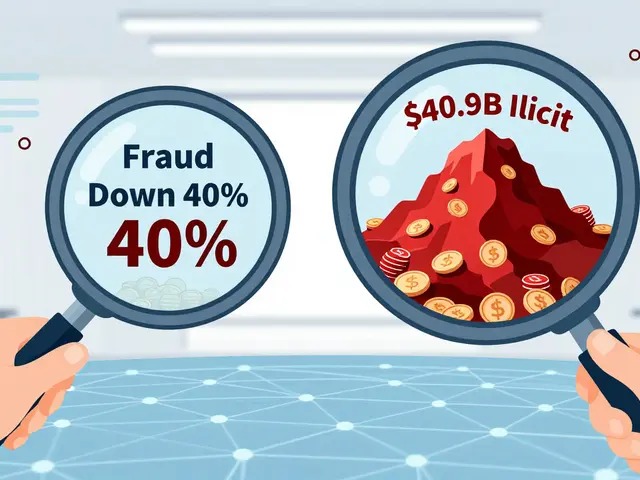
Did you know that the amount of money stolen in crypto crimes dropped by 40% in 2024? It sounds like a victory lap for regulators, but the reality is much messier. While fraud-related transfers fell, the total value received by illicit addresses actually surged to nearly $41 billion when you look at broader metrics. The landscape between 2024 and 2025 isn't just about good guys versus bad guys; it's a complex game of cat and mouse involving billions in fines, shifting blockchain preferences, and regulatory frameworks that often exist on paper but fail in practice.
If you are trying to understand where the industry stands today, looking at raw numbers isn't enough. You need to see how different agencies define "crime," which blockchains criminals prefer, and why traditional finance still pays significantly higher penalties than the crypto sector. This breakdown covers the essential enforcement statistics, regulatory gaps, and the emerging trends that will define digital asset compliance through 2025.
The Data Discrepancy: Why Two Reports Show Different Numbers
When analyzing crypto enforcement statistics, the first hurdle is agreeing on what constitutes "illicit activity." In early 2025, two major intelligence firms released reports with vastly different figures for 2024. This isn't an error; it’s a difference in methodology that matters for anyone tracking risk.
TRM Labs published its 2025 Crypto Crime Report in January 2025, stating that illicit funds sent to fraud amounts totaled USD 10.7 billion in 2024. This represented a 40% decrease from 2023. Their metric focuses specifically on funds moving into known fraud schemes, excluding other types of illicit behavior.
In contrast, Chainalysis reported in February 2025 that the total value received by illicit cryptocurrency addresses hit USD 40.9 billion in 2024. Chainalysis includes a wider net: darknet markets, ransomware payments, scams, and sanctions evasion. They also note a historical pattern where their annual figures increase by approximately 25% after publication as more illicit addresses are identified retroactively. For example, their 2023 figure grew from $24.2 billion to $46.1 billion within a year.
| Source | Total Value (USD) | Scope of Definition | Trend vs. Previous Year |
|---|---|---|---|
| TRM Labs | $10.7 Billion | Fraud-specific transfers only | -40% Decrease |
| Chainalysis | $40.9 Billion | All illicit addresses (scams, darknet, ransomware, sanctions) | Significant Increase (from prior baseline) |
This discrepancy highlights a critical insight: while targeted fraud may be declining due to better detection, the overall volume of money touching illicit addresses remains massive. Furthermore, Kroll Cyber Threat Intelligence noted that nearly $1.93 billion was stolen in crypto-related crimes during the first half of 2025 alone, suggesting that sophisticated attacks persist even if broad fraud metrics dip.
Where the Money Moves: Blockchain Preferences for Illicit Activity
Criminals are not random in their choices. They prioritize low fees, speed, and privacy features. In 2024, the distribution of illicit volume across blockchains revealed clear preferences.
TRON dominated the landscape, hosting 58% of global illicit crypto volume. Ethereum followed with 24%, Bitcoin with 12%, and both Binance Smart Chain and Polygon holding 3% each. The dominance of TRON is largely driven by the widespread use of USDT (Tether) stablecoins on its network, which offers cheap transactions ideal for laundering or moving stolen funds quickly.
However, 2024 saw a significant shift in this trend. TRON’s illicit volume dropped by USD 6 billion, effectively halving its proportion of total illicit activity. This decline wasn’t accidental. It resulted from the formation of the T3 Financial Crime Unit (T3 FCU) in August 2024. This public-private partnership between TRON Foundation, Tether, and TRM Labs enabled the freezing of over USD 130 million in illicit proceeds. Approximately 20% of blocklisted USDT on TRON was reissued directly to victims or government accounts.
This case study demonstrates that enforcement is becoming more effective when technology providers collaborate directly with law enforcement. By targeting specific vectors-like sanctioned entities (which accounted for 49% of TRON’s illicit volume) and blocklisted funds (32%)-regulators can disrupt flows that were previously difficult to stop.

Regulatory Gaps: Paper Rules vs. Real-World Implementation
Having laws on the books does not mean they are enforced. The gap between regulatory intent and actual implementation remains one of the biggest challenges in global crypto oversight.
The Financial Action Task Force (FATF) assessed 58 jurisdictions in March 2024. On paper, the numbers looked promising: 91% had enacted or were implementing Anti-Money Laundering (AML) and Counter-Financing of Terrorism (CFT) registration regimes, and 84% had implemented the Travel Rule (which requires sharing sender/receiver data for cross-border transfers).
Yet, a deeper dive reveals cracks. A subsequent FATF Targeted Report showed significant global implementation gaps. Corroborating this, the PwC Global Crypto Regulation Report 2025 found that 75% of surveyed jurisdictions remain only partially compliant or non-compliant with FATF requirements-a figure unchanged since April 2023. Nearly 30% still fail to implement the Travel Rule entirely.
Why does this matter? Without consistent Travel Rule adoption, criminal actors can hop between jurisdictions with weak enforcement, making cross-border tracing nearly impossible. As the user base expands-projected to surpass 950 million globally by the end of 2025-these gaps become larger vulnerabilities.

Penalties: Crypto vs. Traditional Finance
There is a common perception that crypto is lightly regulated compared to traditional banking. When you look at the aggregate penalty data, the comparison becomes stark.
According to the Coincub Crypto Asset Risk Report 2025, the crypto industry faced aggregate penalties totaling $13.5 billion between 2020 and early 2025. This includes formal sanctions, fines, and costs associated with significant security incidents. While substantial, this pales in comparison to traditional finance. Institutions like Bank of America and JPMorgan Chase have collectively faced penalties exceeding $97 billion, with the broader financial services sector incurring over $300 billion in fines for issues ranging from mortgage abuses to sanctions breaches.
However, the nature of enforcement differs. In crypto, 72% of enforcement records involve regulatory compliance actions rather than massive monetary fines for systemic fraud. Regulators are currently focused on establishing the rules of the road rather than punishing entrenched corruption. For instance, the U.S. Department of Justice charged 17 individuals in Massachusetts in October 2024 for market manipulation using bots and wash trading of meme coins. These cases signal a shift toward prosecuting specific criminal behaviors within the ecosystem.
What to Expect in Late 2025 and Beyond
As we move through 2025, several trends are shaping the future of enforcement:
- Focus on Stablecoins and DeFi: 68% of regulatory bodies plan to issue specific guidance for stablecoins and Decentralized Finance (DeFi) protocols by Q3 2025. These areas are seen as high-risk due to their complexity and potential for anonymity.
- Cross-Border Cooperation: International enforcement cooperation is expected to improve. Initiatives like the T3 FCU model suggest that public-private partnerships will become standard, potentially reducing platform-specific illicit activity by up to 50% within 6-12 months of implementation.
- Evolving Criminal Tactics: While basic fraud may decline, sophisticated attacks continue. The $1.93 billion stolen in H1 2025 indicates that criminals are adapting to new security measures, likely shifting toward more complex smart contract exploits or social engineering campaigns.
For businesses and investors, the message is clear: compliance is no longer optional. The era of wild west regulation is ending. Agencies are gaining technical capabilities, and the tools to trace illicit flows are becoming more precise. Whether you are building a protocol or managing a portfolio, understanding these enforcement dynamics is crucial for risk management.
How much illicit crypto activity occurred in 2024?
The answer depends on the source. TRM Labs reported $10.7 billion in fraud-specific funds sent, a 40% drop from 2023. Chainalysis reported $40.9 billion received by all illicit addresses, including scams, ransomware, and darknet markets. The difference lies in whether the metric tracks only outgoing fraud transfers or all incoming illicit funds.
Which blockchain has the most illicit activity?
In 2024, TRON hosted 58% of global illicit crypto volume, primarily due to the use of USDT stablecoins. Ethereum followed with 24%, and Bitcoin with 12%. However, TRON's share decreased significantly in late 2024 due to enhanced enforcement efforts via the T3 Financial Crime Unit.
Are crypto fines higher than traditional bank fines?
No. Between 2020 and early 2025, the crypto industry faced $13.5 billion in penalties. In contrast, traditional financial institutions like JPMorgan and Bank of America have faced over $97 billion collectively, with the broader sector facing over $300 billion. Crypto enforcement is currently more focused on compliance violations than massive systemic fraud fines.
What is the FATF Travel Rule and is it being followed?
The Travel Rule requires virtual asset service providers to share sender and receiver information for cross-border transactions. While 84% of jurisdictions claim to have implemented it, PwC reports that nearly 30% still fail to do so effectively, creating significant gaps in global enforcement.
Will crypto crime decrease in 2025?
Fraud-related transfers may continue to decline due to better detection, but total illicit activity remains high. Kroll reported $1.93 billion stolen in the first half of 2025 alone. Criminals are adapting to stricter regulations by using more sophisticated methods, such as exploiting DeFi protocols or engaging in complex market manipulation.


Matthew Malone
another day another report trying to convince us crypto is safe while the bad guys are just getting smarter. typical.
aaliyah zahid
i mean look at the numbers though, $40 billion is a lot of money for criminals to be moving around. its kinda wild that tron was the main highway for all this stuff.
Karthikeyan S
you people are so naive 😡 why do you trust these reports? they are cooked. the real crime is in traditional finance but nobody talks about that because they own the media 🤬
Caitlin Donahue
im not saying i trust them completely but it is interesting to see the discrepancy between trm and chainalysis. one says fraud is down, the other says illicit activity is up. makes me think we need better definitions before we start celebrating or panicking.
Dinesh Pattigilli
the average joe here doesnt understand the nuance of blockchain analytics. tron is popular because its cheap and fast, not because its inherently evil. but sure, blame the messenger instead of the criminal masterminds who exploit every vulnerability. pathetic.
Madhu Menon
perhaps the definition of crime itself is shifting with technology. what was once considered a gray area in digital assets is now being codified into strict regulatory frameworks. the t3 financial crime unit seems like a pivotal moment where cooperation actually yielded results. 🧐
Narendra Kulkarni
yeah the t3 thing is pretty cool. freezing over 130 million is huge. maybe if more chains did that we wouldnt have such a mess. good to see some progress even if its slow.
verna kennedy
let's be honest, the travel rule is a joke until everyone follows it. having laws on paper means nothing if half the jurisdictions ignore them. it creates loopholes that criminals exploit daily.
Kelly Tenney
i really hope the focus on stablecoins and defi helps clarify things for regular users. it feels like we are always playing catch up with regulations. but seeing agencies gain technical capabilities gives me a little bit of hope that compliance will become standard rather than an afterthought.
Greg Lewis
so you think following rules will stop crime? nah. criminals adapt. they move to new chains or use mixers. the game never ends it just changes venues. dont get your hopes up too high folks.
JEVON HALL
actually the data shows that targeted enforcement works. look at the drop in tron illicit volume after the t3 fcu formed. collaboration is key. also check out how kroll reported nearly 2 billion stolen in h1 2025 alone. its still happening but we are getting better at tracing it 📉🔍
Caralee Robertson
i find it scary that 30% of jurisdictions still fail to implement the travel rule. that leaves so many gaps for bad actors to slip through. we need global consistency not patchwork laws.
Dr Lynea LaVoy
exactly. without consistent implementation cross-border tracing is nearly impossible. the fatf assessments show promise on paper but the reality is much messier. businesses need to understand these dynamics for risk management especially as the user base grows to 950 million by end of 2025.
Erik Kirana
this article is full of fluff. nobody cares about the methodology differences between trm and chainalysis. just tell us if our money is safe or not. the fines comparison is irrelevant too because banks are too big to fail while crypto projects vanish overnight. 🙄
dan kaffeman
typical weak minded take. the fact that traditional finance has paid 300 billion in fines proves their system is broken beyond repair. crypto is the future despite the noise from regulators trying to stifle innovation. stand strong patriots 💪
Meg Gran
oh please spare me the patriot speech. the fines are high because the crimes are massive and systemic. in crypto 72% of enforcement is about compliance actions not massive fraud fines yet. give it time. the doj charging people for meme coin manipulation is a sign things are tightening up. sarcastic grin included 😉
Alexander DeVries
look at the bigger picture here. the era of wild west regulation is ending. agencies are gaining tools and criminals are adapting. whether you like it or not compliance is no longer optional. embrace the change or get left behind. stay focused on risk management strategies.
Mark Corpuz
it is important to note that while fraud transfers decreased by 40 percent according to trm labs the total value received by illicit addresses increased significantly according to chainalysis. this highlights the complexity of defining illicit activity in decentralized systems.
Steven Jacobowitz
why does everyone ignore the smart contract exploits? kroll said 1.93 billion was stolen in first half of 2025. thats insane. basic fraud might be down but sophisticated attacks are up. we need better security audits not just more regulations. jargon alert: reentrancy attacks are still rampant.
Yogendra Dwivedi
i agree that security audits are crucial. but regulations can force exchanges to improve their internal controls. the public private partnerships like t3 fcu show that when industry and government work together results can be achieved. let us support these initiatives.
Sylvia Mossman
nope. regulations only hurt the honest users. criminals will always find a way around it. they go off chain or use privacy coins. the whole travel rule idea is surveillance state nonsense. i say let the market decide and stop interfering.
Alexis Abster
can we imagine a world where transparency and safety coexist? it feels like we are standing on the brink of a new era for digital assets. the potential for positive change is immense if we can bridge the gap between innovation and responsibility. lets keep pushing forward! ✨