Crypto Tax Havens in 2026: UAE vs. Cayman Islands vs. El Salvador
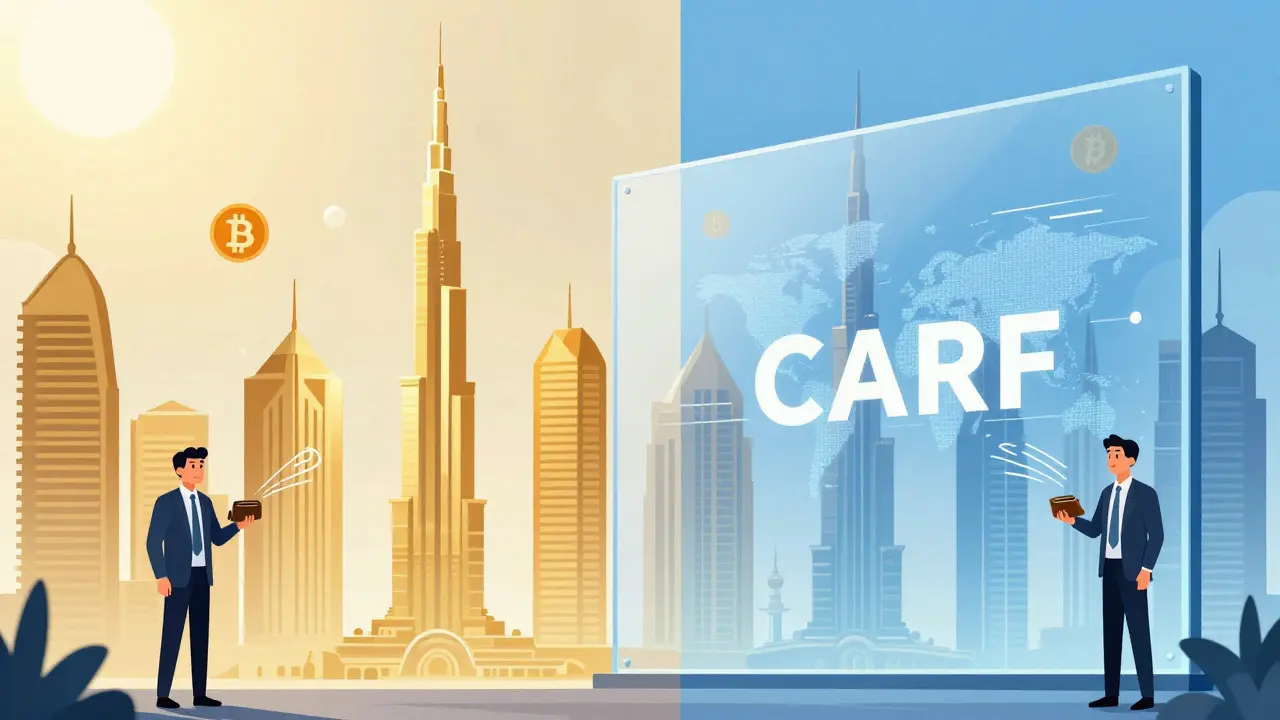
For years, the dream for many crypto investors was simple: move to a place with zero taxes, stack your Bitcoin or Ethereum, and let it grow without the government taking a cut. The United Arab Emirates, the Cayman Islands, and El Salvador were often cited as the holy trinity of these digital tax havens. But if you are planning your financial future in 2026, you need to know that the landscape has shifted dramatically. The era of total secrecy is over, even if the era of low taxation isn't.
The biggest change? The UAE, once considered the ultimate blind spot for tax authorities globally, has joined the global reporting club. Meanwhile, El Salvador offers legal tender status but comes with its own set of economic risks, and the Cayman Islands remains a fortress of privacy that is increasingly under pressure from international regulators. Understanding the differences between these three jurisdictions is no longer just about finding the lowest rate; it is about navigating compliance, residency rules, and the new reality of automatic data sharing.
The UAE: From Secret Haven to Transparent Hub
The United Arab Emirates, particularly Dubai, spent the last decade building a reputation as the world’s friendliest jurisdiction for crypto wealth. For individual investors, the math was irresistible: zero personal income tax and zero capital gains tax on cryptocurrency profits. Whether you were trading Bitcoin, staking Ethereum, or holding NFTs, the money stayed yours. This policy attracted thousands of high-net-worth individuals, including many Non-Resident Indians (NRIs) and global traders, who relocated to Dubai to protect their portfolios from higher taxes back home.
However, September 20, 2025, marked a turning point. The UAE Ministry of Finance announced the adoption of the Crypto-Asset Reporting Framework (CARF). This framework aligns the UAE with the Organization for Economic Cooperation and Development (OECD) standards for global tax transparency. In plain English, this means the days of hiding crypto holdings in Dubai while being a tax resident elsewhere are numbered.
Here is how the timeline works for those watching closely:
- Public Consultation: Open until November 8, 2025, allowing stakeholders to voice concerns.
- Final Regulations: Expected to be published in 2026.
- Implementation Start: January 1, 2027.
- First Data Exchange: Automatic sharing of crypto tax data will begin in 2028.
Under CARF, crypto service providers in the UAE-exchanges, brokers, custodians, and wallet providers-must collect detailed data. This includes account balances, transaction histories, and customer residency status. Crucially, they must report account-holders who are tax-resident abroad. If you live in the UAE and are a tax resident there, you are safe from outbound reporting. But if you use a UAE exchange while living in India, Germany, or the US, your data will eventually be shared with your home country’s tax authority.
Does this mean the UAE is no longer a good place for crypto? Not necessarily. The zero personal income tax still applies. You can still make millions trading crypto in Dubai and pay nothing to the local government. The difference is that your home country will now know about it. For NRIs returning to India, where crypto assets face a brutal 30% flat tax plus a 1% TDS (Tax Deducted at Source), the UAE remains a valuable short-term liquidation zone. It is no longer a "forever comfort plan" for hiding wealth, but it remains a powerful tool for managing taxable events before repatriating funds.
Cayman Islands: The Privacy Fortress Under Pressure
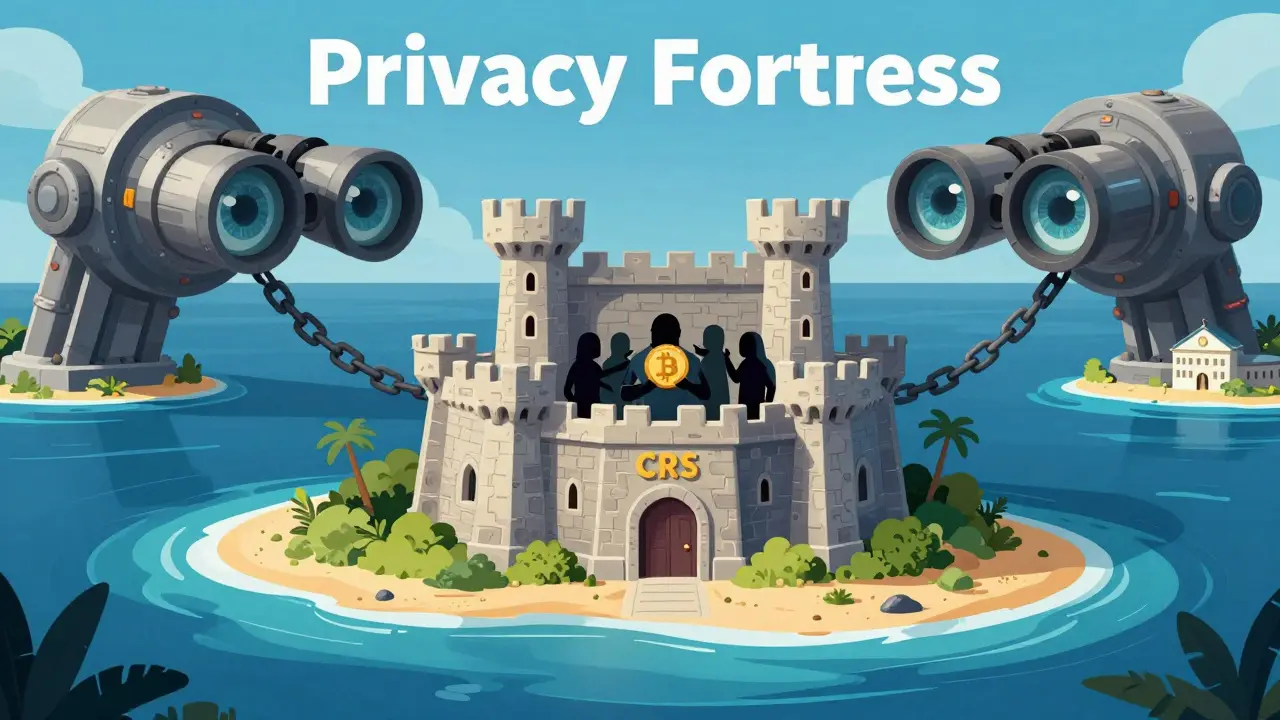
If the UAE is moving toward transparency, the Cayman Islands have long been synonymous with opacity. As a traditional offshore financial center, the Caymans offer no direct taxation on income, capital gains, or profits. There is no corporate tax, no personal income tax, and no specific crypto tax. For decades, this made it an attractive base for hedge funds and family offices looking to structure investments without immediate tax leakage.
However, the Cayman Islands do not operate in a vacuum. They are part of the Common Reporting Standard (CRS) network, which facilitates the automatic exchange of financial account information with partner jurisdictions. While the Caymans themselves do not tax your crypto gains, they do share banking data with countries that do. If you are a tax resident of the UK, Canada, or Australia, your Cayman bank accounts are already visible to your home tax authority through CRS.
The challenge for crypto investors in the Caymans lies in the definition of "reportable entities." Traditional banks comply easily because they deal in fiat currency. Crypto exchanges and decentralized finance (DeFi) protocols are harder to regulate. The Cayman Financial Services Regulatory Commission (CFSRC) has been working to update its frameworks to include virtual asset service providers (VASPs). As of 2026, the pressure is mounting on Cayman-based crypto firms to adopt KYC (Know Your Customer) and AML (Anti-Money Laundering) standards that mirror global expectations.
So, is the Cayman Islands still a crypto haven? Yes, but only if you understand the distinction between tax avoidance and tax evasion. You can legally structure a fund in the Caymans to defer taxes or optimize liabilities, but you cannot simply hide your personal Bitcoin wallet there and expect it to disappear from your home country’s radar. The privacy is real, but the anonymity is fading. For sophisticated investors using trust structures or offshore companies, the Caymans remain a top choice. For retail traders looking for a simple place to hold coins, the regulatory friction is increasing.
El Salvador: The Bold Experiment with Real Risks
El Salvador took a different path entirely. In 2021, it became the first country in the world to adopt Bitcoin as legal tender alongside the US dollar. The message was clear: we are all-in on crypto. For investors, this created a unique proposition. Not only are there no capital gains taxes on Bitcoin transactions for residents, but you can also use Bitcoin to buy coffee, pay bills, and receive salaries. The government even issued "Volcano Bonds" backed by Bitcoin, signaling a deep institutional commitment.
Living in El Salvador as a crypto investor comes with distinct advantages and disadvantages. On the plus side, the cost of living is significantly lower than in Dubai or the Caymans. The residency process for foreigners has become more streamlined, especially for those who can demonstrate investment in the local economy or purchase property. Furthermore, the Chivo Wallet, a state-sponsored digital wallet, allows for easy interaction with the Bitcoin network, although its usability has faced criticism from tech experts.
However, the risks are substantial. El Salvador’s economy is small and volatile. The country faces challenges with debt sustainability and inflation. Relying on a single nation’s political stability for your entire crypto strategy is risky. Additionally, while Bitcoin is legal tender, the regulatory framework for other cryptocurrencies like Ethereum or Solana is less defined. Most regulations focus on Bitcoin, leaving altcoin investors in a gray area regarding consumer protections and dispute resolution.
Another critical factor is banking access. Despite Bitcoin being legal tender, traditional banks in El Salvador have been hesitant to serve crypto businesses due to fears of losing correspondent banking relationships with larger global institutions. This means that while you can hold Bitcoin, moving large amounts of fiat currency in and out of the country can sometimes be cumbersome. For digital nomads and remote workers, El Salvador offers a vibrant community and a tax-friendly environment, but it requires a higher tolerance for economic uncertainty compared to the UAE or Caymans.
Comparing the Big Three: Key Differences
To help you decide which jurisdiction fits your needs, let’s break down the key attributes. Each location serves a different type of investor. The UAE is for those who want modern infrastructure and business growth. The Caymans are for those prioritizing asset protection and complex structuring. El Salvador is for ideologically driven investors willing to embrace volatility.
| Feature | United Arab Emirates (UAE) | Cayman Islands | El Salvador |
|---|---|---|---|
| Personal Income Tax | 0% | 0% | 0% on Crypto Gains |
| Capital Gains Tax | 0% for Individuals | 0% | 0% on Bitcoin |
| Global Reporting (CARF/CRS) | Joining CARF (Data sharing starts 2028) | Part of CRS (Existing data sharing) | Limited participation in global auto-exchange |
| Regulatory Body | VARA (Dubai), ADGM (Abu Dhabi) | CFSRC | Superintendencia del Mercado de Valores |
| Bitcoin Legal Status | Legal Asset | Legal Asset | Legal Tender |
| Best For | Business founders, active traders, NRIs | Wealthy families, hedge funds, asset protection | Ideological believers, low-cost living, early adopters |

Navigating Compliance and Residency
Choosing a tax haven is not just about picking a flag; it is about establishing genuine residency. Tax authorities in major economies like the US, UK, and EU countries are cracking down on "mailbox companies" and fake expats. To benefit from the zero-tax regimes in the UAE or Caymans, you typically need to prove that you are genuinely living and operating in that jurisdiction.
In the UAE, obtaining residency is relatively straightforward for investors and entrepreneurs. The Golden Visa program allows long-term stays for those who invest in real estate or start a business. However, you must maintain ties to the country. Spending significant time abroad while claiming UAE residency can trigger scrutiny under the "center of vital interests" test used by other countries. If your home country determines you are still effectively resident there, they may ignore your UAE status and tax you anyway.
For the Cayman Islands, residency is harder to obtain for average individuals. It is primarily designed for corporations and ultra-high-net-worth individuals setting up trusts. Unless you are buying a multi-million dollar property or establishing a significant business presence, you likely won’t qualify for tax residency. This makes the Caymans less accessible for typical crypto traders.
El Salvador offers a middle ground. Residency can be obtained through investment programs, and the cost barrier is lower. However, the lack of robust international tax treaties means that resolving double-taxation issues or proving residency to foreign authorities can be administratively difficult. You might save on local taxes, but you could spend months dealing with paperwork to convince your former home country that you have truly moved.
Future Outlook: What to Watch in 2026 and Beyond
The trend is clear: global cooperation on crypto taxation is accelerating. The OECD’s CARF framework is gaining momentum, with over 50 jurisdictions committed to implementation. Switzerland, known for its banking secrecy, began sharing crypto tax data with 74 partner countries in mid-2025. New Zealand, Australia, and the Netherlands are also moving forward. This creates a domino effect. As more countries join the reporting network, the value of any single "haven" diminishes unless it offers something beyond just secrecy.
For investors, the strategy must shift from hiding to optimizing. Instead of asking "Where can I hide my Bitcoin?", ask "Where can I legally minimize my tax burden while staying compliant?" The UAE remains strong because it offers a legitimate business ecosystem, not just a tax loophole. The Caymans remain relevant for complex wealth structures. El Salvador remains a niche play for those aligned with Bitcoin maximalism.
As we move into late 2026, keep an eye on the finalization of UAE’s CARF regulations. Once those are published, the window for certain types of pre-compliance planning will close. Document every transaction, keep records of purchase prices and sale dates, and consult with a cross-border tax advisor. The golden age of anonymous crypto wealth is ending, but the silver age of strategic, transparent optimization is just beginning.
Is the UAE still a tax haven for crypto in 2026?
Yes, the UAE remains a tax haven for individuals because it charges 0% personal income tax and 0% capital gains tax on crypto profits. However, it is no longer a secret haven. With the upcoming implementation of CARF starting in 2027, the UAE will automatically share tax data with other countries, meaning your home country will know about your holdings if you are a tax resident elsewhere.
Do I pay tax on crypto in the Cayman Islands?
No, the Cayman Islands does not impose any direct taxes on income, capital gains, or profits, including those from cryptocurrency. However, the Caymans participate in the Common Reporting Standard (CRS), so they share financial data with partner countries. If you are a tax resident of another country, that country may still tax your crypto gains based on the shared information.
Is Bitcoin legal tender in El Salvador tax-free?
Yes, El Salvador does not levy capital gains taxes on Bitcoin transactions for residents. Since Bitcoin is legal tender, gains from its appreciation are treated similarly to gains from holding the local currency. However, the regulatory framework for other cryptocurrencies is less clear, and the country’s economic volatility poses risks for long-term wealth storage.
What is CARF and how does it affect me?
CARF stands for the Crypto-Asset Reporting Framework. It is a global standard developed by the OECD for the automatic exchange of information on crypto assets. For you, it means that crypto exchanges and wallets in participating countries (like the UAE) will report your account details and transaction history to local tax authorities, who will then share that data with your country of tax residence. This ends the era of anonymous crypto trading on regulated platforms.
Which country is best for crypto residency in 2026?
The best country depends on your goals. The UAE is best for active traders and business founders who want modern infrastructure and ease of doing business. The Cayman Islands are best for ultra-high-net-worth individuals seeking asset protection and complex trust structures. El Salvador is best for ideological Bitcoin supporters who prioritize legal tender status and lower costs over economic stability and regulatory maturity.


Routh Middaugh
It is truly fascinating how the landscape has shifted so rapidly! The UAE joining CARF is a massive deal for everyone who thought they had found a permanent loophole. I always believed that transparency was inevitable, but seeing it happen in 2025-2027 feels like history in motion. It makes me wonder if we are finally reaching a point where global financial systems can actually work together without constant friction. Perhaps this is the beginning of a more equitable era for digital assets? We must remain hopeful that these regulations will protect investors rather than just punish them.
Ryan Peters
Typical bureaucratic overreach designed to stifle innovation and control capital flows. The US government wants every penny tracked because they know their own tax system is broken beyond repair. They want you to pay up while they waste billions on useless programs. If you want real freedom, you don't play by their rules; you go dark or move to a jurisdiction that respects sovereignty. This CARF nonsense is just another chain around the ankles of free traders. Wake up people!
Mélanie Boulay
I have been following the developments regarding the Cayman Islands closely, and it is important to note that while they do not impose direct taxes, the Common Reporting Standard means that your home country will likely still see your holdings if you are a tax resident elsewhere. This distinction between tax avoidance and tax evasion is crucial for anyone considering moving their assets there, as the regulatory pressure is increasing significantly for virtual asset service providers. It is not simply about hiding money anymore, but about understanding the complex web of international agreements that govern financial data sharing. Many individuals mistakenly believe that offshore accounts provide total anonymity, but the reality is far more nuanced and requires careful legal structuring to ensure compliance with both local and international laws. The era of simple secrecy is indeed over, and those who fail to adapt may find themselves facing significant penalties down the line.
Maurice Flynn
The philosophical shift here is from hiding to optimizing. We used to think crypto was about escaping the system entirely, but now it seems like the goal is to exist within the system in the most efficient way possible. It’s a bit sad, but also realistic. Maybe this forces us to build better businesses instead of just chasing arbitrage opportunities. Let’s embrace the change and find value in compliance.
nancy jarecki
One might assume that retail investors would grasp the nuance of VARA’s regulatory framework, but alas, the masses remain blissfully ignorant of the sophisticated mechanisms at play. The integration of CARF into the UAE’s legal structure is not merely a policy update; it is a fundamental restructuring of the epistemological basis of offshore wealth management. To suggest that Dubai remains a 'haven' without acknowledging the impending data exchange protocols is intellectually dishonest. The jargon-heavy nature of these regulations serves to exclude the uninitiated, which is precisely the point. Only those with the requisite expertise can navigate this new terrain effectively.
Robert Hundley
This is huge news guys!! :D I’ve been watching Dubai rise as a crypto hub and it’s amazing to see them getting serious about regulation. It gives me confidence that my investments are safe. Who else is planning a trip to check out the scene? Let’s keep the momentum going! 🚀
Melissa L
i dont get why everyone is so worried about taxes. just hold bitcoin and wait. el salvador sounds cool but i heard the internet is slow there lol. maybe i should move there someday.
Rob Morton
It is interesting to consider the long-term implications of El Salvador’s experiment. While the immediate benefits of zero capital gains tax on Bitcoin are appealing, the broader economic risks cannot be ignored. How do we balance ideological commitment with practical financial security? Perhaps the answer lies in diversification rather than putting all our eggs in one volatile basket. What are your thoughts on the sustainability of such policies?
Carl Belgrave
Listen up! The only place you should trust is America. These foreign havens are just scams waiting to happen. You think Dubai cares about your money? They’ll take it when the wind changes. Stick to domestic options and support our economy. Don’t let these globalists trick you into thinking you’re smarter than the IRS. Patriotism pays dividends!
Carl Hanzel
You are all missing the point. The problem isn’t the taxes; it’s the loss of privacy itself. Once you give up your data, you lose your power. CARF is just the tip of the iceberg. Soon everything will be monitored. Stop celebrating compliance and start resisting surveillance. Your enthusiasm for being tracked is pathetic.
Daniel J. Cox
As someone who has lived in both Dubai and Singapore, I can tell you that the cultural shift towards transparency is welcome. It creates a level playing field. In Dubai, the infrastructure is world-class, and knowing that regulators are watching actually protects small players from big bad actors. It’s a mature approach to finance. Embrace it! :)
Emma Rémond
The notion that El Salvador offers any semblance of stability is laughable to those who understand macroeconomic fundamentals. The volatility of Bitcoin combined with the structural weaknesses of the Salvadoran economy creates a perfect storm for disaster. Furthermore, the lack of robust regulatory frameworks for altcoins leaves investors exposed to significant counterparty risk. It is amusing to watch retail traders flock to such jurisdictions based on superficial incentives. True sophistication requires a deep understanding of legal structures and geopolitical realities, which most participants here clearly lack.
ELNORA JEFFERSON
I am so tired of reading these articles. Nothing ever changes. The rich always find a way to hide their money while the rest of us struggle. It’s exhausting trying to keep up with all these rules. I just want to invest in peace. Why is everything so complicated?
John Curry
Oh, the tragedy of lost anonymity! We stand at the precipice of a new age, where every transaction is a whisper in a crowded room. The UAE’s decision to join CARF is not just a policy shift; it is a symbolic end to an era. Yet, amidst this gloom, there is beauty in order. Perhaps true freedom lies not in hiding, but in participating openly in a transparent society. Let us mourn the secrets of the past and celebrate the clarity of the future.
Fiona Ellis
Does anyone know if the Cayman Islands’ CRS participation includes DeFi protocols yet? I’m curious about the specific definitions of reportable entities under the CFSRC guidelines. It seems like a gray area that needs clarification. 😊📊
Nicole Woessner
I traveled through Central America last year and saw the impact of crypto adoption firsthand. It’s fascinating to see how communities are adapting. However, the banking issues mentioned in the article are real. Moving fiat in and out can be a headache. It’s a trade-off between ideology and convenience. I respect those willing to make that choice.
Jon Milton
We need to stop viewing this as a war against taxation and start seeing it as an evolution of global cooperation. The UAE’s move is brave and necessary. It sets a precedent that will likely be followed by other hubs. As cultural ambassadors of the digital age, we should advocate for clear, fair rules that benefit everyone. Let’s engage constructively and help shape this new reality rather than fighting it. Together, we can build a more inclusive financial system.