Exnomy Crypto Exchange Review: Is It Safe or a Scam in 2026?
Imagine depositing your hard-earned money into a new platform, only to find the 'withdraw' button grayed out. This nightmare scenario is exactly why you need to look twice before trusting any unknown name in the crypto space. Exnomy is a cryptocurrency exchange platform that claims to offer low fees and a wide selection of digital assets. Founded in 2020, it positions itself as 'The Better Way to Trade & Invest,' targeting users who want simplicity and speed. But does it deliver on these promises, or is it another trap for unsuspecting investors?
In this review, we cut through the marketing hype. We will examine the platform's actual features, its fee structure, and most importantly, the serious red flags surrounding its legitimacy. By the end of this article, you will know whether Exnomy deserves a spot in your portfolio or if you should keep your wallet closed.
What Is Exnomy? A Quick Overview
To understand the risk, you first need to understand the product. Exnomy operates as a decentralized exchange (DEX) platform based in India. Unlike centralized exchanges like Binance or Coinbase, which hold your funds in their own wallets, a DEX allows peer-to-peer trading directly from your wallet. Theoretically, this means more control for you and less risk of the exchange going bankrupt with your money.
The platform boasts over 2 million customers, a number that sounds impressive until you question how they verify it. Exnomy claims to support various trading types and multiple deposit methods, aiming to be accessible to beginners. The interface is designed to be user-friendly, stripping away complex charts and order books in favor of simple buy/sell buttons. For a novice trader, this looks appealing. However, simplicity can sometimes mask a lack of depth or, worse, hidden traps.
Key Features and User Experience
Let’s break down what you actually get when you sign up. The primary selling point of Exnomy is its promise of low trading fees and a broad selection of cryptocurrencies. In an industry where fees can eat into profits by 1% to 3%, even small savings matter. However, specific current pricing structures are notably absent from public documentation. Are fees truly lower than competitors, or is there a hidden spread cost?
The user experience focuses on ease of use. You don’t need to navigate complex API integrations or manage private keys manually if you use their hosted solution. This convenience comes at a price: trust. You are trusting the platform to execute trades fairly and securely. The platform supports various deposit methods, though the exact list varies by region. For Indian users, this might include local bank transfers or UPI, while international users may rely on crypto deposits.
- Asset Selection: Claims to support a wide range of tokens, but lacks transparency on liquidity depth.
- Fees: Advertised as low, but detailed breakdowns are missing from official sources.
- Interface: Simplified design aimed at beginners, potentially lacking advanced tools for serious traders.
- Accessibility: Mobile-friendly app and web platform for trading on the go.
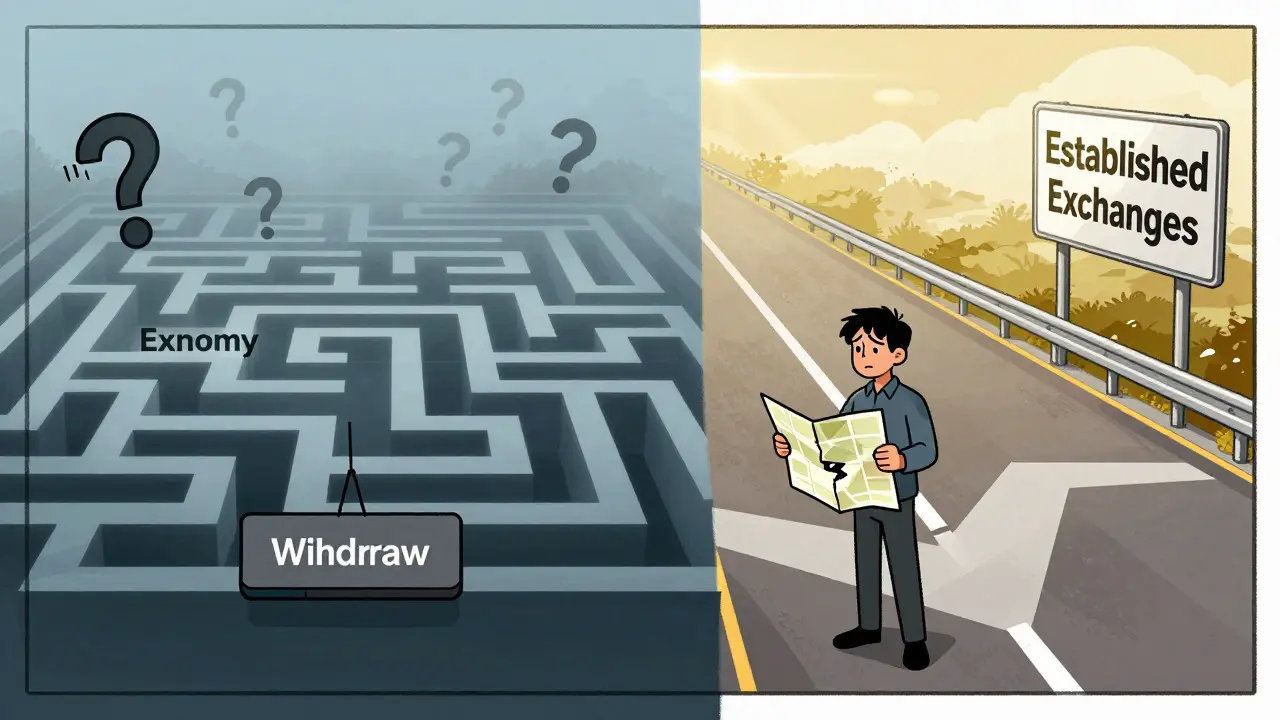
The Big Red Flag: Security and Legitimacy Concerns
Here is where things get tricky. While Exnomy presents a polished front, independent analysis paints a different picture. WikiBit, a reputable crypto review aggregator, has flagged concerns about the platform's long-term viability. Their assessment notes that development prospects seem lacking in innovation and long-term vision, with limited growth potential. They characterize the outlook as 'Disappointing and uninspired.' This isn't just a minor complaint; it suggests the project may not have the resources or roadmap to survive in the competitive crypto market.
More alarming are the user warnings circulating online. There are YouTube videos and forum posts alleging scams associated with entities bearing similar names, such as 'Nomy Finance' or 'Cryptonomy.' These reports claim that international scammers have stolen cryptocurrency from investors under the guise of high-yield returns. Victims report lost funds and empty promises of reimbursement in non-existent tokens.
Crucially, it remains unclear if these scams are directly operated by Exnomy or if they are copycats exploiting the brand's name. However, in the crypto world, ambiguity is dangerous. If a platform cannot clearly distinguish itself from known scams, the risk falls entirely on the user. Always verify the official URL and check for regulatory compliance before depositing funds.
How Exnomy Compares to Competitors
To put Exnomy in perspective, let’s compare it with established players. We’ll look at three key areas: security, fees, and asset variety. This comparison helps you decide if the 'better way' claim holds water.
| Feature | Exnomy | Binance (Centralized) | Uniswap (Decentralized) |
|---|---|---|---|
| Type | Hybrid/DEX | Centralized (CEX) | Decentralized (DEX) |
| Regulatory Status | Unclear/Limited | Licensed in many regions | Non-custodial (No entity to license) |
| Fee Transparency | Low detail available | Highly transparent (0.1% standard) | Transparent (Network gas + 0.3%) |
| Security Reputation | Mixed/Concerns raised | Strong (SAFU fund) | Code-audited (Smart contract risk) |
| User Base | ~2 Million (claimed) | 150+ Million | Millions of daily active wallets |
As you can see, Exnomy struggles to compete on transparency. Binance offers robust security features and clear fee structures, while Uniswap provides true decentralization without a central company to fail. Exnomy sits in a middle ground that often lacks the benefits of both worlds.
Who Should Use Exnomy? And Who Should Avoid It?
Not every platform is for everyone. Based on our analysis, here is who might consider Exnomy and who should steer clear.
Consider Exnomy if:
- You are an experienced trader comfortable taking high risks for potential high rewards.
- You specifically need access to niche tokens listed on Exnomy that aren't available elsewhere.
- You have thoroughly verified the platform's current regulatory status in your country.
Avoid Exnomy if:
- You are a beginner looking for a safe place to store your first Bitcoin or Ethereum.
- You value transparency and clear fee structures.
- You are wary of platforms with ambiguous security records or negative community sentiment.
- You prefer regulated exchanges with insurance funds or proven track records.
Final Verdict: Proceed with Extreme Caution
So, is Exnomy worth your time? The answer is likely no, unless you have a very specific reason to use it. The combination of vague fee structures, lack of innovative development, and concerning associations with scam allegations makes it a risky choice. In 2026, the crypto market is mature enough that you don't need to gamble on obscure platforms. Stick to well-established exchanges with clear reputations.
If you do decide to try Exnomy, start small. Never invest more than you can afford to lose. Enable two-factor authentication immediately, and keep your main holdings in a hardware wallet, not on the exchange. Remember, in crypto, you are your own bank-and your own security guard.
Is Exnomy a legitimate exchange?
Exnomy appears to be a real operating platform, but its legitimacy is questioned due to lack of transparency and negative reviews regarding its long-term vision. Users report mixed experiences, and some associate it with scam-like behavior seen in similar-named entities. Always verify independently before depositing.
What are the fees on Exnomy?
Exnomy advertises low trading fees, but specific percentages are not clearly published in public documentation. This lack of transparency is a red flag. Compare this with competitors like Binance (0.1%) or Uniswap (0.3%) which have clear fee schedules.
Is Exnomy safe for beginners?
Probably not. Beginners should prioritize safety and education over novelty. Platforms with unclear security protocols and negative community sentiment pose unnecessary risks. Start with regulated, well-known exchanges instead.
How does Exnomy compare to Binance?
Binance is a globally recognized, regulated exchange with millions of users and transparent fees. Exnomy is smaller, less transparent, and faces questions about its security and longevity. Binance is generally considered safer and more reliable for most traders.
Are there scams associated with Exnomy?
There are online warnings about scams involving names similar to Exnomy, such as 'Nomy Finance.' While it's unclear if Exnomy itself is the scammer, the association raises doubts. Always double-check URLs and avoid clicking suspicious links.