JPEX Crypto Exchange Review: Risks, Scandal & What It Means for Investors
Crypto Leverage Risk Calculator
Understand Leverage Risks
High leverage amplifies both profits and losses. Based on the JPEX scandal, remember: 300x leverage can wipe out your entire investment in minutes. This tool demonstrates potential outcomes at different market movements.
Results
This is a demonstration of potential gains and losses based on your input. Trading with high leverage carries extreme risk.
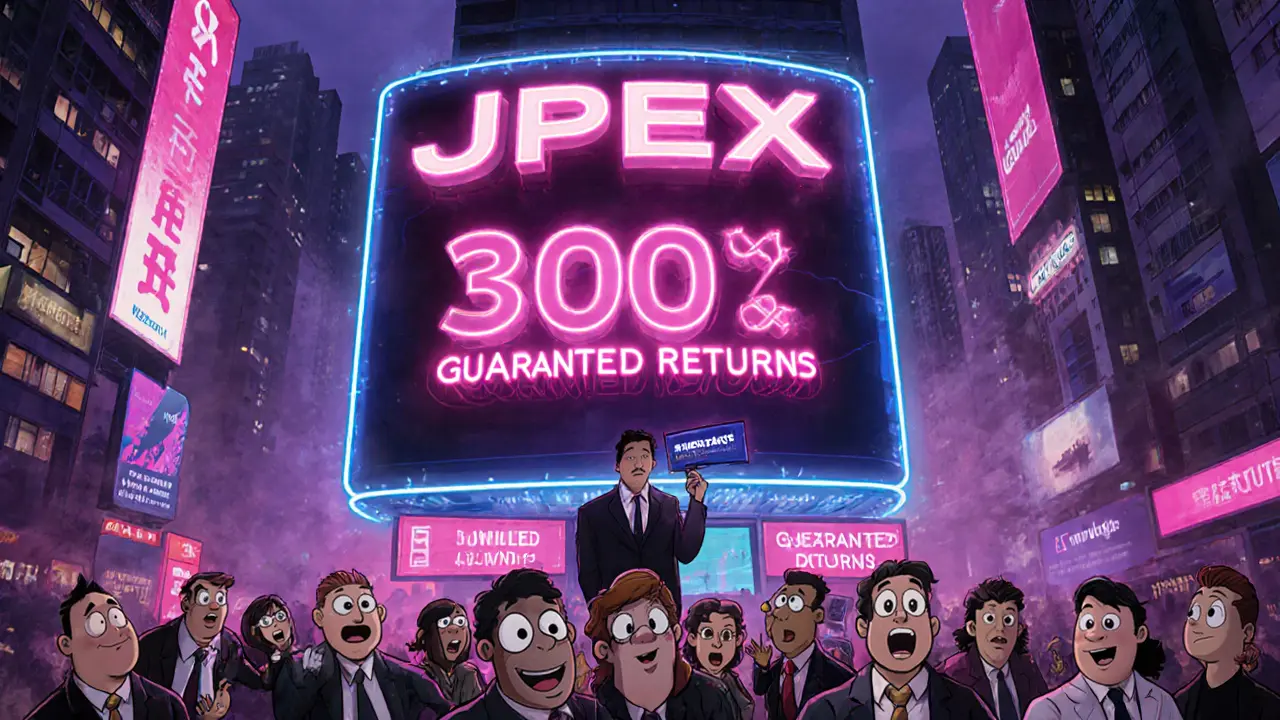
If you’ve been hunting for a crypto platform that promises sky‑high leverage and "guaranteed" returns, you’ve probably come across JPEX crypto exchange review in forums and news feeds. The hype around JPEX was loud, but the reality turned out to be a cautionary tale that still reverberates through Hong Kong’s crypto scene. This article breaks down what JPEX claimed to be, how regulators cracked down, how it stacks up against legit exchanges, and what you should keep in mind before trusting any unlicensed platform.
What is JPEX?
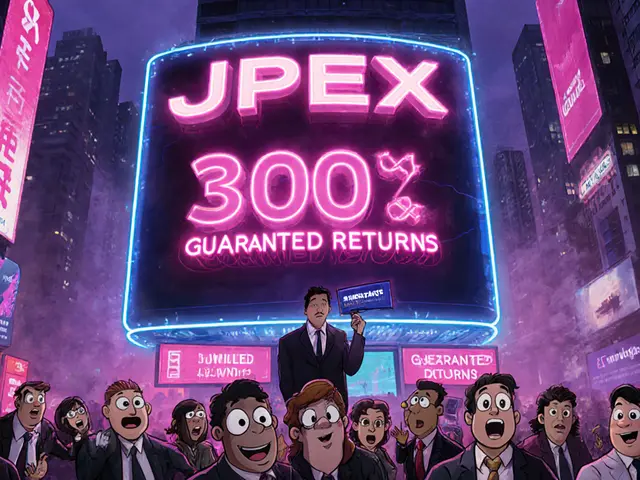
JPEX is a crypto‑asset platform that marketed itself as a high‑leverage exchange, an asset‑management service, and a source of interest‑bearing crypto deposits. Operated by WEB3.0 Technical Support Limited, the platform advertised up to 300x leverage, an "Automatic Arbitrage AI" (IAIA) system, and a Proof of Reserves certificate that supposedly held 8,889BTC and $400million in JPC tokens. In practice, the site offered minimal documentation, no clear licensing, and a customer‑support experience that felt more like a black box than a professional exchange.
Regulatory red flags and legal fallout
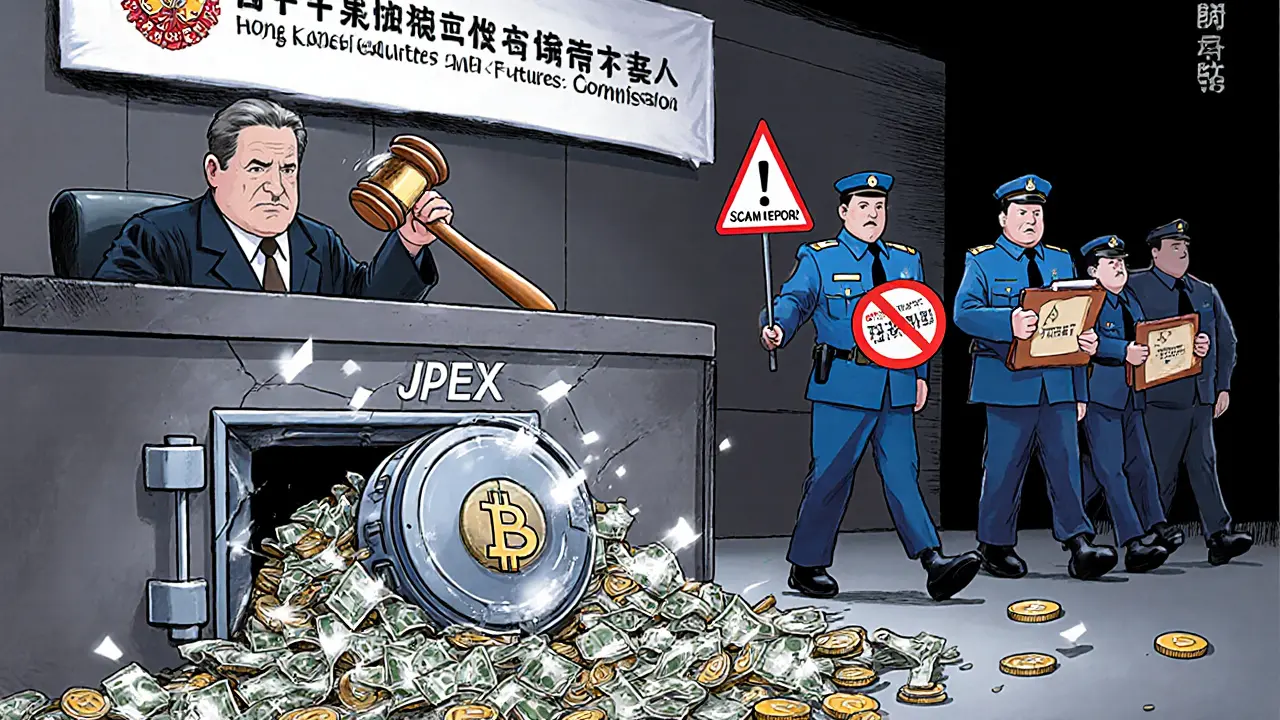
The first big warning sign came when the Hong Kong Securities and Futures Commission (SFC) listed JPEX as an unlicensed virtual asset trading platform (VATP). The regulator warned investors that JPEX operated outside the legal framework introduced in 2023 to curb crypto fraud.
Things escalated in late 2024. The Hong Kong District Court ruled in the case Chan Wing Yan and Another v. JP‑EX Crypto Asset Platform Ltd and Others that the platform had illegally transferred USDT deposits to unknown wallets, ordering the return of HK$1.85million to the plaintiffs. This judgment also set a precedent by confirming that cryptocurrency is "property" that can be held in a trust, giving courts a clearer tool to compensate victims.
Meanwhile, the Hong Kong Police logged 2,636 reports tied to JPEX, with total losses around HK$1.6billion. By April2024, 72 individuals were arrested and HK$228million in assets frozen. The scale of the scandal made it the largest crypto‑fraud case in Hong Kong’s history.
How JPEX stacks up against established exchanges
| Exchange | Founded | Typical Daily Volume (HK$) | Licensing Status | Max Leverage Offered |
|---|---|---|---|---|
| JPEX | 2022 | ≈HK$200million (estimated) | Unlicensed in Hong Kong | Up to 300× |
| Binance | 2017 | ≈HK$221.6billion | Licensed in multiple jurisdictions (e.g., Malta, Singapore) | Up to 125× (for futures) |
| Coinbase | 2012 | ≈HK$38.8billion | Registered with U.S. SEC, FCA, and others | Up to 5× (margin) |
| OKX | 2014 | ≈HK$35.7billion | Licensed in Malta, Dubai, etc. | Up to 100× (futures) |
| Bybit | 2018 | ≈HK$64.1billion | Licensed in Hong Kong (2024), Bermuda | Up to 100× |
The table makes it clear: JPEX’s daily volume was a fraction of the market leaders, and its lack of licensing puts it in a completely different risk class.
Red flags users reported
- Unrealistic returns. The platform advertised guaranteed interest rates that far exceeded market averages, a classic sign of a Ponzi‑style scheme.
- Black‑box AI arbitrage. The IAIA system was never independently audited. Claims of "automatic" profit generation are suspicious without transparent algorithms.
- Proof of Reserves ambiguity. While JPEX released a certificate showing billions in assets, auditors were never named, and the blockchain addresses were not publicly viewable.
- High leverage without safeguards. 300× leverage can wipe out a margin account in seconds. Legitimate exchanges usually require margin calls and have built‑in risk limits.
- Poor customer support. Users who tried to withdraw funds reported delayed responses, generic template replies, and in some cases, outright account bans.
These warning signs appeared early in user forums, yet the hype around high returns kept many investors hooked until the legal crackdown.
Key lessons for crypto investors
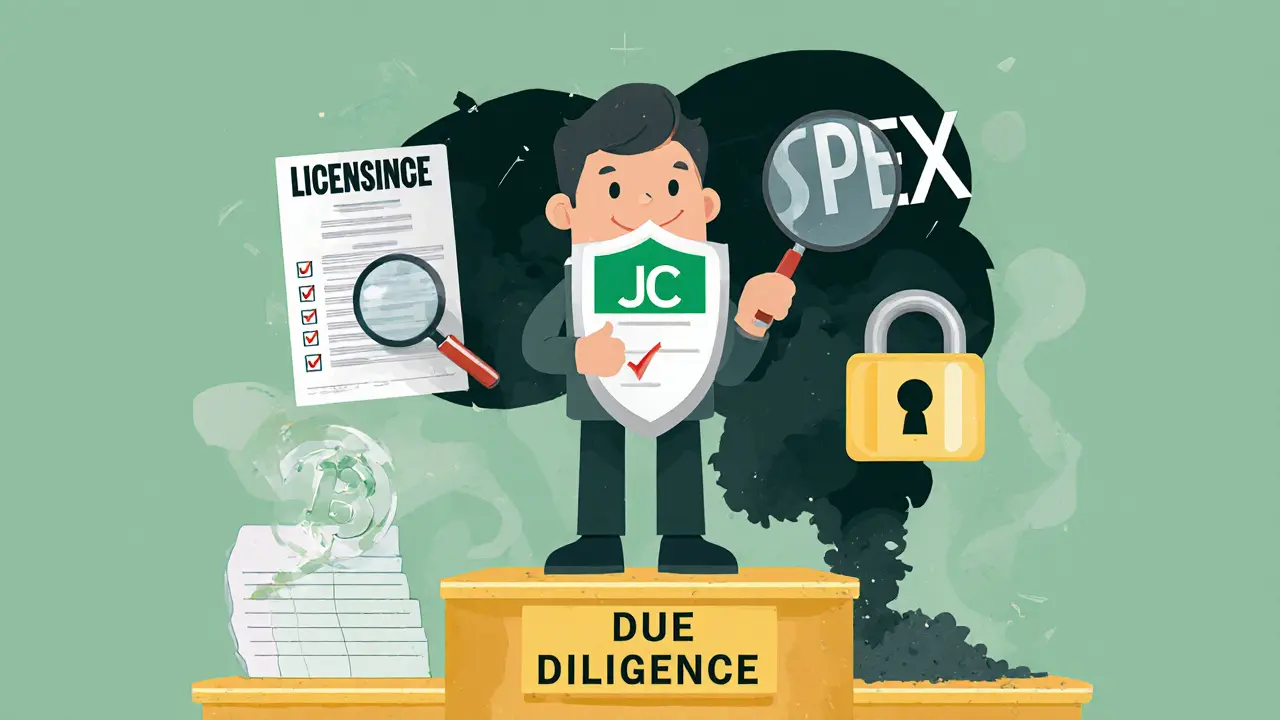
- Check licensing. Verify that the exchange is registered with a reputable regulator (SFC, FCA, MAS, etc.). Unlicensed platforms have no legal recourse if funds disappear.
- Scrutinize promised yields. If an exchange guarantees returns far above market rates, treat it as a red flag. Sustainable yields usually align with broader market yields.
- Demand transparency. Look for publicly audited Proof of Reserves, verifiable on‑chain addresses, and clear governance documents.
- Limit leverage exposure. High leverage magnifies both profits and losses. For most retail traders, staying under 10× is a safer rule of thumb.
- Keep funds in self‑custody when possible. Using a hardware wallet or a reputable non‑custodial service reduces the risk of platform‑level fraud.
Applying these checks could have saved thousands of investors from the JPEX fallout.
Impact on Hong Kong’s crypto regulatory landscape
The JPEX scandal arrived just as Hong Kong was rolling out its new virtual‑asset framework. Authorities used the case to tighten enforcement, launch public education campaigns, and clarify that crypto assets are considered property under the law. The SFC now requires all crypto‑trading platforms serving Hong Kong users to obtain a Type 1 licence, undergo regular audits, and maintain segregated client reserves.
Experts at the Hong Kong Polytechnic University and the University of Hong Kong argue that the JPEX episode highlighted gaps in DeFi oversight and the need for clearer guidance on DAOs. The regulatory response has been swift: more stringent licensing, mandatory AML/KYC procedures, and a dedicated crypto‑fraud task force.
For investors, the takeaway is that Hong Kong is moving toward a safer environment, but the onus remains on individuals to verify compliance before depositing capital.
Bottom line
JPEX promised the crypto world on‑ramp to massive profits, but it delivered legal battles, frozen assets, and a stark reminder that unlicensed platforms can vanish overnight. By comparing its services, volume, and regulatory standing with established exchanges, we see a glaring mismatch. The case also nudged Hong Kong’s regulators to act faster, offering a slightly safer ecosystem for future traders. If you’re considering any crypto exchange, treat JPEX as a textbook example of what not to do: verify licensing, demand transparency, and stay skeptical of “guaranteed” returns.
Frequently Asked Questions
Is JPEX still operating?
As of October2025, JPEX’s website remains online, but most payment gateways have been blocked by Hong Kong banks, and the SFC has issued a cease‑and‑desist order. New user registrations are effectively stalled.
Can I recover funds lost on JPEX?
Recovery depends on whether your case is part of the ongoing court proceedings. The 2024 judgment covered a single plaintiff; a broader restitution plan has not yet been announced. Stay in touch with the Hong Kong Police victim support unit for updates.
What licensing should a legitimate crypto exchange have?
In Hong Kong, a crypto exchange must hold a Type 1 licence from the SFC. In other jurisdictions, look for registration with the FCA (UK), MAS (Singapore), or a similar financial regulator.
Why did JPEX claim a Proof of Reserves but not provide audit details?
The platform used the claim as a marketing hook to build trust while avoiding third‑party auditors that might reveal a shortfall. Without transparent blockchain addresses or a signed audit report, the proof remains unverifiable.
How does the JPEX scandal affect other unlicensed exchanges?
Regulators have intensified surveillance and are more likely to issue immediate shutdown orders. Investors should see increased scrutiny and faster enforcement against platforms operating without a licence.


Mitch Graci
Wow, another "high‑leverage" unicorn appears!!! 🙄🙄🙄 If you love watching your money evaporate faster than a Hollywood blockbuster budget, JPEX is the ticket!!! Grab your popcorn, buckle up, and enjoy the ride to nowhere!!! 🚀💥
DeAnna Greenhaw
It is with a sense of scholarly gravitas that I approach the tragic saga of JPEX, an enterprise that at first blush seemed to embody the very pinnacle of financial innovation yet ultimately revealed itself as a cautionary epitome of hubristic overreach.
One must first acknowledge the audacious promise of 300× leverage, a figure that, while dazzling on promotional material, betrays an alarming disregard for the fundamental tenets of risk management.
The ensuing regulatory censure by the Hong Kong Securities and Futures Commission served not merely as a punitive measure but as an inevitable correction to a market exuberance that threatened systemic stability.
Indeed, the court's recognition of cryptocurrency as "property" underscores a pivotal jurisprudential development, granting victims a tangible avenue for restitution.
Moreover, the staggering loss figures-approaching HK$1.6 billion-illustrate the catastrophic potential when speculative frenzy eclipses due diligence.
The comparative analysis with established exchanges further elucidates the disparity; where reputable platforms cede control through stringent licensing and modest leverage caps, JDEX flouted prudence with unlicensed operations.
Such an environment inevitably cultivates a fertile breeding ground for Ponzi‑like mechanisms, as evidenced by the platform's purported "guaranteed" returns-a hallmark of financial deception.
The opaque nature of its alleged Proof of Reserves, devoid of verifiable blockchain addresses or third‑party audit signatures, compounds the opacity that plagued its operational transparency.
Regulators, in their wisdom, responded with decisive action: arrests, asset freezes, and a public cessation order, thereby reinforcing the essential principle that no entity may evade oversight under the veneer of technological novelty.
From a philosophical standpoint, the JPEX episode is a stark reminder of the moral imperative for market participants to temper ambition with humility, lest the flames of unchecked speculation consume their own portfolios.
For the discerning investor, the lessons are unequivocal: scrutinize licensing, demand transparent audits, and eschew leverage that can annihilate a position with a fractional market movement.
Indeed, the strategic deployment of self‑custody solutions-hardware wallets, non‑custodial protocols-offers a bulwark against the centralization of risk inherent in platforms of dubious repute.
The regulatory reverberations within Hong Kong further signal an evolving landscape where consumer protection is paramount, and the SFC's Type 1 licensing requirement heralds a new era of institutional accountability.
Future entrants into the crypto exchange arena would be well advised to internalize these hard‑won insights, aligning operational practices with both legal mandates and ethical standards.
In summation, JPEX stands as a textbook exemplar of what transpires when speculative allure eclipses regulatory compliance, and its downfall serves as a clarion call to all market participants to champion prudence, transparency, and accountability above all else.
Luke L
Clearly the hype was a mirage; any platform flaunting guaranteed yields must be approached with a critical eye, especially when the leverage offered borders on the absurd.
Cynthia Chiang
hey folks i totally get why ppl were drawn to the big promises but honestly it feels like a classic bait‑and‑switch-nice to see the regulators finally step in! if anyone's looking for a safer spot, maybe stick with exchanges that actually show their reserves on chain. also, dont forget to keep some crypto in a hardware wallet if you can; it adds an extra layer of security. just my two cents, hope it helps :)
Matthew Homewood
The JPEX episode invites a contemplative examination about the nature of trust in financial systems; we are reminded that belief without evidence is a fragile foundation upon which volatility thrives. While the allure of astronomical returns can captivate the imagination, it simultaneously obscures the inherent perils of unbridled leverage. In this context, philosophical prudence dictates a measured approach: prioritize transparency, question promises that defy market fundamentals, and maintain a healthy skepticism toward entities that shun regulatory scrutiny. By aligning our investment practices with these timeless principles, we safeguard not only our capital but also the integrity of the broader financial ecosystem.
Kevin Duffy
Stay safe and keep learning! 😊
Tayla Williams
It is a matter of moral urgency that individuals refrain from endorsing platforms which abdicate fundamental fiduciary responsibilities; the JPEX incident exemplifies the dire consequences of neglecting ethical standards in finance. The lack of verifiable audits and the perpetuation of guaranteed yields betray a profound disregard for investor welfare, an affront to the principles of honesty and accountability that should govern all monetary enterprises.
Brian Elliot
i hear what you're saying and i think it’s worth noting that while regulations are essential, community education plays a huge role too-people need accessible resources to spot red flags before they invest.
Jazmin Duthie
Oh look, another “guaranteed profit” scheme-because that never fails.
Michael Grima
JPEX? more like J‑P‑EX‑cuse the hype. slick promises, zero substance. sad.
Teagan Beck
yeah, that’s wild. hope folks get their money back.
Kim Evans
For anyone still unsure, look at the licensing status: legitimate exchanges publish their regulator IDs and audit reports openly. If a platform can’t provide that, consider it a red flag. Feel free to DM me if you want pointers on how to verify these details 🙂
Steve Cabe
The absence of a proper license unequivocally disqualifies JPEX from any reputable consideration; any investor prioritizing security should avoid such entities.
shirley morales
It is utterly disheartening to witness the continued proliferation of platforms that masquerade as financial innovators while discarding every semblance of ethical conduct.
Mandy Hawks
Reflecting on the JPEX debacle, one might conclude that prudence and humility should guide our engagement with emerging financial technologies, lest we repeat history's costly mistakes.