(PLGR) Pledge Finance Airdrop: Is There One in 2026?
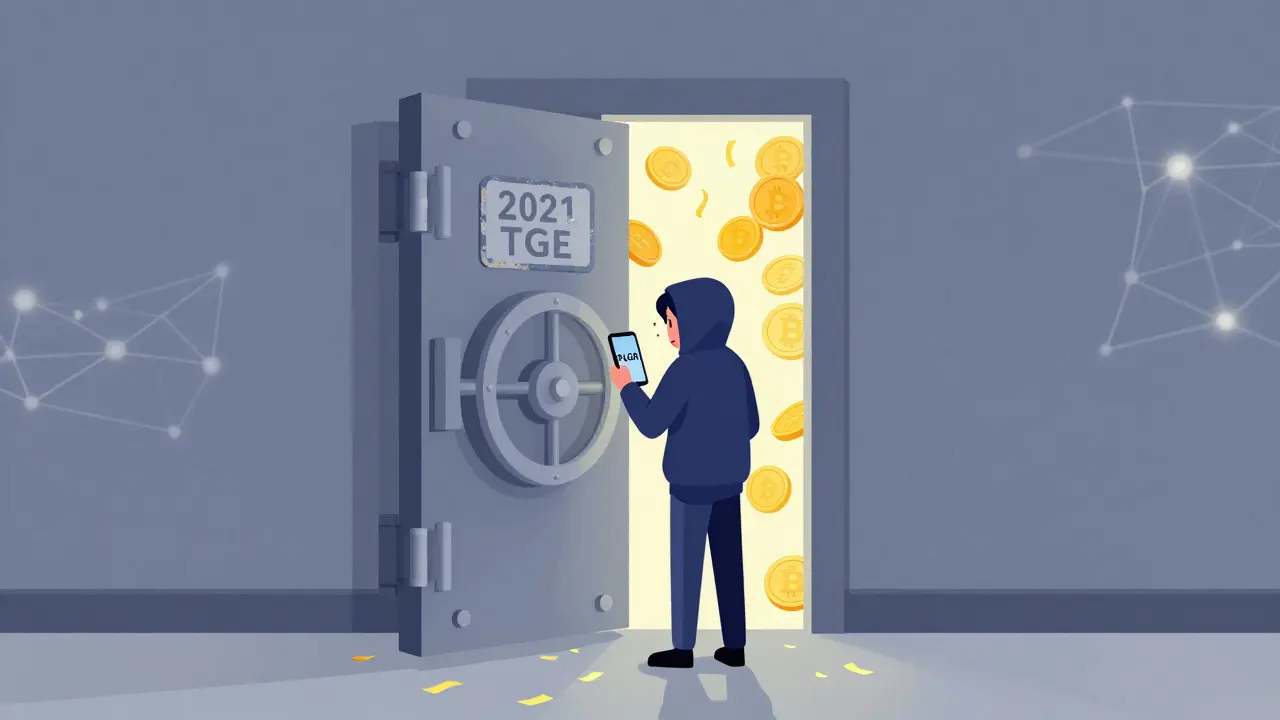
Everyone loves free money. That is why you are here. You saw the ticker PLGR, heard whispers about Pledge Finance, and want to know if there is an airdrop waiting for you. The short answer? It is complicated. As of May 2026, there is no official, active public airdrop campaign running for the PLGR token that matches the hype you might see on social media.
Pledge Finance is not a brand-new project launching its first token. It had its Token Generation Event (TGE) back in October 2021. Usually, when a project has already distributed its initial supply years ago, the window for a "freebie" airdrop closes. However, in the world of decentralized finance (DeFi), things change fast. Let’s look at what Pledge Finance actually is, why it matters, and whether you should still be paying attention to this protocol.
What Exactly Is Pledge Finance?
To understand if an airdrop makes sense, you need to understand the product. Pledge Finance is a decentralized protocol designed to create structured, collateralized lending products. Unlike standard DeFi lenders where interest rates float wildly based on market demand, Pledge aims for fixed-interest rate swaps. Think of it like getting a mortgage with a fixed rate, but entirely on-chain and using crypto as collateral.
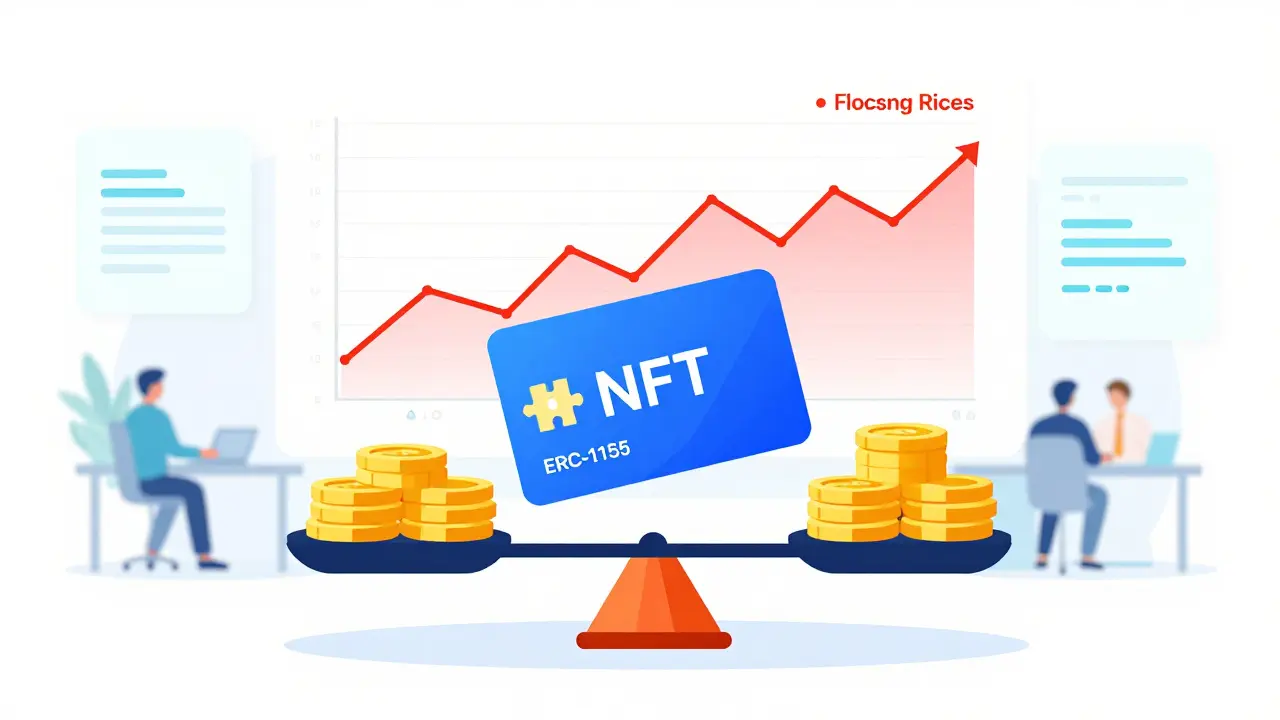
The platform uses ERC-1155 technology. This is a smart contract standard that allows for multiple types of tokens in one contract. Pledge uses this to mint NFTs that represent loans, bonds, and insurance policies. When you lend money or borrow against assets, you aren’t just moving numbers in a database; you are holding a unique digital asset that proves your position. This approach helps build diversified portfolios for investors who want specific risk exposures without dealing with complex derivatives manually.
The Timeline: Why No Big Airdrop Yet?
Airdrops typically happen during the early stages of a project to bootstrap liquidity and community engagement. Pledge Finance completed its major distribution phases long before 2026.
- September 2021: The project raised $3 million in funding from investors including DHVC and notable angel investors.
- October 5, 2021: The Token Generation Event (TGE) took place. This was the moment the PLGR tokens were officially created and distributed to early backers, team members, and public sale participants.
- Public Sale Options: During the 2021 launch, users could choose different vesting schedules. Some got 100% of their tokens immediately, while others had tokens unlock quarterly over time.
Because the primary distribution happened in 2021, the "easy money" era for PLGR is over. If you missed the ICO or the TGE, you cannot retroactively claim those tokens. Any current talk of an airdrop likely refers to smaller, targeted incentives for active users of the lending protocol, rather than a massive giveaway to everyone who holds a wallet.
Token Economics: What Is PLGR Worth?
If you are looking to buy PLGR instead of waiting for an airdrop, you need to check the numbers. The tokenomics can be tricky because of how circulating supply is reported.
| Metric | Value |
|---|---|
| Total Supply | 1,000,000,000 PLGR |
| Max Supply | 3,000,000,000 PLGR |
| All-Time High | $0.009362 (Dec 2024) |
| All-Time Low | $0.0001602 (Apr 2025) |
| Current Price (Approx) | $0.000211 |
| 24h Volume | $0.00 (Low Liquidity) |
Notice the trading volume. Many platforms show zero or near-zero volume. This indicates low liquidity. It means if you try to sell a large amount of PLGR, you might struggle to find buyers, or the price could slip significantly. The price has been relatively flat, hovering around the $0.0002 mark since late 2024. Predictions vary wildly. Some analysts see potential for growth if the lending market recovers, while others warn of further stagnation due to lack of exchange support.
How To Check For Legitimate Airdrops
Just because there is no *major* historical airdrop doesn't mean small campaigns don't exist. Projects often run "retroactive airdrops" for users who interacted with their platform in the past. Here is how you can verify if you qualify for any ongoing Pledge Finance incentives:
- Check Official Channels: Go directly to the Pledge Finance website and their verified X (Twitter) account. Ignore random DMs or links sent by strangers. Scammers love to target people searching for "airdrops."
- Use Wallet Trackers: Tools like Zapper.fi or DeBank can show your interaction history. If you used Pledge Finance’s lending pools in 2021 or 2022, you might have data points that qualify you for future rewards.
- Look for Snapshot Dates: Legitimate airdrops always announce a "snapshot" date. This is the exact block number or time when they will record who holds tokens or has provided liquidity. If no snapshot is announced, no airdrop is happening.
Risks And Red Flags
Crypto airdrop hunting is dangerous. With PLGR specifically, there are a few risks to keep in mind:
- Liquidity Traps: Even if you receive free PLGR tokens, selling them might be hard. If the exchanges listing PLGR have removed the pair due to low volume, your tokens could be stuck in your wallet with no easy way to convert them to stablecoins.
- Phishing Sites: Search results for "PLGR airdrop" are often filled with fake sites designed to drain your wallet. Never connect your MetaMask or Ledger to a site unless you have verified the URL on CoinGecko or CoinMarketCap.
- Opportunity Cost: Spending hours researching a dead or low-volume token like PLGR might take time away from more active DeFi protocols like dYdX, Hyperliquid, or Aave, which offer clearer yield opportunities.
Is Pledge Finance Still Active?
Yes, but quietly. The project raised significant funds ($30.42 million total via ICO and private rounds) and built a cross-chain ecosystem. It operates on Binance Smart Chain and other networks. However, compared to giants like Aave or Compound, Pledge Finance has a smaller footprint. Its focus on fixed-rate lending is niche. In a bull market, traders prefer high-yield, variable-rate lending. In a bear market, fixed rates are attractive, but only if there is enough capital flowing into the protocol.
The social media presence is rated as "Weak" by some trackers, with limited engagement. This suggests the community is not aggressively marketing new user acquisition through airdrops. Instead, they seem focused on maintaining the existing infrastructure for institutional or sophisticated retail lenders.
Alternatives To Watch
If you are looking for DeFi lending projects that are more active and likely to have better liquidity or future incentive programs, consider these competitors:
- dYdX: A leading decentralized exchange for derivatives. They have a strong token utility model.
- Hyperliquid: A newer entrant focusing on high-performance perpetuals.
- Vega Protocol: Specializes in prediction markets and options, similar to Pledge’s derivative focus but with higher visibility.
These projects often have clearer paths for earning tokens through governance participation or providing liquidity, rather than relying on one-time airdrops.
Is there a PLGR airdrop available in 2026?
There is no major public airdrop currently active for PLGR. The main distribution occurred during the Token Generation Event in October 2021. Any current offers may be small-scale incentives for active protocol users, but you must verify these through official Pledge Finance channels to avoid scams.
What is the current price of PLGR?
As of May 2026, PLGR trades at approximately $0.000211. However, liquidity is very low, with many platforms showing zero trading volume. This means buying or selling large amounts can be difficult and may result in significant price slippage.
How did Pledge Finance distribute its tokens initially?
Tokens were distributed via a Token Generation Event (TGE) in October 2021. Participants in the public sale could choose from different vesting schedules, ranging from 100% immediate release to quarterly unlocks over several years. The project also raised funds through an ICO and private investment rounds.
Is Pledge Finance safe to use?
Like all DeFi protocols, Pledge Finance carries smart contract risk. While it has raised significant funding and uses established standards like ERC-1155, users should always audit their own risk tolerance. The low liquidity of the PLGR token adds an additional layer of risk for those trying to exit positions quickly.
What are the best alternatives to Pledge Finance?
For users interested in decentralized lending and derivatives, dYdX, Hyperliquid, and Vega Protocol are more active alternatives. These platforms generally have higher liquidity, larger communities, and more transparent token utility models compared to Pledge Finance.


Jan Gilmore
Look, let's cut through the noise. Pledge Finance isn't dead, it's just dormant because the market doesn't care about fixed-rate lending right now. You want an airdrop? Go farm on Hyperliquid or dYdX where the liquidity actually exists. PLGR is a relic from the 2021 bull run that got left behind when everyone moved to high-performance chains. The tokenomics are fine, but without volume, it's just digital paper. Don't waste your gas fees trying to trade this unless you're holding for a decade.
Caique Muniz
i mean if u really think there is free money here u r probbly already scammed lol
no one gives away tokens in 2026 unless its a rug pull waiting to happen
Bradley Geldenhuys
Why do we always chase the ghost of what could have been instead of building what is? This project had a vision, sure, but visions don't pay bills. We need to stop looking at these stagnant protocols as opportunities and start seeing them as lessons. The real wealth is in the active ecosystems, not the dusty shelves of forgotten DeFi experiments. Wake up people, the party moved on years ago.
robert Whitehead
You people are absolutely delusional if you think a protocol with zero volume has any redeeming value. It's not 'dormant', it's failed. The lack of exchange support is a direct result of poor governance and community neglect. Stop pretending this is a niche play; it's a graveyard. If you hold PLGR, you're not an investor, you're a mark who refused to take losses in 2022. Face reality before you lose more capital chasing phantom incentives.
Mike S
Oh wow, another post about a token that hasn't moved since the dinosaurs ruled the earth. Truly inspiring.
I've seen better liquidity in a desert. The fact that anyone is still asking about airdrops for a TGE from 2021 shows just how desperate the retail crowd has become. It's tragic, really. But hey, keep checking those fake sites, maybe you'll find a portal to Narnia instead of your wallet being drained.
H F
Actually, I think there is some merit in looking at fixed-rate structures even if the current hype is elsewhere. The technology using ERC-1155 for loan NFTs was ahead of its time. Maybe it's not about the price action right now, but about the infrastructure they built. Who knows, maybe in the next cycle, institutional players will prefer stability over volatility. It's worth keeping an eye on, just quietly.
Kiran CS
It is quite amusing to witness the sheer ignorance displayed by those who mistake stagnation for strategy. One must possess a certain level of financial acumen to understand that a Token Generation Event in 2021 renders any notion of a 'fair launch' airtight obsolete. The sophisticated investor does not beg for scraps from a protocol that has clearly lost its relevance. Do try to keep up with the actual market leaders, would you?
Bijan Das
this stuff is boring
why read all this when u can just buy bitcoin and forget about it
these small cap coins are just for losers who cant make real money
Ashley Rodriguez
i guess i just dont get why everyone is so mad about it though like if the project is still running then maybe its doing something right even if no one is talking about it i mean i checked their site and it looks kinda normal so maybe its just quiet and thats okay sometimes things need time to grow and not everything has to be a viral hit overnight so maybe give it a chance?
Bridget Coogle
Let's not be too harsh on the project itself. They did raise significant funds and built a working product. Sometimes projects just fade into the background while they focus on development rather than marketing. It's okay to have different strategies. Just remember to do your own research and never invest more than you can afford to lose. Stay safe out there everyone.
Zara Zaman
This is exactly why American crypto innovation is lagging. We allow these zombie projects to clutter the ecosystem while real builders are moving to sovereign nations with better regulatory clarity. The US SEC might be tough, but at least we aren't stuck analyzing garbage like PLGR. Focus on projects that respect national security and economic sovereignty, not these offshore shell games.
Larry Port
I was actually involved in the early days of Pledge back in 2021. The team was passionate, but they struggled with user acquisition. The fixed-rate model is great in theory, but execution is hard. I wouldn't say it's dead, but it's definitely in maintenance mode. If you're curious, check out their GitHub commits. That's usually a better indicator of activity than Twitter engagement.
Jocelyn Garcia
The alpha here is nonexistent. The slippage on any swap would eat your position whole. Smart money is rotating into L2 derivatives and restaking narratives. PLGR is legacy tech. The ERC-1155 standard is cool but irrelevant if there's no liquidity depth. Move on.
Amit Varpe
lol imagine thinking this shit matters :D
go touch grass
Bronwen Butler
Everyone says its dead but maybe that's the point
contrarian play could work if the devs dump the supply later
but probably not