Ethereum Merge: What It Changed and Why It Still Matters
When the Ethereum Merge, the historic shift of Ethereum from proof-of-work to proof-of-stake consensus. Also known as The Merge, it was the biggest upgrade in blockchain history—not because it added new features, but because it fixed the core flaw: energy waste. Before the Merge, Ethereum used the same mining method as Bitcoin—massive computer farms burning electricity to solve puzzles. After September 15, 2022, that stopped. No more ASICs. No more GPU farms. Just validators staking ETH to secure the network.
The proof of stake, a consensus mechanism where users lock up cryptocurrency to validate transactions instead of using computational power didn’t just cut Ethereum’s energy use by 99.95%. It made the network more secure. Miners could walk away anytime, but validators risk losing their staked ETH if they cheat. That’s a powerful incentive to play fair. And because it removed mining, the Ethereum blockchain, the decentralized ledger that powers smart contracts, DeFi, and NFTs became more predictable. Block times stayed steady. Fees became more stable. And the supply of ETH started shrinking as more was burned than minted.
The Merge didn’t fix everything. Scalability still needs layer-2 solutions. Gas fees didn’t vanish overnight. But it changed the game. It proved a major blockchain could evolve without a hard fork, without splitting the community, and without breaking everything. Today, every new blockchain project looks at the Merge as proof that sustainability and decentralization aren’t trade-offs—they’re goals you can reach together.
What you’ll find below aren’t just articles about the Merge itself. They’re about what came after: the wallets, the tokens, the scams, the tax rules, and the real-world impact. From how account abstraction makes wallets safer to why fake airdrops exploded right after the upgrade, every post ties back to the world the Merge created. This isn’t history. It’s the foundation of everything happening in crypto right now.
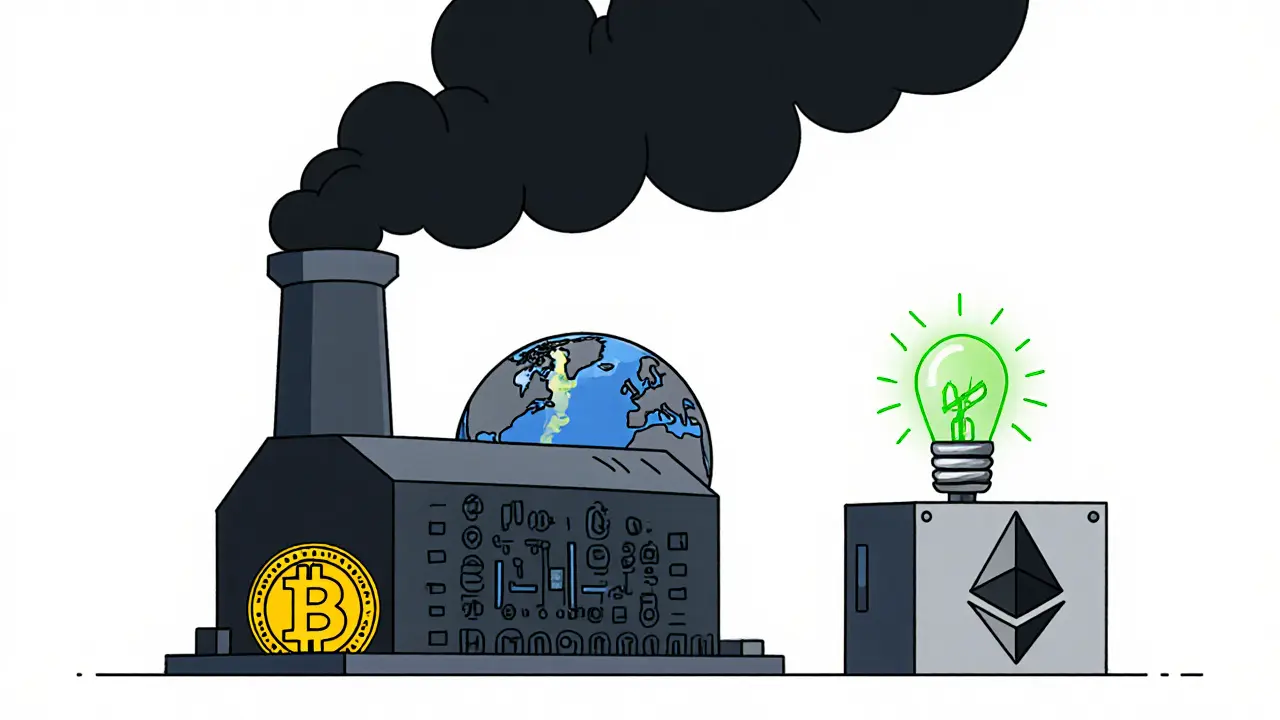
Proof of Stake Energy Efficiency Advantages: Why PoS Uses 99.95% Less Power Than Bitcoin
Proof of Stake slashes blockchain energy use by 99.95% compared to Bitcoin's Proof of Work. Learn how Ethereum's switch cut power consumption, why PoS is the future, and what it means for investors and the planet.
Top News
-
MOT by Mobius Finance Airdrop: What Really Happened and Where to Buy MOT Today 4.03.2026

-
North Korean Crypto Sanctions and Sanctioned Wallet Addresses: How the Regime Funds Its Weapons with Stolen Digital Assets 3.03.2026

-
Cryptal Crypto Exchange Review: Is It Right for You in 2026? 2.03.2026

-
Mexico Crypto Monitoring Regulations by CNBV: What You Need to Know in 2026 1.03.2026

-
Wealth Tax Treatment of Crypto in Switzerland: What You Need to Know in 2026 6.03.2026