PoS Energy Efficiency: How Proof of Stake Cuts Crypto's Carbon Footprint
When you hear Proof of Stake, a consensus mechanism that validates blockchain transactions using locked-up crypto instead of power-hungry computers. Also known as PoS, it's the reason Bitcoin's energy problem isn't the future of crypto anymore. Unlike old-school Proof of Work, where miners race to solve math puzzles using massive amounts of electricity, PoS lets validators create new blocks based on how much crypto they hold and are willing to lock up. No rigs. No noise. No insane power bills.
This shift isn’t theoretical—it’s already happening. Ethereum switched to PoS in 2022 and cut its energy use by over 99.9%. That’s not a small win. It’s the difference between a coal plant and a solar panel. Other chains like Solana, Cardano, and Polygon run on PoS too, and they’re all using a fraction of the electricity Bitcoin still needs. Even governments and environmental groups are taking notice. The European Union’s MiCA rules now require crypto projects to prove their energy use is sustainable—and PoS is the only realistic way to pass.
But PoS isn’t magic. It doesn’t eliminate all risks. Centralization can creep in if only big holders get to validate. And not every PoS chain is built the same—some still rely on energy-heavy infrastructure for node hosting. Still, compared to the 150 terawatt-hours Bitcoin used in 2021 (more than Argentina), PoS is a revolution. The real question isn’t whether PoS is better—it’s whether you’re still using platforms stuck in the past.
Below, you’ll find real breakdowns of tokens, exchanges, and scams tied to this shift. Some posts show you how PoS powers legitimate DeFi platforms. Others warn you about fake projects pretending to be green while running on outdated tech. You’ll learn which coins actually save energy, which ones just claim to, and how to spot the difference before you invest.
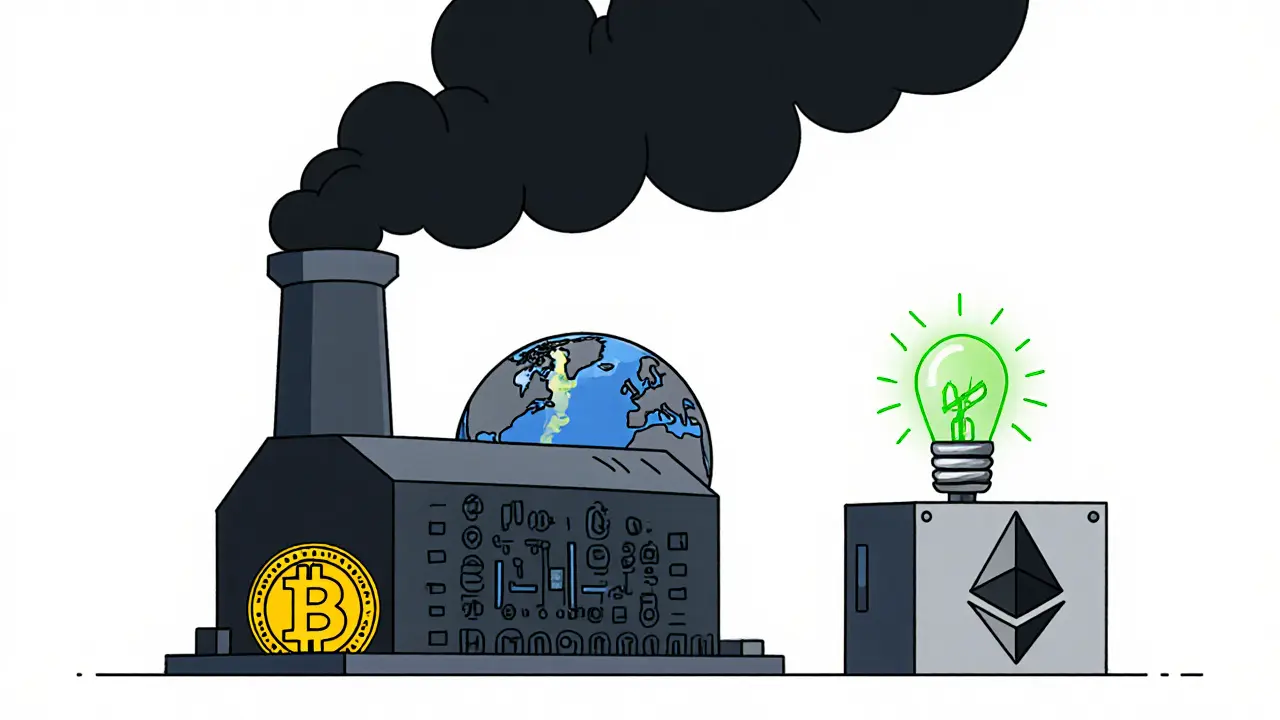
Proof of Stake Energy Efficiency Advantages: Why PoS Uses 99.95% Less Power Than Bitcoin
Proof of Stake slashes blockchain energy use by 99.95% compared to Bitcoin's Proof of Work. Learn how Ethereum's switch cut power consumption, why PoS is the future, and what it means for investors and the planet.
Top News
-
Wealth Tax Treatment of Crypto in Switzerland: What You Need to Know in 2026 6.03.2026

-
North Korean Crypto Sanctions and Sanctioned Wallet Addresses: How the Regime Funds Its Weapons with Stolen Digital Assets 3.03.2026

-
MOT by Mobius Finance Airdrop: What Really Happened and Where to Buy MOT Today 4.03.2026

-
BunnySwap Crypto Exchange Review: A Niche DEX with Almost No Trading Volume 5.03.2026

-
Mexico Crypto Monitoring Regulations by CNBV: What You Need to Know in 2026 1.03.2026