Virtual Digital Assets Taxation in India: Complete Guide for 2026
Understanding Virtual Digital Assets and the New Tax Reality
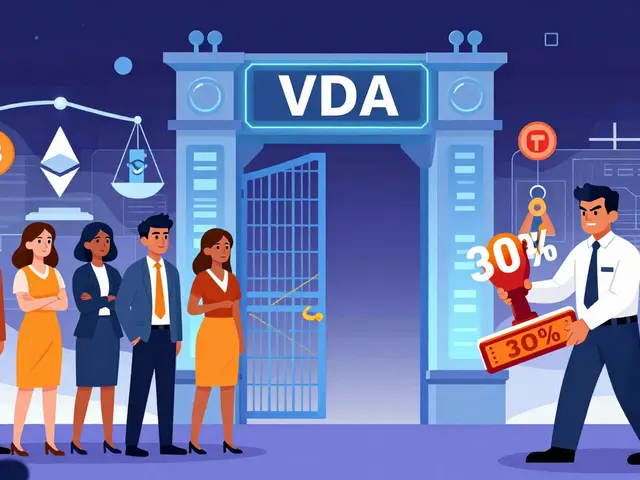
If you hold Bitcoin, Ethereum, or any other digital token in India, the rules of engagement have changed dramatically. Since April 1, 2022, the Indian government has treated these assets under a strict regulatory umbrella known as Virtual Digital Assets (VDAs). This category includes cryptocurrencies, non-fungible tokens (NFTs), and similar digital representations of value, but explicitly excludes fiat currencies like the Rupee or Dollar. The definition is broad, covering anything generated through cryptographic means that functions as a store of value or unit of account.
The shift wasn't just semantic; it was financial. Before 2022, crypto gains fell into a gray area, often taxed as business income or capital gains with indexation benefits. Today, the framework is clear but unforgiving. You can buy, sell, and hold VDAs legally, but they are not recognized as valid payment methods. This creates a unique environment where your assets are monitored closely for anti-money laundering (AML) purposes while being taxed at rates that many investors find steep. As we move into 2026, understanding this landscape isn't optional-it's essential for preserving your wealth.
The 30% Flat Tax Rate: What It Means for Your Returns
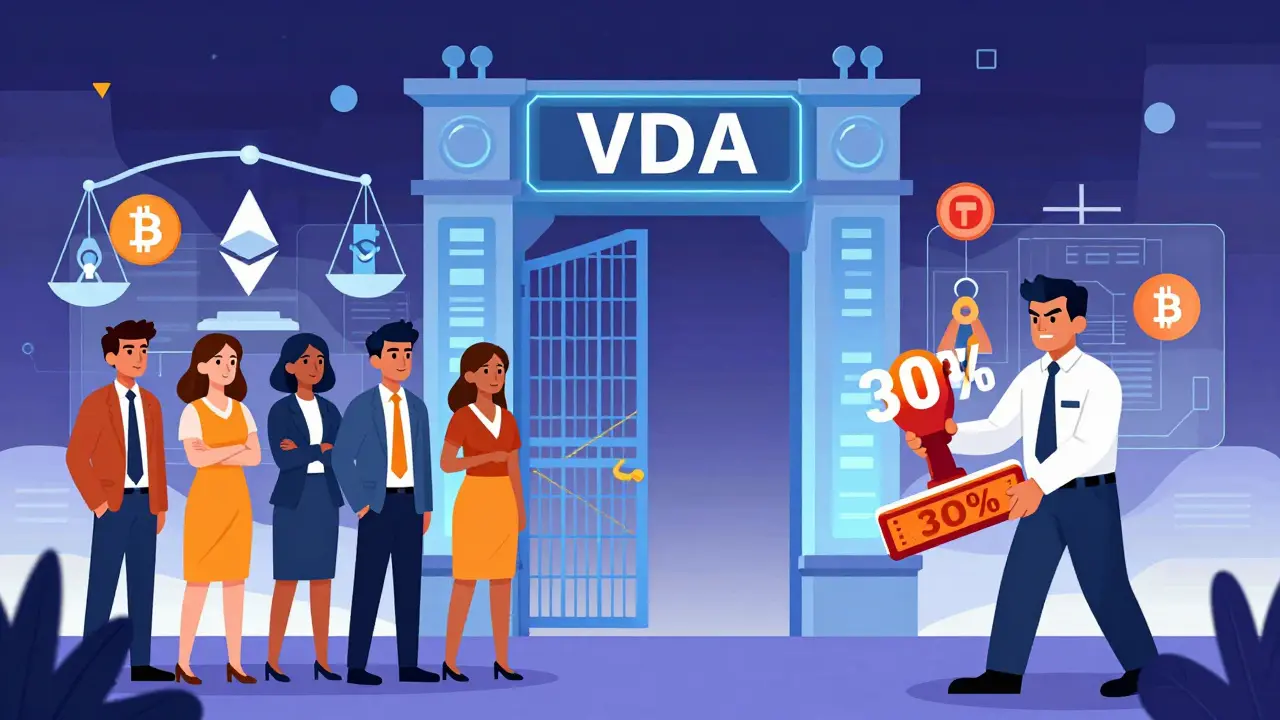
The cornerstone of the current regime is Section 115BBH of the Income Tax Act, which imposes a flat 30% tax rate on all gains from VDAs. This applies regardless of your personal income slab, how long you held the asset, or whether the gain is short-term or long-term. Gone are the days of indexation benefits that reduced effective tax liabilities for long-term holders. Whether you held Bitcoin for one month or five years, the tax bite remains the same.
Here’s the catch: deductions are extremely limited. When calculating your taxable gain, you can only deduct the cost of acquisition. Expenses like transaction fees, mining costs, electricity bills, or wallet storage fees are explicitly non-deductible. This means if you bought an asset for ₹10,000 and sold it for ₹1,10,000, your taxable gain is ₹1,00,000, even if you paid ₹5,000 in trading fees along the way. For high-income individuals, this represents a significant increase in effective tax compared to pre-2022 scenarios where long-term capital gains could be taxed at lower effective rates after indexation.
| Feature | Pre-2022 Regime | Current Regime (Post-2022) |
|---|---|---|
| Tax Rate | Slab rates (up to 30%) + Surcharge/Cess | Flat 30% + Cess |
| Indexation Benefit | Available for Long-Term Capital Gains | Not Available |
| Deductions | Business expenses allowed | Only Cost of Acquisition |
| Loss Set-off | Allowed against other income heads | Only carried forward for 8 years against future VDA gains |
Navigating Losses: The Carry-Forward Rule
One of the most criticized aspects of the VDA tax framework is the treatment of losses. If you sell a digital asset at a loss, you cannot set it off against your salary, rental income, or profits from other investments. This restriction isolates crypto losses within the VDA bucket. However, you aren't left entirely without recourse. You can carry forward these losses for up to eight assessment years to offset future gains from VDAs.
This rule creates a strategic challenge. If you expect consistent growth in your portfolio, carrying forward losses makes sense. But if you’re trading frequently with mixed results, the inability to offset losses against other income can erode your overall net worth faster than anticipated. For instance, losing ₹2 lakh on Ethereum doesn’t reduce your taxable salary income; it merely sits in your records until you make a profit on another crypto trade. This limitation has led many professional traders to reevaluate their strategies, focusing more on risk management than aggressive speculation.
TDS Mechanisms: Who Deducts and How Much?
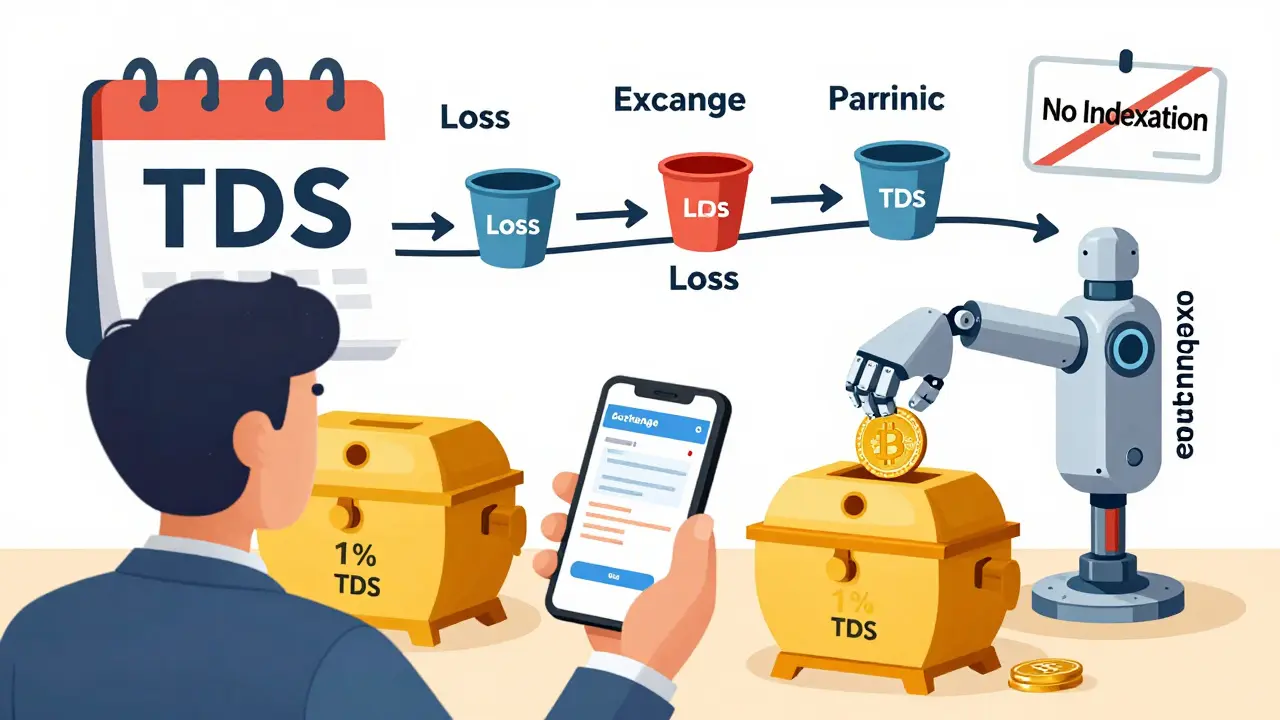
To ensure compliance, the government introduced a Tax Deducted at Source (TDS) mechanism. Under Section 194S, a 1% TDS is applied to all VDA transactions exceeding specific thresholds. For most sellers, this kicks in when annual transfers exceed ₹10,000. For 'specified persons'-typically those with lower turnover or no business income-the threshold is higher at ₹50,000 annually.
Indian exchanges like CoinDCX, WazirX, and ZebPay are responsible for deducting this TDS at the point of transaction. If you fail to provide your PAN, the TDS rate jumps drastically to 20%. While the 1% rate seems modest, it adds up quickly for active traders. Moreover, errors in TDS calculation by exchanges have been a common complaint, with users reporting over-deductions that require time-consuming refunds via ITR filings. Always verify your TDS certificates (Form 16E) issued by platforms, especially if you're a specified person required to file Form 26QE.
Filing Your Returns: Schedule VDA and Compliance
When it comes to filing your Income Tax Return (ITR), VDAs have their own dedicated section. You must report all transactions in Schedule VDA of either ITR-2 or ITR-3 forms. This schedule requires detailed disclosure: acquisition date, transfer date, cost of acquisition, and full value of consideration. Missing any detail can trigger notices from the Income Tax Department.
Crypto-to-crypto transactions add complexity here. If you swap Bitcoin for Solana, you need to value both legs of the transaction in INR at the time of exchange. The CBDT mandates using rates from notified platforms. Failure to maintain auditable blockchain records is a leading cause of tax disputes. Keep your exchange histories, wallet addresses, and proof of acquisition costs organized. The National Institute of Securities Markets (NISM) reports that inadequate record-keeping leads to the majority of crypto-related tax queries. Use tools like CoinTracker or Koinly to automate tracking, but always double-check the INR conversion values.
Recent Changes: The Income Tax Act, 2025
The landscape shifted again with the assent of the Income Tax Act, 2025 in August 2025. While the core 30% tax rate remains unchanged, the new law introduces the concept of a 'Tax Year' instead of the traditional financial year for assessment purposes. It also emphasizes digital-first enforcement mechanisms, making real-time data sharing between exchanges and the tax department more seamless.
For investors, this means greater transparency and less room for evasion. The Act formalizes VDA definitions further and creates specialized dispute resolution channels. Finance Minister Nirmala Sitharaman highlighted that the framework aims to balance innovation with revenue protection, targeting steady annual growth in VDA tax revenues. If you’re planning large transactions in 2026, be aware that the system is now more automated and vigilant than ever before.
Strategic Considerations for Indian Investors
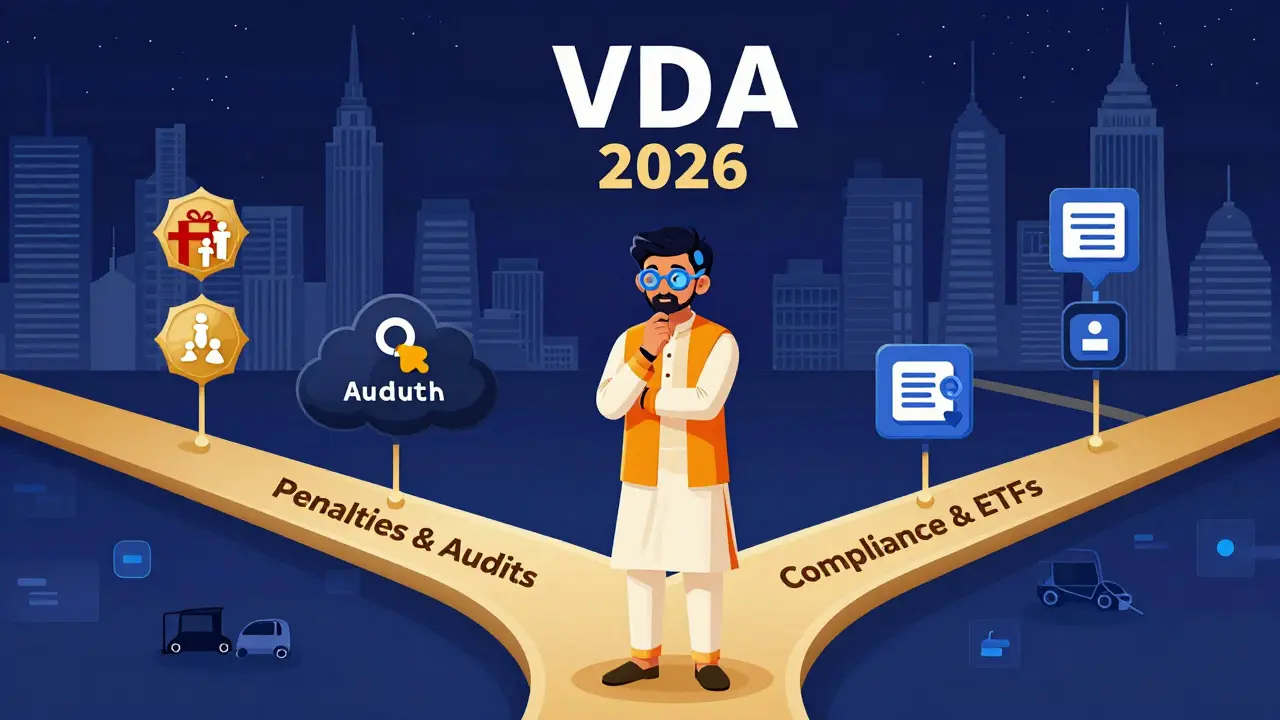
Given the stringent tax rules, many investors are exploring alternative structures. Some are gifting assets to family members in lower tax brackets, though this must be done carefully to avoid scrutiny as tax avoidance. Others are looking into Bitcoin ETFs or hybrid products that may fall under different tax treatments as securities rather than pure VDAs. However, these strategies come with their own risks and regulatory uncertainties.
Institutional participation has grown despite the taxes, rising from 3% in 2021 to 27% in 2023. Yet, retail investors remain cautious. Surveys indicate that while 73% of users feel the tax structure is harsh, 61% continue trading due to potential returns. The key is discipline. Treat your VDA investments as a distinct asset class with its own tax implications. Don’t mix them casually with your regular savings without accounting for the 30% hit. And remember, simplicity in compliance-thanks to the flat rate-can save you hours of planning, even if it costs you more in taxes.
Is mining income taxed differently from trading gains?
Yes. Mining income is typically taxed as business income at your applicable slab rates plus surcharge and cess. However, when you subsequently sell the mined coins, the gain is subject to the 30% VDA tax rate. This dual taxation layer makes mining less profitable unless operational costs are efficiently managed.
Can I claim TDS credit on my final tax return?
Absolutely. The TDS deducted by exchanges is credited to your tax account. When you file your ITR, this amount reduces your total tax liability. Ensure your Form 26AS reflects the correct TDS entries to avoid discrepancies during processing.
What happens if I don't declare VDA holdings?
Non-disclosure can lead to severe penalties. With increased data sharing between exchanges and the Income Tax Department, undeclared holdings are easily traceable. Penalties include interest on delayed payment, fines up to 50% of tax evaded, and potential prosecution under black money laws.
Are NFTs taxed the same as cryptocurrencies?
Yes. Under the current definition, NFTs fall under Virtual Digital Assets. Therefore, gains from selling NFTs are taxed at 30%, and the same rules regarding loss carry-forward and TDS apply. There is no separate exemption for artistic or collectible digital items.
How do I determine the cost basis for crypto received via airdrop?
Airdrops are generally treated as perquisites or business income depending on context, taxed at slab rates upon receipt. The fair market value at the time of receipt becomes your cost basis for future sale calculations. Consult a CA to ensure proper classification based on your specific situation.