What is AppLovin Tokenized Stock (APPon)? Ondo’s Crypto Mirror Explained
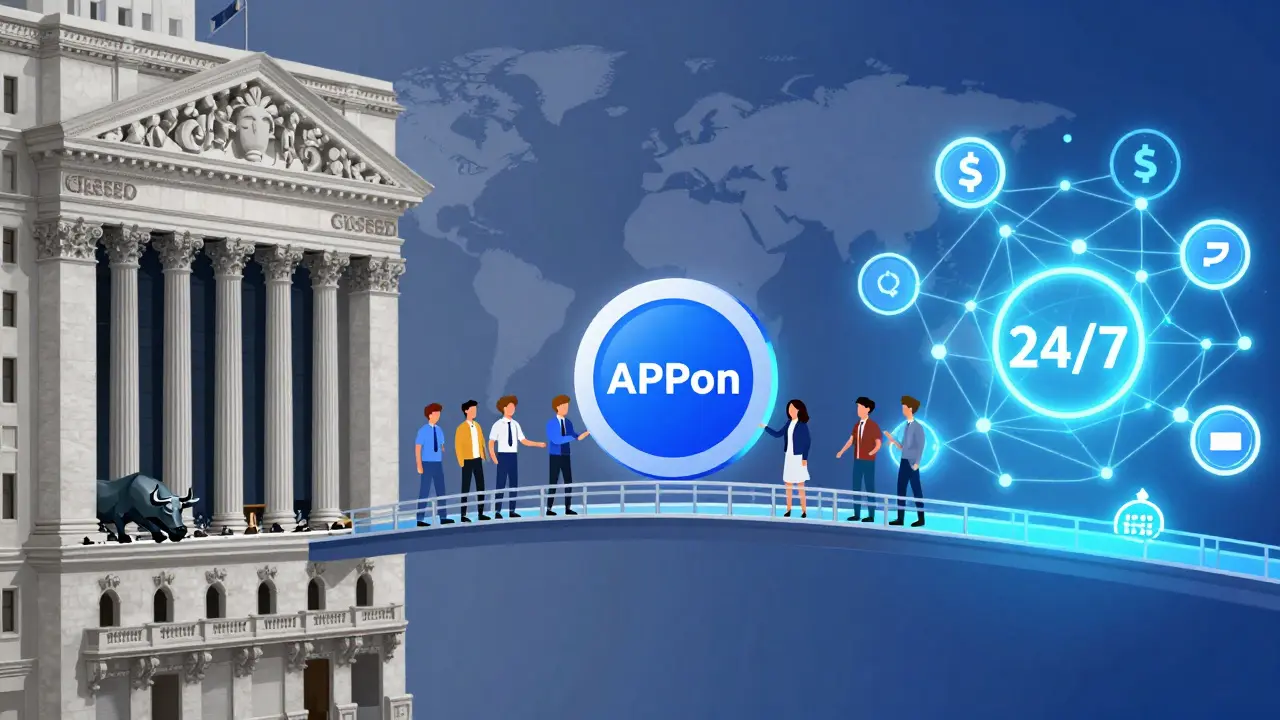
You want exposure to AppLovin, the mobile gaming giant, but you don't have a brokerage account that lets you trade during weekends or late nights. Or maybe you live outside the U.S. and navigating cross-border equity rules feels like a headache. This is where AppLovin Tokenized Stock (Ondo) comes in. Traded under the ticker APPon, this isn't a standard cryptocurrency with its own utility or governance rights. Instead, it is a digital receipt for economic exposure to AppLovin's stock.
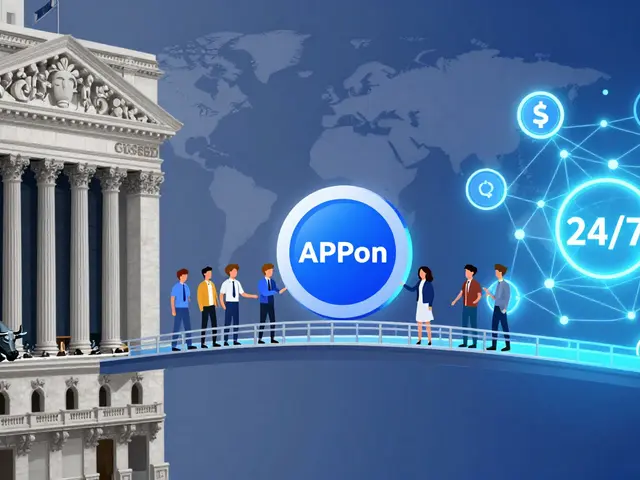
Think of APPon as a bridge between traditional Wall Street finance and the 24/7 world of blockchain. It allows you to hold a position that moves in sync with AppLovin shares without actually owning the physical stock certificate. But before you rush to buy, you need to understand how it works, who can use it, and why the price might not match the stock exactly at every second.
How Does APPon Actually Work?
To get APPon, you interact with Ondo Finance, a protocol specializing in bringing real-world assets (RWAs) onto the blockchain. When you mint APPon, Ondo essentially locks up capital or hedges against the underlying AppLovin stock on traditional exchanges. You receive tokens in return.
The goal here is tracking performance. If AppLovin’s stock goes up, your APPon should go up. If AppLovin pays dividends, the mechanism behind APPon is designed to reinvest those returns so your token value reflects total growth, not just share price appreciation. This is different from holding a meme coin or even Bitcoin, which relies purely on market sentiment and network adoption. APPon derives its value from a specific, publicly traded company.
However, there is a catch. You are not buying the stock directly. You are buying a synthetic representation. This means you rely on Ondo’s infrastructure to keep the peg tight. If the system fails, or if liquidity dries up, your token could drift away from the actual stock price. It is an economic mirror, not legal ownership.
Who Can Buy APPon? The Geography Rule
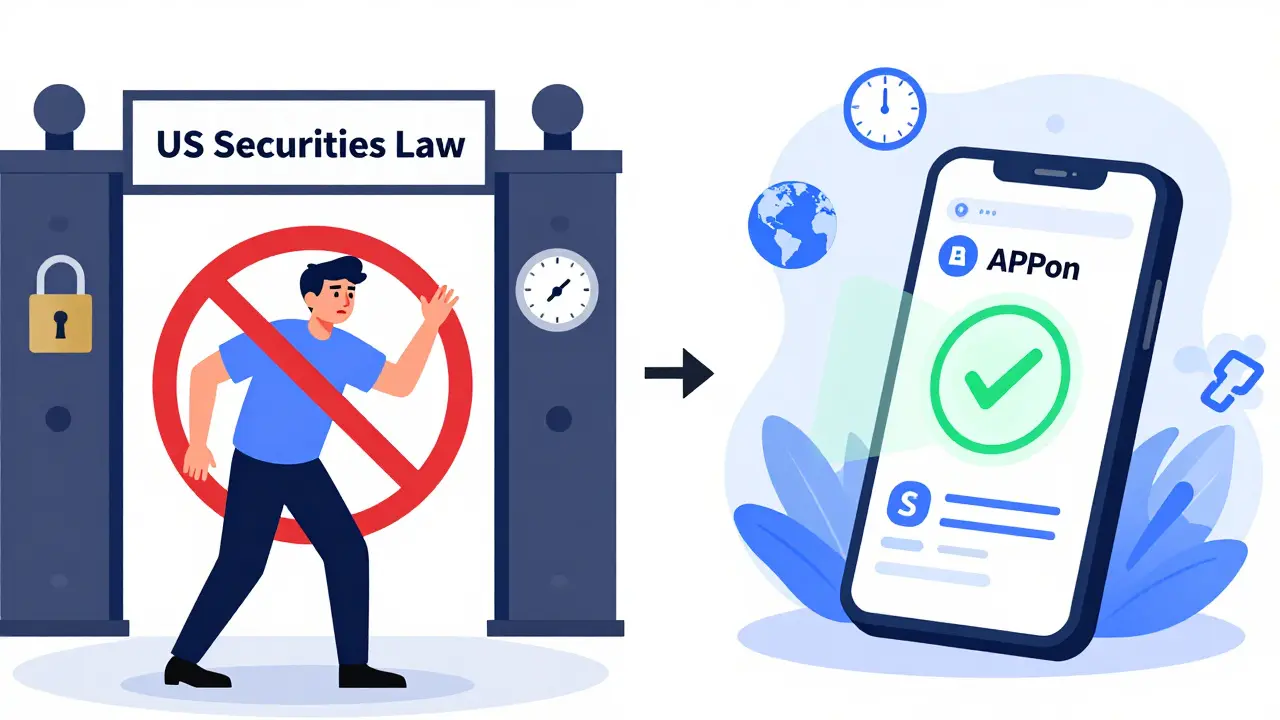
This is the most critical part for many users. Ondo’s tokenized stock program explicitly targets non-U.S. retail and institutional users. If you are a resident of the United States, you generally cannot participate. This restriction exists because U.S. securities laws are incredibly strict about who can trade fractionalized or tokenized equities.
For users outside the U.S., this opens a door. You can access U.S. tech giants like AppLovin through crypto platforms that support these assets. Platforms like Binance Alpha, MetaMask, and Crypto.com have integrated APPon into their interfaces. This means you can swap stablecoins or other cryptocurrencies for APPon without opening a separate brokerage account. But always check the "additional restrictions" listed by your specific platform, as some countries may still be blocked due to local regulations.
Price, Supply, and Liquidity: What the Numbers Say
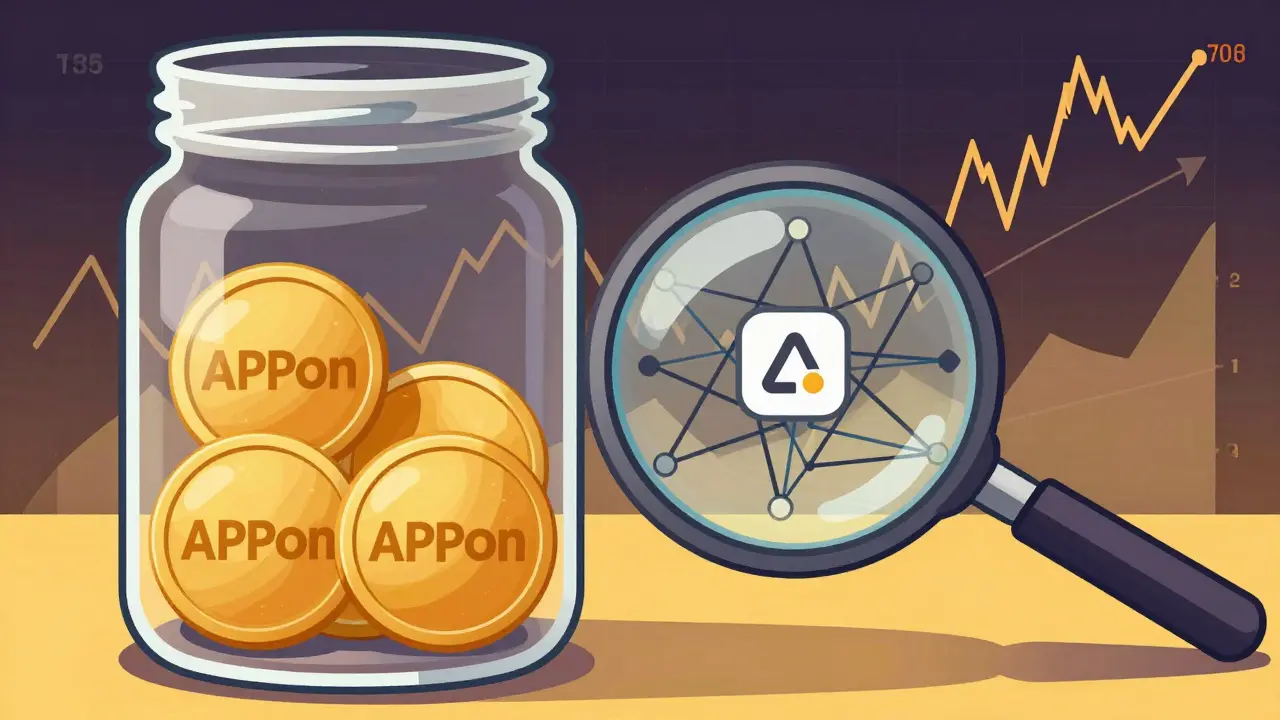
When you look at APPon data, things can look confusing at first glance. The price per token is high-often hovering around $500 to $600 USD in mid-2026. Why so expensive? Because the supply is tiny.
| Metric | Value | Note |
|---|---|---|
| Price Range | $478 - $610 USD | Varies by exchange and time |
| Total Supply | ~469 - 640 Tokens | Extremely low supply drives high unit price |
| Market Cap | ~$245k - $390k USD | Small cap compared to major cryptos |
| 24h Volume | $87k - $2.8M USD | Highly variable; indicates niche trading |
With only a few hundred tokens in existence, each APPon represents a significant chunk of value. This low supply makes the asset sensitive to large trades. A single person buying 10 tokens can move the market cap significantly. Also, note that volume varies wildly between aggregators. CoinGecko might show low volume while RevenueBOT shows millions. This discrepancy often happens because different platforms count on-chain swaps versus centralized exchange trades differently. Always check multiple sources before assuming deep liquidity.
APPon vs. Buying AppLovin Stock Directly
Why would anyone choose APPon over just buying APP stock on Robinhood or Fidelity? There are three main reasons:
- Trading Hours: Traditional markets close on weekends and holidays. Crypto markets never sleep. With APPon, you can adjust your position on Saturday night if news breaks about AppLovin’s ad revenue.
- Accessibility: For non-U.S. investors, setting up international brokerage accounts can be slow and costly. Swapping crypto for APPon takes minutes.
- Composability: If you are a DeFi user, you can potentially use APPon as collateral in other protocols (if supported), whereas traditional stock certificates sit idle in a brokerage account.
But there are downsides. You pay fees to Ondo and the blockchain network. You face counterparty risk (what if Ondo loses the underlying funds?). And you don’t get voting rights in AppLovin shareholder meetings. You are an investor, not an owner.
Risks You Cannot Ignore
Tokenized stocks are innovative, but they are not risk-free. Here is what keeps experts awake at night:
- Regulatory Crackdowns: Governments are watching RWAs closely. If regulators decide that APPon violates securities laws in your jurisdiction, trading could be halted instantly.
- Tracking Error: In perfect conditions, APPon matches AppLovin stock. In volatile markets, delays in hedging or redemption can cause the token to lag or overshoot the real price.
- Liquidity Droughts: With such a small supply, finding a buyer when you want to sell quickly might be hard. You could be stuck holding a token that doesn’t reflect the current stock price until someone else buys it.
- Smart Contract Risk: Like any crypto asset, APPon lives on code. Bugs or hacks in Ondo’s smart contracts could theoretically lead to loss of funds.
How to Trade APPon Safely
If you decide to proceed, start with platforms that have strong security records. Binance Alpha is a common entry point, offering direct purchase options. MetaMask users can swap directly within their wallet interface, which is convenient but requires careful attention to slippage settings given the low liquidity.
Always verify the contract address before swapping. Scammers love to create fake tokens with similar names. The official APPon is tied to Ondo’s verified deployments. Check CoinMarketCap or CoinGecko for the correct contract details before connecting your wallet.
Finally, treat this as a speculative play on AppLovin’s future, wrapped in crypto complexity. It is not a replacement for a diversified portfolio. Use it if you understand the mechanics and accept the risks.
Can US residents buy APPon?
Generally, no. Ondo Finance restricts its tokenized stock products to non-U.S. users to comply with American securities regulations. Attempting to bypass this via VPN or other methods violates terms of service and carries legal risk.
Does APPon pay dividends?
Not directly in cash. The structure is designed to reinvest dividends automatically. This means the value of your APPon token should increase to reflect the total return of the underlying stock, including dividend payouts, rather than sending you separate tokens or cash.
Why is the price of APPon so high?
The high price is due to extremely low supply. Only a few hundred tokens exist, so each one represents a large notional amount of AppLovin stock exposure. This is different from cryptocurrencies like Bitcoin or Ethereum, which have millions or billions in circulation.
Is APPon a good investment?
It depends on your view of AppLovin and your comfort with crypto risks. If you believe AppLovin will grow and you want 24/7 trading access, it offers unique benefits. However, it adds layers of regulatory and technical risk that traditional stock investing does not have. It is best suited for experienced investors who understand both equity markets and decentralized finance.
Where can I track APPon price?
You can track APPon on major aggregators like CoinMarketCap, CoinGecko, and TradingView. Wallets like MetaMask also display real-time prices. Be aware that prices may vary slightly between platforms due to differences in data feeds and liquidity pools.

Crystal Davis
Let's be real, this whole 'tokenized stock' thing is just a regulatory arbitrage scheme wrapped in blockchain jargon to make it sound fancy. You are not getting exposure, you are buying a liability on someone else's balance sheet that could vanish if the SEC decides to have a bad day. The fact that the supply is only a few hundred tokens means liquidity is an illusion and slippage will eat your gains before you even blink. It is a derivative product masquerading as an asset class for people who think they are smarter than the system but are actually just easier to exploit.
Barclay Chantel
I find the entire premise of APPon to be rather vulgar in its simplicity. Why must we drag the elegance of traditional equity markets into the muddy swamp of crypto? It lacks the sophistication of proper financial instruments and appeals to a certain... untamed demographic that prefers speed over substance. One simply does not mix high finance with meme culture without expecting some degree of moral decay in the market structure itself.
Miss Masquer
I have been following the evolution of Real World Assets on the blockchain for quite some time now, and I must say that the way Ondo is structuring these tokenized equities is genuinely fascinating from a cross-cultural perspective because it bridges the gap between the rigid, often exclusionary nature of traditional Wall Street brokerage accounts and the more fluid, accessible, yet sometimes chaotic world of decentralized finance which allows users from countries like Canada or India to participate in US tech growth without navigating the bureaucratic nightmare of international wire transfers and compliance checks that usually take weeks to process through multiple banking intermediaries who all want their cut of the pie before the money even arrives at its destination so you can finally buy a fraction of a share of a company that might change the world or go bankrupt depending on the whims of quarterly earnings reports and macroeconomic indicators that seem to shift every other day.
Edith Mair
Wait, so if I'm outside the US I can just swap ETH for APPon on Binance Alpha and hold it indefinitely? Does the dividend reinvestment actually happen automatically on-chain or is that just marketing fluff until they update the contract?
Sam Dashti
Man, the low supply thing is wild. Like, buying one token feels like buying a whole house in terms of price point, but then you realize you're just holding a digital IOU for a gaming ad company. It’s like trading baseball cards but the cards are backed by corporate debt and smart contracts that might get hacked by a script kiddie in his mom’s basement. Kinda cool, kinda terrifying.
Joe Clements
I totally get why people are hesitant about the counterparty risk here. It makes sense to worry about where the underlying assets are kept. If Ondo goes under, what happens to the tokens? Just wondering if anyone has looked into their insurance coverage or reserve audits recently.
Rosie Morris
i mean its pretty neat u can trade applovin on saturday night when ur bored instead of staring at charts all week lol but yeah the fees r kinda steep and i dont trust anythng that says 'no us residents' bc thats always sus
lorna erni
Listen up everyone because this is huge! We are talking about democratizing access to top-tier tech stocks! Sure there are risks but look at the innovation! Who cares about the SEC if you are in London or Tokyo? Get in now before the retail wave hits! This is the future of finance and those who hesitate will be left behind in the dust of traditional banking!
Debbie Lewis
Just observing from the sidelines. Seems like a niche product for specific use cases. Not sure I see the mass appeal yet given the complexity.
Eric Grosso
so if i got this right the peg can slip? like if applovin drops 10% in pre-market but crypto is closed or something weird happens do i lose more than 10%? seems sketchy af
saradee dee
Oh my god this is amazing news for us in India! Finally we can invest in US tech without dealing with the terrible forex limits and complicated NRI accounts! I am so excited to try this out on MetaMask! Let us all come together and support this new era of global finance! 🌟🚀
Craig Swanson
You need to pay attention to the tracking error metrics closely. Many of you are ignoring the hedging costs built into the token price. If volatility spikes, the rebalancing frequency matters immensely. Do your homework before throwing money at a synthetic wrapper.
Bill Gunn
Hey folks! 👋 Great discussion here. Just a quick tip: always double-check the contract address on CoinGecko before swapping! Scammers love creating fake tokens with similar names. Stay safe out there! 🛡️💰 Also, remember that liquidity is key with low supply tokens, so watch those slippage settings! 📉➡️📈
Dana Rapoport
The philosophical implication of separating ownership rights from economic benefits is profound. Are we truly investing if we cannot vote? Perhaps value is purely transactional in this new paradigm.
Hadleigh Edwards
I think this is going to be a game changer for weekend traders everywhere because imagine being able to react to earnings reports that drop on a Friday afternoon while you are still enjoying your beer instead of waiting until Monday morning when the market opens and the move has already happened and everyone else has gotten in early leaving you with nothing but FOMO and regret over missing out on the best part of the rally which could have been substantial if you had just held the tokenized version throughout the weekend hours when crypto never sleeps and opportunities abound for those who are prepared and willing to embrace the technology.
mark valmart
cool stuff. i guess if u live outside usa it saves hassle. just dont put all ur eggs in one basket tho.
Christina Pearce
I appreciate the detailed breakdown of the risks. It's important to understand that this isn't a replacement for a diversified portfolio. Has anyone tried using this as collateral in DeFi protocols yet? Curious about the composability aspect mentioned.
Joshua Alcover
The geopolitical implications of bypassing US securities regulations via offshore tokenization are deeply concerning for national sovereignty and financial integrity. Such pseudo-innovations undermine the foundational structures of our democratic economic systems and invite illicit capital flows that evade oversight mechanisms designed to protect citizens from predatory speculative instruments lacking intrinsic value verification.
Diana Morris
stop whining about regulation and start trading!!! this is freedom!!! buy buy buy!!! dont let the haters stop you from making millions!!! 🚀🚀🚀
Dianne Wright
you guys are so naive thinking this is safe i know everything about how these rug pulls work and ondo is just another centralised entity pretending to be decentralised while draining your funds slowly through fees and tracking errors enjoy your losses
trisya hazriyana
oh wow such innovation much wow very blockchain. i guess if u want to gamble on applovin without voting rights this is ur ticket. sarcasm aside the tech stack is impressive but the legal grey area is yikes.