What is Arianee (ARIA20) Crypto Coin? A Deep Dive into the Blockchain Product Passport Token

Most people think of cryptocurrencies as money you trade or invest in. But what if a crypto coin wasn’t meant for speculation at all? What if it was built to prove that your $5,000 handbag is real - not a knockoff from a street vendor? That’s where Arianee (ARIA20) comes in. It’s not another memecoin. It’s not a DeFi token. It’s a digital certificate tied to real-world objects, powered by blockchain.
What Exactly Is Arianee (ARIA20)?
Arianee (ARIA20) is the native token of the Arianee Protocol, a blockchain system designed to create digital passports for physical products. Think of it like a birth certificate for your luxury watch, designer jacket, or even a piece of art. Instead of relying on paper receipts or brand logos that can be faked, Arianee gives every item a unique, tamper-proof digital identity stored on the blockchain.
This isn’t about owning a JPEG of a monkey. Arianee’s NFTs - built on Ethereum’s ERC-721 standard - are tied to actual items you can hold. When you buy a certified product, you get a digital key that proves you’re the rightful owner. And unlike traditional systems, you control that key. The brand doesn’t store your data. You do.
The token itself, ARIA20, is an ERC-20 token. It doesn’t trade like Bitcoin. Its job is to keep the system running. Brands pay with ARIA20 to issue digital passports. Developers use it to build tools. Users can earn it by verifying ownership or sharing feedback. It’s the fuel that makes the whole machine work.
How Does Arianee Actually Work?
Here’s how it plays out in real life:
- A luxury brand partners with Arianee and registers their product line.
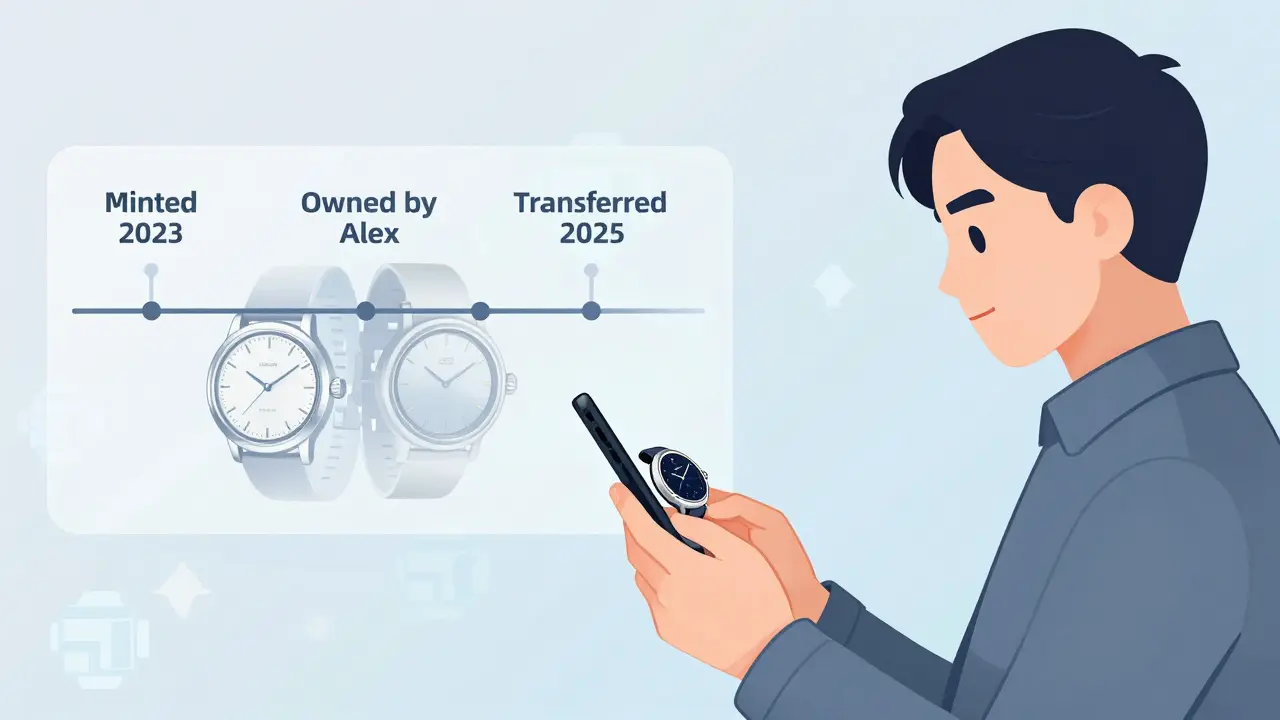
- When a new bag or watch is made, the brand mints a unique NFT on the blockchain - this is the digital passport.
- The NFT is linked to a QR code or NFC chip inside the product.
- When you buy it, you scan the code. Your wallet gets the NFT. Now you own the proof of authenticity.
- Later, if you resell it, you transfer the NFT to the new owner. No middleman. No doubt.
The magic? Every step is recorded on the blockchain. No one can delete it. No one can alter it. Even if the brand goes out of business, your proof of ownership stays intact.
Arianee runs on multiple Ethereum-compatible blockchains - including Ethereum mainnet and the POA Network. This flexibility lets brands pick the chain that fits their needs: lower fees, faster speeds, or better scalability. The system even has something called a “Layer Switch” that keeps everything running smoothly across these different networks.
Why Arianee Is Different From Other NFT Projects
Most NFTs you hear about are digital art, profile pictures, or virtual land. Arianee doesn’t care about that. It’s not trying to be the next Bored Ape. It’s solving a real, expensive problem: counterfeiting.
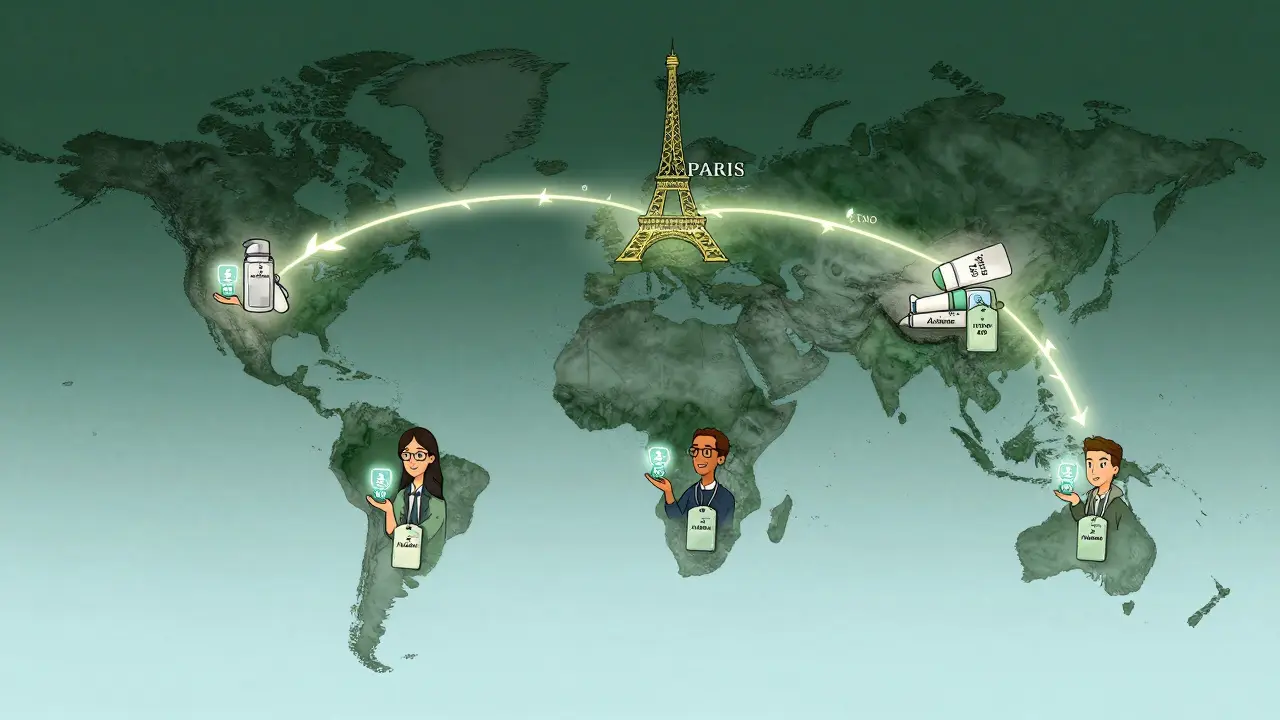
The global market for fake luxury goods is estimated at $30 billion a year. Brands lose money. Consumers get scammed. Trust breaks down. Arianee fixes that by giving every product a verifiable digital twin.
Compare it to VeChain, which also uses blockchain for supply chains. VeChain tracks shipments and logistics. Arianee focuses on the end-user experience - ownership, resale, care instructions, warranty claims. It’s not about where the product came from. It’s about who owns it now - and who will own it next.
And unlike centralized systems (like a brand’s internal database), Arianee has no single point of failure. If Apple’s servers go down, you can’t check your AirPods’ warranty. If Arianee’s system goes down? Your NFT is still on the blockchain. You still own the proof.
Who Uses Arianee - And Why?
Arianee isn’t for casual crypto traders. It’s for brands that care about trust, resale value, and customer loyalty.
Luxury fashion houses, fine watchmakers, art galleries, and high-end jewelry brands are the early adopters. Why? Because their entire business depends on authenticity. A fake Rolex isn’t just a ripoff - it destroys the brand’s reputation.
But it’s not just about stopping fakes. Arianee helps brands build deeper relationships. Imagine getting a notification on your phone: “Your 2023 Hermès Birkin has a new care guide. Would you like to schedule a cleaning?” That’s possible because you own the digital passport. The brand can send updates, warranty info, or even exclusive invites - all through your wallet.
And because the data belongs to you, not the brand, you can choose what to share. No tracking. No ads. Just control.
Tokenomics: Supply, Value, and Liquidity
As of early 2026, Arianee has a maximum supply of 200 million ARIA20 tokens. Around 110 million are currently in circulation. The fully diluted valuation (FDV) sits at roughly 99 BTC - meaning if every token were in circulation, that’s the total market cap.
But here’s the catch: liquidity is extremely low. The 24-hour trading volume hovers around $5.97. That’s not a typo. For comparison, Bitcoin trades billions daily. Arianee’s token isn’t meant to be traded. It’s meant to be used.
Most ARIA20 tokens are held by brands, developers, and ecosystem partners - not retail investors. That’s why the price doesn’t swing wildly. It’s not a speculative asset. It’s a utility token. Its value comes from how many products use it, not how many people are buying it.
That low volume also means you won’t find it on most exchanges. You’ll mostly see it on smaller platforms like Bitget or CoinEx. If you want to hold it, you’ll need to add the contract address - 0xedf6568618a00c6f0908bf7758a16f76b6e04af9 - manually to your MetaMask wallet.
Sustainability and Ethical Design
Arianee makes a bold claim: since its launch, its entire blockchain activity has used less energy than a European family uses in a week. That’s because it runs on Proof-of-Stake chains like POA Network and Ethereum (after its Merge), not energy-hungry Proof-of-Work systems.
It’s not just marketing. The protocol is designed with minimal on-chain activity. Most data is stored off-chain (like product photos or care instructions), and only the critical ownership records go on-chain. That keeps gas fees low and energy use near zero.
This matters. Consumers are starting to ask: “Is this brand doing right by the planet?” Arianee gives brands a way to answer that - not just with words, but with verifiable, blockchain-backed proof.
Limitations and Challenges
Arianee isn’t perfect. Its biggest weakness? It’s too niche.
It won’t replace Bitcoin. It won’t power DeFi apps. It won’t make you rich overnight. It’s built for a very specific use case: authenticating high-value physical goods. That’s great if you’re a luxury brand. Not so great if you’re looking for a crypto investment.
Also, adoption is slow. Most people don’t know about it. Most brands haven’t integrated it. The technology is solid, but changing how companies handle ownership takes time - and money.
And while the protocol is open-source and well-documented, integrating it requires technical expertise. Small businesses can’t just plug it in. You need developers, API access, and a reason to invest.
What’s Next for Arianee?
The roadmap is clear: expand multi-chain support, improve the user experience for end consumers, and onboard more enterprise partners. The Arianee Association, the nonprofit behind the protocol, is working with certification bodies and industry groups to make digital product passports a global standard.
Regulators are starting to take notice too. The EU is pushing for digital product passports across all high-value goods by 2027. Arianee is already built for that. It could become the backbone of future compliance laws.
Long-term, Arianee could expand beyond luxury goods. Think medical devices, electronics, or even car parts. If you can prove a used battery is genuine, you can build trust in the circular economy.
Should You Buy Arianee (ARIA20)?
Only if you understand what you’re buying.
If you’re looking to flip crypto for quick profits - skip it. The market is too thin. You won’t find buyers. You’ll get stuck.
If you’re a developer, brand owner, or someone passionate about reducing counterfeiting - then yes. ARIA20 gives you access to a system that’s changing how the world thinks about ownership.
It’s not a currency. It’s a tool. And tools only have value when you use them.
Is Arianee (ARIA20) a good investment?
No, not in the traditional sense. Arianee isn’t designed for speculation. Its token has extremely low trading volume and isn’t meant to be bought and sold for profit. Its value comes from real-world use - brands issuing digital passports. If you’re a developer or enterprise partner, it’s a utility token. If you’re a retail investor, it’s not a reliable asset class.
How do I get Arianee (ARIA20)?
You can buy ARIA20 on smaller exchanges like Bitget or CoinEx. To store it, add the contract address 0xedf6568618a00c6f0908bf7758a16f76b6e04af9 to your MetaMask wallet manually. Most holders are brands or developers - not individual traders.
Can I use Arianee to verify my own products?
Only if you’re a brand or partner. Arianee isn’t a consumer app. You can’t mint your own passport. It’s a B2B protocol. If you own a luxury item with an Arianee tag, you can view its passport - but you can’t create one yourself.
Is Arianee only for luxury goods?
Currently, yes - mostly. The luxury sector is the easiest to target because of high counterfeit rates and strong brand value. But the tech can work for electronics, pharmaceuticals, or even car parts. The protocol is designed to scale beyond fashion and watches.
How is Arianee different from VeChain?
VeChain focuses on supply chain tracking - where a product was made, shipped, and inspected. Arianee focuses on ownership - who owns it now, who owned it before, and how to prove it. VeChain is about logistics. Arianee is about identity.



steven sun
this is actually wild. i just scanned my gucci bag and it showed me the whole journey from factory to me. like... whoa. no receipt needed. just my phone. mind blown 🤯
Roshmi Chatterjee
i love this. finally something crypto does that actually matters. not another degens flipping ape pics. this fixes real problems. counterfeiting ruins lives and brands. this is tech with purpose.
Chidimma Catherine
as someone from nigeria where fake goods flood the market, this could be life-changing. imagine verifying a medical device or even a school uniform. this isn't just luxury. this is justice.
Taylor Mills
low volume? $5.97? lol. this isn't a coin. it's a corporate tool. retail investors are wasting time. if you're not a brand or dev, you're just gambling on a ledger. don't be fooled.
David Zinger
USA thinks it invented everything 🇺🇸 but canada's been doing blockchain for supply chains since 2018. arianee? cute. we had it working with maple syrup labels before you guys even knew what nft meant 🍁
MICHELLE REICHARD
this is just rebranded blockchain theater. luxury brands already have serial numbers. why add a crypto layer? it’s not solving anything. it’s just charging brands more to do the same thing. elitist nonsense.
Abdulahi Oluwasegun Fagbayi
i like how it keeps the data with the owner. no creepy tracking. no ads. just pure ownership. reminds me of how our elders passed down tools - with trust, not databases.
Melissa Contreras López
you guys are missing the point. this isn’t about the token. it’s about the *experience*. imagine your watch sending you a care reminder. or your jacket suggesting a cleaner nearby. that’s magic. not crypto. magic.
Nathan Drake
if ownership is truly decentralized, then why can’t consumers mint their own passports? the system is open-source but closed in practice. isn’t that a contradiction? or just corporate control dressed in blockchain?
carol johnson
i mean... it’s cute. but let’s be real. most people don’t care if their purse is ‘verified’. they just want it to look real. this is for people who care about the *story* behind the bag. and honestly? that’s a tiny, rich niche.
Mark Estareja
the tokenomics are intentionally opaque. 200M supply, 110M circulating, FDV at 99 BTC - but zero liquidity? that’s not a market. that’s a controlled experiment. brands hold it. devs hold it. retail? irrelevant. this isn’t finance. it’s infrastructure.
katie gibson
i bought a bag with arianee. then i tried to resell it. the buyer had no idea what it was. so i had to explain blockchain, nfts, erc-721... and then they still didn’t care. so i just took cash. the tech is cool. the culture? not ready.
Dave Ellender
the energy use comparison is misleading. yes, it’s on PoS. but every time a brand mints 10,000 passports, that’s 10,000 on-chain transactions. multiply that by global luxury. it adds up. sustainability claims need audit trails too.
Deepu Verma
this is the future. not for speculators. for makers. for repair shops. for secondhand markets. imagine a guy in delhi fixing a vintage rolex - he scans it, sees the full history, knows it’s real, and charges fair price. that’s power.
Brenda Platt
i work in sustainability consulting. this is the first blockchain project i’ve seen that actually reduces waste. if you can prove a product’s origin and lifecycle, you can incentivize repair, resale, recycling. this isn’t crypto. it’s circular economy infrastructure.
Athena Mantle
i’m so tired of people saying ‘it’s not for investors’. why does every useful tech have to be weaponized against retail? we’re not all degens. some of us just want to support ethical innovation. why do we get shamed for trying?
Adam Fularz
this is a joke. you’re telling me a $5k bag needs a blockchain to prove it’s real? i’ve held real luxury. you don’t need a qr code. you feel it. this is tech for people who don’t know quality when they see it.
Clark Dilworth
this is the quiet revolution. not in price charts. in trust architecture. europe’s digital product passport mandate? arianee’s already compliant. this isn’t about crypto. it’s about global standards. and the west is just catching up.
Adam Lewkovitz
if you’re buying this token, you’re literally funding the luxury industry’s marketing budget. they’ll use it to charge more. ‘authenticity premium’. same old capitalism with a blockchain sticker. don’t be fooled.
Matthew Kelly
my dad owns a small watch repair shop. he’s skeptical. but he’s testing arianee with one client. said the client cried when he saw the digital history of his grandfather’s pocket watch. that’s not tech. that’s legacy.
David Zinger
you think arianee’s niche? wait till the EU makes digital passports mandatory for all electronics by 2027. then you’ll see every phone, toaster, and blender have one. this isn’t luxury tech. it’s the new normal. and canada’s already ahead 🇨🇦