What is EUROe Stablecoin (EUROE)? A Guide to the Euro-Backed Crypto
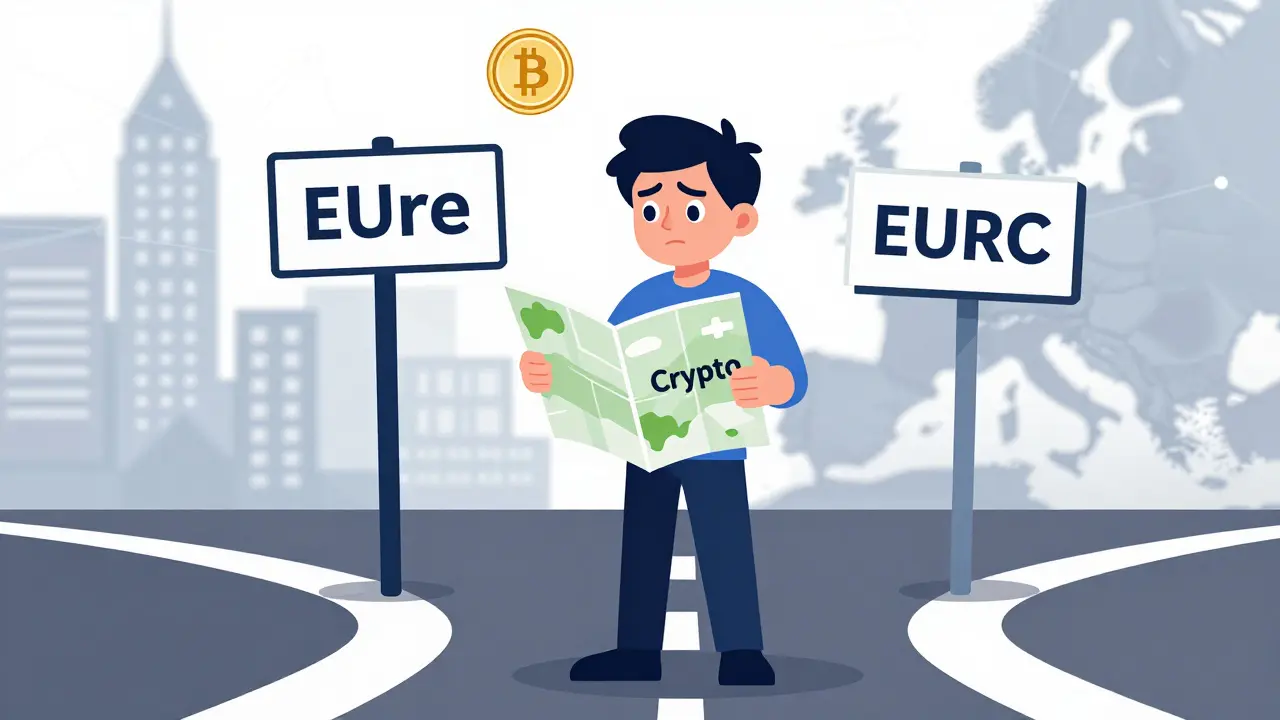
Confusion in the crypto world is often just a matter of spelling. You might be looking for EUROe, but you’ve likely encountered EURe or EURC. This mix-up is common because several major projects are racing to bring regulated, euro-backed stability to blockchain networks. If you are trying to understand what "EUROe" refers to, you are probably looking at one of two things: either it is a typo for the established EURe token by Monerium, or it is a reference to the broader category of euro-denominated stablecoins emerging under new European laws.
The landscape for digital euros has shifted dramatically since the introduction of the Markets in Crypto-Assets Regulation (MiCA). This regulatory framework has forced stablecoin issuers to prove their reserves and operate within strict legal boundaries. As a result, the "wild west" era of unbacked tokens is fading, replaced by institutional-grade assets that bridge traditional banking with decentralized finance. Understanding which specific token you are dealing with is crucial for safety, compliance, and utility.
Clarifying the Name: EUROe vs. EURe
First, let’s clear up the identity crisis. There is no widely recognized, major cryptocurrency specifically branded as "EUROe" or with the ticker "EUROE" that dominates market discussions. However, EURe (note the capitalization) is a prominent player. It is issued by Monerium, an authorized Electronic Money Institution (EMI) based in Europe. When people search for "EUROe," they are almost always looking for this token or its competitors like EURC.
EURe is a regulated e-money token that represents one euro held in reserve. It is designed to be programmable money, meaning developers can write code that automatically executes payments when certain conditions are met. For example, a smart contract could release funds only after a delivery confirmation is verified on-chain. This makes it ideal for supply chain finance and automated settlements. Unlike older stablecoins that relied on opaque corporate reserves, EURe operates under the strict oversight of European financial authorities, giving users a layer of trust that was previously missing from the crypto space.
The Rise of Regulated Euro Stablecoins
The push for euro stablecoins is not just about convenience; it is about regulatory survival. The European Union’s MiCA regulation sets strict rules for any token pegged to a fiat currency. Issuers must hold reserves that are safe, liquid, and transparent. Specifically, at least 30% of these reserves must be held in cash at credit institutions, while the rest can be low-risk instruments like sovereign bonds.
This regulatory pressure has created a split in the market. On one side, you have tech-first companies like Circle, which issues EURC. On the other, you have fintech-native players like Monerium, which issues EURe. Both aim to solve the same problem: how to move euros instantly, globally, and cheaply using blockchain technology without losing the legal protections of traditional banking.
| Feature | EURe (Monerium) | EURC (Circle) |
|---|---|---|
| Issuer Type | Electronic Money Institution (EMI) | Fintech Company / Money Transmitter |
| Primary Use Case | Programmable payments, B2B settlements | DeFi trading, lending, liquidity provision |
| Banking Integration | Direct Web3 IBAN (SEPA transfers) | Traditional bank accounts for reserves |
| Regulatory Framework | MiCA-compliant EMT | MiCA-compliant, US-regulated issuer |
| Supported Networks | Ethereum, Polygon, others | Ethereum, Solana, Avalanche, Base, Stellar |
How EURe Works: Bridging Bank Accounts and Wallets
The unique selling point of EURe is its seamless integration between your traditional bank account and your crypto wallet. Monerium provides a "Web3 IBAN." An IBAN is the standard identifier for bank accounts in Europe. By linking this to a crypto wallet, you can send euros directly from your bank to your wallet via SEPA transfer, and vice versa, without needing to go through a centralized exchange like Coinbase or Binance.
This process works as follows:
- You initiate a SEPA transfer from your bank to your unique Web3 IBAN.
- Monerium receives the euros and credits your wallet with the equivalent amount in EURe tokens.
- You can now use these tokens for transactions, payments, or DeFi activities.
- To cash out, you send the EURe back to the protocol, and the euros are transferred to your linked bank account.
This reduces friction significantly. In the past, moving money off-chain required selling crypto on an exchange, waiting for withdrawal approvals, and then transferring fiat to your bank. With EURe, the boundary between fiat and crypto blurs, making it easier for businesses to adopt blockchain technology for everyday operations.

The Competition: EURC and Institutional Players
While EURe focuses on banking integration, EURC has become the dominant euro stablecoin in decentralized finance (DeFi). Issued by Circle, the company behind the popular USDC dollar stablecoin, EURC is fully backed 1:1 by euros held in regulated financial institutions within the European Economic Area. As of early 2026, EURC had hundreds of millions of euros in circulation, making it a critical asset for traders who want exposure to the euro without holding volatile cryptocurrencies.
EURC is available on multiple blockchains, including Ethereum, Solana, Avalanche, and Base. This multi-chain presence allows it to serve a wide variety of users, from high-frequency traders on Solana to institutional investors on Ethereum. Its primary advantage is liquidity; if you want to swap euros for another crypto asset quickly, EURC pairs are often the most efficient route.
Another player to watch is Qivilis, a consortium formed by twelve major European banks. They plan to launch their own euro-backed stablecoin by mid-2026. This project represents a significant shift, as it brings traditional banking giants directly into the stablecoin issuance game. Their entry suggests that the future of euro stablecoins will be heavily institutionalized, with banks competing against fintech startups for dominance.
Why Regulation Matters for Your Euros
You might wonder why all this talk of regulation matters to you as an individual user. The answer is safety. Unregulated stablecoins have failed before, sometimes collapsing because their reserves were not what they claimed to be. Under MiCA, issuers like Monerium and Circle must undergo regular audits and provide proof of reserves. They cannot lend out your money or invest it in risky assets.
This means that if you hold EURe or EURC, you are less exposed to the risk of a sudden de-pegging event caused by poor management. While no investment is entirely risk-free, regulated stablecoins offer a much higher degree of confidence than their predecessors. For businesses operating in Europe, using MiCA-compliant tokens also ensures they are meeting legal requirements for anti-money laundering (AML) and know-your-customer (KYC) standards.

Practical Use Cases for Euro Stablecoins
So, what do you actually do with these tokens? Here are three common scenarios:
- Cross-Border Payments: Sending euros from Germany to Italy traditionally takes days and costs fees. With EURe, the transaction settles in minutes on the blockchain, with minimal fees regardless of distance.
- Hedging Against Volatility: If you trade cryptocurrencies, you don’t want your profits wiped out by a market crash. Converting your gains to EURC allows you to stay in the crypto ecosystem while preserving value in a stable currency.
- Automated Contracts: Developers building applications on Ethereum can use EURe to create smart contracts that pay freelancers automatically upon task completion, removing the need for manual invoicing and bank transfers.
Future Outlook: What Comes Next?
The euro stablecoin market is still young but growing rapidly. The entry of major banks through consortia like Qivilis signals that this sector is becoming mainstream. We can expect to see more interoperability between different stablecoins, allowing users to switch between EURe, EURC, and potentially central bank digital currencies (CBDCs) like the Digital Euro seamlessly.
For now, if you are looking for "EUROe," start by verifying if you mean EURe by Monerium. Check the contract address carefully before connecting your wallet. Ensure you are interacting with the official platform to avoid scams. As the regulatory landscape solidifies, these tokens will likely become the backbone of everyday digital commerce in Europe, bridging the gap between the old world of banking and the new world of blockchain.
Is EUROe the same as EURe?
Most likely, yes. "EUROe" is often a misspelling or variation of EURe, the stablecoin issued by Monerium. Always check the contract address and official documentation to ensure you are dealing with the correct token, as there is no major standalone coin officially named "EUROe" with a distinct ticker in the top market caps.
Which is better: EURe or EURC?
It depends on your needs. EURe is better for users who want direct bank-to-wallet integration via SEPA transfers and Web3 IBANs. EURC is generally preferred for decentralized finance (DeFi) activities due to its higher liquidity and wider availability across multiple blockchain networks like Solana and Avalanche.
Are euro stablecoins regulated?
Yes, major euro stablecoins like EURe and EURC are compliant with the EU’s MiCA (Markets in Crypto-Assets) regulation. This means they must hold full reserves in safe, liquid assets and undergo regular audits, providing greater security compared to unregulated tokens.
Can I use EURe for international payments?
Absolutely. One of the main advantages of EURe is its ability to facilitate fast, low-cost cross-border payments within the Eurozone and beyond. By using blockchain technology, transactions settle much faster than traditional SWIFT transfers, making it ideal for businesses and individuals sending money internationally.
What is the Web3 IBAN offered by Monerium?
The Web3 IBAN is a feature provided by Monerium that links your traditional bank account to your crypto wallet. It allows you to send and receive euros directly via SEPA transfers, which are automatically converted to EURe tokens on the blockchain, simplifying the on-ramp and off-ramp process for users.