What is EUROe Stablecoin (EUROE)? Understanding Euro-Backed Digital Assets
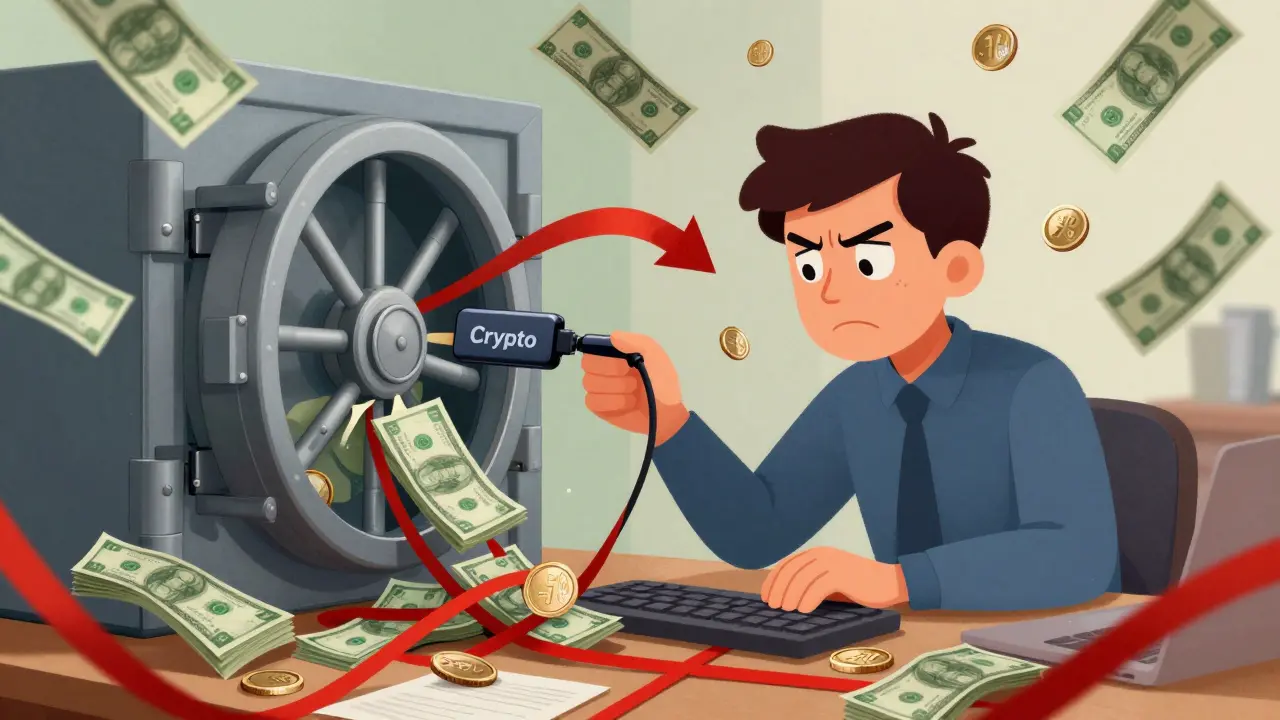
Buying or trading cryptocurrency in Europe often means dealing with a frustrating loop: you convert your euros to dollars, buy the coin, and then watch the exchange rates shift while fees eat into your profit. It’s messy, slow, and unnecessary. This is exactly why EUROe-or more accurately, the broader category of euro-denominated stablecoins like EURC and EURe-has become a critical tool for European users. If you are looking at "EUROe" on a chart or a wallet, you are likely encountering one of these regulated, euro-pegged digital assets designed to bring traditional banking stability to the blockchain.
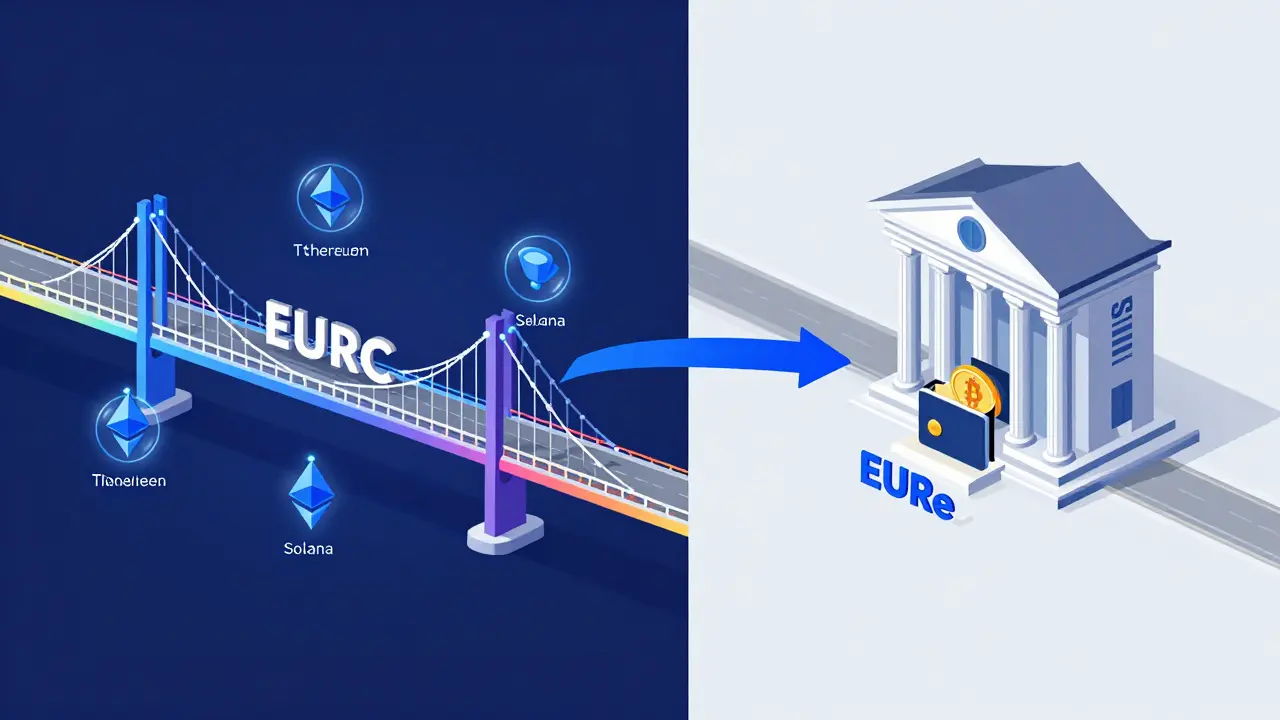
Unlike volatile coins that swing wildly based on market sentiment, these stablecoins maintain a strict 1:1 value with the Euro. They act as a bridge between your bank account and the decentralized finance (DeFi) world. But not all euro stablecoins are created equal. Some are backed by cash reserves in Swiss banks, others by short-term government bonds, and some operate under strict new EU laws. Understanding which one you are holding-and how it works-is the difference between safe storage and unnecessary risk.
The Rise of Euro-Denominated Stablecoins
To understand what "EUROe" represents, we first need to look at the problem it solves. For years, the crypto market was dominated by the US Dollar. The most popular stablecoin, USDT (Tether), and its competitor USDC, were pegged to the dollar. For a user in Berlin, Paris, or Wellington, this meant constant exposure to forex risk. If the dollar strengthened against the euro, your savings effectively shrank in local purchasing power.
Euro stablecoins emerged to fix this. They allow you to hold digital value without leaving the euro zone economically. In 2026, this isn't just a convenience; it's a regulatory necessity. The introduction of MiCA (Markets in Crypto-Assets Regulation) has forced issuers to be transparent about their reserves. You can no longer blindly trust a company's word that they have the money to back the tokens. They must prove it, audited by independent firms.
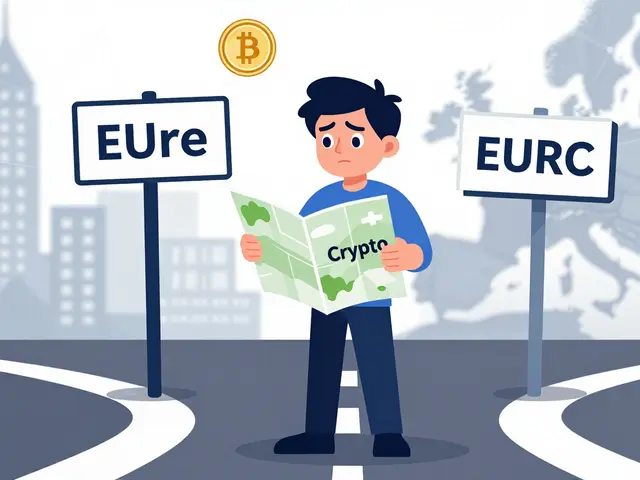
When people search for "EUROe," they are often referring to two primary entities that dominate the space:
- EURC: Issued by Circle, known for its integration with major blockchains.
- EURe: Issued by Monerium, focused on banking compliance and e-money regulations.
Both serve the same core function but cater to slightly different needs. Let's break down how each operates.
EURC: The Multi-Chain Powerhouse
EURC is a fully reserved euro-backed stablecoin issued by Circle. Launched in June 2022, it was built to mirror the success of USDC but for the European market. Circle didn't reinvent the wheel; they applied the same rigorous reserve management model they use for USDC. Every single EURC token in circulation is backed 1:1 by liquid euro assets.
Where EURC stands out is its accessibility across different networks. Most early stablecoins were stuck on Ethereum, where transaction fees could be high. EURC is natively available on Ethereum, Solana, Avalanche, Base, and Stellar. This multi-chain approach is crucial for developers and traders who want speed and low costs without sacrificing security.
The reserve structure for EURC is straightforward and conservative. Circle holds these reserves in segregated accounts at regulated financial institutions within the European Economic Area (EEA). The assets are primarily cash and short-term European government securities. As of recent data, EURC had over €371 million in circulation, making it a significant player in the DeFi landscape. For businesses using Circle Mint, converting euros to EURC is instant and fee-free, settling directly on the blockchain.
EURe: The Regulated E-Money Token
If EURC is the trader's choice, EURe is the institutional and developer's choice. Issued by Monerium, EURe operates differently because it is classified as an Electronic Money Token (EMT). Monerium is authorized as an EU Electronic Money Institution (EMI), which gives EURe a unique legal status.
The biggest advantage of EURe is its connection to traditional banking. Monerium offers a Web3 IBAN, allowing you to send SEPA transfers directly from your bank to your crypto wallet. There is no need to go through a centralized exchange like Binance or Coinbase to get euros on-chain. You simply transfer euros from your bank account, and they arrive as EURe tokens in your wallet. This removes a major friction point for everyday users.
EURe is also "programmable." Because it is treated as e-money, developers can build smart contracts that enforce specific conditions. For example, a payment could be released only when certain criteria are met, something that is harder to do legally with other types of stablecoins. Under MiCA, EMT issuers like Monerium must hold at least 30% of their reserve assets in credit institutions, with the rest in low-risk, highly liquid instruments like sovereign bonds. This ensures that if you want to redeem your EURe for euros, the money is there.
MiCA Regulation: What It Means for Your Safety
In 2026, the regulatory environment in Europe is completely different than it was five years ago. MiCA is the comprehensive regulatory framework for crypto assets in the European Union. Before MiCA, stablecoin issuers operated in a gray area. Now, they are heavily scrutinized.
MiCA introduces strict requirements for reserve assets. Issuers cannot just claim they have cash; they must prove the liquidity and safety of those assets. For euro stablecoins, this means the backing assets must be held in regulated banks within the EEA. This protects users from the kind of opacity that plagued earlier stablecoin projects. If an issuer fails, the reserve assets are protected from being seized by general creditors.
The European Central Bank (ECB) has noted that the growth of these stablecoins could impact sovereign bond markets, as issuers buy government debt to back their tokens. This is actually a positive sign for stability. It means your stablecoin is backed by real, liquid financial instruments, not just promises. When you hold EURC or EURe, you are indirectly holding a slice of European fiscal stability.
Comparison: EURC vs. EURe
Choosing between these two depends on what you prioritize: network flexibility or banking integration. Here is how they stack up against each other in practical terms.
| Feature | EURC (Circle) | EURe (Monerium) |
|---|---|---|
| Issuer | Circle Internet Financial | Monerium |
| Regulatory Status | MiCA Compliant Stablecoin | Electronic Money Token (EMT) |
| Primary Backing | Cash & Short-term Gov Securities | Credit Institutions & Low-risk Instruments |
| Supported Networks | Ethereum, Solana, Avalanche, Base, Stellar | Ethereum, Polygon, Optimism |
| Banking Integration | Standard On/Off Ramps | Direct SEPA via Web3 IBAN |
| Best For | Traders, DeFi Users, Multi-chain Devs | Businesses, Compliance-focused Apps |
If you are actively trading on Solana or Avalanche, EURC is your best bet due to its native presence on those chains. If you are a business looking to pay invoices in crypto but need to reconcile everything with your traditional bank statement, EURe's SEPA integration makes accounting much simpler.

Other Players in the Euro Stablecoin Market
While EURC and EURe lead the pack, they aren't alone. EURS (STASIS EUROS) was one of the earliest euro stablecoins, launched in 2019. It is backed by cash deposits and German government bills. However, it has faced challenges adapting to the new MiCA regulations compared to newer entrants.
Another major development in 2026 is the rise of bank-led consortia. A group of twelve major European banks formed Qivilis to launch a euro-backed stablecoin. This project aims to bring even deeper institutional trust to the table, leveraging the existing infrastructure of traditional banking giants. While still emerging, Qivilis represents the next phase of adoption: when your own bank issues the stablecoin.
Practical Use Cases for Euro Stablecoins
Why should you care about EUROe-style stablecoins? Here are three concrete scenarios where they add value:
- Cross-Border Payments: Sending money from France to Germany used to take days and cost significant fees. With EURC or EURe, you can send value instantly for a fraction of the cost. The recipient receives euros in their wallet, which they can spend or convert back to fiat immediately.
- DeFi Yield Farming: Many decentralized finance protocols offer interest on stablecoins. By depositing EURC instead of USD-based coins, you avoid the currency conversion risk. If the euro strengthens, your holdings grow in local value without any action on your part.
- Hedging Volatility: If you hold Bitcoin or Ethereum but want to protect your gains during a market dip, selling for euros directly via a stablecoin allows you to exit quickly without going through a slow withdrawal process to your bank.
These use cases highlight the utility beyond simple speculation. Euro stablecoins are becoming essential infrastructure for the digital economy in Europe.
Risks and Considerations
No financial instrument is risk-free. While euro stablecoins are safer than volatile cryptocurrencies, you still need to be aware of potential pitfalls. First, there is counterparty risk. You are trusting Circle or Monerium to manage the reserves correctly. Although MiCA requires audits and transparency, operational failures or cyberattacks on the issuer's systems could theoretically impact redemption.
Second, there is smart contract risk. Even if the issuer is solid, the code running on the blockchain could have vulnerabilities. Always use reputable wallets and verify contract addresses before interacting. Third, regulatory changes can happen. While MiCA provides clarity now, future updates could impose stricter limits on stablecoin usage or reserve compositions.
Finally, remember that stablecoins are not insured by government deposit protection schemes like standard bank accounts. If an issuer collapses and reserves are insufficient, you may lose funds. Diversification across multiple reputable issuers is a wise strategy.
Is EUROe the same as the Digital Euro?
No. The Digital Euro is a central bank digital currency (CBDC) being developed by the European Central Bank. It would be direct liability of the ECB. EUROe-style stablecoins like EURC and EURe are private sector assets issued by companies like Circle and Monerium. They are not backed by the central bank but by commercial reserves.
Can I use EURC or EURe outside of Europe?
Yes. These stablecoins operate on global blockchains. Anyone with a compatible wallet can hold and trade them. However, the ease of converting them back to fiat euros may depend on local regulations and banking partnerships in your country.
Are euro stablecoins safe under MiCA?
They are significantly safer than pre-MiCA stablecoins. MiCA mandates full reserve backing, regular audits, and strict segregation of assets. This reduces the risk of fraud or insolvency. However, they are still not government-insured like traditional bank deposits.
Which blockchain is best for sending euro stablecoins?
For speed and low fees, Solana and Base are excellent choices for EURC. For maximum compatibility with traditional banking tools like Web3 IBANs, Ethereum and Polygon are often preferred for EURe. Choose based on where your receiving wallet supports the token.
Will my euro stablecoin lose value?
The token itself is pegged 1:1 to the euro, so it should not fluctuate in value relative to the euro. However, if the euro itself loses value against other currencies, your purchasing power decreases. Additionally, if the issuer fails to maintain reserves, the peg could break, though MiCA regulations make this unlikely.


Gavin Wonnacott
Oh look, another article trying to convince you that 'regulated' means 'safe'. Please.
I've been in crypto since 2013 and I can tell you right now that Circle is just a bank with better marketing. They want you to feel cozy holding EURC because it has a pretty logo and some lawyers in Brussels nodding at them. But let's be real for a second. You are still trusting a private entity with your money. If they get hacked, or if the EU decides tomorrow that stablecoins are 'too risky' and freeze assets, where do you think you'll be? Standing in line like every other retail loser who thought MiCA was a magic shield.
And don't get me started on this 'EURe' nonsense from Monerium. Web3 IBANs? Really? It's just a bridge to traditional banking which is slow, expensive, and corrupt. Why would anyone want to bring the inefficiency of SWIFT into their wallet? It's like putting a velvet rope around a dumpster fire and calling it exclusive.
The only people winning here are the issuers taking fees on minting and burning. The rest of you are just liquidity for their balance sheets. Wake up.
Sheldon Friesen
Gavin! Always such a delightful splash of cold water on the pool party! 🌊
You make it sound like MiCA is a conspiracy theory rather than a regulatory framework designed to protect consumers from exactly the kind of rug pulls we saw in 2022. While I appreciate your passion (and your unique perspective on 'banking efficiency'), perhaps we should acknowledge that having audited reserves is actually... good? For everyone? Even people who aren't trying to overthrow the financial system?
Also, calling EURC a 'dumpster fire with a velvet rope' is quite the poetic image! Did you write that in one go? Because it flows beautifully! Let's not forget that multi-chain compatibility isn't just about 'marketing'; it's about accessibility for developers who need speed on Solana but compliance on Ethereum. It's a feature set, not a conspiracy!
Samara McCallum
i mean its just money right
but what is money really
isnt it just a shared hallucination
so why does it matter if the hallucination is backed by euros or dollars
we are all dreaming together
maybe the dream is waking up
Jan Gilmore
Actually, Samara, while your existential crisis is noted, the mechanics of pegged assets are quite specific. The 'shared hallucination' argument ignores the legal recourse available under MiCA. Unlike Tether, which has historically operated in opaque jurisdictions, EURC and EURe are subject to strict reserve requirements within the EEA. This isn't just philosophy; it's contract law enforced by regulators.
Furthermore, the distinction between EURC and EURe is critical for institutional adoption. EURC’s presence on Solana and Base allows for high-throughput transactions that are essential for micro-payments, whereas EURe’s EMT status makes it viable for corporate treasury management due to its alignment with e-money regulations. Ignoring these technical and legal distinctions leads to poor portfolio allocation.
Tricia Alach
im so confused tho
why do i need euroe when i have regular euros
isnt crypto just for gambling anyway
my friend told me to buy bitcoin but he lost half his money
so maybe this is safer?
but then again banks are safe too right?
Bradley Geldenhuys
Tricia, listen to me closely because I am going to save you from financial ignorance.
You DO NOT use Euroe for gambling. That is a waste of potential. You use it for stability. When Bitcoin drops 20% in a day, your EURC stays at 1 euro. That is the power.
Banks are NOT safe. Remember Silicon Valley Bank? Remember Celsius? Those were 'safe' until they weren't. Crypto gives you control. But yes, you must be smart. Do not leave your coins on exchanges. Use a hardware wallet. Learn about seed phrases.
I am shouting this because I care about your future. Don't let the banks steal your interest rates. DeFi yields are higher. Just do your homework. I am an optimist but I demand competence.
Caique Muniz
lol nice try bradley
youre yelling at a cloud
also ur spelling is bad
anyway nobody reads this stuff
just hodl btc and ignore the noise
stablecoins are for noobs who are scared of volatility
real investors embrace the chaos
or whatever
robert Whitehead
Caique, your laziness is showing. Dismissing stablecoins as 'for noobs' reveals a fundamental misunderstanding of market infrastructure. Stablecoins are the backbone of DeFi trading pairs. Without them, liquidity would evaporate during bear markets.
Moreover, your suggestion to 'hodl BTC' is a non-strategy. Professional traders use stablecoins to hedge exposure and capture yield without selling their long-term holdings. Your 'embrace the chaos' mantra is typical of gamblers who confuse luck with skill.
I suggest you read the whitepaper for EURC before commenting further. Ignorance is not a virtue.
Mike S
Oh, Robert, always the moral high ground, aren't you?
'Ignorance is not a virtue.' How profound. Did you come up with that yourself, or did you borrow it from a self-help book?
Let's cut the drama. Caique might be lazy, but he's pointing out that for the average person, BTC is simpler. Why complicate life with EURC vs EURe debates when you can just hold gold or cash?
This whole 'DeFi backbone' narrative is just hype to keep us engaged in a casino that doesn't exist. We're analyzing spreadsheets while whales dump tokens. Pathetic.
H F
Wow, Mike! What a dramatic exit!
But seriously, can we agree that the article is spot on? I’ve been using EURC for my freelance payments from the US to Europe, and the speed is incredible. No more waiting 3-5 days for wire transfers.
It’s not about being a 'whale' or a 'noob'. It’s about utility. If it works, use it. Stop fighting each other and start building. The tech is solid. The regulation is clear. Let’s move forward!
Michael Berggren
H F, you are absolutely right! 👏👏👏
I’ve been experimenting with EURe for my small business invoicing. The Web3 IBAN feature is a game-changer for reconciliation. My accountant was skeptical at first, but seeing the direct SEPA link made her very happy. 😊
It’s amazing how much friction we used to accept as normal. Now, instant settlement is possible. We should celebrate progress, not tear it down! 🚀💰
Kiran CS
How utterly quaint.
To think that individuals like Michael believe that a few digital tokens issued by private entities constitute 'progress' is laughable. The true evolution of finance lies in the centralization of power, not this chaotic decentralization masquerading as freedom.
MiCA is not a shield; it is a leash. And those wagging their tails at the prospect of 'instant settlement' are merely dogs chasing cars. The Digital Euro will render these private stablecoins obsolete. Until then, enjoy your fleeting moment of 'utility', peasants.
Bijan Das
Kiran u r so pretentious
who cares about digital euro
if i can send money to my cousin in india faster with eurc then i will use it
stop talking like a robot
and stop acting like u know everything
nobody likes u
Ashley Rodriguez
i think bijan has a point though even if he says it rudely
the thing is most people just want to pay bills and save money without worrying about exchange rates
if euroe helps with that then its good
but i worry about what happens if circle goes bankrupt
because then all my savings are gone
and i dont know how to fix that
so maybe i should just keep cash under my mattress
it feels safer somehow
Bridget Coogle
Ashley your concern is valid
counterparty risk is real
but diversification helps
don't put all eggs in one basket
use multiple wallets
and learn about self-custody
you got this 💪