What is Neurai (XNA)? A Guide to the AI and IoT Crypto Project
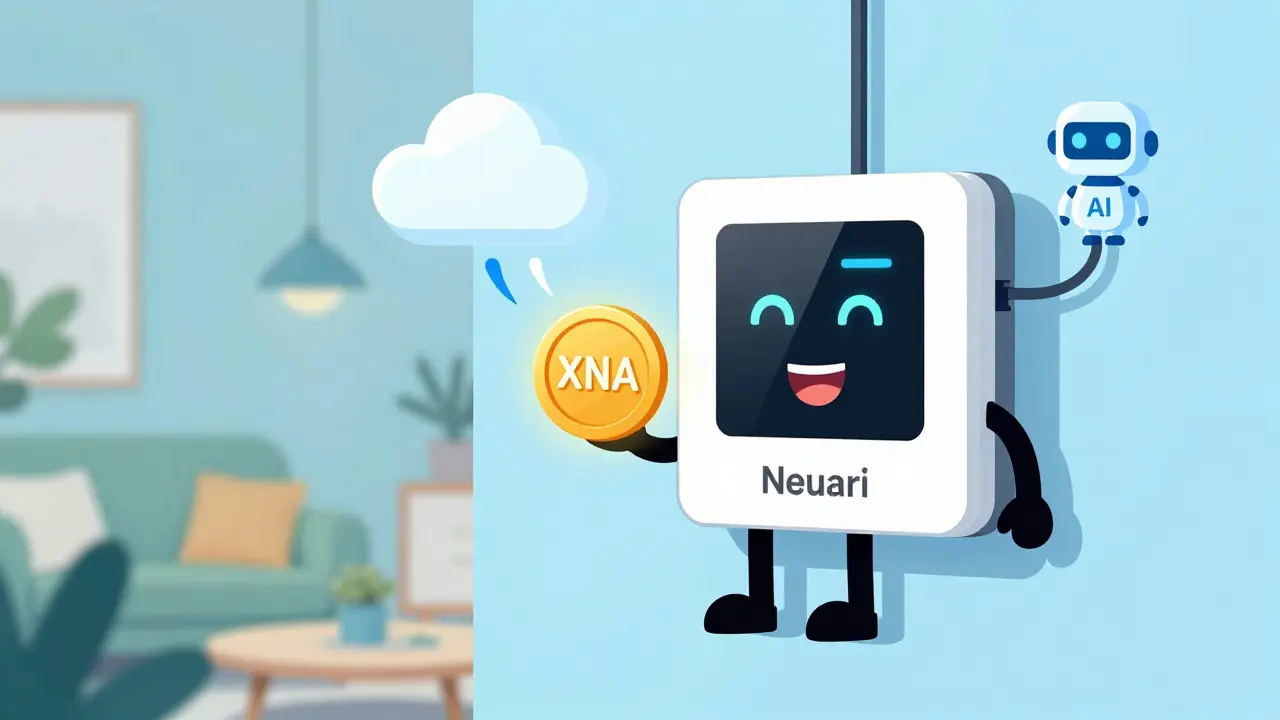
Imagine a world where your smart thermostat doesn't just adjust the temperature but also earns you tokens for sharing energy usage data. Or picture an industrial sensor that automatically pays for its own maintenance using micro-transactions on a blockchain. This is the vision behind Neurai, a cryptocurrency project trying to bridge the gap between the physical world of devices and the digital world of finance.
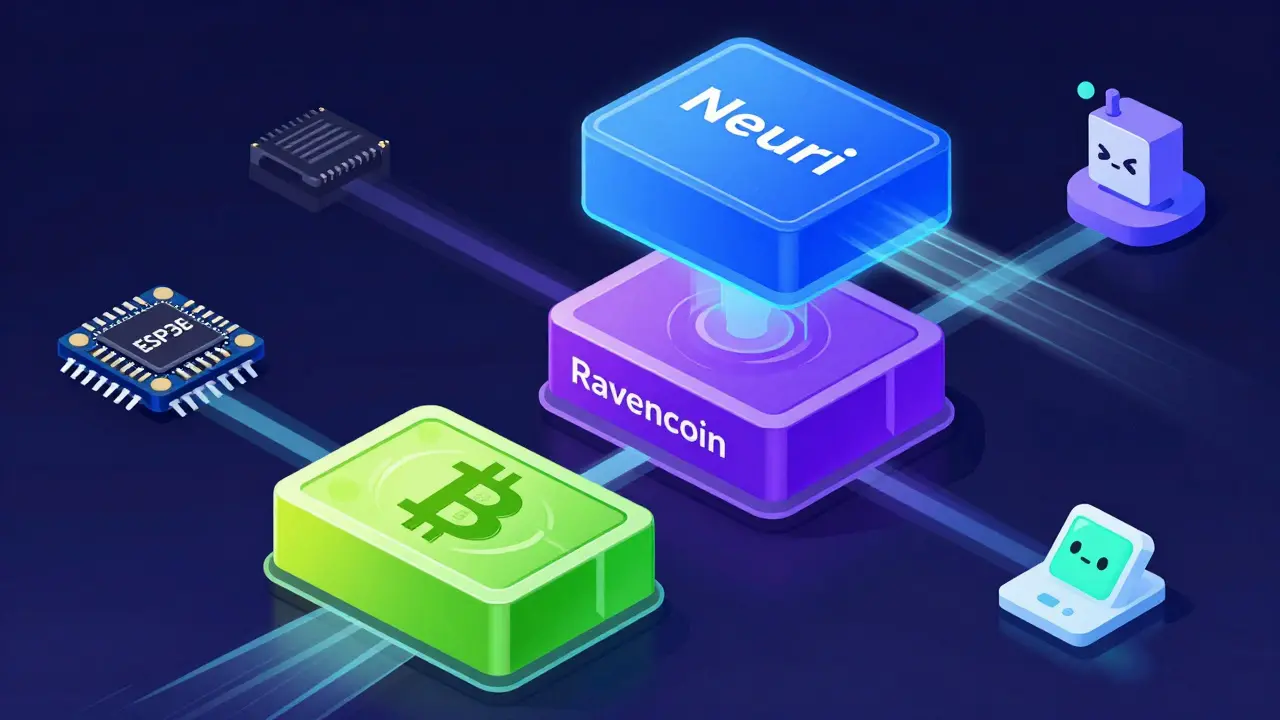
If you've stumbled upon the ticker symbol **XNA** and wondered what it actually does, you aren't alone. The crypto space is flooded with projects claiming to revolutionize Artificial Intelligence (AI) and the Internet of Things (IoT), but few have the specific technical lineage that Neurai boasts. It isn't just another meme coin or a vague concept; it's a functional Layer-1 blockchain built on code derived from Bitcoin and Ravencoin, designed specifically to handle assets in an interconnected device ecosystem.
The Origin Story: Electronics Experts Meet Blockchain
Most crypto projects are born from computer scientists or financial engineers. Neurai is different. It was launched on April 17, 2023, by a trio of electronics specialists who spent years working on IoT projects. They noticed a glaring problem: there were no platforms effectively merging hardware expertise with blockchain technology.
These founders didn't just want to create a currency; they wanted to build infrastructure. Their goal was to connect IoT hardware-specifically devices based on ESP32 microcontrollers and RISC-V processors-with AI models and blockchain asset functionality. By leveraging their background in electronics, they aimed to solve real-world integration issues rather than just speculating on price movements. The result is a decentralized, open-source protocol optimized for transferring cryptoassets, released under the permissive MIT license, which allows developers to reuse and modify the code freely.
Technical Architecture: Built on Proven Foundations
To understand Neurai, you need to look at its family tree. The official documentation states clearly: "The Neurai code comes from Ravencoin, and Ravencoin comes from Bitcoin." This lineage places XNA firmly in the UTXO (Unspent Transaction Output) model category, known for security and transparency. However, Neurai isn't just a clone; it introduces specific optimizations tailored for high-frequency, low-value transactions typical of IoT environments.
| Feature | Specification | Comparison/Context |
|---|---|---|
| Consensus Algorithm | KAWPOW Proof-of-Work | Favors GPU miners over ASICs, promoting decentralization |
| Block Time | 1 Minute | Much faster than Bitcoin's 10 minutes |
| Initial Block Size | 8 Megabytes | Larger capacity than Bitcoin's base 1 MB |
| Halving Mechanism | Micro-Halvening (5% every 10 days) | Continuous emission decline vs. discrete halvings |
| Maximum Supply | 21 Billion XNA | 1,000x larger than Bitcoin's cap for granular pricing |
The use of the KAWPOW algorithm is significant. Unlike Bitcoin's SHA-256, which is dominated by specialized ASIC machines, KAWPOW is designed to be resistant to such centralization, allowing regular users with powerful graphics cards to participate in securing the network. The one-minute block time and eight-megabyte block size ensure that transactions confirm quickly and can handle higher throughput, which is essential when thousands of sensors are sending data simultaneously.
Tokenomics: The Micro-Halvening Strategy
One of the most unique aspects of Neurai is its monetary policy. Bitcoin halves its block reward roughly every four years, causing massive market events. Neurai takes a different approach with a "micro-halvening" schedule. Every ten days, the block reward decreases by 5%. This creates a continuous, smooth decline in new supply issuance rather than sudden shocks.
This strategy aligns with the project's maximum supply of 21 billion XNA. Why so many coins? Because IoT transactions often involve tiny amounts of value. If you're paying a sensor $0.0001 for data, you don't want to deal with fractions of a cent in a currency like Bitcoin. The high supply allows for precise, granular micro-transactions without complex decimal math. As of early 2026, approximately 80.9% of the total supply (around 16.98 billion XNA) is already in circulation, meaning the inflation rate is slowing down steadily according to the predefined formula.
The Use Case: Bridging AI, IoT, and Assets
So, what do you actually *do* with XNA? The core utility lies in tokenizing real-world data. Imagine a fleet of delivery drones. Each drone could hold a wallet on the Neurai blockchain. When a drone completes a delivery, it records the event on-chain. An AI model analyzes the route efficiency and automatically releases payment to the operator in XNA. Simultaneously, the flight data could be minted as an NFT, creating a verifiable history of the journey that can be sold to logistics companies for training their own AI models.
Neurai aims to facilitate this by providing APIs that connect ESP32 or RISC-V devices directly to the blockchain. This allows hardware manufacturers to embed blockchain capabilities into cheap, low-power devices. Instead of relying on centralized cloud servers to validate data, the device itself can interact with the Neurai network, ensuring data integrity and enabling automated, trustless payments. This is particularly valuable in industries like agriculture, manufacturing, and energy management, where data provenance and automated micropayments are crucial.
Market Reality: High Risk, High Volatility
While the technology sounds promising, it's important to look at the market data with clear eyes. Neurai is a small-cap cryptocurrency. As of May 2026, it ranks around #2100 among all cryptocurrencies, with a market capitalization hovering near $700,000 USD. This indicates limited liquidity and high volatility.
The price history tells a story of extreme fluctuation. Neurai reached an all-time high of $0.006802 in November 2023. Since then, it has experienced a drawdown of nearly 99%, hitting an all-time low of $0.00003078 in March 2026. While it has recovered slightly from that low, trading volumes remain thin, often dipping below $40,000 in 24-hour volume. This means that large buy or sell orders can significantly impact the price, leading to slippage for traders.
You can trade XNA on several mid-tier centralized exchanges like Gate.io, MEXC, CoinEx, and Biconomy. These platforms typically require some form of KYC (Know Your Customer) verification. For instance, Biconomy requires full KYC with US/CA license coverage, while others may have partial requirements. There are currently no major listings on top-tier exchanges like Coinbase or Binance, which limits accessibility for mainstream investors.

Security and Decentralization Considerations
Because Neurai uses Proof-of-Work and inherits code from mature projects like Bitcoin and Ravencoin, it benefits from established security standards. The open-source nature under the MIT license means anyone can audit the code, which is a positive sign for transparency. However, due to its smaller hash rate compared to giants like Bitcoin or even Ravencoin, the network is theoretically more vulnerable to 51% attacks if a single entity gains control of the majority of mining power. Currently, there is no public data on the Nakamoto coefficient or detailed miner distribution, making it difficult to assess the true level of decentralization.
For users looking to store XNA, standard wallet practices apply. Since it's a UTXO-based chain, you'll need a wallet that supports Neurai addresses. Always verify contract addresses and exchange URLs to avoid phishing scams, especially given the lower visibility of the project compared to major altcoins.
Is Neurai Worth Your Attention?
Neurai represents a niche but technically sound attempt to solve a real problem: integrating blockchain with the physical world of IoT and AI. Its foundation in electronics engineering gives it credibility in terms of practical application, not just financial speculation. The micro-halvening and high-supply model are well-suited for the micro-transaction needs of smart devices.
However, it remains a highly speculative asset. The lack of widespread adoption, thin liquidity, and absence of major exchange listings mean that investing in XNA carries significant risk. It is best suited for those interested in the intersection of hardware and blockchain who are willing to monitor development progress closely and accept the volatility inherent in small-cap projects. If you are a developer building IoT solutions, exploring Neurai's APIs might offer unique opportunities. If you are purely an investor, proceed with caution and only allocate funds you can afford to lose.
What is the main purpose of Neurai (XNA)?
Neurai is designed to integrate Non-Fungible Tokens (NFTs) and tokenized assets with Internet of Things (IoT) devices and Artificial Intelligence (AI) applications. It aims to enable micro-transactions and data verification for smart hardware like ESP32 and RISC-V based devices.
How does Neurai differ from Bitcoin?
While derived from Bitcoin's codebase via Ravencoin, Neurai uses the KAWPOW mining algorithm instead of SHA-256, has a 1-minute block time (vs. 10 minutes), an 8MB initial block size, and a maximum supply of 21 billion coins (vs. 21 million). It also features a continuous micro-halvening schedule rather than discrete halving events.
Where can I buy Neurai (XNA)?
As of 2026, Neurai is listed on mid-tier centralized exchanges such as Gate.io, MEXC, CoinEx, and Biconomy. Most of these platforms require some form of KYC verification. Trading pairs are primarily XNA/USDT.
What is the micro-halvening mechanism?
Instead of halving the block reward every four years like Bitcoin, Neurai reduces its block reward by 5% every 10 days. This creates a smoother, continuous decline in new supply issuance, helping to stabilize miner revenue over shorter periods.
Is Neurai a safe investment?
Neurai is considered a high-risk, speculative asset. It has a small market capitalization (around $700k), low liquidity, and has experienced a ~99% drop from its all-time high. Investors should exercise extreme caution and conduct thorough due diligence before participating.