When to Pay Lower Gas Fees: Timing Strategies for 2026
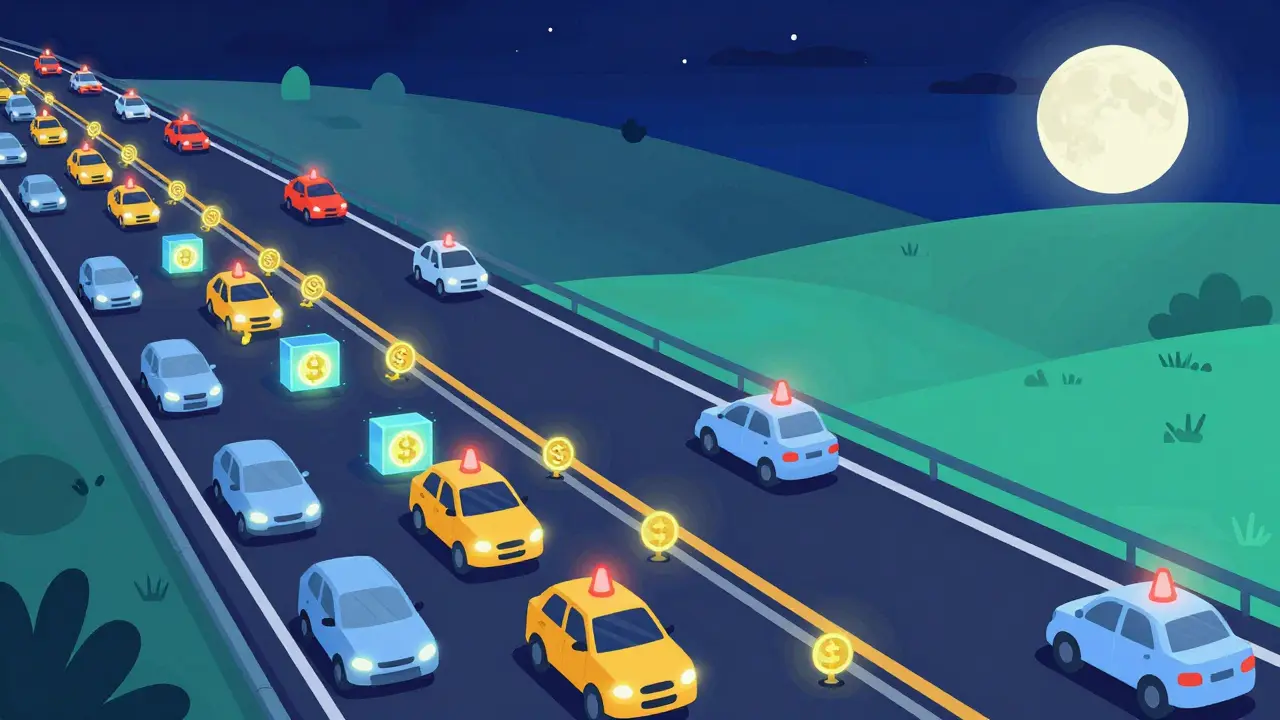
You know the feeling. You click "Swap" or "Send," and suddenly you realize the network fee is eating up most of your money. It feels like paying a toll tax just to exist on the internet. But here is the hard truth: you are often paying premium prices when you don't have to. While developers talk about code efficiency, regular users can slash their spending just by moving the clock.
Network congestion isn't random noise; it follows a pattern. Just like traffic gets bad at rush hour, blockchain networks get crowded when financial markets are open. By understanding these rhythms, you can stop leaving money on the table. This isn't theoretical speculation. Real users, tracked through community forums and analytics dashboards, have shown consistent savings of 30% to 70% just by shifting timing strategies.
The Mechanics Behind Your Wallet Drain
To master the timing, you first need to understand what you are actually paying for. It is easy to think of gas as a fixed service fee, like a bank transfer charge. It is not. It is an auction for space.
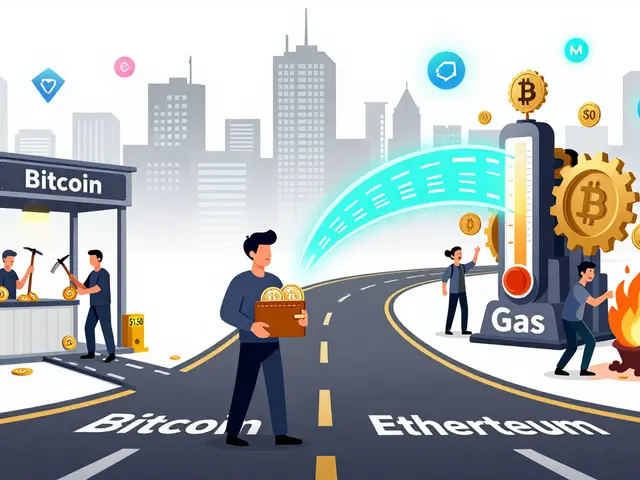
Etheruem Gas is the computational work required to process and validate a transaction on the Ethereum blockchain. Also known as Block Space, it operates on a supply-and-demand model. When demand exceeds the block limit, prices rise.
Every second, miners and validators pack blocks with transactions. They fill them up starting with the highest bidder. In 2021, this was entirely manual bidding. Today, thanks to EIP-1559, there is a dynamic base fee that burns, plus a tip you add to move your transaction faster. This system stabilizes things slightly, but volatility remains massive. According to data from Q3 2024, Ethereum processes approximately 1.1 million transactions daily. When those 1.1 million transactions crowd into a single busy hour, the price per unit jumps dramatically.
The math is brutal during spikes. A study of network conditions showed that base fees can increase by up to 12.5% when blocks are over 50% full. Conversely, when the network is quiet, the algorithm adjusts down. This isn't magic; it's basic economics applied to code.
The Global Clock: Why UTC Matters
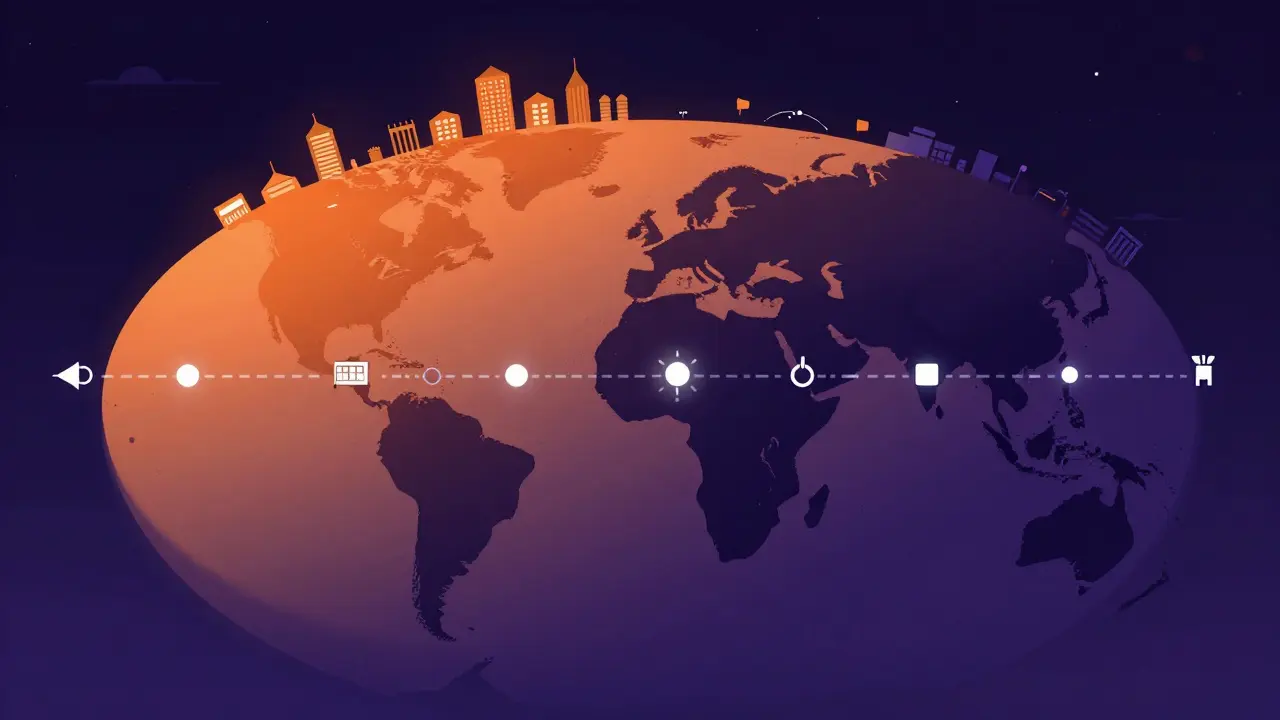
If you live in Wellington, London, or New York, your local morning is someone else's evening. Blockchain networks operate on a universal timeline, usually referenced to Coordinated Universal Time (UTC). Understanding this offset is the single biggest factor in reducing costs.
Historical data spanning from 2021 to 2024 shows a very specific weekly heartbeat. Fees aren't constant throughout the week. Friday afternoons typically carry fees 22.3% higher than Sunday mornings. Monday mornings tend to see an 18.7% hike compared to Wednesday afternoons. Why? Because institutional traders and automated bots wake up then. When they sleep, the network clears out.
The sweet spot for most users is between 2 AM and 6 AM UTC. During this window, European markets are mostly closed, and American markets are asleep or just opening slowly. Asian markets are active, but volume is generally lower than the global overlap hours. This four-hour window consistently delivers the lowest gas prices across major chains.
| Time Window (UTC) | Relative Cost | User Activity Level | Recommendation |
|---|---|---|---|
| 09:00 - 17:00 | High (Peak) | Very High | Avoid non-urgent tasks |
| 22:00 - 02:00 | Medium | Moderate | Acceptable for standard transfers |
| 02:00 - 06:00 | Low (Off-Peak) | Low | Best for bulk operations |
| Sunday Morning | Lowest | Minimal | Ideal for large contract interactions |
For example, a user on Reddit named u/EthereumSaver documented saving $142.37 over three months just by sticking to the 3 AM to 5 AM UTC window. That represents a 41.2% reduction in costs compared to their average transaction history. That is free money kept in your pocket.
Comparing Networks: Not All Chains Are Equal
Timing strategies depend heavily on which network you are using. They do not all react the same way to traffic spikes.
- Ethereum Mainnet: This chain is the most volatile. Prices swing wildly from 5 gwei to 5,000 gwei depending on hype cycles like an NFT drop. The timing strategy here yields the highest potential savings because the gap between high and low is so wide.
- Polygon: Polygon offers much more predictability. Their Proof-of-Stake mechanism smooths out the peaks. During off-peak hours, average fees sit around 0.0005 MATIC, jumping to 0.0025 MATIC during peaks. That is a 5x difference, making timing highly effective for frequent swappers.
- Avalanche: With the Avalanche9000 upgrade introduced in late 2024, this chain became even more stable. Subnets allow for customizable fee structures, meaning timing matters less here than on Ethereum.
If you are using a network like BNB Chain, you might find the effort isn't worth it. Fee fluctuations there are only around 40-50% between peak and off-peak times. On Ethereum or Polygon, that spread is wider, so the incentive to wait is stronger.
Tools That Track The Pulse
Guessing is a bad business. You need data to confirm the traffic conditions before you click send. Relying on memory or habit leaves you exposed to sudden spikes, like the unexpected cross-chain congestion caused by the Bitcoin halving in May 2024.
You should integrate a few specific tools into your workflow:
- Etherscan Gas Tracker: This is the gold standard for Ethereum. Look for the Green zone on the dashboard. It signals that network demand is low. If it turns red (above 100 gwei), you hold off unless it is urgent.
- Blocknative Gas Platform: Offers predictive data rather than just current snapshots. It helps you see trends approaching in the next few minutes.
- Tenderly: For more advanced users, setting up custom alerts allows you to receive a notification when gas hits your target threshold.
One veteran user, u/GasGuru, reported consistent 35-45% savings by strictly executing trades when the tracker showed green zones. However, a warning here: tools are reactive. Sudden events happen. A surprise NFT launch or a token airdrop campaign can crash the market in minutes. Always keep some flexibility in your plan.
The Hidden Risks of Waiting
Saving money sounds great until you lose something bigger. Timing strategies have a downside known as opportunity cost. There is a story from July 2024 involving a trader called u/DeFiDisaster. He tried to buy into a Uniswap V3 liquidity pool. Instead of buying immediately during the initial hype, he waited for gas to drop. He lost the arbitrage opportunity and ultimately $850 in potential profits waiting for a cleaner block.
This highlights a critical nuance: timing works best for non-urgent tasks.
- Safely Delayable: Token swaps, bridging assets, staking claims, or withdrawing funds to cold storage. These are perfect candidates for off-peak execution.
- Time-Sensitive: Arbitrage trades, flash loan attacks, bidding on limited supply drops, or voting on governance proposals with deadlines. Rushing these makes sense even if fees are high.
There is also a security risk known as front-running. Nadcab's blockchain security team warned in July 2024 that delaying transactions exposes details. If a transaction is broadcast and sits in the mempool for too long, bots can see it and jump ahead, pushing your bid higher and potentially stealing your intended outcome.
Looking Ahead: Automation Is Coming
As we move through 2026, the industry is shifting away from manual monitoring. Remember when checking gas charts felt mandatory? It won't always be that way. Innovation is catching up to these manual habits.
Polygon announced a feature called "Gas Hero" for late 2024, designed to automatically route transactions through predicted low-fee windows without the user needing to manually check the clock. Meanwhile, Gartner predicts that by 2026, 75% of enterprise blockchain applications will incorporate automated gas optimization directly into their interfaces.
For the individual user, this means the golden age of manual timing might be ending. However, until every platform integrates this perfectly, knowing these principles gives you an edge. The best approach combines strategic timing with technical optimization. Code efficiency saves the most money long-term, but timing wins the battle for your monthly wallet budget.
Don't let a high base fee dictate your financial moves. Check the clock, watch the green indicators, and make your move when the network is quiet.
Frequently Asked Questions
Is it better to wait for gas or pay now?
It depends on urgency. If the transaction involves time-sensitive value like arbitrage or limited mints, pay now. If it is a simple transfer or swap, waiting 30-60 minutes during off-peak UTC hours (like 2 AM UTC) can save you 30-50%.
Which blockchain has the most stable fees?
Currently, Avalanche C-Chain and Polygon offer more stability due to their consensus mechanisms. Ethereum remains the most volatile, swinging between 5 and 5,000 gwei depending on activity.
Does time of day matter on weekends?
Yes. Weekend trading volume is generally lower. Sunday mornings specifically show the lowest average gas prices of the week, while Friday afternoons often hit the highest peaks before the weekend break.
Can I set alerts for low gas prices?
Yes. Services like Tenderly allow you to set custom alerts. You can configure notifications to fire when network gas drops below a specific threshold (e.g., below 30 gwei).
What is Gwei?
Gwei is a unit of measurement for Ethereum gas. 1 Gwei equals one billionth of an Ether. It represents the price you are willing to pay per unit of computation to get your transaction prioritized.

Justin Garcia
The whole premise feels like chasing ghosts in the machine.
Stop trying to game the system when you cannot predict the bots.
It is a waste of mental bandwidth for marginal gains.
You lose more time than money waiting for windows.
Just send your transaction and get it over with.
People obsess over pennies while ignoring bigger structural flaws.
Michael Nadeau
Understanding the mechanics requires patience and deep observation.
Most people rush into transactions without considering the broader context.
They simply see red fees and panic immediately.
Panic leads to poor financial decisions every single time.
We must observe the market rhythm instead of reacting blindly.
It acts like a breathing entity of data across the network.
When it breathes fast, costs increase significantly for everyone.
We wait for the inhale phase of the cycle before acting.
This discipline saves capital in the long run significantly.
Capital preservation is a fundamental law of digital finance.
Many ignore this subtle nuance entirely because they fear loss.
They pay premiums for urgency they do not actually need.
Urgency is often manufactured by bad habits or external pressure.
Breaking those habits frees up wallet value for future projects.
True mastery comes from strategic silence rather than constant action.
One must respect the clock above all other indicators here.
Raymond K
I think you have a really good pooint tho!
Waiting can be tough but savving money is cool.
Thanks for sharing the stats on gwei prices.
I hope evryone tries to check etherescan before paying too much.
Leah Lara
Why bother checking charts when the network is congested anyway?
Ashley Stump
There is a deeper conspiracy behind these fee structures that nobody mentions.
They manipulate the difficulty to force higher spending from retail investors.
It looks like natural congestion but the patterns are too consistent.
Big players know when the base fee will drop and we are left guessing.
Don't trust the official metrics displayed on public dashboards.
Their algorithms are designed to encourage panic selling of assets.
We should organize locally to demand transparent block space allocation.
Markus Church
It is imperative to acknowledge the statistical variance presented herein.
The correlation between UTC timing and gas cost remains significant.
However, reliance on manual intervention reduces overall efficiency for enterprise operations.
Automated systems offer superior optimization for high volume traders.
Individual users should adopt similar algorithmic approaches to their workflow.
Manual monitoring introduces error rates that exceed acceptable thresholds.
Therefore, reliance on third-party tracking tools is highly recommended.
Tiffany Selchow
Sure sure keep waiting for the perfect window like a peasant.
While you sleep the real trades get done in milliseconds.
No wonder your portfolio is stuck in the dirt forever.
Only losers care about saving five bucks on gas fees today.
Cara Boyer
Oh please~ the little plebs want to save their pennies 😂
Real investors know the time cost is higher than gas fees.
But if you want to play with clocks go ahead darling 🥺
We know the elite chains do not even use this garbage method 😌
Colin Finch
Fair enough mate though the weekend slump is real as hell.
I caught a massive spike on Friday afternoon last week.
Cost me a fortune just to bridge some stablecoins over.
Now I am sticking to Sunday mornings for my transfers.
Better late than broke on the mainnet usually.
Disha Patil
Wait what about the risk of front running though?
I tried waiting once and someone stole my liquidity position.
It was the worst day in crypto history ever.
My screen went red and I cried for hours straight.
Can anyone tell me how to stop bots from seeing my pending tx?
Justin Smith
Front running is mitigated via private RPC nodes mostly.
Public mempool waiting is dangerous for arbitrage opportunities.
Use a flashbot or similar infrastructure to bypass the queue.
Nobody cares about your feelings regarding bot attacks.
joshua kutcher
Listen buddy sometimes a little loss on fees buys peace of mind.
We all make mistakes trying to optimize every penny spent.
The key is knowing when urgency actually matters for you.
Learn from your past trades instead of fearing the next one.
Jay Starr
I feel like this advice ignores the emotional toll of waiting.
Checking gas every thirty minutes ruins your entire day plan.
Maybe automation is indeed better for the average person.
Beverly Menezes
We should all try to find a way to help each other save fees.
Sharing information on low traffic hours helps everyone grow.
Community support is always more important than individual profit.
Let us all learn together on this new financial landscape.
Wade Berlin
Everyone wants to be a genius timer but nobody is.
I checked three trackers and they all gave different numbers.
Who decides which tool is actually reliable for trading?
Seems like another case of false precision marketing again.
Addy Stearns
Historically speaking the evolution of gas fees mirrors industrial shifts.
Early adoption phases prioritize speed over cost efficiency constantly.
Maturity brings stability and eventually allows for price normalization.
We are currently witnessing the transition from wild volatility to calm.
Patience during this era yields dividends far exceeding token rewards.
Investors who understand macro trends outperform micro optimizers daily.
The clock is irrelevant if the asset price doubles overnight.
Focus should remain on the security of the underlying protocol layer.
Rushing transactions introduces unnecessary friction into settlement processes.
Friction creates opportunities for malicious actors to intervene easily.
Intervention costs more money than waiting quietly for confirmation.
Confirmation is the only metric that truly validates value transfer.
Validation happens best when the network state is quiet and stable.
Stability is achieved through predictable participation from validators.
Predictable participation is the result of established consensus rules.
These rules dictate the economic model of the entire ecosystem.
Katrina Tate
The article claims 70 percent savings but that is statistically improbable.
Data sampling is likely biased towards outlier low fee moments.
Average user experiences median fees regardless of timing efforts.
Expectations need to be lowered for realistic financial outcomes.
Lisa Walton
I bet the author is selling a course on this right now.
Free information rarely leads to actual wealth creation online.
If it was so easy everyone would be rich by now.
Dont fall for the generic newsletter bait disguised as advice.
Zackary Hogeboom
Great discussion points everyone brings to this table honestly.
We can all benefit from sharing our own observations.
What does your local tracker show for next monday morning?
Maybe we can pool data for a more accurate community guide.
Alex Kuzmenko
I dont get why ppl say ethereum is the only chain.
Polygon gas is cheap like water and never spikes hard.
Why stay on mainnet when you can bridge instantly?
L2s are the real future of crypto scaling solutions soon.
Chris R
In Nigeria we deal with network issues all the time daily.
Learning to wait is part of the culture for many of us.
Global standards help us connect with international markets properly.
Technology should serve humanity rather than drain resources endlessly.
Keep fighting for better access to affordable blockchain tools.
Jamie Riddell
I hear u and i hope the tools work better for everyone soon
maybe less stress and more success in ur wallets< :)>