Getting Started with Web3 Development: A 2026 Practical Guide

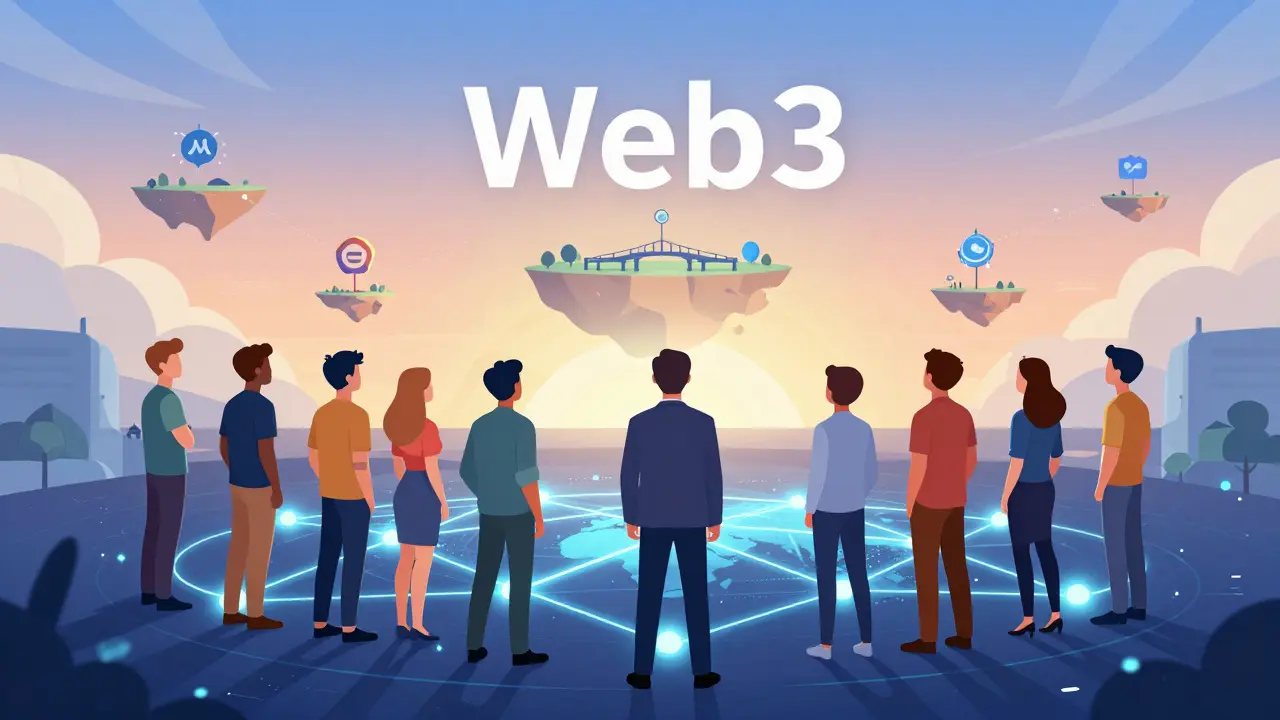
The internet is changing beneath our feet. If you are looking to build for the next generation of the web, you need to understand that Web3 development is the practice of creating decentralized applications where users own their data and assets. It is no longer just a buzzword. By March 2026, the ecosystem has matured significantly from the experimental phase of the early 2020s. You are not just writing code; you are architecting systems that run without central servers. This guide cuts through the noise to show you exactly what you need to start building today.
Many developers ask if they should jump in now. The answer lies in the numbers. The global Web3 development market reached $8.2 billion in 2024 and is projected to hit $23.7 billion by 2026. More importantly, over 450,000 active developers are working in this space globally. If you want to future-proof your career or build something resilient, understanding the underlying architecture is essential. You are moving from a model where platforms own the user to one where the user owns the platform.
Understanding the Core Architecture
Before writing a single line of code, you must grasp the foundation. Traditional web applications rely on centralized databases and servers. In contrast, Web3 applications run on blockchain networks. The most prominent of these is Ethereum, a decentralized platform that executes smart contracts with 58% market share for smart contract development. It launched in 2015 and remains the backbone for most decentralized finance (DeFi) and non-fungible token (NFT) projects.
However, Ethereum is not the only option. You will encounter Layer 2 solutions scaling networks like Optimism and Arbitrum that increase transaction throughput to 2,000-4,000 TPS. These are critical because the main Ethereum network processes only about 15 transactions per second. If your application needs speed, you will likely build on a Layer 2 solution first. This distinction is vital for performance planning. You need to decide early whether your data needs the security of the main chain or the speed of a rollup.
Choosing Your Programming Language
Your first technical decision is the language you will use to write your logic. For Ethereum-compatible chains, Solidity is the dominant smart contract language with 87% market share among developers. It looks similar to JavaScript but is designed for the constraints of a blockchain. You write functions that execute when conditions are met, and these functions are immutable once deployed. This immutability means you cannot fix a bug with a simple patch; you must deploy a new contract and migrate users.
If you are looking at other ecosystems like Solana or Polkadot, you might use Rust. Rust powers 67% of non-Ethereum smart contracts. It is known for memory safety and speed. However, Solidity remains the safest bet for employability and community support. Most documentation, tutorials, and libraries are built around the Ethereum Virtual Machine (EVM). Unless you have a specific reason to choose Rust, starting with Solidity gives you access to the largest pool of resources.
Setting Up Your Development Environment
You cannot build Web3 apps without the right tools installed on your machine. The baseline requirement is Node.js version 18.0 or higher. This allows you to run JavaScript locally and interact with blockchain networks. You will also need npm version 9.0 or higher to manage your packages. For your code editor, Visual Studio Code is used by 92% of Web3 developers for its extensive plugin ecosystem. It offers extensions that help you debug smart contracts and format code correctly.
Next, you need a way to test your code without spending real money. Hardhat is a development environment that reduces deployment errors by 73% and allows local blockchain testing. It lets you simulate transactions, run tests, and deploy to testnets like Sepolia or Goerli. Another option is Truffle Suite, which is still used by 33% of professional teams, but Hardhat has gained favor for its flexibility. For beginners, the Remix IDE is also a great starting point, used by 41% of newcomers because it runs entirely in the browser.

Interacting with the Blockchain
Your application needs a bridge between the user's browser and the blockchain. This is where libraries come in. You have two main choices: Web3.js and Ethers.js. Ethers.js has gained 63% adoption among new developers due to its smaller bundle size of 85KB. Web3.js is the older library with a larger size of 450KB. For modern applications where load time matters, Ethers.js is generally the preferred choice. It is modular and easier to maintain.
You also need a wallet for users to sign transactions. MetaMask is installed by 30 million users and is the standard for connecting wallets to dApps. When you build your frontend, you will use the MetaMask API to request a connection. This allows users to view their balance and sign messages. However, wallet integration is a common pain point. About 42% of GitHub issues related to Web3.js involve wallet connection problems. Ensure you handle errors gracefully, especially when users reject a transaction or switch networks.
Managing Storage and Data
Storing data on a blockchain is expensive. You should not store large files or heavy text on-chain. Instead, use decentralized storage solutions. IPFS (InterPlanetary File System) has 24,000 active nodes globally and provides censorship-resistant file storage. You upload your images or documents to IPFS and store the content identifier (CID) on the blockchain. This keeps your smart contract cheap while maintaining decentralization. Filecoin is another option, offering 18 exbibytes of storage capacity for more permanent archival needs.
Security and Gas Optimization
Security is not an afterthought; it is the foundation. In Web2, a hacked database might leak passwords. In Web3, a hacked contract can drain all user funds permanently. About 28% of smart contracts contain at least one critical vulnerability. You must use tools like Slither and MythX to audit your code before deployment. Always aim for 80% code coverage in your unit tests. Smart Contracts are self-executing programs with terms directly written into code that are immutable once deployed. Because they cannot be changed, you must get them right the first time.
Gas fees are another critical factor. Every operation costs money. As of late 2024, the average gas fee on Ethereum was around $0.45 per transaction, but this fluctuates. Beginners often overpay by 30-50% on initial deployments. You need to optimize your loops and data structures. Using Layer 2 solutions can reduce costs by 90%, as seen after the Dencun upgrade in 2024. Always check the current network congestion before deploying.
Learning Path and Community
How long does it take to become productive? The Web3 Career Roadmap suggests allocating 120-150 hours for foundational knowledge. This includes 30 hours for blockchain fundamentals, 40 hours for Solidity, and 50 hours for tools. Most developers report 3-6 months of dedicated study to reach a professional level. The learning curve is steeper than traditional web development because you are learning new concepts like cryptographic hashing and consensus mechanisms.
You do not have to learn alone. Communities are vital. Reddit's r/ethdev has 187,000 members where you can find answers to specific technical hurdles. The Discord server for Web3 Developer DAO has 42,000 active members. 89% of developers report these communities as essential for problem-solving. If you get stuck on a wallet connection or a gas estimation error, someone else has likely faced it before. Engaging with these groups will accelerate your learning significantly.
Comparison of Development Frameworks
| Framework | Adoption Rate | Best For | Key Feature |
|---|---|---|---|
| Hardhat | High | Production Teams | JavaScript debugging |
| Truffle Suite | 33% of Pros | Legacy Projects | Integrated testing |
| Remix IDE | 41% of Beginners | Prototyping | Browser-based |
| Foundry | Growing | Speed & Testing | Written in Rust |
Choosing the right framework depends on your project stage. If you are prototyping, Remix is the fastest way to get code on a testnet. If you are building a production application, Hardhat offers better tooling for debugging and testing. Foundry is gaining traction for its speed, especially among developers who prefer Rust-based tooling. There is no single "best" tool, but Hardhat remains the industry standard for most professional teams.
Future Trends to Watch
As you start your journey, keep an eye on where the industry is heading. Account abstraction is rising, with 41% of new dApps implementing ERC-4337. This allows for gasless transactions and social recovery, making the user experience much smoother. Cross-chain experiences are also becoming the norm. By 2026, multi-chain applications are expected to dominate. You should learn how to interact with bridges and interoperability protocols.
Regulatory considerations are also increasing. 78% of developers report spending 15-20 hours monthly tracking regulatory changes. While this is more relevant for enterprise projects, understanding compliance early helps avoid legal pitfalls later. The landscape is shifting from pure experimentation to regulated utility. Your code must be robust enough to handle real-world financial implications.
Do I need to know JavaScript to start Web3 development?
Yes, knowing JavaScript is highly beneficial. Most Web3 libraries like Ethers.js and Web3.js are JavaScript-based. While Solidity is used for smart contracts, your frontend interaction will rely heavily on JavaScript.
Is it expensive to deploy a smart contract?
It can be. Deployment costs depend on gas fees and contract size. On Ethereum mainnet, it can cost hundreds of dollars. However, using testnets or Layer 2 solutions like Arbitrum can reduce costs significantly, sometimes to less than a dollar.
What is the biggest challenge for beginners?
The biggest challenge is understanding gas estimation and security. 68% of beginners report initial frustration with blockchain-specific concepts. Learning to optimize code for gas and secure it against vulnerabilities takes time and practice.
Can I use Python for Web3 development?
Python is not commonly used for writing smart contracts on Ethereum. Solidity is the standard. However, Python is useful for scripting, data analysis, and interacting with blockchain data via APIs.
How long does it take to build a simple dApp?
For a beginner, building a simple token-gated content platform might take 2 weeks after mastering Solidity. The learning curve is steep, with 3-6 months needed to reach full productivity in the field.
What are the best resources for learning Solidity?
Official Ethereum documentation is highly rated, scoring 4.2/5 in developer surveys. CryptoZombies and the Solidity by Example website are also excellent interactive resources for hands-on learning.
Is Web3 development more lucrative than Web2?
Yes, median salaries for junior Web3 developers in the United States are around $145,000, which is 23% higher than comparable Web2 roles. However, income can be more volatile due to crypto market fluctuations.
Do I need to buy cryptocurrency to develop?
You only need cryptocurrency for deploying to mainnet. For development and testing, you can use testnets like Sepolia which provide free test tokens. You can build and test extensively without spending real money.
What is the difference between Web2 and Web3?
Web2 applications are centralized, where companies control user data. Web3 applications are decentralized, giving users ownership of their data and assets through blockchain technology and digital wallets.
Should I learn Solidity or Rust first?
Start with Solidity. It has 78% adoption for Ethereum development and more learning resources. Rust is powerful but has a steeper learning curve and is primarily used on non-EVM chains like Solana.
Starting your journey in Web3 is an investment in the future of the internet. The tools are better than ever, and the community is ready to support you. Focus on the fundamentals, prioritize security, and keep experimenting. The shift from Web2 to Web3 is not just technical; it is a shift in how we value digital ownership. By mastering these skills, you position yourself at the forefront of this evolution.


Justin Credible
gas fees are still kinda high even with l2 stuff but i guess its better than before when it costed like fifty bucks to move money around
kavya barikar
The architectural shift described here is indeed significant for the industry.
aravindsai pandla
You must understand that security is paramount in this ecosystem. Many developers rush to deploy without auditing their code properly. This leads to vulnerabilities that hackers exploit within hours. The immutability of smart contracts means you cannot patch a bug easily. You have to migrate users to a new contract address entirely. Testing coverage should be at least eighty percent before any mainnet deployment. Tools like Slither help identify common reentrancy attacks early. Gas optimization is another critical factor that beginners often overlook. Inefficient loops can drain wallets during high congestion periods. Layer two solutions offer a viable path for reducing these transaction costs significantly. However, you must verify the security of the bridge protocols connecting these chains. The market data suggests a steady growth in developer adoption rates. This indicates a maturing landscape beyond the initial speculative hype. Learning Solidity provides the best foundation for entering this field currently. Documentation resources are far more abundant compared to other languages. Community support remains the strongest asset for troubleshooting complex issues. Engaging with forums accelerates the learning curve substantially. Do not neglect the importance of regulatory compliance in your development process. Future trends point towards account abstraction becoming standard practice. Understanding these fundamentals will ensure longevity in your career path.
namrata singh
Reading this feels like watching a storm gather on the horizon. The weight of responsibility for user funds is immense.
DarShawn Owens
I really appreciate the breakdown of the tools section especially for Hardhat. It makes the setup process feel much less intimidating for new folks.
Andrew Midwood
tbh the evm dominance is kinda crazy but the rust ecosystem is catching up fast with solana stuff. need to watch out for the mempool congestion though.
Mike Yobra
Sure, everyone is rushing to build decentralized apps like it's the new gold rush. We will see how many of these projects actually survive the winter.
Shelley Dunbrook
Your cynicism is noted but the market metrics suggest otherwise. It is not merely a speculative bubble anymore.
Aman Kulshreshtha
chill out guys, just start learning the basics and dont stress about the market too much yet. the tech is cool regardless of the price action.
Leona Fowler
The distinction between storage solutions is critical for cost management. IPFS remains the standard for off-chain data handling in most dApps.
Neil MacLeod
One might argue that the narrative around decentralization is often overstated in marketing materials. Yet the technical infrastructure is undeniably robust.
Misty Williams
It is unethical to deploy without proper audits given the financial risks involved. Developers have a moral obligation to protect user assets.
Andrea Zaszczynski
The author might not have deployed to mainnet or just read about it. The practical experience matters more than theory.
Cordany Harper
The guide references specific tooling stats which implies hands-on knowledge. It is helpful to focus on the technical advice provided.
Andy Green
Most people here are still thinking in Web2 paradigms and do not get the true value proposition. Real decentralization requires a mindset shift beyond code.
Zion Banks
The centralization of validators is a bigger issue than they admit in this text. You cannot trust the narrative pushed by the big chains.
Annette Gilbert
Oh please, you act like you know everything but you are just another keyboard warrior. The industry moves forward regardless of your opinion.
JOHN NGEH
Seeing the growth in developer numbers is genuinely encouraging for the future. It shows that the community is building something sustainable.
Alicia Speas
That optimism is well-placed given the investment in educational resources. Mentorship programs are key to retaining talent in this sector.
Dheeraj Singh
the guide is okay but misses the nuance of cross chain bridges which are often the weak link. only the smart ones know to aviod them.
Mansoor ahamed
Focus on the security tools mentioned as they are vital for production readiness.
Jackie Crusenberry
I feel like security is always so scary but we have to try our best to keep things safe.