Real Estate RWA Tokenization: How Blockchain is Democratizing Property Investment

Imagine owning a slice of a $50 million Manhattan office building for the price of a used sedan. For decades, this was impossible unless you were a high-net-worth individual or a large institution. Today, Real Estate RWA Tokenization is changing that narrative by converting physical properties into digital tokens on a blockchain. This isn't just tech hype; it’s a structural shift in how we buy, sell, and manage property. By breaking down assets into smaller, tradable units, tokenization removes the massive capital barriers that have kept most people out of the commercial real estate game.
The market is moving fast. As of late 2024, tokenized real-world assets (RWAs) had grown to over $13.5 billion, with projections suggesting this number could hit $2 trillion by 2030. But before you rush to put your savings into a tokenized apartment complex, you need to understand what’s actually happening under the hood. Is it direct ownership? Is it a security? And more importantly, can you actually cash out when you want to?
What Exactly Is Real Estate Tokenization?
At its core, tokenization is the process of creating digital representations of physical assets on a blockchain network. In the context of real estate, each token represents a fractional share of the underlying property. Think of it like an IPO, but for buildings instead of companies. Instead of buying one share of Apple stock, you might buy 100 tokens representing a fraction of a residential tower in Miami.
This process relies heavily on Ethereum and its ERC-20 standard, which allows for fungible tokens-meaning one token is identical to another and easily tradable. While other blockchains are gaining traction, Ethereum remains the dominant platform due to its robust developer ecosystem and established security protocols. The goal is simple: democratize access. Traditional real estate is illiquid and expensive. Tokenization aims to make it liquid and accessible to anyone with a few thousand dollars.
How It Works: From Brick to Byte
You don’t just slap a QR code on a house and call it done. The implementation involves a rigorous five-step process that blends legal engineering with software development. First, there’s asset selection. Not every property works for this model. Commercial buildings with steady rental income are ideal candidates because they generate predictable cash flow for dividend distributions.
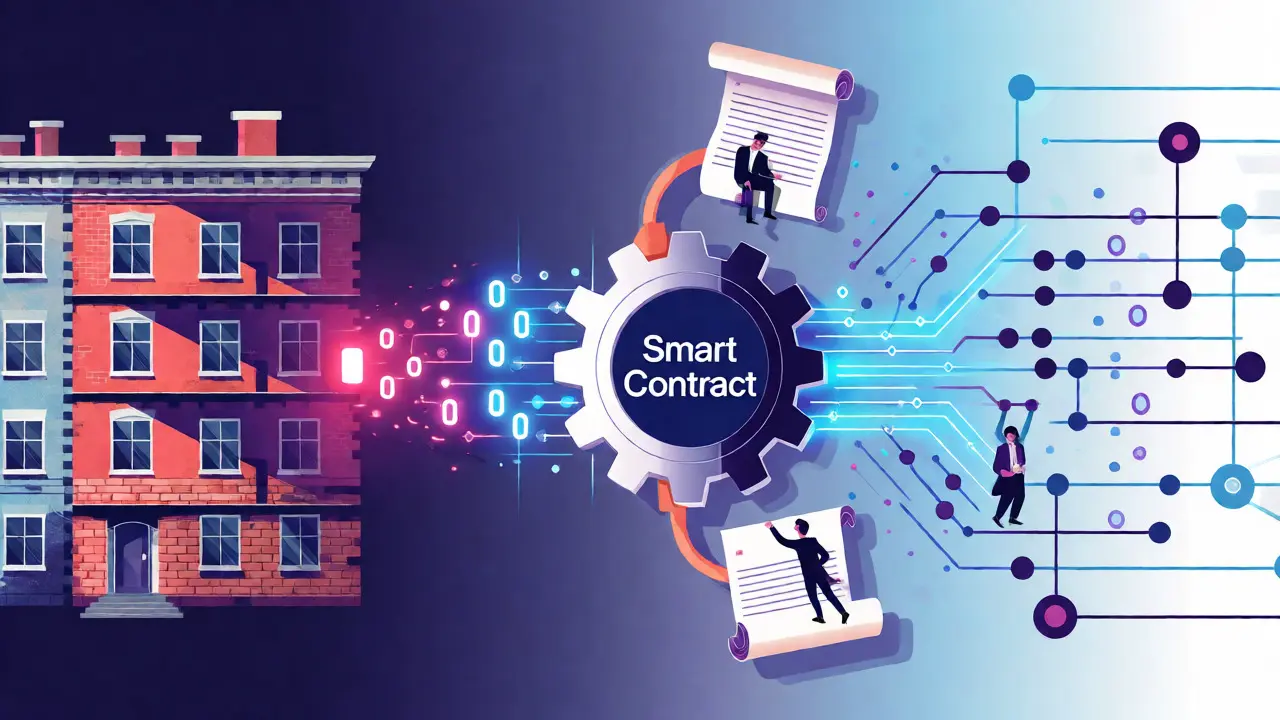
Next comes the legal structure. Most platforms use a Special Purpose Vehicle (SPV), typically an LLC, to hold the actual deed to the property. When you buy a token, you aren’t directly named on the county land registry; you own shares in the SPV that owns the building. This layer is crucial for liability protection and regulatory compliance.
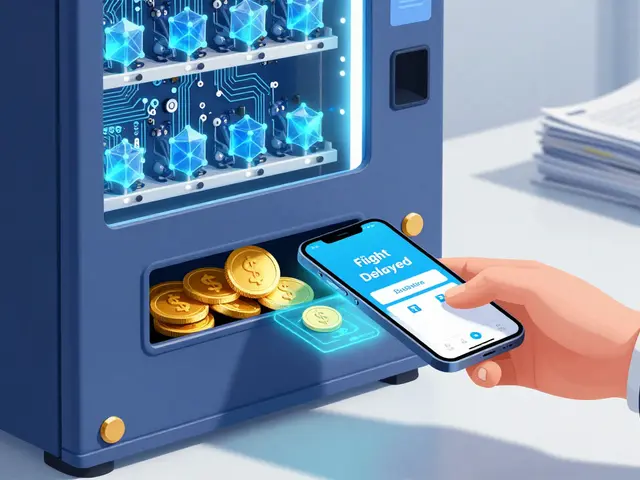
Once the legal framework is set, developers mint the tokens on the blockchain. Smart contracts then handle the heavy lifting: automatically distributing rental income to token holders, enforcing transfer rules, and managing voting rights. Finally, these tokens are listed on secondary markets where investors can trade them 24/7, unlike traditional stocks or real estate deals that close during business hours.
Why Bother? The Case for Fractional Ownership
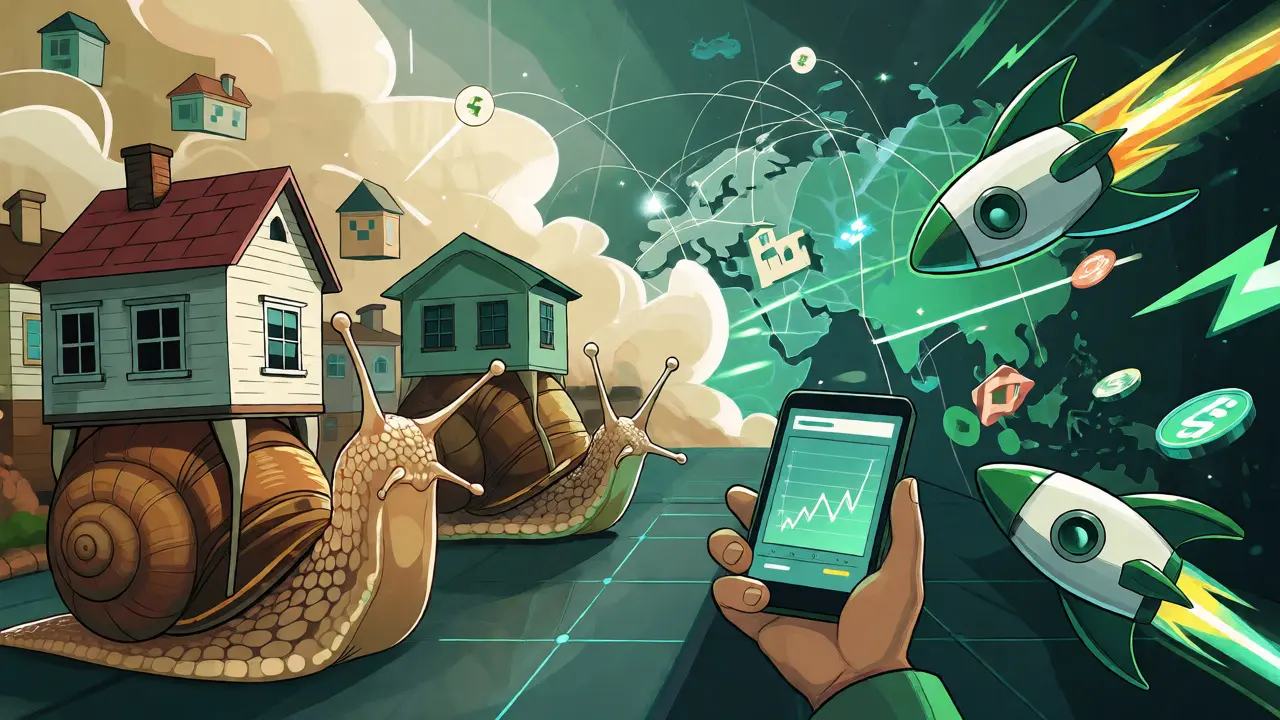
The primary appeal here is liquidity. Selling a whole apartment building takes months of negotiations, inspections, and paperwork. Selling a token takes seconds. If you need cash, you can list your tokens on a marketplace and find a buyer instantly, assuming there’s demand. This 24/7 global trading capability opens up real estate investment to international buyers who previously couldn’t participate due to geographic or financial constraints.
Transparency is another major win. Every transaction, ownership change, and dividend payment is recorded on an immutable ledger. You can verify exactly who owns what and when payments were made without trusting a middleman’s spreadsheet. Plus, costs drop significantly. Traditional brokers take 3-6% of the deal value. Tokenized platforms often charge much less, passing those savings on to investors.
| Feature | Traditional REITs/Direct | Tokenized RWA |
|---|---|---|
| Minimum Investment | $10k - $1M+ | ~$1,000 per token |
| Liquidity | Low (Months to sell) | High (Seconds to trade) |
| Transparency | Opaque reporting | On-chain audit trail |
| Trading Hours | Business hours only | 24/7 Global Market |
| Intermediaries | Brokers, Agents, Banks | Smart Contracts, Platforms |
The Legal Reality Check
Here is where things get tricky. Buying a token does not always mean you own the bricks and mortar directly. In most jurisdictions, you own equity in an entity that holds the property. This distinction matters if things go wrong. If the SPV faces bankruptcy, your claim as a token holder depends entirely on the legal documents drafted at the start.
Regulation is also a patchwork quilt. Only about 37% of global markets have clear frameworks for RWAs. Switzerland, Singapore, and certain US states like Wyoming are leading the way with favorable laws. However, cross-border investments remain complex. A token issued in New York might face different tax implications if sold to an investor in Germany. The EU’s MiCA regulations, effective December 2024, are trying to harmonize this, but fragmentation persists.
Experts warn that while the technology works, the legal enforceability of token-based rights is still being tested in courts. Until standardized global frameworks exist, investors must scrutinize the specific legal structure of each project. Don’t assume your token gives you the right to evict a tenant; usually, it just entitles you to a share of the profits.
Risks You Can’t Ignore
It’s not all smooth sailing. Liquidity risk is real. Just because you *can* sell a token doesn’t mean someone will buy it at your desired price. Secondary markets for niche properties can be thin, leading to wide bid-ask spreads. During market downturns, you might find yourself unable to exit your position quickly.
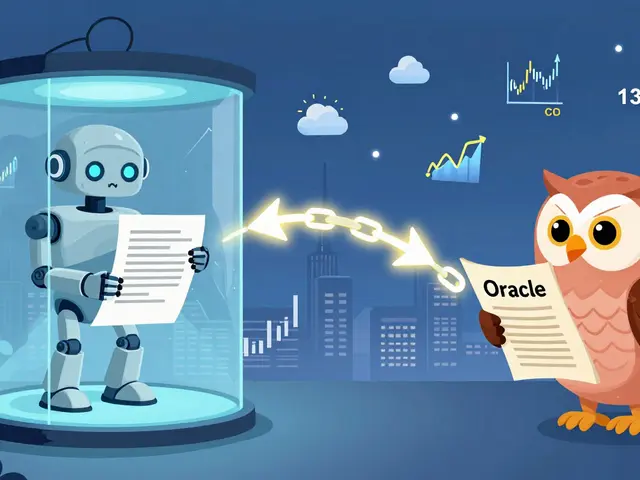
Then there’s the technical side. While blockchain itself is secure, the platforms hosting these tokens are not immune to bugs or hacks. Smart contract vulnerabilities have drained millions from DeFi projects, and real estate platforms are no exception. Additionally, reliance on oracle networks like Chainlink to feed real-world data (like rent prices) into the blockchain introduces a point of failure. If the oracle feeds incorrect data, the smart contract executes incorrectly.
Finally, consider the management overhead. Who fixes the leaky roof? Usually, a third-party property manager handles physical operations. If they do a poor job, your token’s value drops, even if the blockchain infrastructure is perfect. You’re essentially outsourcing the hard part of real estate to a company you trust, which adds counterparty risk.
Who Is Actually Doing This?
Institutional money is entering the space rapidly. BlackRock launched its BUIDL fund, integrating tokenized assets, while JPMorgan has piloted tokenized mortgages. On the retail side, platforms like Brickken and Securitize allow users to invest in specific properties. For example, Securitize tokenized a $50 million New York building into 50,000 tokens, offering a 6.2% annual yield.
These early adopters are mostly accredited investors, but retail participation is growing. Surveys show that while crypto-savvy users grasp the mechanics quickly, traditional real estate investors struggle with the concept of SPVs versus direct ownership. Education is key. If you don’t understand the difference between holding a deed and holding a tokenized share, you might misunderstand your actual rights.
Is It Worth Your Money?
Real estate tokenization offers a compelling solution to old problems: high entry costs, low liquidity, and opacity. For passive investors seeking exposure to commercial real estate without the hassle of being a landlord, it’s a powerful tool. However, it requires a higher tolerance for technological and regulatory uncertainty than traditional investing.
If you decide to dive in, start small. Look for platforms with transparent legal structures, established track records, and active secondary markets. Read the fine print regarding lock-up periods and exit strategies. Remember, you’re investing in a hybrid product-part real estate, part fintech. Both sides carry risks, but combined, they offer a glimpse into the future of asset ownership.
Do I legally own the property when I buy a token?
Typically, no. You usually own shares in a Special Purpose Vehicle (SPV) or LLC that holds the title to the property. Your rights are defined by the terms of the SPV, not by direct land registry entries in your name.
Can I sell my tokens anytime?
Technically, yes, on secondary markets. However, liquidity varies. Some tokens may have few buyers, making it difficult to sell at fair market value. Always check the platform's trading volume before investing.
How are dividends paid?
Rental income is collected by the property manager, converted to stablecoins (like USDC), and distributed automatically via smart contracts to token holders' wallets. This process is transparent and traceable on the blockchain.
What happens if the platform goes bankrupt?
This is a significant risk. Since the token is often a claim against the SPV managed by the platform, bankruptcy proceedings could freeze your ability to trade or receive dividends until resolved. Choose platforms with strong legal separation between the operator and the asset.
Are tokenized real estate investments regulated?
Yes, but inconsistently. In the US, many tokens are classified as securities and fall under SEC jurisdiction. The EU's MiCA regulation provides a clearer framework. Regulations vary by country, so cross-border investing requires careful legal review.