Smart Contracts for Automated Claims: How Blockchain Transforms Insurance Payouts
Imagine filing an insurance claim and getting paid before you’ve even finished writing the email. No forms, no adjusters calling you back in three weeks, no waiting on hold. Just a notification that the money is in your account because a hurricane hit your zip code or your flight was delayed by exactly two hours. This isn’t science fiction anymore. It’s happening right now through smart contracts designed specifically for automated claims processing.
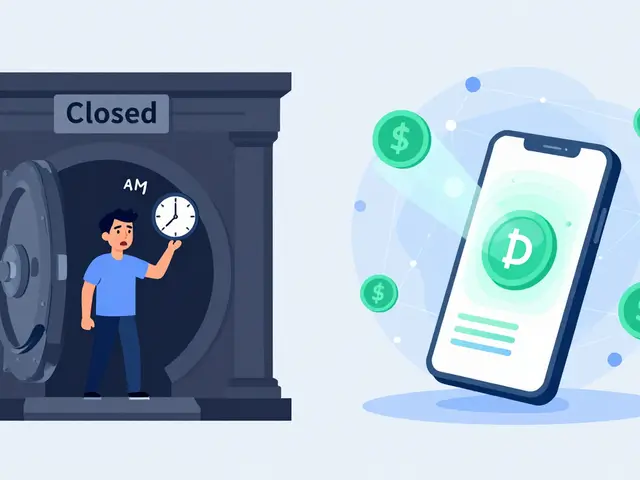
For decades, insurance has been stuck in the past. You buy a policy, something bad happens, you submit paperwork, and then you wait. Weeks. Sometimes months. The system is slow, expensive, and frustrating for everyone involved. But blockchain technology is changing the rules. By turning insurance policies into self-executing code, insurers can verify claims and release payouts instantly when specific conditions are met. If you’re curious about how this works, why it matters, and what it means for your next insurance purchase, here is the breakdown.
What Are Smart Contracts in Insurance?
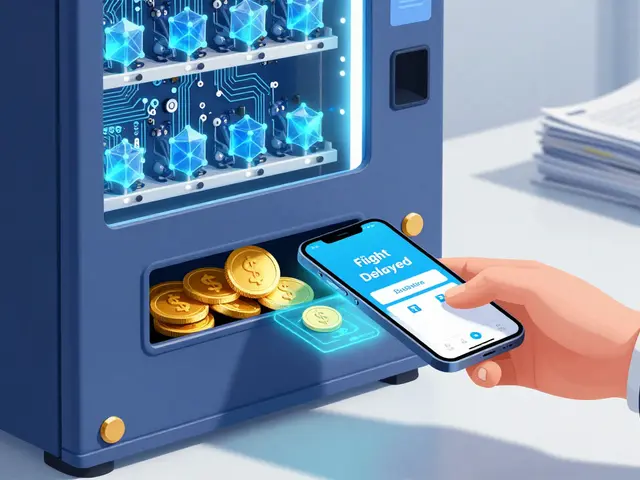
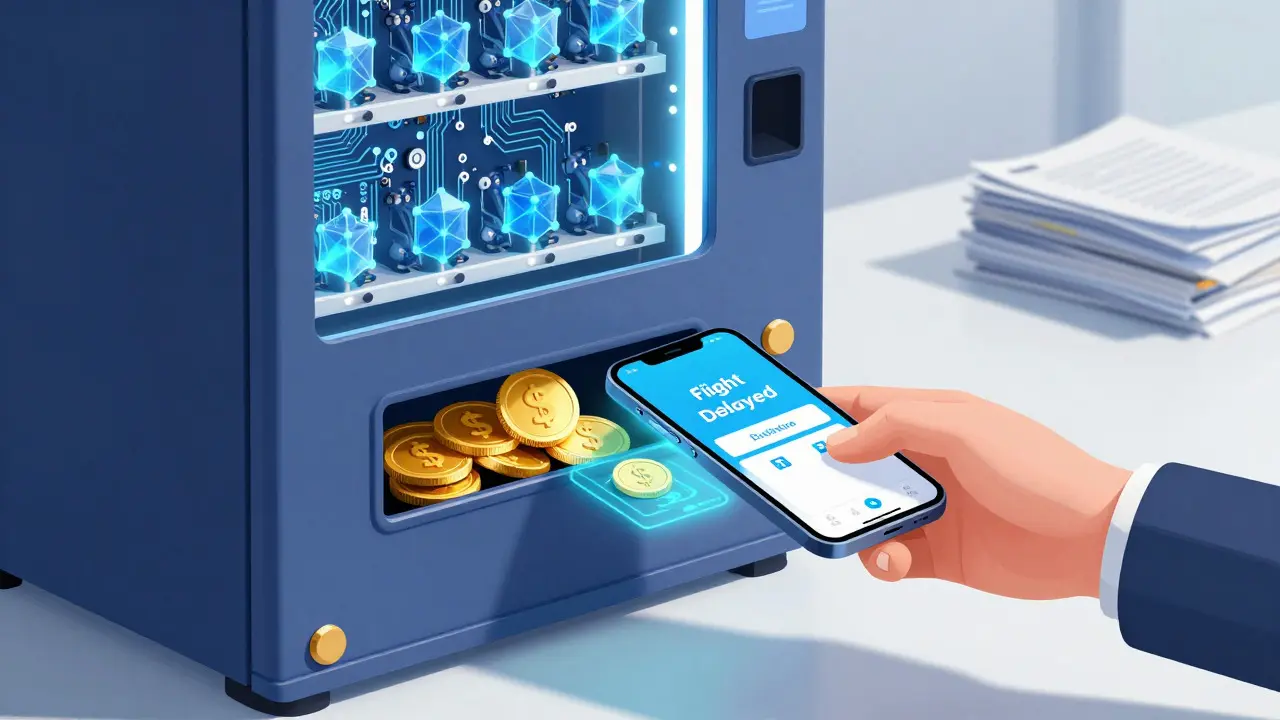
To understand automated claims, you first need to get comfortable with the term "smart contract." Don’t let the word "contract" fool you into thinking this is just legal jargon. A smart contract is actually a piece of computer code stored on a blockchain. Think of it like a digital vending machine. You put in the right input (proof that an event happened), and the machine automatically gives you the output (your payout). There is no human cashier deciding if you deserve the snack. The machine just follows its programming.
In the context of insurance, these contracts encode the terms of your policy directly into software. When a predefined event occurs-like an earthquake reaching a certain magnitude or a flight departing late-the contract checks the data against the policy terms. If the conditions match, the contract executes the payment automatically. According to OSL Academy, these are "self-executing agreements based on blockchain technology" that transform traditional contract terms into deployable code. This removes the need for intermediaries, which is where most of the delay and cost in traditional insurance comes from.
The technology relies heavily on blockchain platforms like Ethereum. Why? Because blockchains provide a permanent, transparent, and immutable record of every transaction. Once a payout is triggered and recorded, it cannot be altered or denied later. This transparency builds trust between the insurer and the policyholder, which has historically been a major pain point in the industry.
How Automated Claims Processing Works
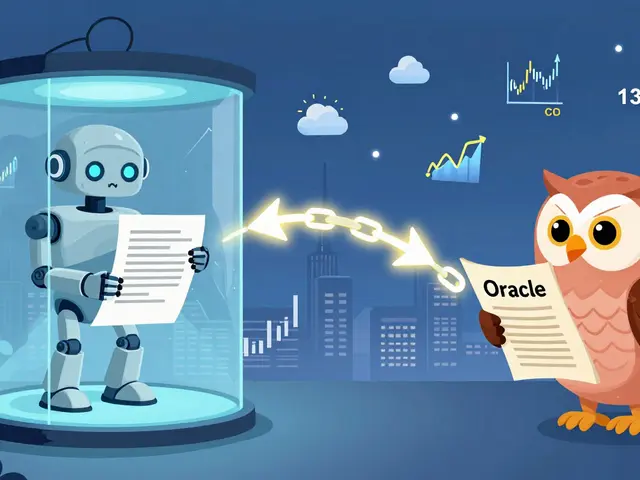
The magic of automated claims lies in the connection between the smart contract and real-world data. A smart contract lives on the blockchain, but it doesn’t know what’s happening outside of it. It needs a bridge to the physical world. This bridge is called an oracle.
Here is the step-by-step flow of an automated claim:
- Policy Creation: You buy an insurance policy. Instead of just a PDF document, the key terms (coverage amount, triggers, exclusions) are written into a smart contract on the blockchain.
- Data Monitoring: An oracle-a trusted third-party service-monitors external data sources. For flight insurance, this might be aviation databases. For weather insurance, it could be meteorological agencies.
- Event Trigger: Something happens. Your flight is delayed by three hours. The oracle detects this event and verifies it against the official data source.
- Verification: The oracle sends this verified data to the smart contract. The contract checks: "Did the flight delay exceed two hours?" If yes, the condition is met.
- Payout Execution: The smart contract automatically releases the funds from the insurer’s escrow wallet to your digital wallet. This happens in seconds or minutes, not weeks.
This process eliminates the manual review stage entirely. As noted by Vention Teams, the contract "autonomously checks a claim against a policy's terms and conditions" using the conditions coded into it. There is no adjuster looking at photos of your damaged roof. There is just data, code, and money moving instantly.
The Rise of Parametric Insurance
You might be wondering, "Does this work for my car accident or health bill?" Not yet. Currently, automated claims are most successful in a niche called parametric insurance. Traditional insurance pays based on the actual loss you suffered (indemnity). Parametric insurance pays based on whether a specific parameter was met.
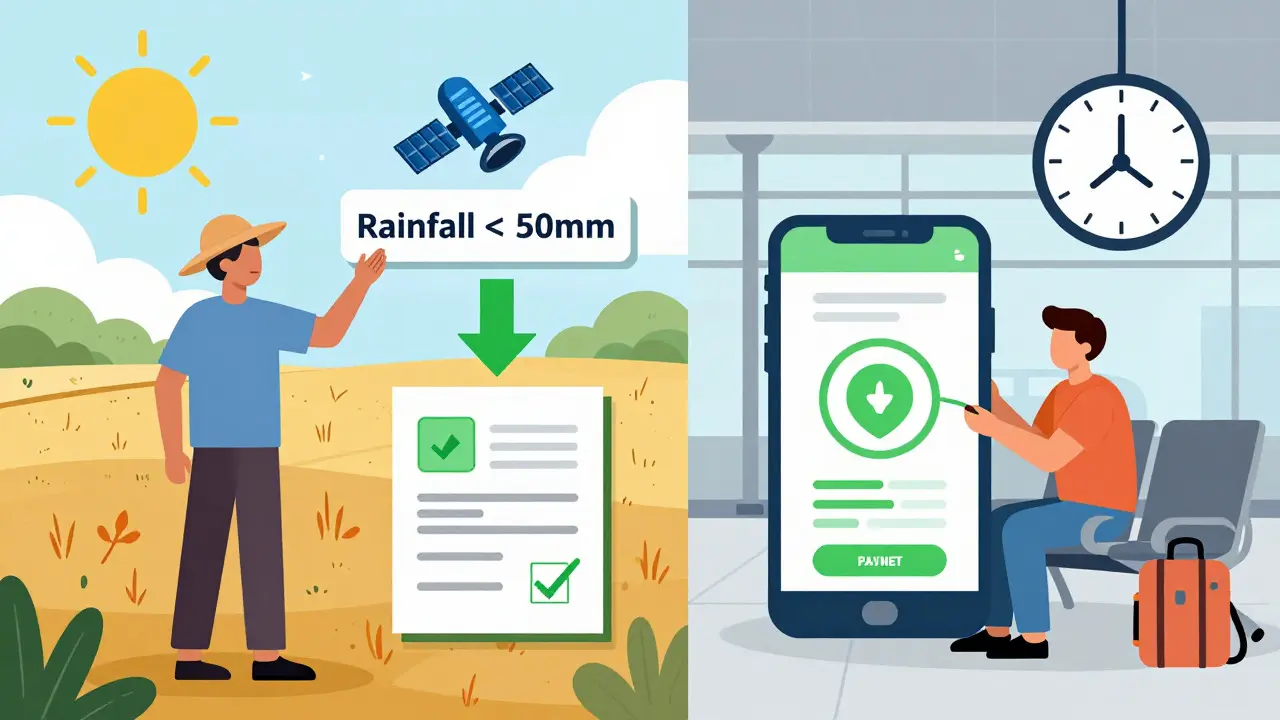
For example, instead of proving your crops were destroyed by drought, a farmer buys parametric insurance that pays out if rainfall drops below 50mm in a specific region during planting season. The satellite data confirms the lack of rain, and the smart contract pays out. It doesn’t matter if the farmer’s crops survived or died; the trigger was the weather, not the damage assessment.
Guidewire reports that several insurance companies have begun piloting these solutions, particularly in segments outside of health or life insurance. This makes sense. It’s easy to measure wind speed, earthquake magnitude, or flight times. It’s much harder to measure the exact value of a stolen laptop or the extent of a medical injury without human judgment. That’s why parametric products are the gateway drug for smart contract adoption in insurance.
| Feature | Traditional Claims | Smart Contract Claims |
|---|---|---|
| Processing Time | Weeks to Months | Minutes to Hours |
| Human Intervention | High (Adjusters, Admin) | None (Automated) |
| Cost Structure | High Administrative Overhead | Low Gas Fees & Oracle Costs |
| Fraud Risk | Moderate to High | Low (Data-Verified) |
| Transparency | Opaque (Black Box) | Full Audit Trail on Blockchain |
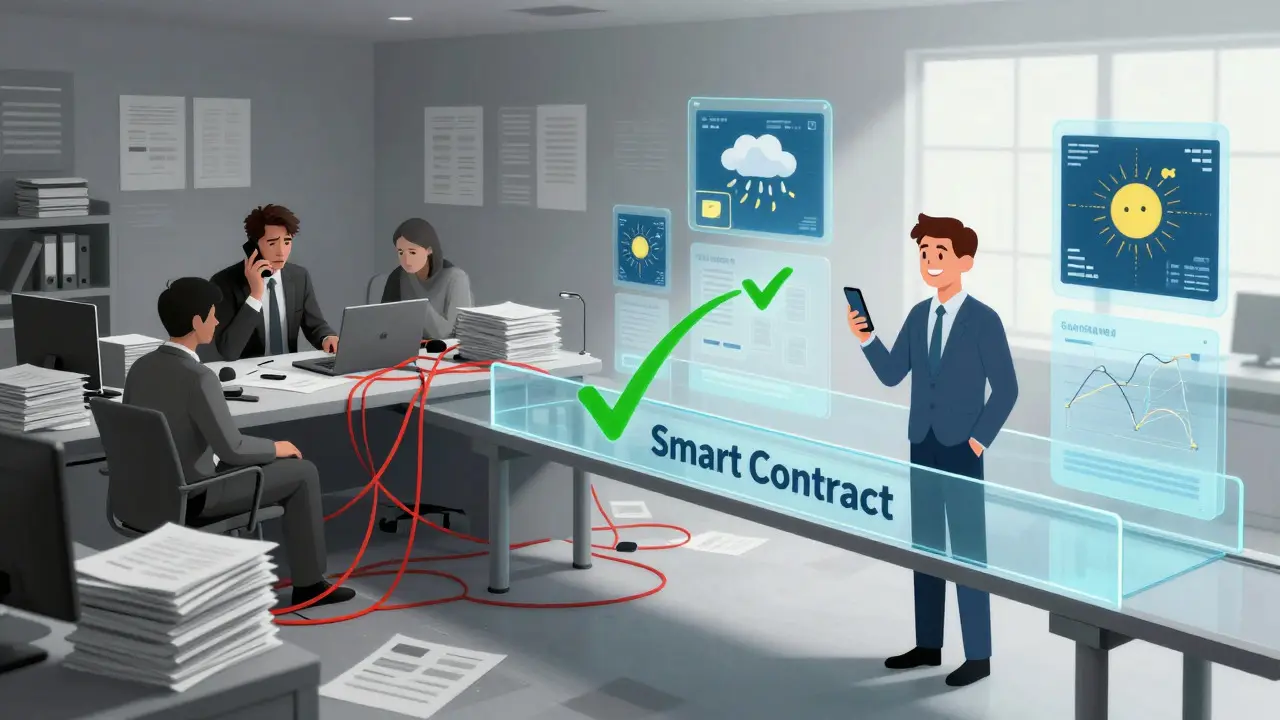
Benefits for Policyholders and Insurers
Why should you care? If you’re a policyholder, the biggest win is speed. Norton Rose Fulbright notes that automated processes mean policyholders get paid "more quickly in comparison to today's manual processes." In a crisis, cash flow matters. Whether it’s a small business recovering from a storm or a traveler dealing with a missed connection, immediate liquidity reduces stress.
There’s also the issue of fraud. Fraudulent claims cost the insurance industry billions annually, which drives up premiums for honest customers. Smart contracts minimize this risk because they rely on objective data from trusted oracles rather than subjective claims filed by humans. As the SAIS Journal of International Affairs points out, blockchain ensures "transparency and immutability," creating a clear audit trail that deters bad actors.
For insurers, the benefit is efficiency. Automating routine tasks reduces administrative costs significantly. Legitt AI highlights that encoding policies into smart contracts alleviates the "administrative burden on both the insurer and the policyholder." Lower overhead means insurers can potentially offer lower premiums or better coverage terms, passing the savings back to you.
Limitations and Challenges
It’s not all smooth sailing. While the potential is huge, there are real hurdles preventing widespread adoption. The biggest challenge is the "oracle problem." A smart contract is only as good as the data feeding it. If the oracle provides incorrect data, the contract will execute incorrectly. Harvard Law School warned in 2018 that smart contracts require "ancillary" verification mechanisms. For instance, defining exactly how a flight delay is calculated can be tricky. Does it include taxiing time? What if the airline changes the gate?
Another limitation is complexity. Most insurance policies are nuanced. They have exceptions, exclusions, and gray areas. Coding these nuances into rigid computer logic is difficult. A simple parametric trigger is easy to code. A complex liability claim involving multiple parties and varying degrees of fault is not. This is why banking sector smart contracts are more advanced than insurance ones; financial transactions are simpler and more standardized.
Integration with legacy systems is also a headache. Many insurers still run on decades-old mainframe computers. Connecting these ancient systems to modern blockchain networks requires significant technical investment and expertise. Vention Teams notes that successful deployment demands precise parameter definition and robust data integration capabilities, which many smaller insurers lack.
Real-World Examples and Pilot Programs
Despite the challenges, real-world examples are emerging. One notable area is travel insurance. Imagine buying a ticket and adding a $5 add-on for delay protection. If your flight is delayed by more than two hours, you get $100 instantly in crypto or fiat currency. Reddit users in the r/InsurTech community have reported experiences like this, with one user noting a parametric weather claim paying out within two hours of a hurricane hitting their ZIP code, with zero paperwork.
In the realm of natural disasters, leading global insurers have trialed cat bonds (catastrophe bonds) using smart contracts. These instruments pay out based on physical parameters like wind speed or earthquake magnitude. If a hurricane reaches Category 4 in Florida, the bondholders lose money, and the insurer gets a massive payout immediately to cover reconstruction efforts, without waiting for individual claims to be processed.
These pilots prove the concept works. The question is no longer "can we do it?" but "how fast can we scale it?" As David Chen of Guidewire states, this automation improves efficiency and provides policyholders with real-time responses, setting a new standard for customer experience.
The Future of Automated Claims
Looking ahead, the trend is clear: automation will become the norm for straightforward claims. We’ll likely see more parametric products for homeowners, renters, and businesses. Imagine home insurance that automatically pays out if local flood sensors detect water levels rising above a certain threshold. Or crop insurance that adjusts premiums dynamically based on daily weather forecasts fed into the smart contract.
However, fully replacing human adjusters for complex cases is unlikely anytime soon. The future is probably hybrid. Simple, data-driven claims will be handled by smart contracts, freeing up human experts to focus on complex, high-value, or ambiguous cases where empathy and judgment are required.
For consumers, this means staying informed. As these technologies mature, you’ll see new insurance products that look different from what you’re used to. They’ll be faster, cheaper, and more transparent. But they’ll also require you to understand what you’re buying. Read the fine print-or rather, read the code. Know what triggers your payout, and ensure you trust the data sources behind them.
Are smart contracts legally binding?
Yes, in many jurisdictions, smart contracts are considered legally binding agreements. However, Harvard Law School notes that key terms should still be set forth in a text-based contract to address legal enforceability concerns and clarify ambiguities that code alone might not resolve.
What is an oracle in blockchain insurance?
An oracle is a service that connects a smart contract to external data sources. Since blockchains are closed systems, they need oracles to bring in real-world information like weather data, flight statuses, or stock prices to trigger automated payouts.
Can I use smart contracts for health insurance?
Currently, it’s difficult. Health claims involve complex diagnoses and subjective assessments that are hard to automate. Smart contracts are currently best suited for parametric insurance where triggers are objective and measurable, such as weather events or flight delays.
Is my data safe with smart contract insurance?
Blockchain offers high security due to its decentralized and encrypted nature. Transactions are immutable and transparent. However, privacy depends on how the insurer handles personal data off-chain. Ensure the provider complies with data protection regulations like GDPR.
Will smart contracts replace insurance agents?
Not entirely. While they will automate routine claims and reduce administrative roles, agents will still be needed for complex consultations, selling nuanced policies, and handling disputes that fall outside strict algorithmic parameters.