AUSTRAC Privacy Coins: What They Are, Why They Matter, and What You Need to Know
When people talk about AUSTRAC privacy coins, cryptocurrencies designed to obscure transaction details and evade financial tracking, often targeted by Australia’s anti-money laundering watchdog. Also known as anonymous coins, it’s not just about privacy—it’s about whether that privacy crosses into illegal territory under Australian law. These aren’t your average tokens. They’re built with features like zero-knowledge proofs, ring signatures, or stealth addresses to hide sender, receiver, or amount. That sounds useful for protecting your data—but in Australia, it’s a red flag.
AUSTRAC, Australia’s financial intelligence unit responsible for monitoring suspicious transactions and enforcing anti-money laundering rules. Also known as Australian Transaction Reports and Analysis Centre, it doesn’t ban crypto outright—but it does demand transparency. Any exchange operating in Australia must verify users, log transactions, and report anything that looks like money laundering. Privacy coins make that impossible, which is why AUSTRAC has quietly pressured exchanges to delist them. Coins like Monero, Zcash, and Dash have been quietly removed from major Australian platforms. Even if you’re not breaking the law, holding them might raise questions. You can’t use them on Australian exchanges, and if you try to cash out, you’ll likely trigger a compliance alert.
It’s not just about legality—it’s about practicality. If you’re using a privacy coin in Australia, you’re cutting yourself off from regulated services. No banks, no crypto ATMs, no easy fiat on-ramps. You’re stuck with peer-to-peer trades, decentralized exchanges, or offshore platforms—all of which carry higher risk. And if you’re caught moving large amounts without reporting, you could face fines or even criminal charges, even if you’re not laundering money. The system isn’t designed to catch criminals—it’s designed to make it too hard to use these coins legally.
What you’ll find in the posts below aren’t guides on how to hide your transactions. They’re real-world breakdowns of what happens when privacy tech meets regulation. You’ll see how projects like Monsoon Finance and Shield DAO tried to build privacy into DeFi—and why regulators came knocking. You’ll learn why some tokens labeled as privacy coins have zero value and no real users. And you’ll find out which crypto tools actually help you stay compliant while protecting your data—without crossing the line.
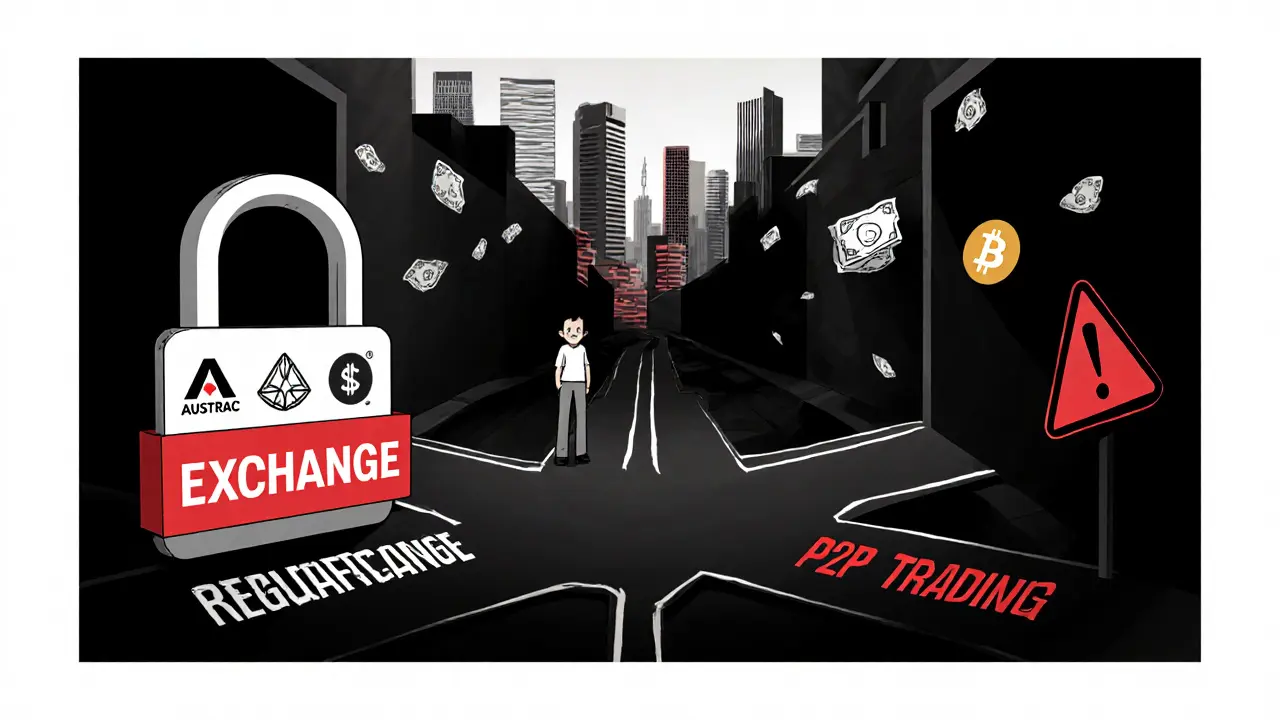
Privacy Coins Banned on Australian Crypto Exchanges: What You Need to Know
Australia doesn't ban privacy coins outright, but exchanges can't list them due to strict anti-money laundering rules. Here's how the ban works, why it's happening, and what options Australians have left.
Top News
-
VPN Detection Risks for Crypto Traders in Iran: How to Stay Safe 8.04.2026

-
Understanding PVARA: Crypto Regulations & Restrictions in Pakistan 1.04.2026

-
What is CoTrader (COT)? A Deep Dive into the COT Token 7.04.2026

-
Bitcoin in El Salvador: The Shift from Legal Tender to Voluntary Use 9.04.2026

-
CRMClick Crypto Exchange Review: Is it Safe to Trade Here? 4.04.2026