Block Time: What It Is, Why It Matters, and How It Shapes Crypto
When you send crypto, block time, the average time it takes for a new block to be added to a blockchain. Also known as block confirmation time, it’s the heartbeat of any crypto network—deciding how fast your transaction clears, how secure it is, and how much you pay in fees. If block time is too short, the network gets congested. Too long, and you’re stuck waiting. It’s not just a number—it’s the rhythm that makes crypto work.
Bitcoin, the first and most widely used blockchain has a block time of about 10 minutes. That means if you send BTC, you might wait 10 to 30 minutes before it’s fully confirmed. Ethereum, a blockchain built for smart contracts and decentralized apps, slashed that to around 12 seconds after its upgrade. That’s why DeFi swaps on Ethereum feel instant compared to sending Bitcoin. But faster isn’t always better. Shorter block times mean more orphaned blocks, which can reduce security. Networks have to balance speed, safety, and decentralization.
Block time also affects transaction fees, the cost to get your crypto moved across the network. On networks with tight block times like Solana or Polygon, fees stay low because blocks fill up quickly and miners or validators compete for space. On slower chains like Bitcoin, when demand spikes, fees surge because people bid to get their transaction included in the next block. That’s why you might pay $5 to send Bitcoin during a bull run but under $0.10 on Ethereum during quiet hours.
And it’s not just about speed. Block time shapes how projects build on top of chains. If you’re making a game that needs instant trades, you won’t pick Bitcoin. If you’re building a payment app that needs high security, you might accept slower confirmation times. That’s why you see so many sidechains and Layer 2s—like Polygon or Starknet—trying to keep Ethereum’s security while offering near-instant block times.
In the posts below, you’ll find real examples of how block time impacts everything from airdrop claims to exchange performance. You’ll see why a 12-second block time made Jupiter (JUP) a top DeFi aggregator on Solana, why KALATA’s airdrop relied on Ethereum’s slower but more secure timing, and why platforms like Paradex use zk-tech to speed up transactions without touching the base chain. Whether you’re trading, staking, or just sending crypto, understanding block time helps you pick the right tools—and avoid the traps.
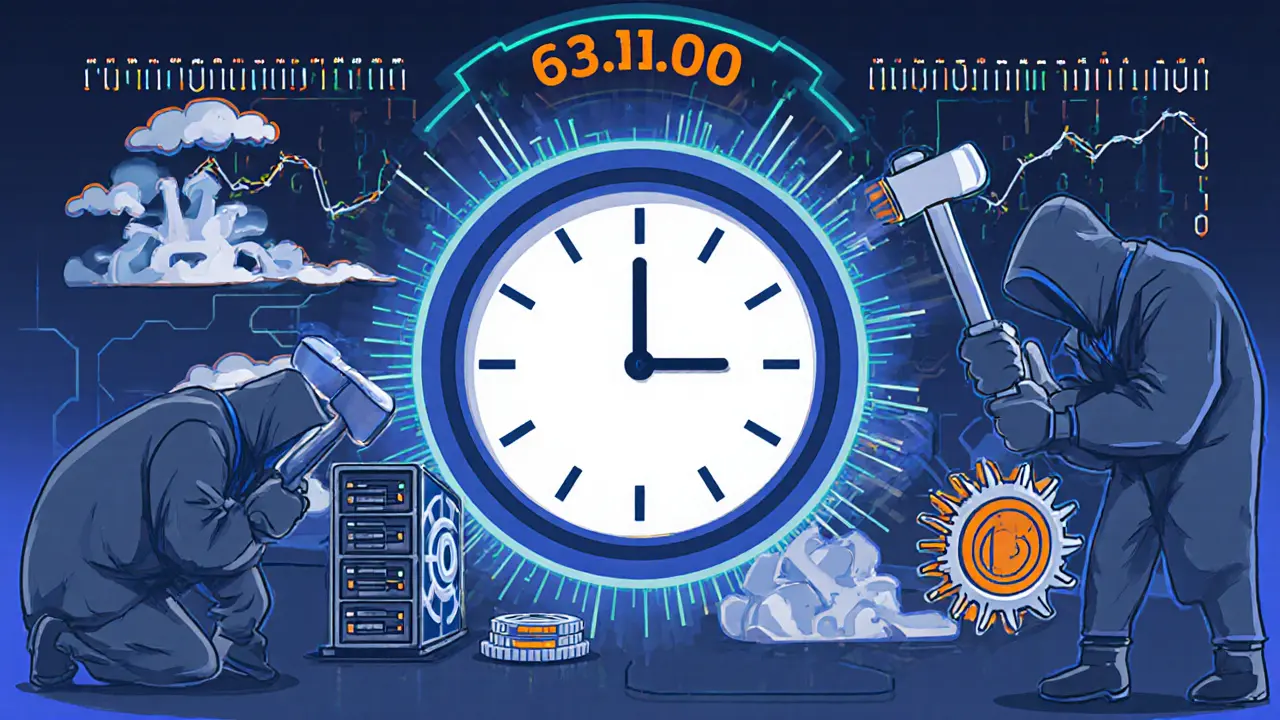
Mining Difficulty and Block Time: How Bitcoin Keeps Block Creation Stable
Bitcoin's mining difficulty adjusts every two weeks to maintain a 10-minute block time, ensuring network stability despite massive changes in hash power. Learn how it works, why it matters, and what it means for miners.
Top News
-
What is BLink (BLINK) Crypto Coin? Clearing Up the Confusion 10.04.2026

-
CRMClick Crypto Exchange Review: Is it Safe to Trade Here? 4.04.2026

-
Bitcoin in El Salvador: The Shift from Legal Tender to Voluntary Use 9.04.2026

-
Understanding PVARA: Crypto Regulations & Restrictions in Pakistan 1.04.2026

-
VPN Detection Risks for Crypto Traders in Iran: How to Stay Safe 8.04.2026