Blockchain NFT: What They Are, How They Work, and What You Need to Know
When you hear blockchain NFT, a unique digital asset recorded on a blockchain that proves ownership and authenticity. Also known as non-fungible tokens, it's not just a JPEG you downloaded—it's a verifiable piece of data that can't be copied or replaced. Unlike Bitcoin or Ethereum, where every unit is identical, an NFT is one-of-a-kind. Think of it like a signed limited-edition poster versus a mass-printed poster. The blockchain keeps track of who owns it, when it was created, and every time it changes hands.
This system relies on blockchain technology, a decentralized digital ledger that records transactions across many computers so that records can't be altered retroactively. It's the same tech behind Bitcoin, but instead of tracking money, it tracks ownership of digital items—art, music, virtual land, even tweets. Without blockchain, NFTs wouldn't be possible. And without NFTs, blockchain has found one of its most visible uses outside of finance. That’s why you see so many posts here about NFT drops, like the SHF CMC X SHIBAFRIEND SHIBA METAVERSE NFT Airdrop, a campaign offering digital collectibles tied to a blockchain-based metaverse project, or the fake ones like the CRDT Give a Way Airdrop, a scam pretending to offer free NFTs with no real project behind it. Real NFTs come from active projects with transparent smart contracts. Fake ones? They vanish the second you send crypto to claim them.
Most NFTs live on Ethereum, but others run on Solana, Polygon, or even BNB Chain. Each has trade-offs: speed, cost, or security. You’ll find posts here breaking down what’s real and what’s just noise—like the LumiChill (CHILL) crypto coin, a Solana-based token with no utility, often confused with legitimate NFT projects, or the FashionTV Token (FTVT), a brand-linked token with zero trading activity and no real NFT ecosystem. Not every token tied to a blockchain is an NFT. And not every NFT has value. The key is understanding what’s built to last versus what’s built to pump and dump.
People buy NFTs for different reasons: as art, as access, as speculation, or just because they like the design. But if you don’t know how the underlying blockchain works, or how to check if a project is legit, you’re just gambling. That’s why this collection includes guides on wallet security, how to spot fake airdrops, and what happens when a project disappears overnight. You’ll find real examples—like the KALATA airdrop that actually delivered value, and the MMS airdrop that never existed. No fluff. No hype. Just what you need to know before you click "Connect Wallet."
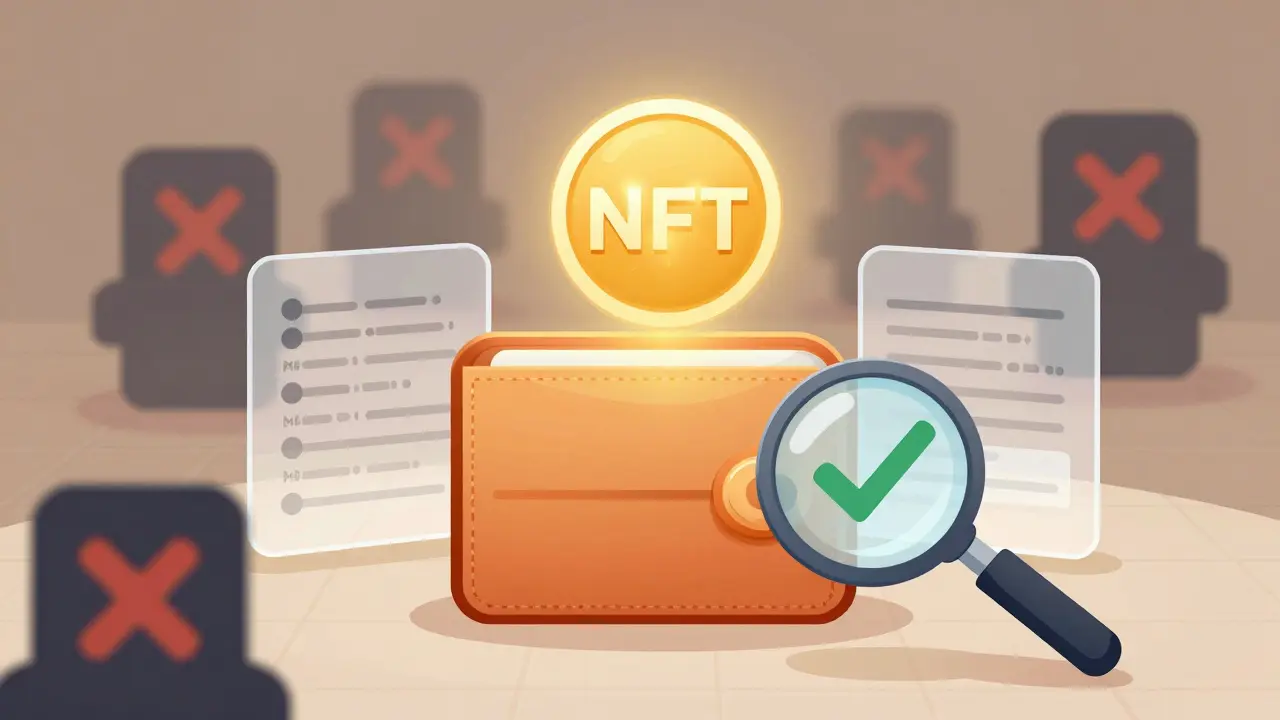
How to Verify NFT Ownership on Blockchain: A Step-by-Step Guide
Learn how to verify NFT ownership on the blockchain using Etherscan and other tools. Avoid scams, understand what you really own, and confirm your NFT is legitimate with step-by-step verification.
Top News
-
MOT by Mobius Finance Airdrop: What Really Happened and Where to Buy MOT Today 4.03.2026
-
Mexico Crypto Monitoring Regulations by CNBV: What You Need to Know in 2026 1.03.2026
-
BunnySwap Crypto Exchange Review: A Niche DEX with Almost No Trading Volume 5.03.2026
-
North Korean Crypto Sanctions and Sanctioned Wallet Addresses: How the Regime Funds Its Weapons with Stolen Digital Assets 3.03.2026
-
Wealth Tax Treatment of Crypto in Switzerland: What You Need to Know in 2026 6.03.2026