Crypto Restrictions in China: What’s Banned, Why It Matters
When we talk about crypto restrictions China, the sweeping government policies that limit or ban cryptocurrency activities within the country. Also known as China’s cryptocurrency ban, these rules reshaped the global crypto landscape overnight in 2021 and still define how crypto operates in one of the world’s largest economies. Unlike countries that tax or regulate crypto, China chose to shut it down—no exchanges, no mining, no trading on domestic platforms. The goal? To protect financial stability and push its own digital currency, the digital currency China, the official central bank digital currency (CBDC) issued by the People’s Bank of China. Also known as e-CNY, it’s designed for control, traceability, and state oversight—everything crypto was built to avoid.
China’s crackdown didn’t just stop exchanges. It went after mining farms, cutting power to entire regions and forcing operators to shut down or flee. Bitcoin’s global hash rate dropped by over 50% in months. But here’s the twist: while private crypto use is banned, holding crypto in personal wallets isn’t explicitly illegal. People still own it—but they can’t trade it legally, cash out easily, or use it to pay for goods. This creates a gray zone: you can hold, but you can’t move. Meanwhile, the blockchain China, the government-backed use of distributed ledger technology for supply chains, public records, and financial infrastructure. Also known as state blockchain, it’s thriving under strict control—used for tracking vaccines, managing land titles, and digitizing customs. This isn’t DeFi. It’s a tool for bureaucracy, not decentralization.
These restrictions aren’t just about money. They’re about power. China sees decentralized finance as a threat to its monetary sovereignty. If people can bypass banks, evade capital controls, or send value outside the system, the state loses control. That’s why even foreign crypto platforms are blocked, VPNs are monitored, and wallet addresses are flagged. The result? Chinese crypto users either go underground—or switch to the digital yuan. And globally, this move pushed major exchanges like Binance and Huobi to relocate, reshaped mining hardware markets, and made China’s digital currency the most advanced CBDC in the world.
What you’ll find in the posts below aren’t just articles about bans—they’re real stories about what happens when a nation shuts down crypto. You’ll see how traders adapted, why some projects vanished overnight, how scams targeted people trying to exit the system, and what’s left for users who still hold crypto inside China. There’s no fluff. Just facts on what’s banned, what’s allowed, and what’s truly at stake.
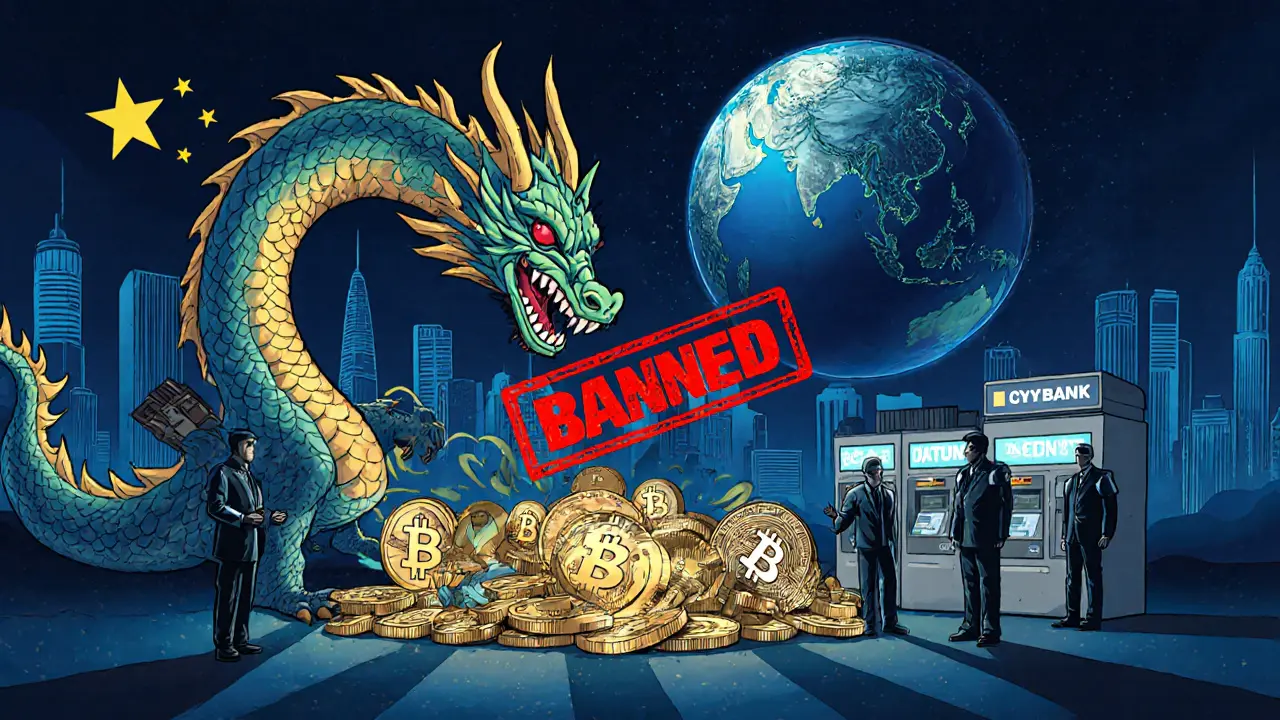
Crypto Exchange Restrictions for Chinese Citizens in 2025: What’s Banned and Why
As of June 2025, Chinese citizens are completely banned from owning, trading, or using any cryptocurrency. This article explains how the ban works, why it’s enforced so strictly, and what alternatives like the digital yuan mean for the future.
Top News
-
Cryptal Crypto Exchange Review: Is It Right for You in 2026? 2.03.2026

-
MOT by Mobius Finance Airdrop: What Really Happened and Where to Buy MOT Today 4.03.2026

-
Wealth Tax Treatment of Crypto in Switzerland: What You Need to Know in 2026 6.03.2026

-
North Korean Crypto Sanctions and Sanctioned Wallet Addresses: How the Regime Funds Its Weapons with Stolen Digital Assets 3.03.2026

-
Mexico Crypto Monitoring Regulations by CNBV: What You Need to Know in 2026 1.03.2026