Cryptocurrency Ban 2025: What’s Really Happening and Who It Affects
When people talk about a cryptocurrency ban 2025, a proposed or enacted government policy that prohibits the use, trading, or ownership of digital assets like Bitcoin and Ethereum. Also known as crypto prohibition, it’s not a single global law—it’s a patchwork of local rules that vary wildly by country. Some governments see crypto as a threat to financial control. Others see it as a tool for tax evasion or money laundering. But the real story isn’t about banning crypto outright—it’s about who gets targeted and how.
The idea of a full crypto ban, a legal restriction that makes owning or trading digital currencies illegal within a jurisdiction is rare. Most countries don’t ban crypto itself—they ban exchanges, restrict banking access, or impose crushing taxes. Take Australia, a country that doesn’t outlaw privacy coins like Monero but blocks exchanges from listing them due to strict anti-money laundering rules. Or India, where a 30% tax on crypto gains and 1% TDS on every trade make trading so costly that many users just walk away. These aren’t bans—they’re slow suffocation.
And it’s not just about taxes. Enforcement is shifting. In 2025, most criminal penalties for crypto violations target businesses, not individuals. If you’re running an unlicensed exchange in Nigeria or laundering crypto through a shell company in Russia, you’re at risk. But if you’re holding Bitcoin in a personal wallet? You’re mostly safe—unless your country has a zero-tolerance policy like China’s, where even mining rigs get seized. The real danger isn’t the law—it’s the uncertainty. One day, your exchange might be shut down. The next, your wallet might be flagged for "suspicious activity." That’s why so many posts here warn about fake airdrops, dead tokens, and sketchy exchanges like Btcwinex or Qmall. They’re not just scams—they’re symptoms of a system under pressure.
What you’ll find in this collection isn’t speculation. It’s real cases: how Australia’s rules killed privacy coin listings, how India’s tax system chokes traders, how criminal penalties are applied in different regions, and why so many "new" crypto projects are just empty shells. You’ll see how account abstraction and DeFi composability are trying to outpace regulation, and why privacy coins keep getting squeezed. This isn’t about fear. It’s about awareness. If you’re holding crypto in 2025, you need to know who’s watching, what’s changing, and how to protect yourself—not just from hackers, but from the system itself.
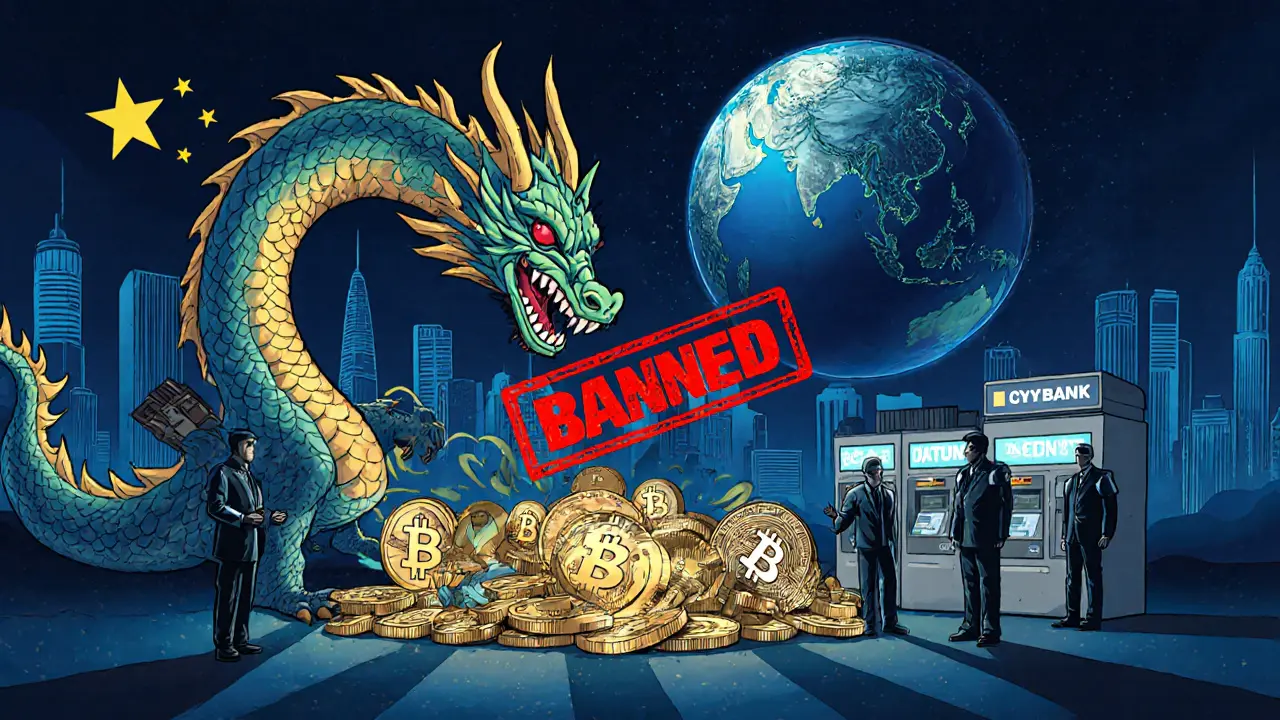
Crypto Exchange Restrictions for Chinese Citizens in 2025: What’s Banned and Why
As of June 2025, Chinese citizens are completely banned from owning, trading, or using any cryptocurrency. This article explains how the ban works, why it’s enforced so strictly, and what alternatives like the digital yuan mean for the future.
Top News
-
BunnySwap Crypto Exchange Review: A Niche DEX with Almost No Trading Volume 5.03.2026

-
MOT by Mobius Finance Airdrop: What Really Happened and Where to Buy MOT Today 4.03.2026

-
North Korean Crypto Sanctions and Sanctioned Wallet Addresses: How the Regime Funds Its Weapons with Stolen Digital Assets 3.03.2026

-
Wealth Tax Treatment of Crypto in Switzerland: What You Need to Know in 2026 6.03.2026

-
Mexico Crypto Monitoring Regulations by CNBV: What You Need to Know in 2026 1.03.2026