Decentralized Exchange (DEX) Overview
When you hear the term Decentralized Exchange, a peer‑to‑peer platform that lets users trade cryptocurrencies directly without a central intermediary. Also known as DEX, it removes the need for a custodian and gives you full control of your assets.
One of the core ingredients that makes a DEX functional is Liquidity, the amount of tokens available to fill orders quickly and at stable prices. Without sufficient liquidity, trades would slip or fail altogether. This is why many DEXs rely on automated market makers that pool assets and price them algorithmically. In practice, liquidity enables Token Swap, the direct exchange of one cryptocurrency for another on the platform without waiting for a counterparty.
Key Components of a Decentralized Exchange
At the heart of every DEX sits a Smart Contract, self‑executing code that enforces trade rules and moves funds automatically. Smart contracts replace traditional order books with code that matches trades, distributes fees, and secures the pool. Because the contract runs on a blockchain, its logic is transparent and immutable – you can verify exactly how your trade will be processed.
Most popular DEXs are built on decentralized exchange friendly blockchains like Ethereum and Binance Smart Chain. These ecosystems provide the necessary infrastructure: a large developer community, robust token standards (ERC‑20, BEP‑20), and a cascade of tools for analyzing pool health. The choice of chain influences transaction speed, fees, and the range of assets you can access.
Security is another pillar. Since you never hand over private keys, the risk of a hack that steals user funds from a central server drops dramatically. However, you must still watch out for buggy smart contracts or fraudulent liquidity pools. Audited contracts and reputable platforms help keep your assets safe.
Current trends are pushing DEXs toward faster, cheaper trades. Layer‑2 solutions, sidechains, and innovative AMM formulas are squeezing out slippage and gas costs. Meanwhile, cross‑chain bridges let you swap assets that live on different blockchains without leaving the DEX environment. This evolution expands the reach of decentralized finance and makes token swaps more seamless than ever.
Below you’ll find a curated list of articles that dig deeper into each of these topics – from airdrop guides that use DEX platforms to detailed reviews of specific exchanges. Whether you’re hunting for the best liquidity pools, learning how to audit a smart contract, or simply curious about the latest DEX trends, the posts ahead will give you practical insights you can act on right away.

BunnySwap Crypto Exchange Review: A Niche DEX with Almost No Trading Volume
BunnySwap is a hyper-specialized decentralized exchange that only trades FRIEND and WETH. With $231 in daily volume and no audits, it offers no real advantage over larger DEXes like Uniswap. Not worth using.
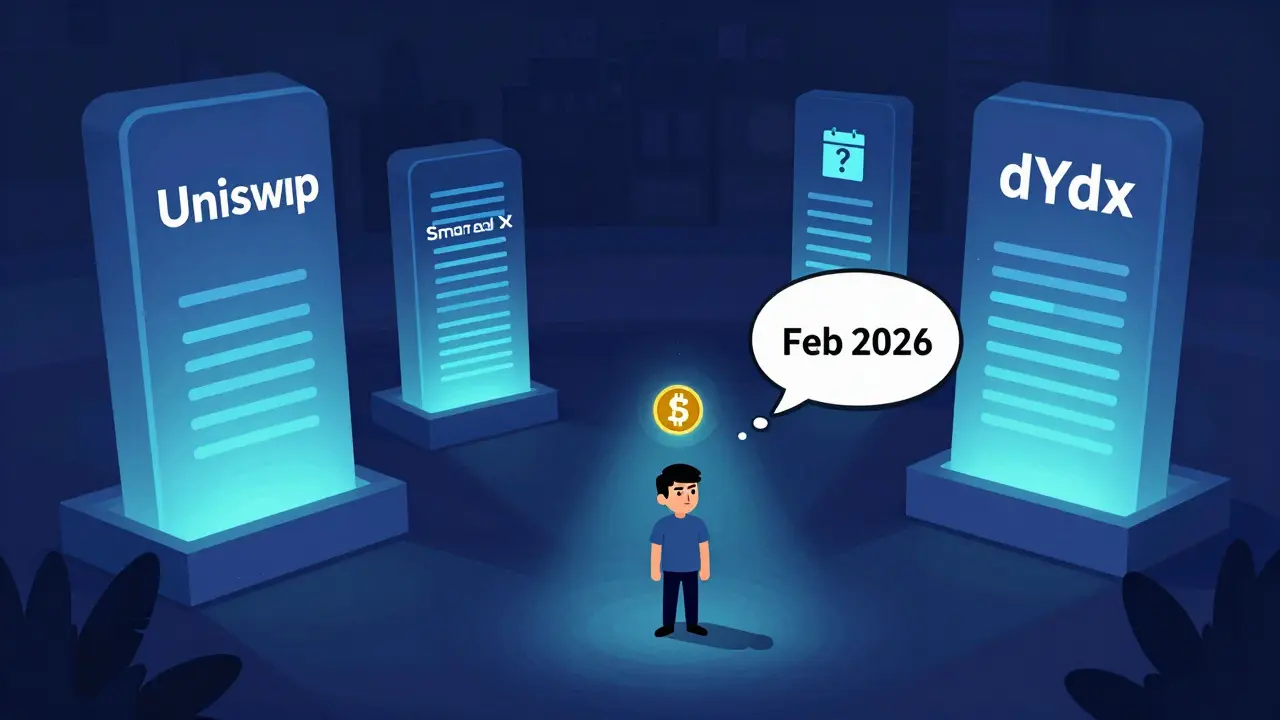
Smardex Crypto Exchange Review: Real Trading or Just Theory in 2025?
Smardex is a DeFi exchange with big promises but almost no real trading. Its SDEX token has low volume and minimal adoption. The real test comes in February 2026 with its 'Everything' protocol upgrade - until then, it's a speculative bet, not a working exchange.

DeFi Swap Crypto Exchange Review: Best Platforms for 2025
DeFi swap exchanges let you trade crypto without intermediaries. In 2025, Uniswap, PancakeSwap, Curve, and Symbiosis lead the market with different strengths. Learn which one fits your needs, how to avoid common mistakes, and what’s coming next.
AUX Exchange Review: Is This Tiny DEX Worth Your Crypto?
A thorough AUX Exchange review covering assets, fees, security, user experience, and how it compares to major crypto exchanges.
What Is Raydium (RAY) Crypto Coin? A Simple Guide
Raydium (RAY) is a fast Solana‑based DEX that combines AMM pools with an order‑book, offering low‑fee trades, yield farming, and governance-all explained in plain English.

Non-KYC Crypto Exchanges: Privacy, Risks, and How to Trade in 2025
Explore non-KYC crypto exchanges in 2025: learn how they work, top platforms, privacy benefits, risks, and step‑by‑step guide for safe anonymous trading.
Top News
-
BunnySwap Crypto Exchange Review: A Niche DEX with Almost No Trading Volume 5.03.2026

-
Cryptal Crypto Exchange Review: Is It Right for You in 2026? 2.03.2026

-
North Korean Crypto Sanctions and Sanctioned Wallet Addresses: How the Regime Funds Its Weapons with Stolen Digital Assets 3.03.2026
-
MOT by Mobius Finance Airdrop: What Really Happened and Where to Buy MOT Today 4.03.2026

-
Mexico Crypto Monitoring Regulations by CNBV: What You Need to Know in 2026 1.03.2026