Margin Trading in Crypto: What It Is, How It Works, and Where to Be Careful
When you use margin trading, a practice where traders borrow funds from a broker or exchange to increase their position size in crypto markets. Also known as leveraged trading, it lets you control a larger amount of crypto than your actual balance allows—like using $1,000 to trade $5,000 worth of Bitcoin. This isn’t magic. It’s math. And math can go wrong fast.
Most crypto exchanges that offer margin trading, a feature enabling traders to open positions larger than their account balance using borrowed capital. Also known as leveraged trading, it lets you control a larger amount of crypto than your actual balance allows—like using $1,000 to trade $5,000 worth of Bitcoin. This isn’t magic. It’s math. And math can go wrong fast.
Most crypto exchanges that offer leverage, the ratio of borrowed funds to your own capital used to amplify trading positions. Also known as trading on margin, it’s the engine behind bigger wins—and bigger losses. You’ll see options like 2x, 5x, even 100x. Sounds great until the market moves $1 against you. At 100x leverage, that $1 drop wipes out your entire $1,000 stake. No warning. No second chance. This isn’t speculation. It’s gambling with borrowed money.
Some platforms, like Paradex, a decentralized derivatives exchange on Starknet offering zero-fee trading with institutional-grade liquidity and zk-privacy. Also known as DeFi derivatives platform, it’s built for traders who want to go long or short without trusting a central authority. let you trade derivatives without handing over your keys. Others, like the defunct Btcwinex or sketchy Qmall Exchange, promise high leverage but vanish when you need your funds. You can’t trust a platform just because it says "zero fees" or "high liquidity." Check the history. Look for audits. See if real people are trading.
Margin trading doesn’t exist in a vacuum. It connects to DeFi derivatives, financial instruments built on blockchain that allow trading without intermediaries, like options, futures, and leveraged positions. Also known as on-chain trading products, they’re the backbone of platforms like Hedget and Jupiter, where you can hedge or amplify your crypto exposure using smart contracts. But here’s the catch: DeFi doesn’t protect you from bad decisions. If you don’t understand liquidation prices, funding rates, or collateral requirements, you’re just handing your money to the market.
What you’ll find below aren’t tutorials on how to get rich overnight. These are real stories—about tokens that vanished, exchanges that disappeared, and traders who lost everything because they thought leverage was a shortcut. Some posts warn you about fake airdrops tied to leveraged platforms. Others break down how margin calls work on Solana DEXs or why India’s tax rules make leveraged trading a nightmare. There’s no fluff. Just facts about what works, what doesn’t, and who gets left behind.
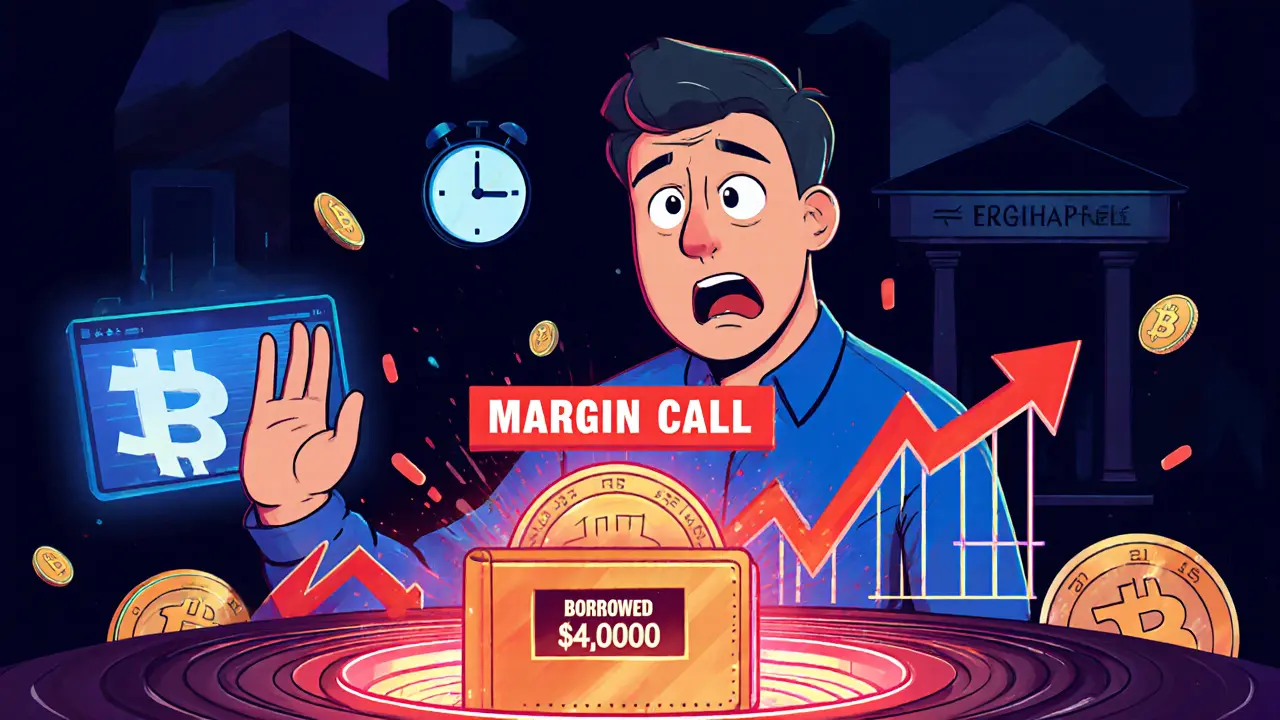
Margin Call and Liquidation Explained: How Leverage Risks Work in Crypto Trading
Margin calls and liquidation are critical risks in leveraged crypto trading. Learn how they work, why they happen, and how to avoid losing everything - even if you're new to trading with leverage.
Top News
-
Cryptal Crypto Exchange Review: Is It Right for You in 2026? 2.03.2026
-
Wealth Tax Treatment of Crypto in Switzerland: What You Need to Know in 2026 6.03.2026
-
Mexico Crypto Monitoring Regulations by CNBV: What You Need to Know in 2026 1.03.2026
-
North Korean Crypto Sanctions and Sanctioned Wallet Addresses: How the Regime Funds Its Weapons with Stolen Digital Assets 3.03.2026
-
MOT by Mobius Finance Airdrop: What Really Happened and Where to Buy MOT Today 4.03.2026