Solana memecoin: What They Are, Why They Crash, and What You Need to Know
When you hear Solana memecoin, a type of cryptocurrency launched on the Solana blockchain with no utility, team, or roadmap—often built purely for viral attention and speculative trading. Also known as Solana meme token, it’s the digital equivalent of a flash sale at a gas station convenience store: loud, cheap, and gone before you realize you didn’t need it. Unlike Bitcoin or Ethereum, these tokens don’t solve problems. They don’t power apps. They don’t even have whitepapers. They exist because someone made a funny dog picture and tagged it with $WIF or $BONK—and the internet went wild.
What makes Solana the favorite playground for memecoins? Speed and cost. Solana can process thousands of transactions per second for pennies, making it perfect for pump-and-dump cycles. You can buy, sell, and flip a Solana memecoin in seconds while Ethereum users are waiting for gas fees to drop. That’s why you see Solana DEX, decentralized exchanges like Jupiter and Raydium that handle the bulk of memecoin trading on Solana buzzing with activity while other chains stay quiet. But here’s the catch: low fees mean low barriers—not just for traders, but for scammers too. Most Solana memecoins are launched by anonymous teams, have zero liquidity, and get abandoned within weeks. Look at LumiChill (CHILL), a Solana-based token with no team, no utility, and wild price swings that make it a gamble, not an investment. It’s not an outlier—it’s the norm.
These tokens thrive on hype, not fundamentals. A tweet from a big influencer, a viral TikTok trend, or a fake partnership announcement can send a Solana memecoin to the moon—then crash it back to zero in hours. That’s why so many posts here warn you about dead coins like CrazyPepe and scams disguised as airdrops. You’re not investing in tech. You’re betting on crowd psychology. And the odds? They’re stacked against you. Most Solana memecoins fail within 30 days. The ones that don’t? They usually get listed on a major exchange, get pumped hard, then vanish when the insiders cash out.
So why do people still chase them? Because someone always wins. And that one win feels like proof it’s possible. But if you’re looking for real value, real utility, or long-term growth—you won’t find it here. What you will find in the posts below are real case studies: tokens that died, exchanges that turned out to be traps, and airdrops that were never real. You’ll learn how to spot the red flags before you send your money into the void. This isn’t a guide to getting rich. It’s a guide to not getting wiped out.
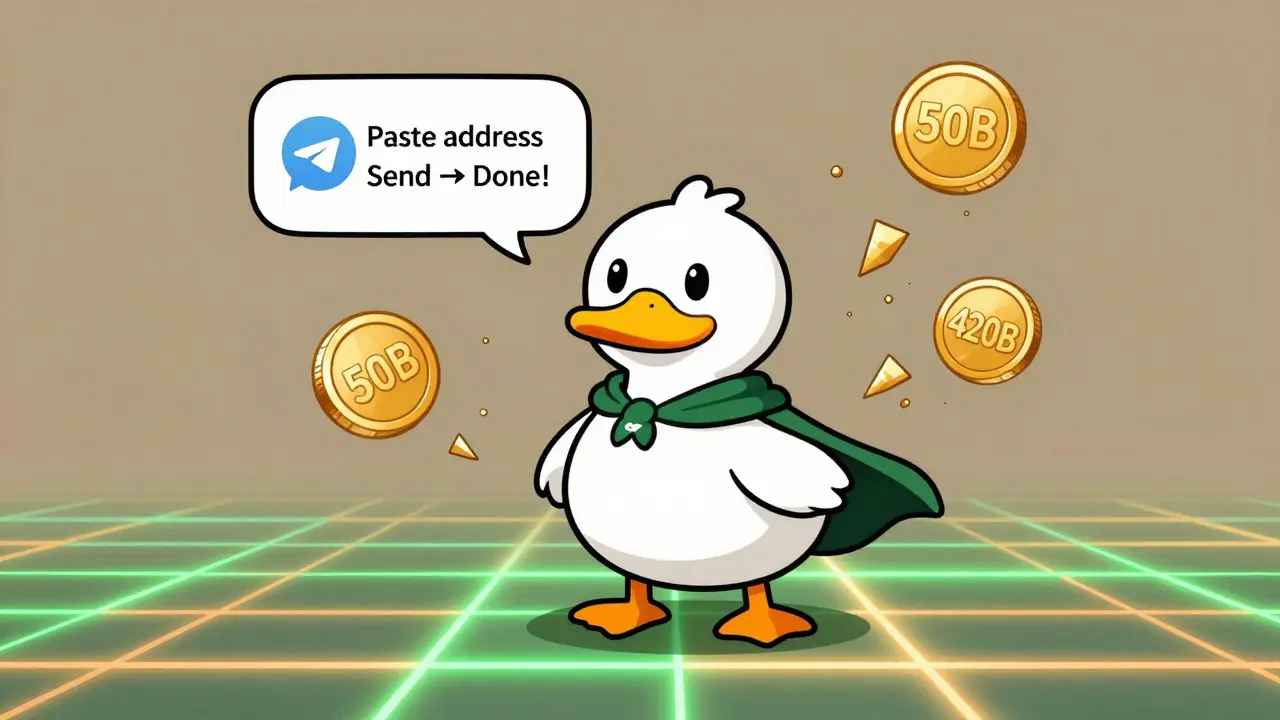
What is Ducky Duck (DUCKY) crypto coin? Solana memecoin explained with real data
Ducky Duck (DUCKY) is a Solana-based memecoin with a 200 million token supply and a Telegram trading bot that lets you swap tokens without a wallet. Learn how to spot the real one and avoid fake versions.
Top News
-
CRMClick Crypto Exchange Review: Is it Safe to Trade Here? 4.04.2026

-
What is BLink (BLINK) Crypto Coin? Clearing Up the Confusion 10.04.2026

-
VPN Detection Risks for Crypto Traders in Iran: How to Stay Safe 8.04.2026

-
Bitcoin in El Salvador: The Shift from Legal Tender to Voluntary Use 9.04.2026

-
What is CoTrader (COT)? A Deep Dive into the COT Token 7.04.2026