DUSD Stablecoin: What It Is, How It Works, and Why It Matters
When you hear DUSD, a decentralized stablecoin issued on the Harmony blockchain that maintains a 1:1 peg with the US dollar through collateralized reserves. Also known as Dollar on Harmony, it’s not backed by banks or cash reserves—it’s backed by crypto assets locked in smart contracts. Unlike USDT or USDC, DUSD doesn’t rely on centralized custodians. Instead, it’s generated by users who lock up assets like WAVES, DOT, or other supported tokens as collateral. This makes it part of a growing wave of crypto-native stablecoins designed to work inside DeFi without touching traditional finance.
DUSD relates directly to other stablecoins like sUSD and DAI, but it’s simpler and faster. While sUSD is tied to Synthetix’s SNX token and DAI is overcollateralized with ETH, DUSD uses a more flexible model that allows for quicker minting and lower fees. It’s built for users who want stable value without the complexity of multi-layered collateral systems. If you’ve used a DeFi protocol on Harmony, you’ve probably seen DUSD in action—trading, lending, or earning yield. It’s also one of the few stablecoins that works natively across multiple chains through cross-chain bridges, making it useful for traders who jump between ecosystems.
But DUSD isn’t risk-free. If the value of the collateral drops sharply and isn’t replenished, the system can become undercollateralized. That’s why it’s not for passive holders—it’s for active DeFi users who understand liquidation risks and monitor their positions. You won’t find DUSD on Coinbase or Binance, but you’ll see it on Harmony-based DEXs like Swapsicle and on cross-chain bridges like Multichain. Its adoption is small compared to USDT, but growing fast among users who value decentralization over convenience.
What you’ll find below are real breakdowns of DUSD and similar tokens—like sUSD and other algorithmic or crypto-backed stablecoins. You’ll see how they’re built, who uses them, and what happens when things go wrong. No hype. No fluff. Just facts about what’s working, what’s failing, and why DUSD still has a place in the DeFi toolbox—even if it’s not the biggest player.
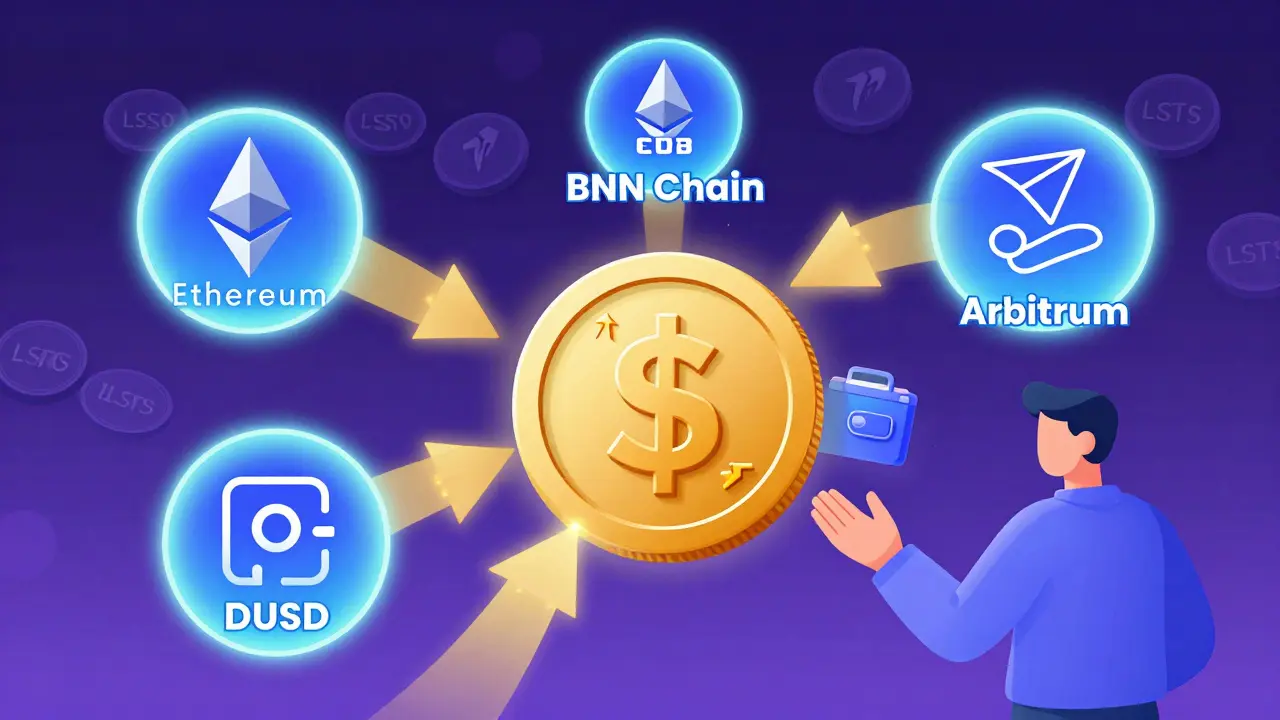
What is Davos.xyz USD (DUSD) Crypto Coin? A Clear Breakdown of the Yield-Paying Stablecoin
DUSD is a decentralized, yield-generating stablecoin backed by crypto assets like stETH and LRTs. It moves across 5 blockchains and pays users to hold it, but its small market cap and opaque collateral make it risky for savings. Best for cross-chain swaps, not long-term storage.
Top News
-
Bitcoin in El Salvador: The Shift from Legal Tender to Voluntary Use 9.04.2026

-
What is BLink (BLINK) Crypto Coin? Clearing Up the Confusion 10.04.2026

-
CRMClick Crypto Exchange Review: Is it Safe to Trade Here? 4.04.2026

-
What is CoTrader (COT)? A Deep Dive into the COT Token 7.04.2026

-
VPN Detection Risks for Crypto Traders in Iran: How to Stay Safe 8.04.2026