Gas Fees Explained: What They Are, Why They Matter, and How to Save
When you send crypto, swap tokens, or interact with a smart contract, you pay a gas fee, the cost to process and validate a transaction on a blockchain network. Also known as transaction fees, gas fees keep networks secure by rewarding miners or validators for their work. Without gas fees, anyone could flood the network with useless transactions—making it slow, expensive, or even unusable.
Gas fees aren’t the same everywhere. On Ethereum, the most popular blockchain for decentralized apps and tokens, fees spike when everyone is trading at once—like during a new meme coin launch or a major NFT drop. But on Solana, a high-speed blockchain built for low-cost transactions, you might pay less than a penny. That’s why tokens like $KEKIUS or CHILL often trade on Solana: lower gas fees mean more people can join the hype without getting hit with a $50 fee just to buy a coin worth $0.0001.
Smart contracts—like the ones behind stablecoins such as sUSD or DUSD—also rely on gas. Every time you claim yield, swap assets, or move funds between chains, the network charges you. That’s why some DeFi projects, like Katana or Paradex, focus on reducing these costs through smarter design. And when gas gets too high, users switch to Layer 2s like Arbitrum or zkSync, where fees are a fraction of Ethereum’s. Account abstraction, another key concept, is starting to let wallets pay gas for you, or even let you send transactions without holding any ETH upfront.
But here’s the real problem: most people don’t know why their fee is $12 one day and $0.50 the next. It’s not random. It’s supply and demand. More people trying to send transactions = higher bids = higher fees. Tools like Etherscan show you exactly how much gas was used, but few explain how to avoid overpaying. That’s why we’ve collected real examples—from dead meme coins with zero trading volume to yield-bearing stablecoins that move across five chains—so you can see how gas fees impact every move you make.
Whether you’re claiming an airdrop, swapping tokens on a DEX, or just sending ETH, gas fees are always there. Some posts here show how a token with $0 price still had gas fees because someone tried to dump it. Others reveal how low-fee chains became the only home for tiny tokens nobody else would touch. You’ll see why some airdrops are fake not because of the token—but because the gas cost to claim it was higher than the token’s value. This isn’t theory. It’s what’s happening right now.

When to Pay Lower Gas Fees: Timing Strategies for 2026
Save 30-70% on transaction costs by transacting during low-congestion hours. Learn the best UTC windows, which networks offer predictable savings, and how to avoid missing out on DeFi opportunities while optimizing your wallet budget.
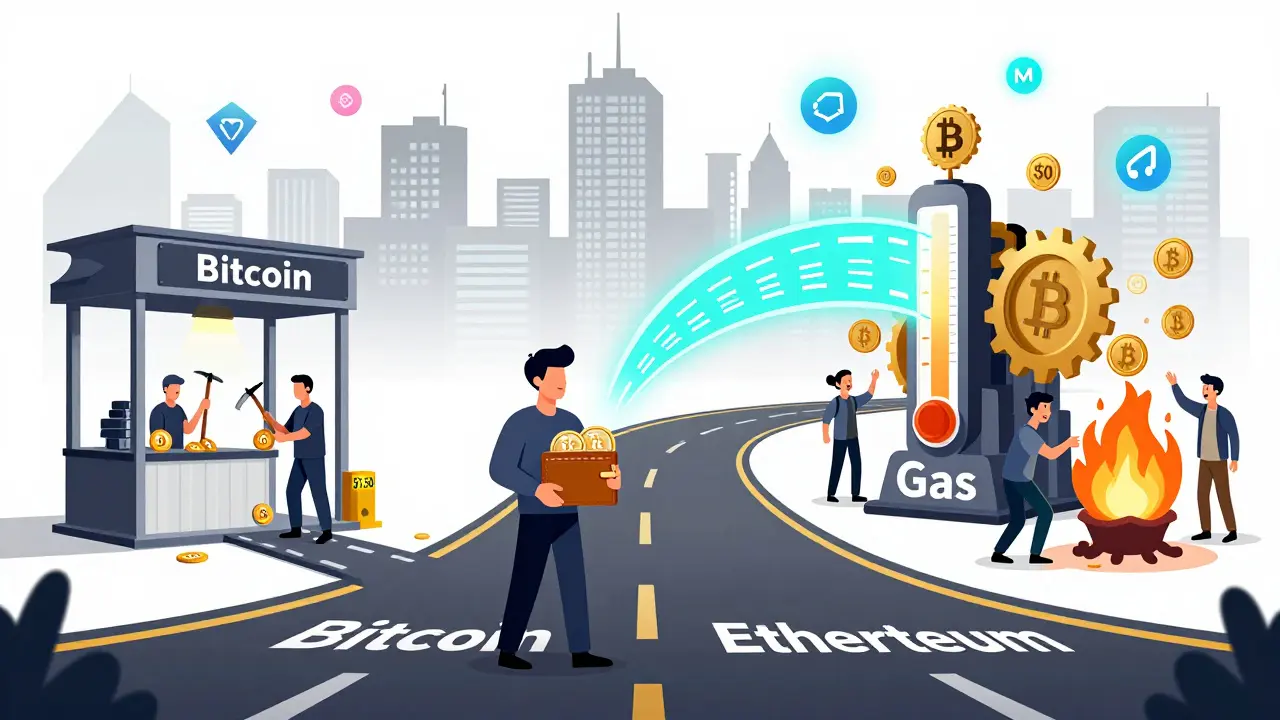
Gas Fees vs Transaction Fees: What's the Difference in Blockchain Networks
Gas fees and transaction fees are often confused, but they're fundamentally different. Learn how Bitcoin's simple fees compare to Ethereum's complex gas system-and how to save money on crypto transactions today.
Top News
-
CRMClick Crypto Exchange Review: Is it Safe to Trade Here? 4.04.2026

-
Bitcoin in El Salvador: The Shift from Legal Tender to Voluntary Use 9.04.2026

-
What is CoTrader (COT)? A Deep Dive into the COT Token 7.04.2026
-
Understanding PVARA: Crypto Regulations & Restrictions in Pakistan 1.04.2026
-
VPN Detection Risks for Crypto Traders in Iran: How to Stay Safe 8.04.2026