Katana blockchain: What It Is, How It Works, and What You Need to Know
When you hear Katana blockchain, a high-performance blockchain built specifically to support decentralized exchanges on Solana. It's not a public chain like Ethereum, but a specialized execution layer that makes trading crypto faster and cheaper. Think of it like a dedicated race track for DeFi apps—built for speed, not general use. This is why platforms like Lifinity and other Solana-based DEXs rely on it to handle thousands of trades per second without gas spikes or delays.
Katana blockchain blockchain infrastructure, the underlying system that enables decentralized applications to run efficiently by cutting out unnecessary layers. Unlike full blockchains that process everything from NFTs to payments, Katana focuses on one thing: enabling smooth, low-latency trading. It works alongside Solana’s mainnet, using its security and speed but optimizing for order matching and liquidity provision. This makes it a key player in blockchain scaling, the effort to make blockchains handle more users without slowing down. If Solana is the engine, Katana is the turbocharger.
What does this mean for you? If you’ve used a Solana DEX and noticed near-instant trades with fees under a penny, you were likely interacting with something powered by Katana. It’s behind the scenes, but it’s what lets you swap tokens without waiting minutes or paying $5 in gas. It also helps smaller projects launch trading pairs without needing their own blockchain. But here’s the catch: Katana isn’t a place you hold coins. It doesn’t have its own token. You won’t find it on CoinGecko. It’s a tool, not a coin. That’s why most people don’t talk about it—but traders and developers depend on it every day.
That’s why the posts below dive into exactly what’s running on this infrastructure. You’ll find reviews of exchanges like Lifinity that use Katana, deep dives into Solana memecoins traded there, and breakdowns of tokens that only exist because this kind of infrastructure makes them possible. Some of these tokens are high-risk, some are dead, and a few might actually have legs. But they all live on chains like Katana—fast, cheap, and unforgiving. If you’re trading on Solana, you’re already using it. Now you know what’s really powering those trades.
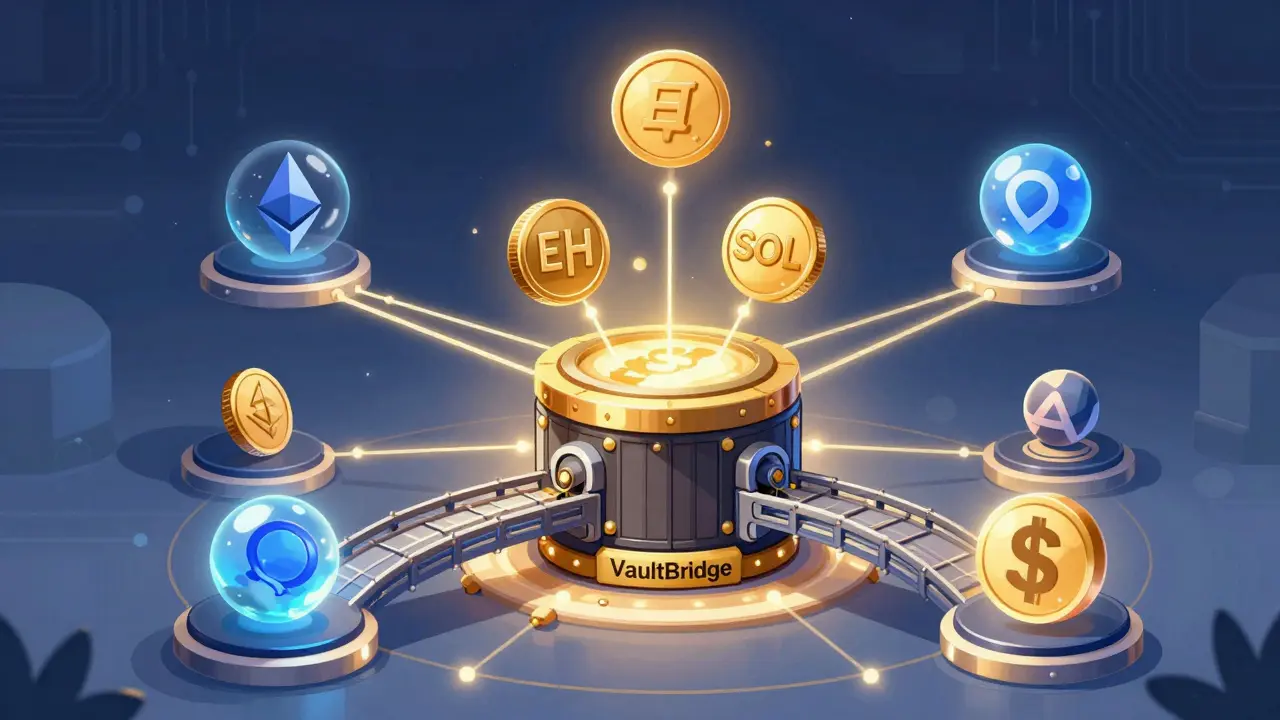
Katana Crypto Exchange Review: What It Really Is and How It Works
Katana is not a crypto exchange - it's a DeFi blockchain that connects liquidity across chains to generate sustainable yield. Learn how VaultBridge and Chain-Owned Liquidity work, who it's for, and why it's different from Arbitrum or Yearn.
Top News
-
What is BLink (BLINK) Crypto Coin? Clearing Up the Confusion 10.04.2026

-
Understanding PVARA: Crypto Regulations & Restrictions in Pakistan 1.04.2026

-
CRMClick Crypto Exchange Review: Is it Safe to Trade Here? 4.04.2026

-
What is CoTrader (COT)? A Deep Dive into the COT Token 7.04.2026

-
Bitcoin in El Salvador: The Shift from Legal Tender to Voluntary Use 9.04.2026