Blockchain Fees Explained: What They Are, Why They Matter, and How to Save
When you send crypto, stake a token, or interact with a smart contract, you pay a blockchain fee, a payment made to miners or validators to process and confirm your transaction on the network. Also known as gas fees, these charges aren’t optional—they’re how the network stays secure, fast, and functional. Without them, your transaction would sit in a queue forever, or worse, get ignored entirely.
Not all blockchains charge the same way. On Ethereum, fees rise when everyone’s trading at once—like rush hour on a digital highway. On Solana, fees stay near $0.0001 because the network processes thousands of transactions per second. That’s why you see people moving from Ethereum to Solana or Polygon just to avoid $50 fees for a simple swap. Smart contracts, self-executing programs on blockchains that run when conditions are met are especially expensive. Every line of code you trigger costs gas. A DeFi trade? Maybe $2. A complex NFT mint? Could hit $20. And if you’re trying to claim an airdrop on a busy chain? You might pay more in fees than the token is worth.
It’s not just about the network. Your wallet choice matters. Some wallets auto-suggest high fees to get your transaction through fast, even if you don’t need it. Others let you adjust fees manually—saving you money if you’re patient. And don’t forget timing. Fees drop late at night or on weekends when fewer people are trading. You can also use layer-2 solutions like Arbitrum or zkSync, which handle transactions off the main chain and then bundle them up—cutting your cost by 90% or more.
What you’ll find in these posts isn’t theory—it’s real examples. You’ll see how KIZUNA and CHILL tokens vanished because people couldn’t afford to trade them. You’ll learn why DUSD and sUSD move across chains to avoid high fees. You’ll understand why Katana and Paradex built their own blockchains to cut costs. And you’ll spot scams where fake airdrops demand you pay a fee first—because no real airdrop ever asks for money upfront.
Blockchain fees aren’t just a number. They’re the heartbeat of the system. Pay too much, and you lose. Pay too little, and you wait. Get it right, and you keep more of your crypto—where it belongs.
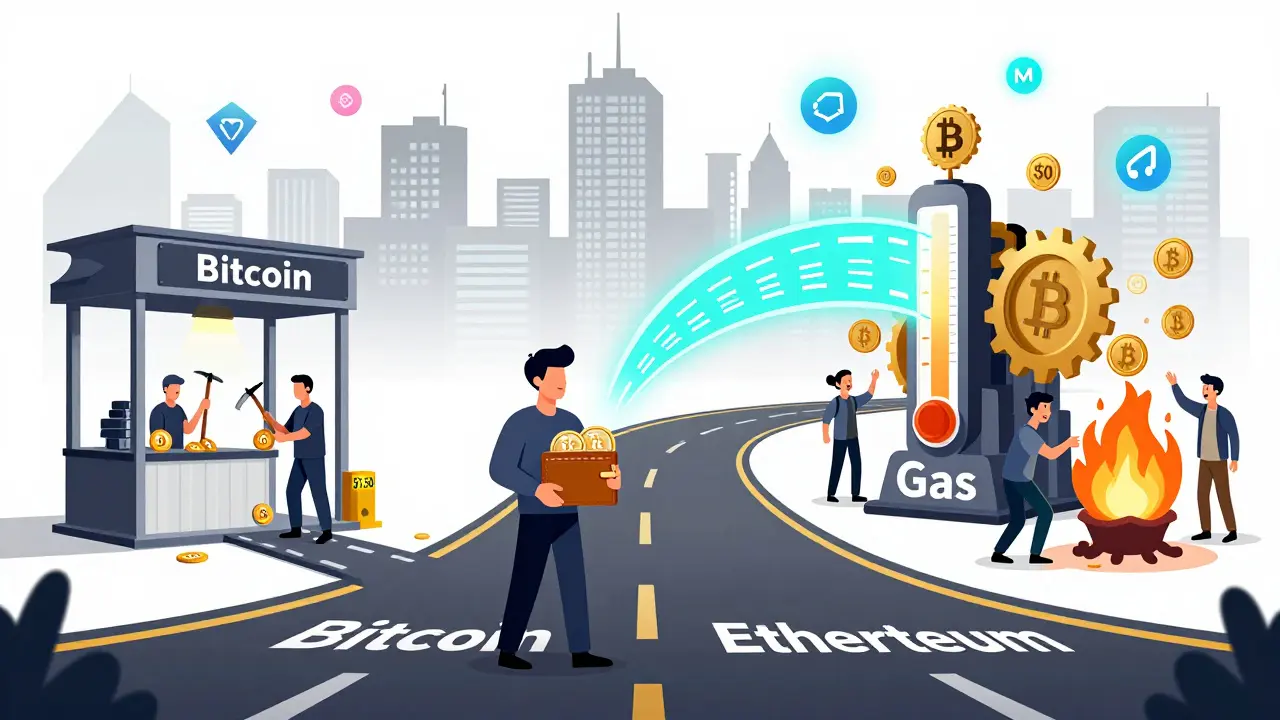
Gas Fees vs Transaction Fees: What's the Difference in Blockchain Networks
Gas fees and transaction fees are often confused, but they're fundamentally different. Learn how Bitcoin's simple fees compare to Ethereum's complex gas system-and how to save money on crypto transactions today.
Top News
-
VPN Detection Risks for Crypto Traders in Iran: How to Stay Safe 8.04.2026

-
What is CoTrader (COT)? A Deep Dive into the COT Token 7.04.2026
-
Understanding PVARA: Crypto Regulations & Restrictions in Pakistan 1.04.2026
-
What is BLink (BLINK) Crypto Coin? Clearing Up the Confusion 10.04.2026

-
CRMClick Crypto Exchange Review: Is it Safe to Trade Here? 4.04.2026