Davos.xyz USD: What It Is, Why It Matters, and What You Need to Know
When you hear Davos.xyz USD, a crypto token linked to decentralized finance and blockchain-based value systems. Also known as Davos USD, it's not a traditional stablecoin like USDT or DAI—but it tries to solve similar problems in a new way. Unlike most tokens that just ride hype waves, Davos.xyz USD is built on the idea that money should be open, transparent, and not controlled by banks or governments. It’s part of a growing wave of tokens that aim to give users direct control over their digital assets without middlemen.
This token doesn’t exist in a vacuum. It connects directly to DeFi, a system of financial tools built on blockchain that lets you lend, borrow, and trade without banks, and it shares traits with stablecoins, digital currencies pegged to real-world assets like the US dollar to reduce volatility. But here’s the catch: most stablecoins are backed by cash or reserves. Davos.xyz USD? It’s often backed by other crypto assets, which makes it riskier but also more flexible. That’s why you’ll see it pop up in posts about Solana memecoins, tokenomics experiments, and DeFi yield strategies. It’s not for everyone—but if you’re exploring how new tokens try to replace old financial systems, it’s worth understanding.
What you’ll find in the posts below isn’t a sales pitch. It’s real talk. You’ll see breakdowns of tokens that claim to be the next big thing but have zero liquidity, no team, or fake audits. You’ll learn how to spot the difference between a working DeFi protocol and a vaporware token. You’ll also see how blockchain oracles, account abstraction, and gasless wallets are changing the game behind the scenes. Whether you’re holding a meme coin or trying to understand why your stablecoin lost value, these posts give you the facts—not the fluff.
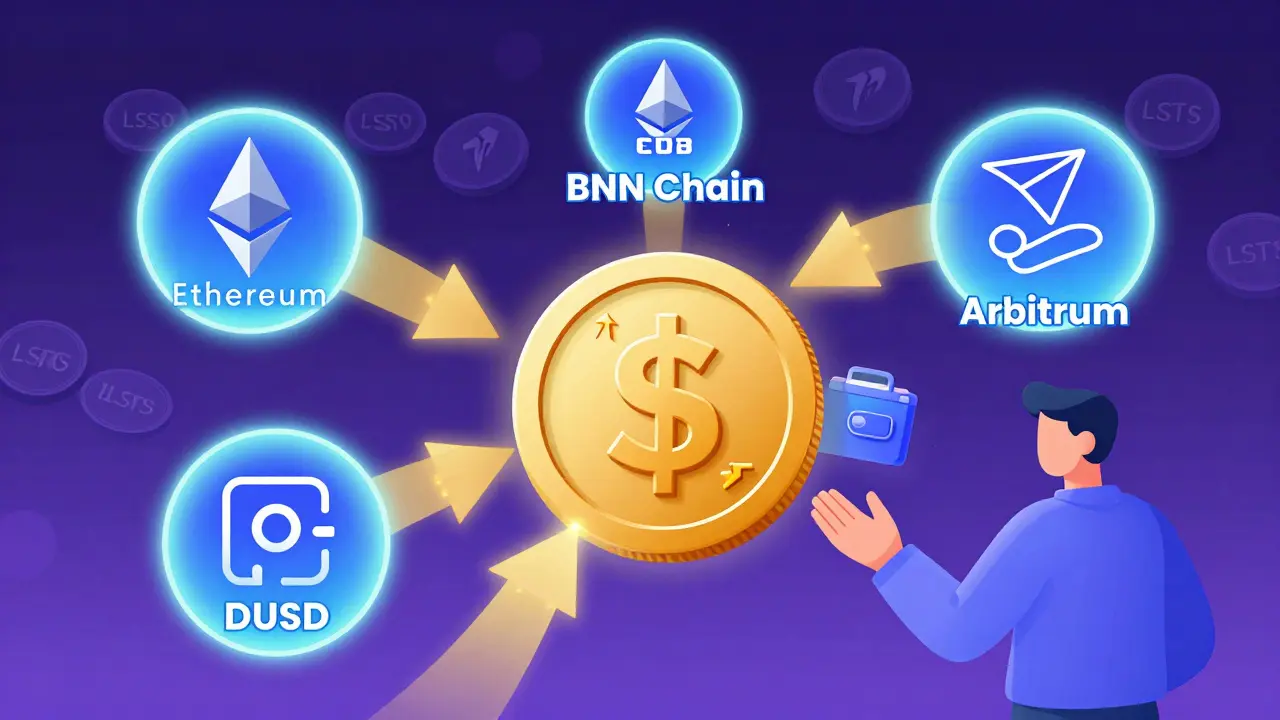
What is Davos.xyz USD (DUSD) Crypto Coin? A Clear Breakdown of the Yield-Paying Stablecoin
DUSD is a decentralized, yield-generating stablecoin backed by crypto assets like stETH and LRTs. It moves across 5 blockchains and pays users to hold it, but its small market cap and opaque collateral make it risky for savings. Best for cross-chain swaps, not long-term storage.
Top News
-
CRMClick Crypto Exchange Review: Is it Safe to Trade Here? 4.04.2026

-
What is BLink (BLINK) Crypto Coin? Clearing Up the Confusion 10.04.2026

-
What is CoTrader (COT)? A Deep Dive into the COT Token 7.04.2026

-
Bitcoin in El Salvador: The Shift from Legal Tender to Voluntary Use 9.04.2026

-
Understanding PVARA: Crypto Regulations & Restrictions in Pakistan 1.04.2026