Transaction Fees in Crypto: What You Really Pay and Why It Matters
When you send crypto, you’re not just moving money—you’re paying for space on a blockchain. This payment is called a transaction fee, the cost paid to miners or validators to process and confirm your transaction on a blockchain network. Also known as gas fees, it’s what keeps networks like Ethereum, Solana, or Bitcoin running without central control. Unlike bank transfers, where fees are hidden or flat, crypto fees change constantly based on demand, network congestion, and how fast you want your transaction to go.
Not all blockchains handle fees the same way. On Ethereum, fees spike during NFT drops or DeFi rushes because every action—swapping tokens, staking, or even claiming an airdrop—needs to be written to the chain. That’s why you might pay $20 to send $100 worth of ETH on a busy day. On Solana, the same action might cost less than a penny because the network processes thousands of transactions per second. Bitcoin’s fees are simpler but less predictable: during high traffic, they can jump to several dollars as users compete to get their transactions included in the next block. These differences matter because they shape how you use each chain. If you’re swapping tokens on a DEX like Lifinity or Paradex, low fees make frequent trades possible. High fees? You’ll avoid small transactions entirely.
Transaction fees also connect to bigger ideas like blockchain scalability, a network’s ability to handle more users and transactions without slowing down or becoming too expensive. When fees get too high, people leave—like when Ethereum fees hit $50 during the 2021 NFT boom, and users flocked to alternatives like Polygon or Arbitrum. That’s why newer chains focus on low fees from day one. Even account abstraction, a new wallet technology that lets users pay fees in any token or even have someone else pay for them, is built to make fees less painful. You won’t need to hold ETH just to pay gas—you could pay with USDC or DUSD instead.
And here’s the real catch: most people don’t realize they’re paying fees on every tiny action. Claiming an airdrop? That’s a fee. Approving a token for a swap? Another fee. Even checking your balance on some wallets can trigger a fee if the app talks to the blockchain. That’s why tools like Token.com or KALATA’s early airdrops were only worth it if you could cover the fees without losing money. The same goes for DeFi platforms like Hedget or Davos.xyz—each interaction adds up. If you’re holding sUSD or DUSD for yield, you might earn 5% a year but lose 10% in fees from constant claiming and rebalancing.
So what can you do? Track your fees. Use networks with lower costs for small transactions. Wait for quiet times. And always check the fee preview before hitting confirm. You’d be surprised how often a $5 fee turns a $20 profit into a $15 loss. The best crypto users aren’t the ones who chase the hottest tokens—they’re the ones who understand the hidden costs behind every click.
Below, you’ll find real breakdowns of crypto projects, exchanges, and tokens where transaction fees played a major role—sometimes saving users money, other times wiping out their gains. These aren’t theory pieces. They’re post-mortems on what actually happened when fees hit the real world.
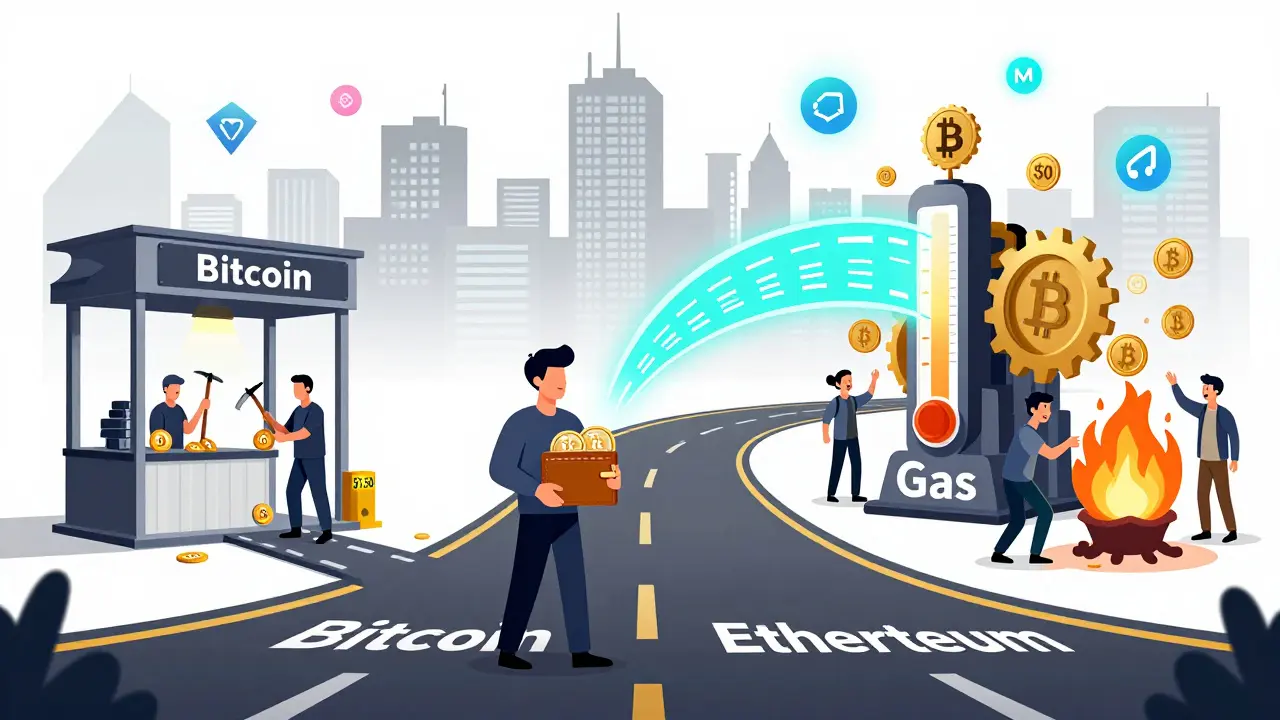
Gas Fees vs Transaction Fees: What's the Difference in Blockchain Networks
Gas fees and transaction fees are often confused, but they're fundamentally different. Learn how Bitcoin's simple fees compare to Ethereum's complex gas system-and how to save money on crypto transactions today.
Top News
-
What is BLink (BLINK) Crypto Coin? Clearing Up the Confusion 10.04.2026

-
What is CoTrader (COT)? A Deep Dive into the COT Token 7.04.2026

-
Understanding PVARA: Crypto Regulations & Restrictions in Pakistan 1.04.2026
-
VPN Detection Risks for Crypto Traders in Iran: How to Stay Safe 8.04.2026

-
CRMClick Crypto Exchange Review: Is it Safe to Trade Here? 4.04.2026